







Question: Direction: This case study is prepared to practice how to apply what students have learned in this course to real marketing situations. By using this
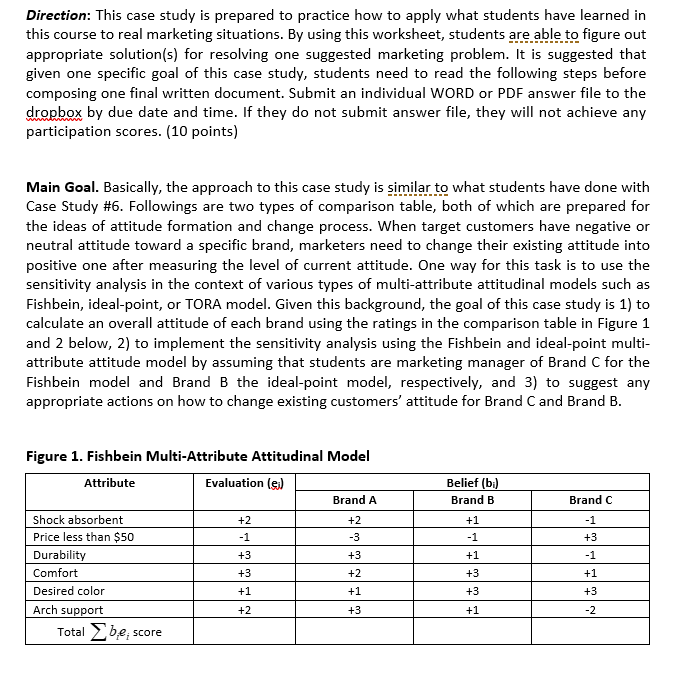
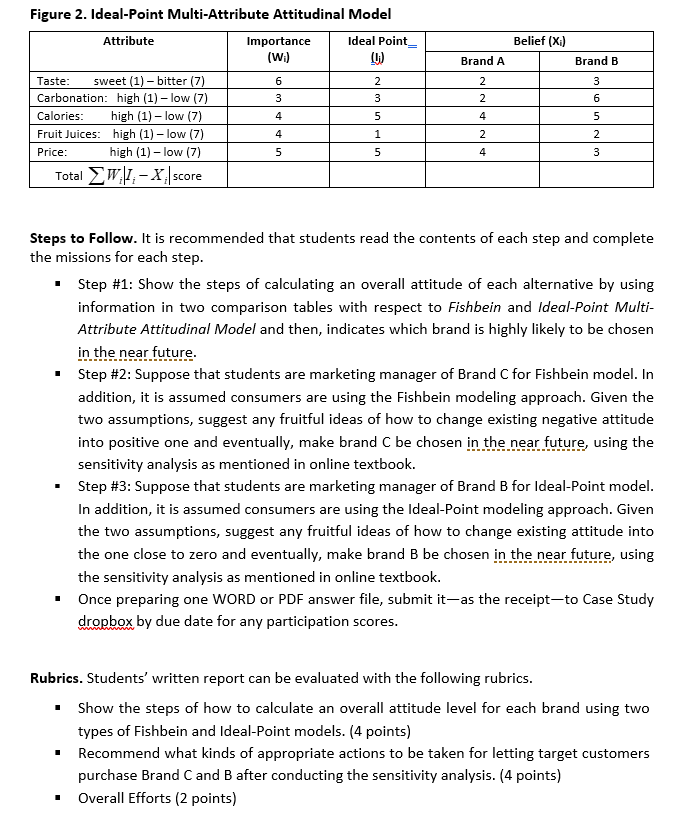
Direction: This case study is prepared to practice how to apply what students have learned in this course to real marketing situations. By using this worksheet, students are able to figure out appropriate solution(s) for resolving one suggested marketing problem. It is suggested that given one specific goal of this case study, students need to read the following steps before composing one final written document. Submit an individual WORD or PDF answer file to the dropbox by due date and time. If they do not submit answer file, they will not achieve any participation scores. (10 points) Main Goal. Basically, the approach to this case study is similar to what students have done with Case Study \#6. Followings are two types of comparison table, both of which are prepared for the ideas of attitude formation and change process. When target customers have negative or neutral attitude toward a specific brand, marketers need to change their existing attitude into positive one after measuring the level of current attitude. One way for this task is to use the sensitivity analysis in the context of various types of multi-attribute attitudinal models such as Fishbein, ideal-point, or TORA model. Given this background, the goal of this case study is 1) to calculate an overall attitude of each brand using the ratings in the comparison table in Figure 1 and 2 below, 2) to implement the sensitivity analysis using the Fishbein and ideal-point multiattribute attitude model by assuming that students are marketing manager of Brand C for the Fishbein model and Brand B the ideal-point model, respectively, and 3) to suggest any appropriate actions on how to change existing customers' attitude for Brand C and Brand B. Figure 1. Fishbein Multi-Attribute Attitudinal Model Figure 2. Ideal-Point Multi-Attribute Attitudinal Model Steps to Follow. It is recommended that students read the contents of each step and complete the missions for each step. - Step \#1: Show the steps of calculating an overall attitude of each alternative by using information in two comparison tables with respect to Fishbein and Ideal-Point MultiAttribute Attitudinal Model and then, indicates which brand is highly likely to be chosen in the near future. - Step \#2: Suppose that students are marketing manager of Brand C for Fishbein model. In addition, it is assumed consumers are using the Fishbein modeling approach. Given the two assumptions, suggest any fruitful ideas of how to change existing negative attitude into positive one and eventually, make brand C be chosen in the near future, using the sensitivity analysis as mentioned in online textbook. - Step \#3: Suppose that students are marketing manager of Brand B for Ideal-Point model. In addition, it is assumed consumers are using the Ideal-Point modeling approach. Given the two assumptions, suggest any fruitful ideas of how to change existing attitude into the one close to zero and eventually, make brand B be chosen in the near future, using the sensitivity analysis as mentioned in online textbook. - Once preparing one WORD or PDF answer file, submit it-as the receipt-to Case Study dropbox by due date for any participation scores. Rubrics. Students' written report can be evaluated with the following rubrics. - Show the steps of how to calculate an overall attitude level for each brand using two types of Fishbein and Ideal-Point models. (4 points) - Recommend what kinds of appropriate actions to be taken for letting target customers purchase Brand C and B after conducting the sensitivity analysis. (4 points) - Overall Efforts (2 points)
Step by Step Solution
There are 3 Steps involved in it

Get step-by-step solutions from verified subject matter experts
 Study Help