







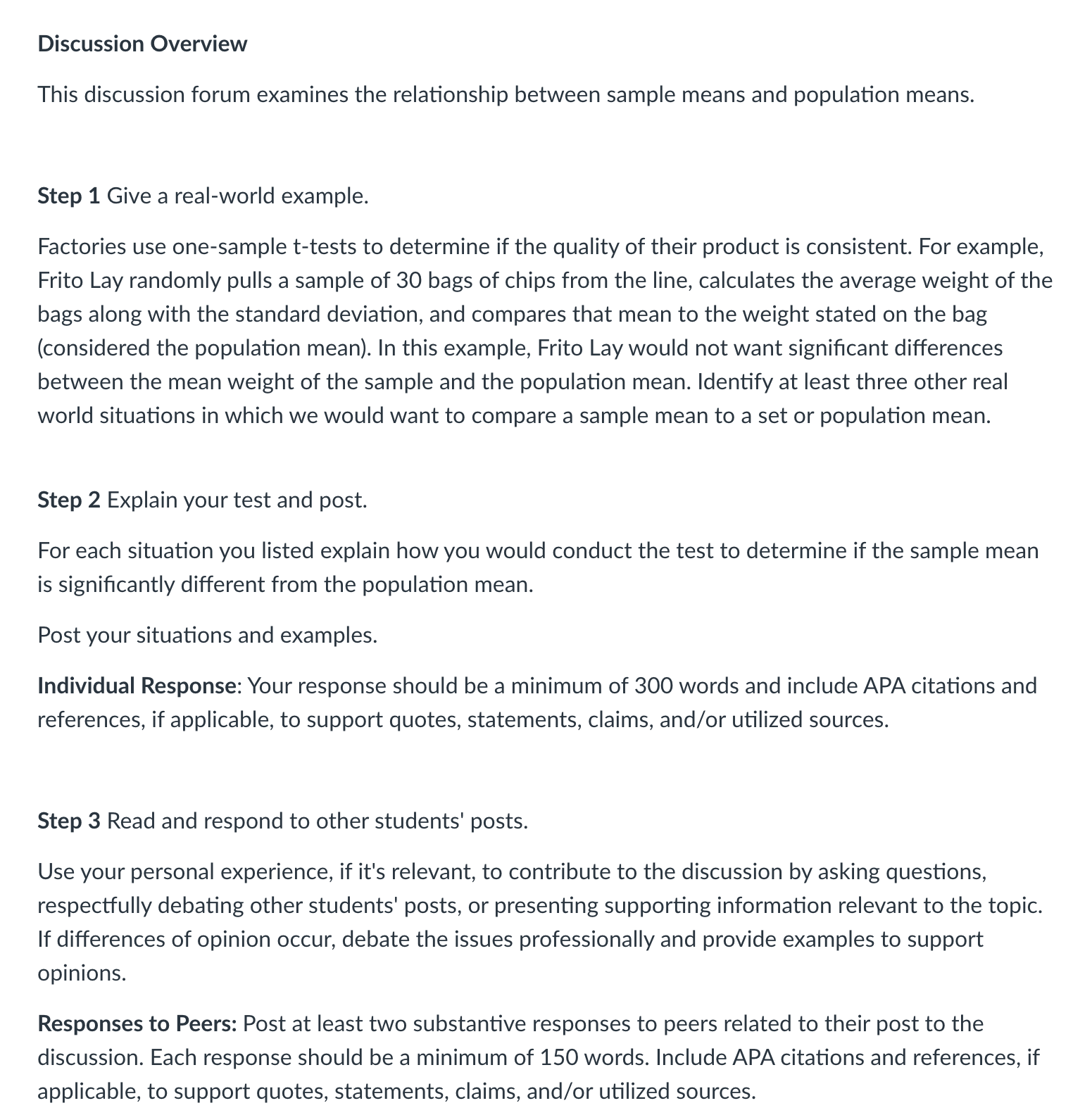
Question: Discussion 5.1: Comparing a Sample Mean to a Population Discussion Overview This discussion forum examines the relationship between sample means and population means. Step 1
Discussion 5.1: Comparing a Sample Mean to a Population
Discussion Overview
This discussion forum examines the relationship between sample means and population means.
Step 1 Give a real-world example.
Factories use one-sample t-tests to determine if the quality of their product is consistent. For example, Frito Lay randomly pulls a sample of 30 bags of chips from the line, calculates the average weight of the bags along with the standard deviation, and compares that mean to the weight stated on the bag (considered the population mean). In this example, Frito Lay would not want significant differences between the mean weight of the sample and the population mean. Identify at least three other real world situations in which we would want to compare a sample mean to a set or population mean.
Step 2 Explain your test and post.
For each situation you listed explain how you would conduct the test to determine if the sample mean is significantly different from the population mean.
Post your situations and examples.
Individual Response: include APA citations and references, if applicable, to support quotes, statements, claims, and/or utilized sources.
Step 3 Read and respond to other students' posts.
Use your personal experience, if it's relevant, to contribute to the discussion by asking questions, respectfully debating other students' posts, or presenting supporting information relevant to the topic. If differences of opinion occur, debate the issues professionally and provide examples to support opinions.
Responses to Peers: Post at least two substantive responses to peers related to their post to the discussion. Include APA citations and references, if applicable, to support quotes, statements, claims, and/or utilized sources.
Step by Step Solution
There are 3 Steps involved in it

Get step-by-step solutions from verified subject matter experts
 Study Help