



Question: Dividend policy for a case study that accompanies the Foundations for Financial Management book (14th ed).Scanned images of the case study are attached. 1. Refer
Dividend policy for a case study that accompanies the Foundations for Financial Management book (14th ed).Scanned images of the case study are attached.
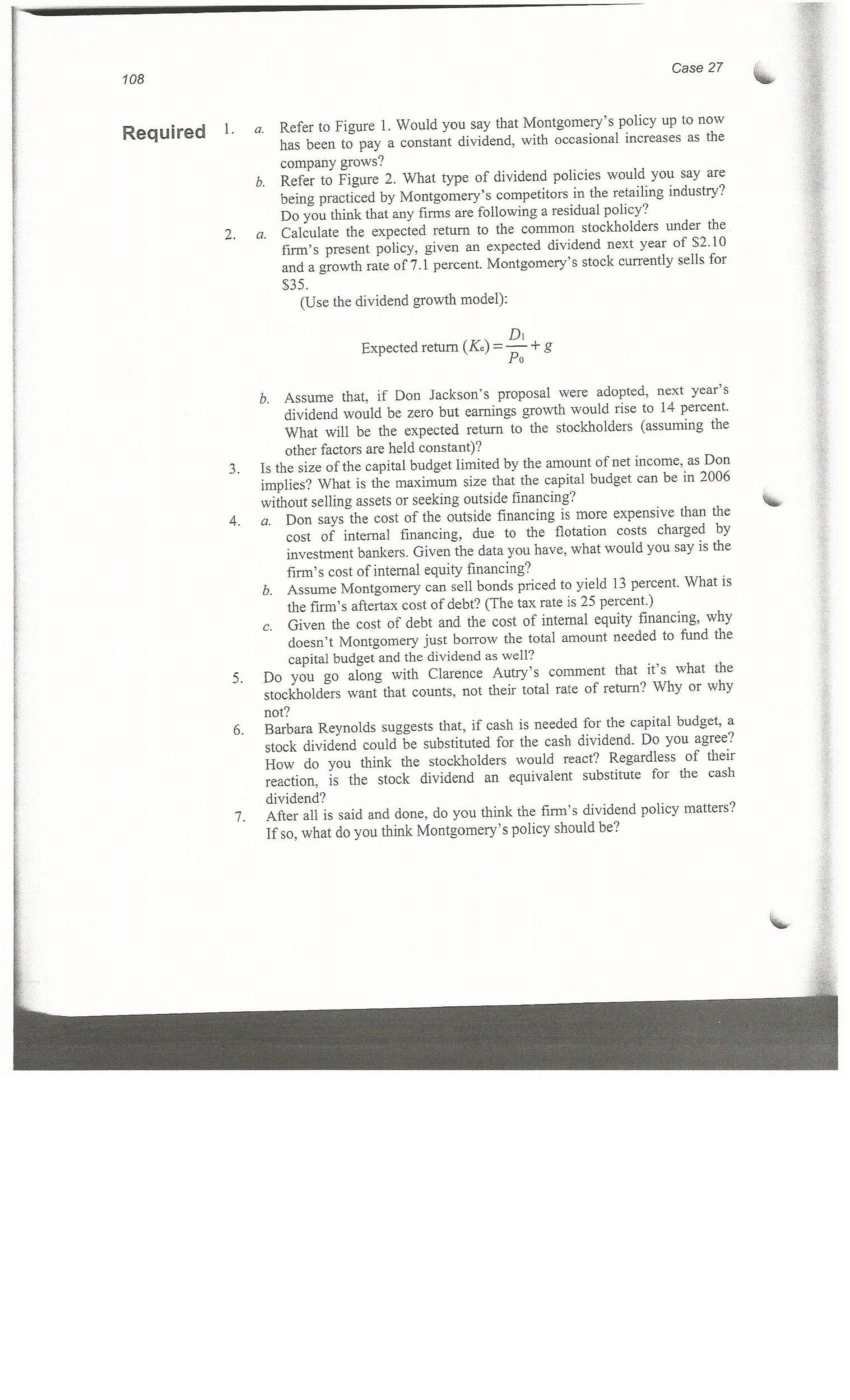
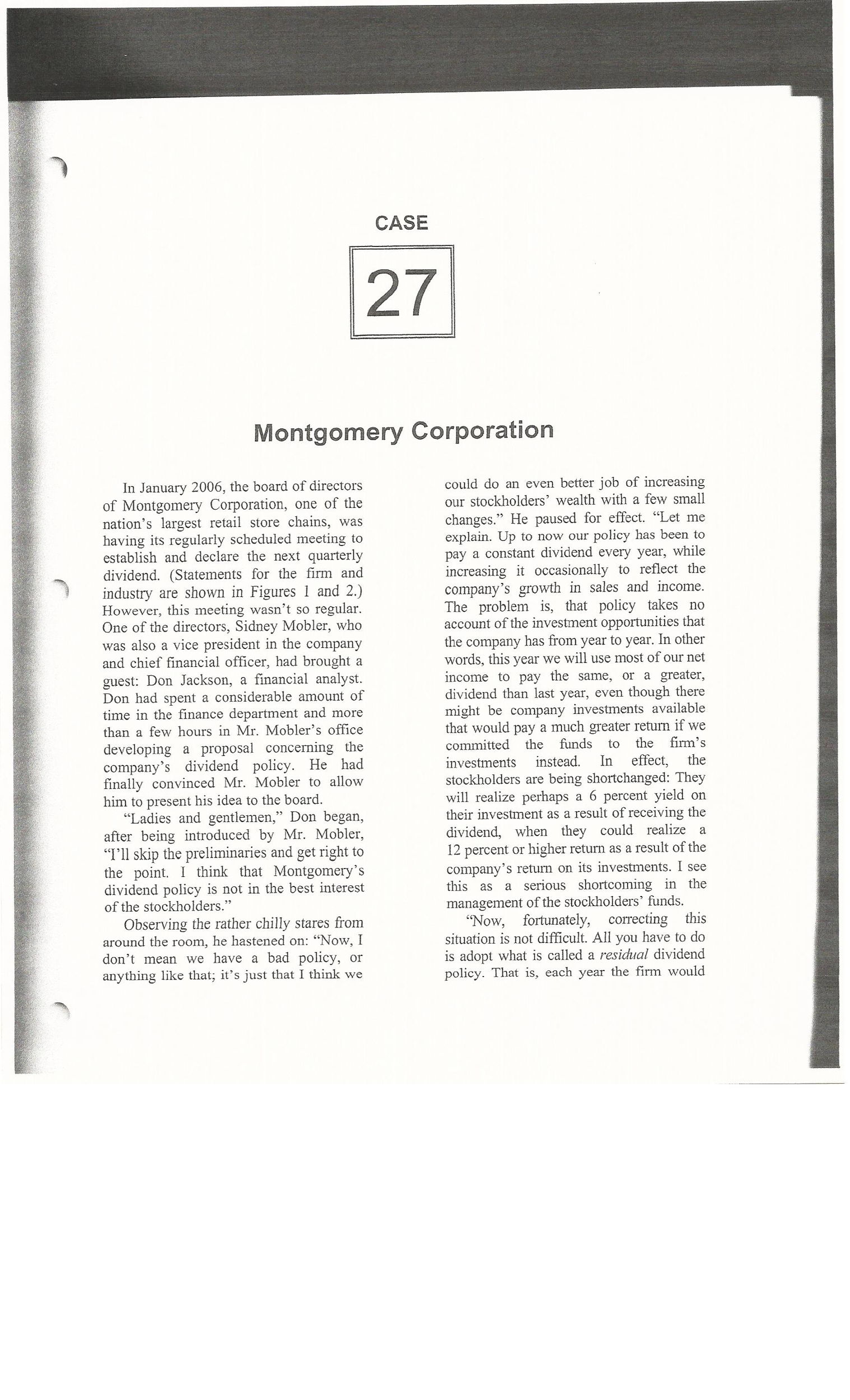

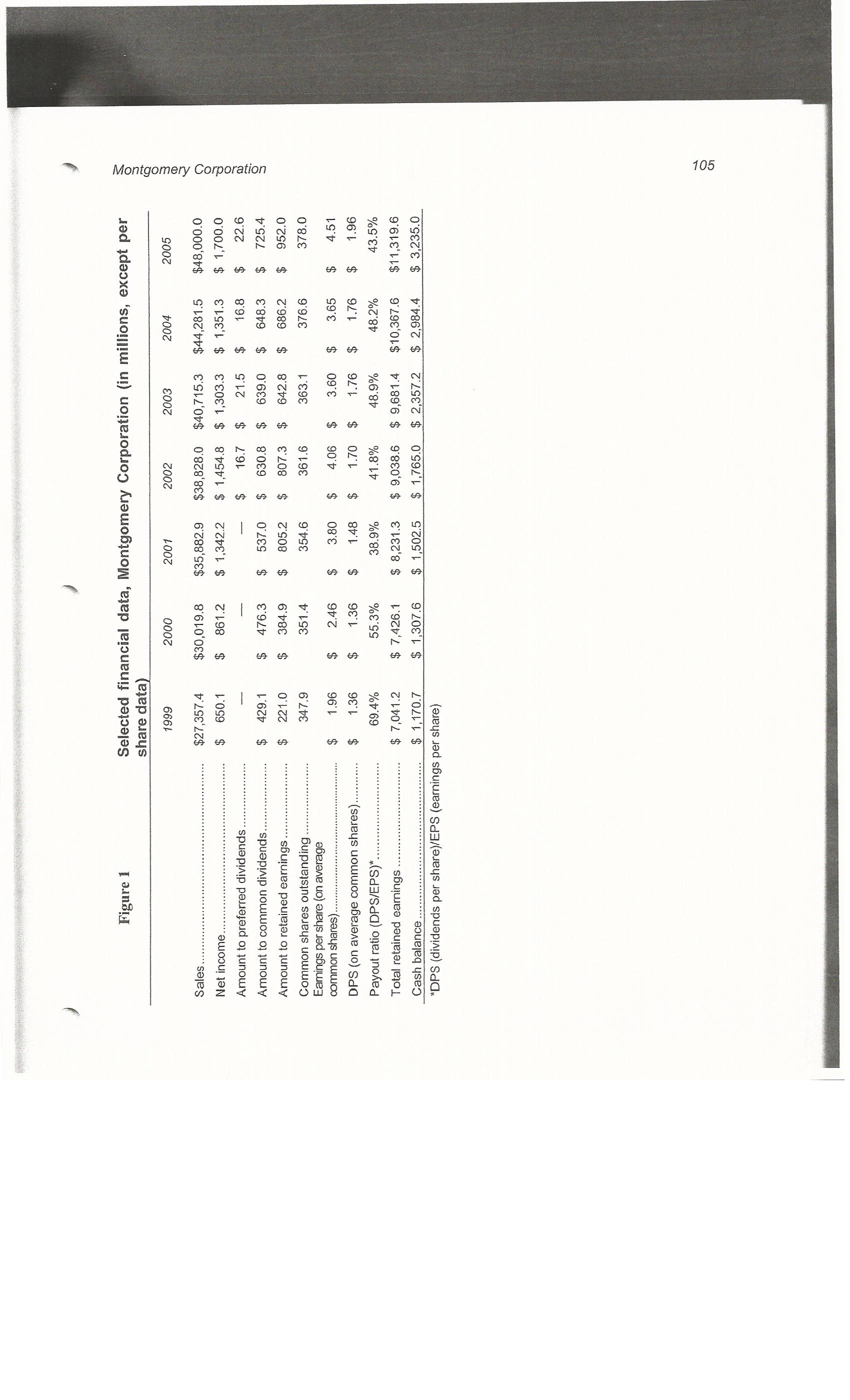
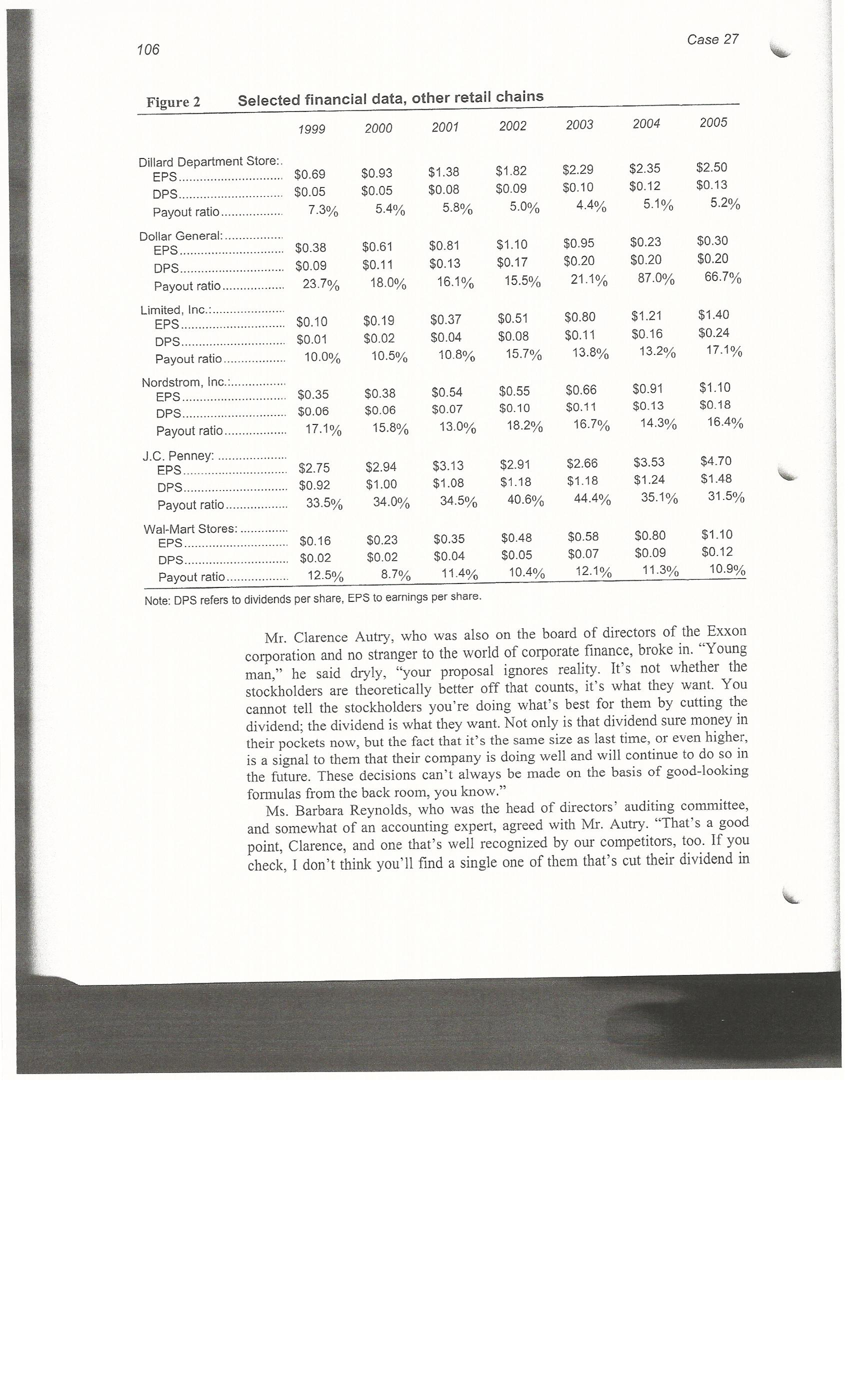
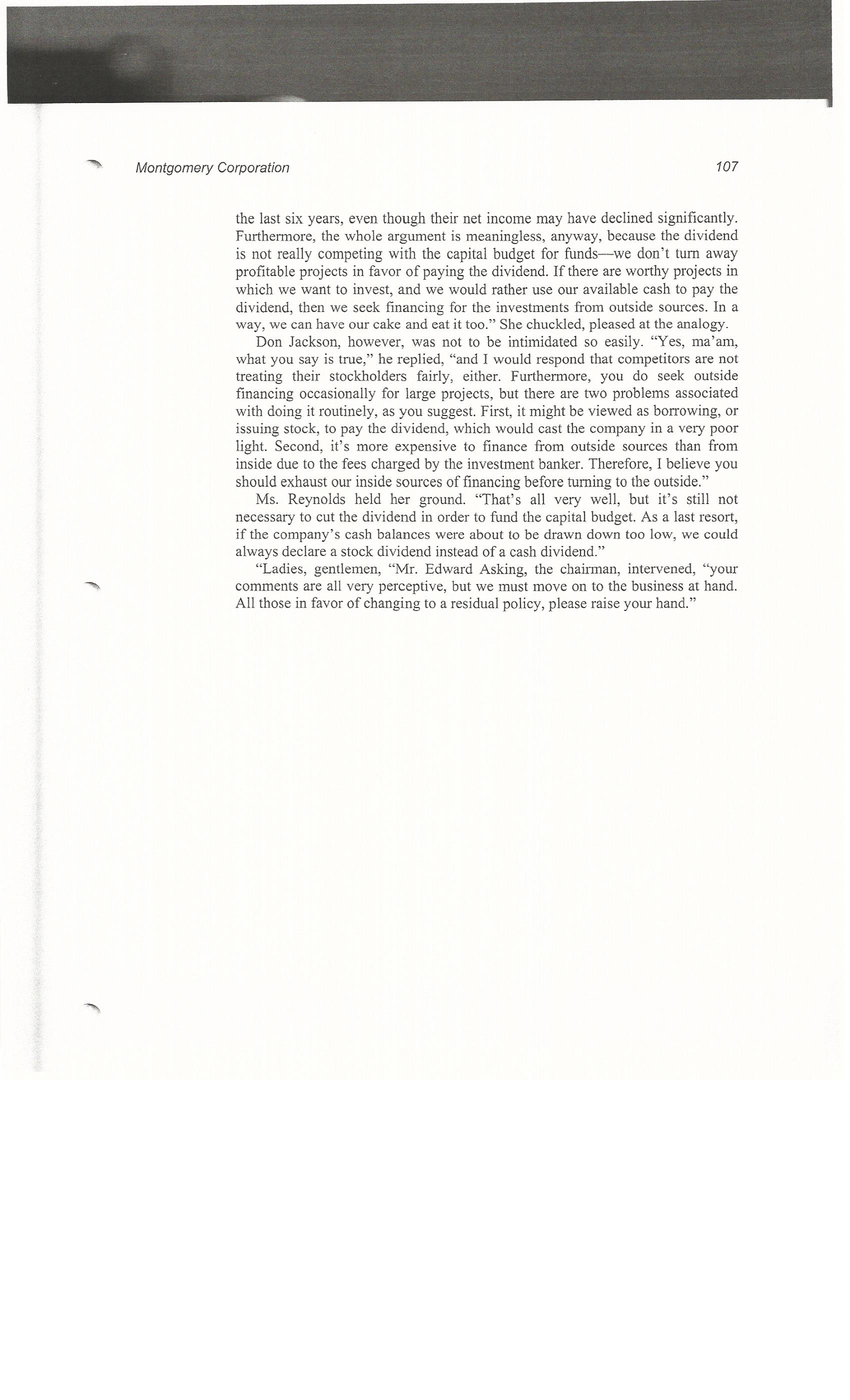
1. Refer to Figure 1. Would you say that Montgomery's policy up to now has been to pay a constant dividend, with occasional increases as the company grows? Refer to Figure 2. What type of dividend policies would you say are being practiced by Montgomery's competitors in the retailing industry? Do you think that any firms are following a residual policy?
2. Calculate the expected return to the common stockholders under the firm's present policy, given an expected dividend next year of $2.10 and a growth rate of 7.1 percent. Montgomery's stock currently sells for $35. Use the dividend growth model. Assume that, if Don Jackson's proposal were adopted, next year's dividend would be zero but earnings growth would rise to 14 percent. What will be the expected return to the stockholders (assuming the other factors are held constant)?
3. Is the size of the capital budget limited by the amount of net income, as Don implies? What is the maximum size that the capital budget can be in 2006 without selling assets or seeking outside financing?
4. a. Don says the cost of the outside financing is more expensive than the cost of internal financing, due to the flotation costs charged by investment bankers. Given the data you have, what would you say is the firm's cost of internal equity financing?
b. Assume Montgomery can sell bonds priced to yield 13 percent. What is the firm's aftertax cost of debt? (The tax rate is 25 percent).
c. Given the cost of debt and the cost of internal equity financing, why doesn't Montgomery just borrow the total amount needed to fund the capital budget and the dividend as well?
5. Do you go along with Clarence Autry's comment that it's what the stockholders want that counts, not their total rate of return? Why or why not?
6. Barbara Reynolds suggests that, if cash is needed for the capital budget, a stock dividend could be substituted for the cash dividend. Do you agree? How do you think the stockholders would react? Regardless of their reaction, is the stock dividend an equivalent substitute for the cash dividend?
7. After all is said and done, do you think the firm's dividend policy matters? If so, what do you think Montgomery's policy should be?
Step by Step Solution
There are 3 Steps involved in it

Get step-by-step solutions from verified subject matter experts