Question: do a SWOT, Pestle, Key problem they need to solve, and what information they need from library sources etc and answer the questions in the
do a SWOT, Pestle, Key problem they need to solve, and what information they need from library sources etc and answer the questions in the pictures down below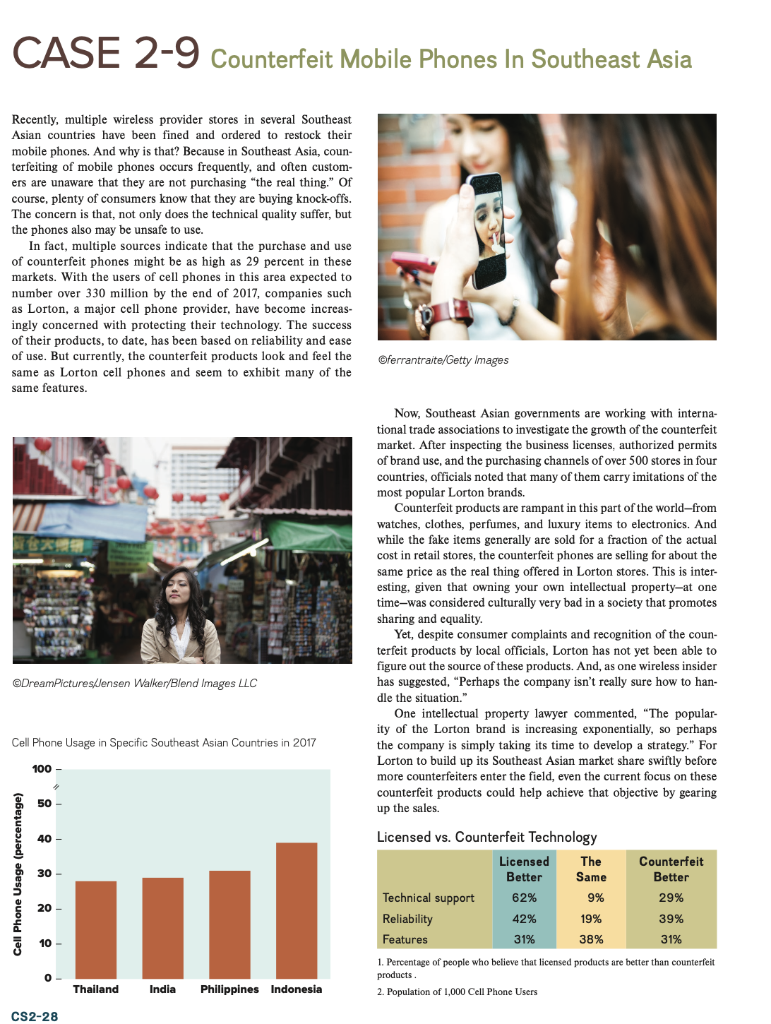
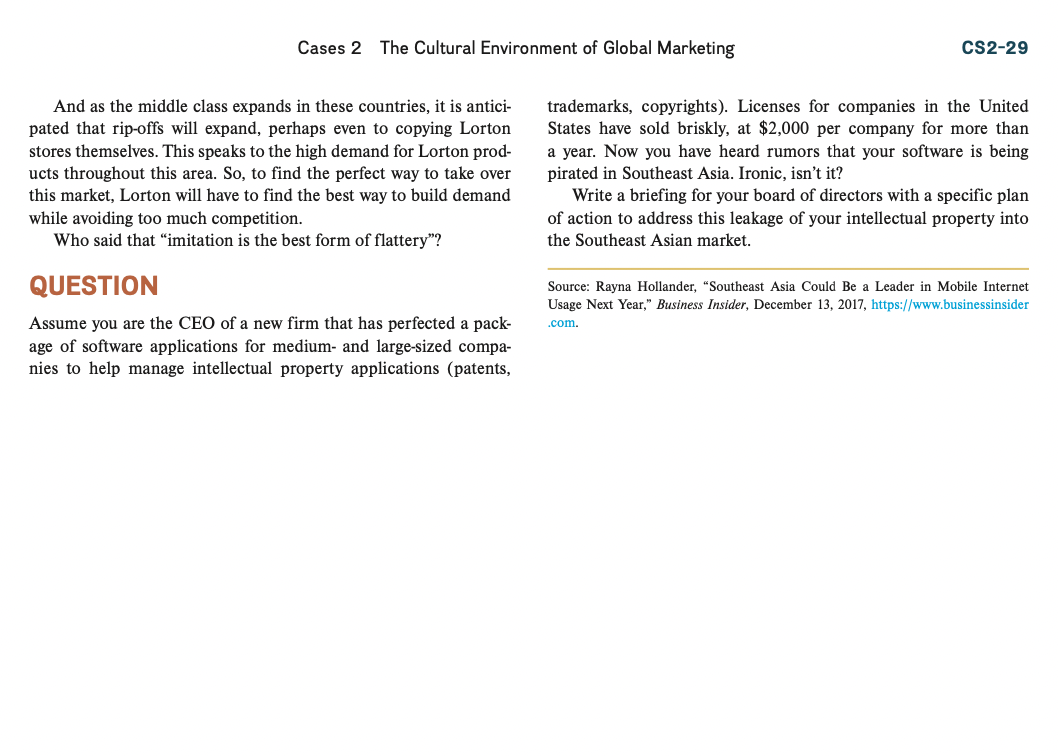
CASE 2-9 Counterfeit Mobile Phones In Southeast Asia terfeiting of Recently, multiple wireless provider stores in several Southeast Asian countries have been fined and ordered to restock their mobile phones. And why is that? Because in Southeast Asia, coun- of mobile phones occurs frequently, and often custom- ers are unaware that they are not purchasing "the real thing." of course, plenty of consumers know that they are buying knock-offs. The concern is that, not only does the technical quality suffer, but concerns that to my the phones also may be unsafe to use. In fact, multiple sources indicate that the purchase and use of counterfeit phones might be as high as 29 percent in these markets. With the users of cell phones in this area expected to 20 number over 330 million by the end of 2017, companies such as Lorton, a major cell phone provider, have become increas- ingly concerned with protecting their technology. The success of their products, to date, has been based on reliability and ease of use. But currently, the counterfeit products look and feel the same as Lorton cell phones and seem to exhibit many of the same features. Oferrantraite/Getty Images Now, Southeast Asian governments are working with interna- tional trade associations to investigate the growth of the counterfeit market. After inspecting the business licenses, authorized permits of brand use, and the purchasing channels of over 500 stores in four countries, officials noted that many of them carry imitations of the most popular Lorton brands. Counterfeit products are are rampant in this part of the world-from watches, clothes, perfumes, and luxury items to electronics. And while the fake items generally are sold for a fraction of the actual cost in retail stores, the counterfeit phones are selling for about the same price as the real thing offered in Lorton stores. This is inter- esting, given that owning your own intellectual property-at one time-was considered culturally very bad in a society that promotes sharing and equality Yet , despite consumer complaints and recognition of the coun- terfeit products by local officials, Lorton has not yet been able to figure out the source of these products. And, as one wireless insider has suggested, "Perhaps the company isn't really sure how to han- dle the situation. One intellectual property lawyer commented, "The popular- ity of the Lorton brand is increasing exponentially, so perhaps company is simply taking its time to develop a strategy." For Lorton to build up its Southeast Asian market share swiftly before more counterfeiters enter the field, even the current focus on these counterfeit products could help achieve that objective by gearing up the sales. @DreamPictures/ensen Walker/Blend Images LLC Cell Phone Usage in Specific Southeast Asian Countries in 2017 the 100 - 50 40 - Licensed vs. Counterfeit Technology Cell Phone Usage (percentage) Licensed Better The Same Counterfeit Better 30 Technical support 62% 9% 29% 20 Reliability 42% 19% 39% 10 Features 31% 38% 31% 1. Percentage of people who believe that licensed products are better than counterfeit products 0- Thailand India Philippines Indonesia 2. Population of 1,000 Cell Phone Users CS2-28 Cases 2 The Cultural Environment of Global Marketing CS2-29 And as the middle class expands in these countries, it is antici- pated that rip-offs will expand, perhaps even to copying Lorton stores themselves. This speaks to the high demand for Lorton prod- ucts throughout this area. So, to find the perfect way to take over this market, Lorton will have to find the best way to build demand while avoiding too much competition. Who said that "imitation is the best form of flattery"? trademarks, copyrights). Licenses for companies in the United States have sold briskly, at $2,000 per company for more than a year. Now you have heard rumors that your software is being pirated in Southeast Asia. Ironic, isn't it? Write a briefing for your board of directors with a specific plan of action to address this leakage of your intellectual property into the Southeast Asian market. QUESTION Source: Rayna Hollander, "Southeast Asia Could Be a Leader in Mobile Internet Usage Next Year," Business Insider, December 13, 2017, https://www.businessinsider .com. Assume you are the CEO of a new firm that has perfected a pack- age of software applications for medium- and large-sized compa- nies to help manage intellectual property applications (patents









 Study Help