


Question: DO NOT COPY WORDS FROM OUTSIDE SOURCES TO Discuss: a) something you leamed that you didn't already know and b) something that could have been
DO NOT COPY WORDS FROM OUTSIDE SOURCES TO

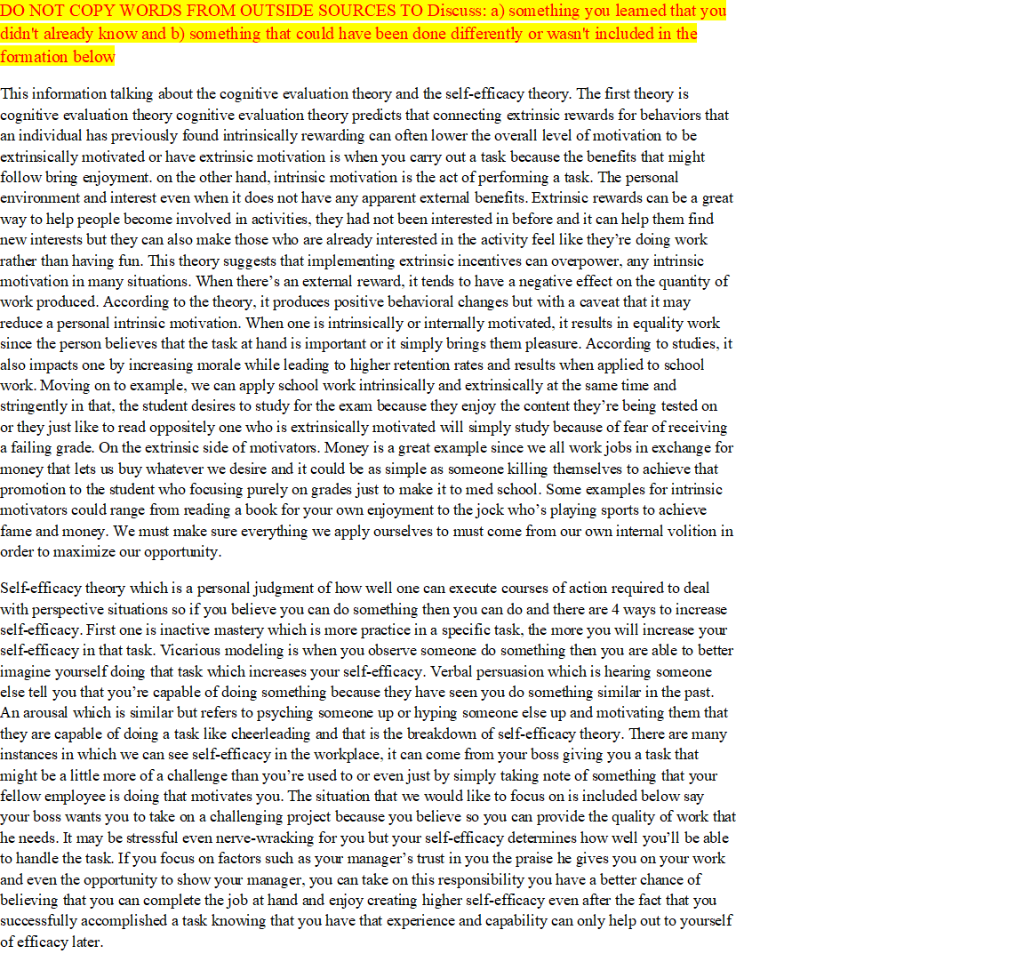
DO NOT COPY WORDS FROM OUTSIDE SOURCES TO Discuss: a) something you leamed that you didn't already know and b) something that could have been done differently or wasn't included in the formation below This information talking about the cognitive evaluation theory and the self-efficacy theory. The first theory is cognitive evaluation theory cognitive evaluation theory predicts that connecting extrinsic rewards for behaviors that an individual has previously found intrinsically rewarding can often lower the overall level of motivation to be extrinsically motivated or have extrinsic motivation is when you carry out a task because the benefits that might follow bring enjoyment on the other hand, intrinsic motivation is the act of performing a task. The personal environment and interest even when it does not have any apparent external benefits. Extrinsic rewards can be a great way to help people become involved in activities, they had not been interested in before and it can help them find new interests but they can also make those who are already interested in the activity feel like they're doing work rather than having fun. This theory suggests that implementing extrinsic incentives can overpower, any intrinsic motivation in many situations. When there's an external reward, it tends to have a negative effect on the quantity of work produced. According to the theory, it produces positive behavioral changes but with a caveat that it may reduce a personal intrinsic motivation. When one is intrinsically or internally motivated, it results in equality work since the person believes that the task at hand is important or it simply brings them pleasure. According to studies, it also impacts one by increasing morale while leading to higher retention rates and results when applied to school work. Moving on to example, we can apply school work intrinsically and extrinsically at the same time and stringently in that, the student desires to study for the exam because they enjoy the content they're being tested on or they just like to read oppositely one who is extrinsically motivated will simply study because of fear of receiving a failing grade. On the extrinsic side of motivators. Money is a great example since we all work jobs in exchange for money that lets us buy whatever we desire and it could be as simple as someone killing themselves to achieve that promotion to the student who focusing purely on grades just to make it to med school. Some examples for intrinsic motivators could range from reading a book for your own enjoyment to the jock who's playing sports to achieve fame and money. We must make sure everything we apply ourselves to must come from our own internal volition in order to maximize our opportunity. Self-efficacy theory which is a personal judgment of how well one can execute courses of action required to deal with perspective situations so if you believe you can do something then you can do and there are 4 ways to increase self-efficacy. First one is inactive mastery which is more practice in a specific task, the more you will increase your self-efficacy in that task. Vicarious modeling is when you observe someone do something then you are able to better imagine yourself doing that task which increases your self-efficacy. Verbal persuasion which is hearing someone else tell you that you're capable of doing something because they have seen you do something similar in the past. An arousal which is similar but refers to psyching someone up or hyping someone else up and motivating them that they are capable of doing a task like cheerleading and that is the breakdown of self-efficacy theory. There are many instances in which we can see self-efficacy in the workplace, it can come from your boss giving you a task that might be a little more of a challenge than you're used to or even just by simply taking note of something that your fellow employee is doing that motivates you. The situation that we would like to focus on is included below say your boss wants you to take on a challenging project because you believe so you can provide the quality of work that he needs. It may be stressful even nerve-wracking for you but your self-efficacy determines how well you'll be able to handle the task. If you focus on factors such as you manager's trust in you the praise he gives you on your work and even the opportunity to show you manager, you can take on this responsibility you have a better chance of believing that you can complete the job at hand and enjoy creating higher self-efficacy even after the fact that you successfully accomplished a task knowing that you have that experience and capability can only help out to yourself of efficacy later

Step by Step Solution

There are 3 Steps involved in it

1 Expert Approved Answer
Step: 1 Unlock blur-text-image

Question Has Been Solved by an Expert!

Get step-by-step solutions from verified subject matter experts

Step: 2 Unlock
Step: 3 Unlock

Students Have Also Explored These Related General Management Questions!