







Question: Don't copy+paste answer, it is INCORRECT ex. from 3.3.3.3 to 1.1.1.1 AS 33 -> AS 1 Consider the AS topology in Figure 1. ASes run
Don't copy+paste answer, it is INCORRECT
ex. from 3.3.3.3 to 1.1.1.1 AS 33 -> AS 1
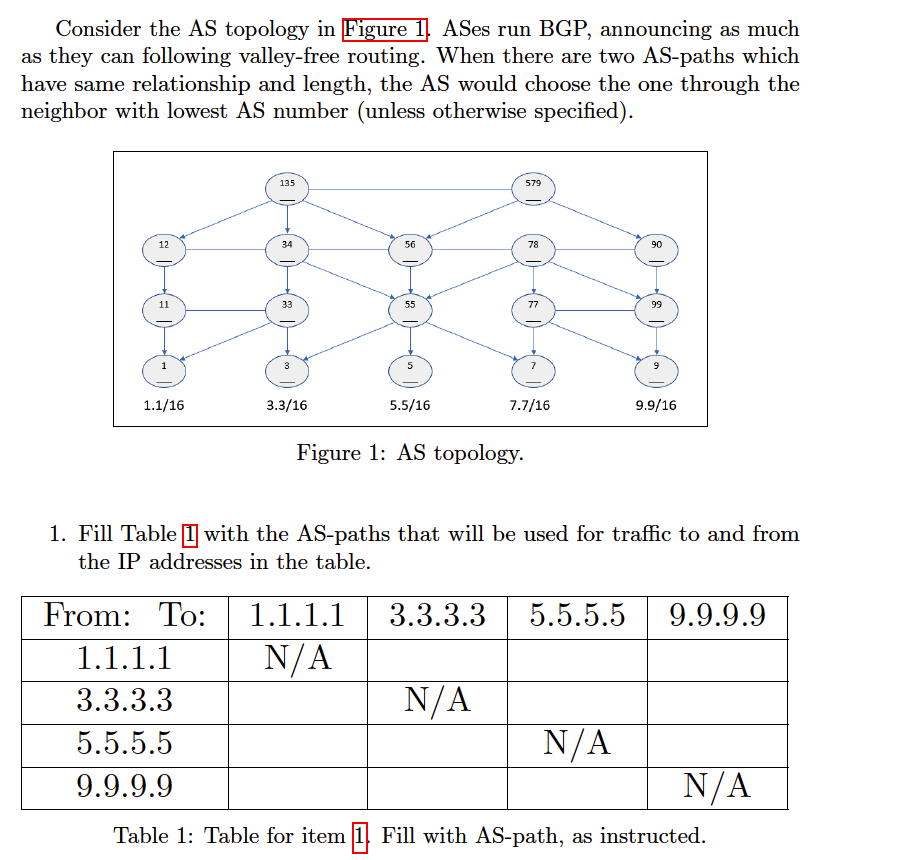

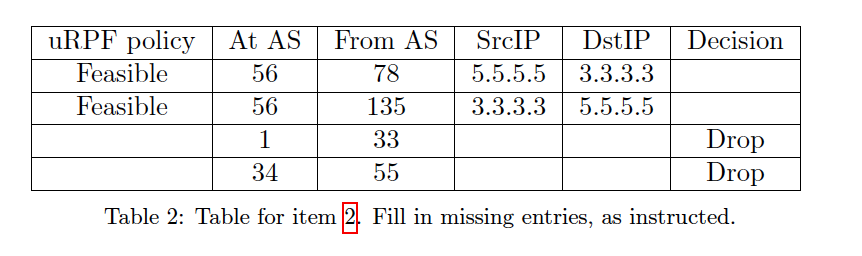
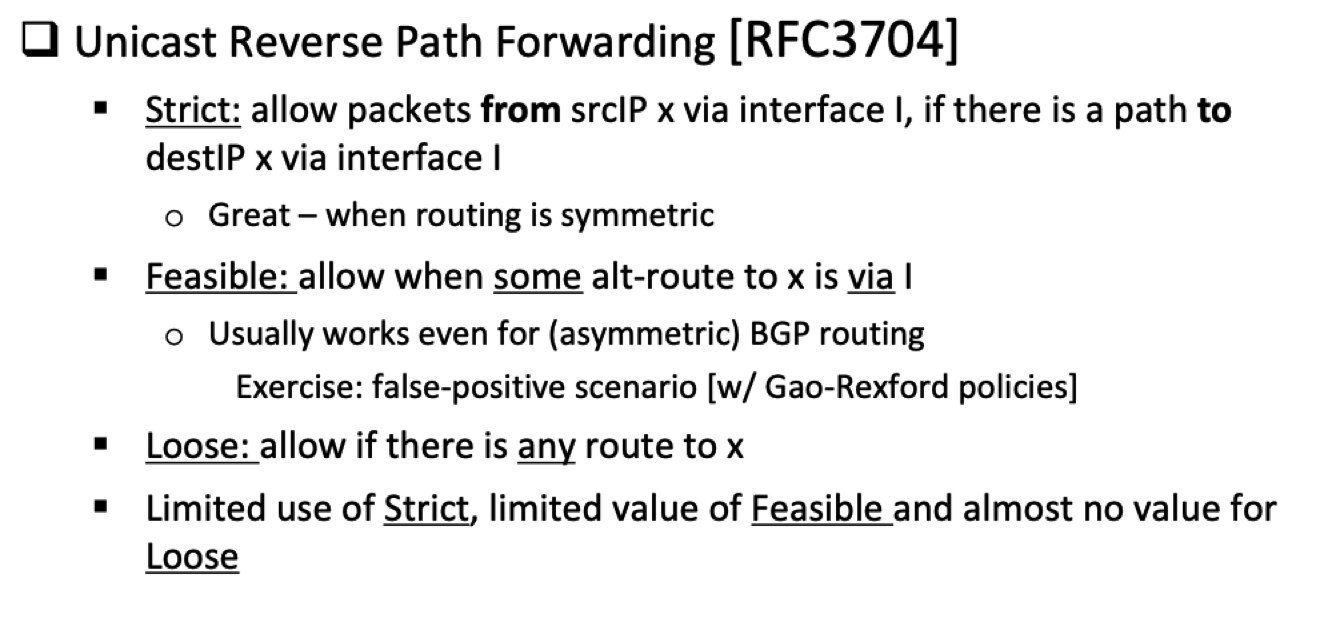
Consider the AS topology in Figure 1. ASes run BGP, announcing as much as they can following valley-free routing. When there are two AS-paths which have same relationship and length, the AS would choose the one through the neighbor with lowest AS number (unless otherwise specified). Figure 1: AS topology. 1. Fill Table 1] with the AS-paths that will be used for traffic to and from the IP addresses in the table. Table 1: Table for item 1. Fill with AS-path, as instructed. 2. Fill the empty spaces in Table 2 with the uRPF decision for the row (when empty) or with any entry that justifies the given decision. Write 'None' if there is no such entry. Table 2: Table for item 2. Fill in missing entries, as instructed. Unicast Reverse Path Forwarding [RFC3704] - Strict: allow packets from srclP x via interface I, if there is a path to destIP x via interface I - Great - when routing is symmetric - Feasible: allow when some alt-route to x is via I Usually works even for (asymmetric) BGP routing Exercise: false-positive scenario [w/ Gao-Rexford policies] - Loose: allow if there is any route to x Loose
Step by Step Solution
There are 3 Steps involved in it

Get step-by-step solutions from verified subject matter experts
 Study Help