







Question: Draft a Simple Presentation for the following Details Introduction: The skill of negotiation is an essential component of being suceessful in bosiness. It takes place
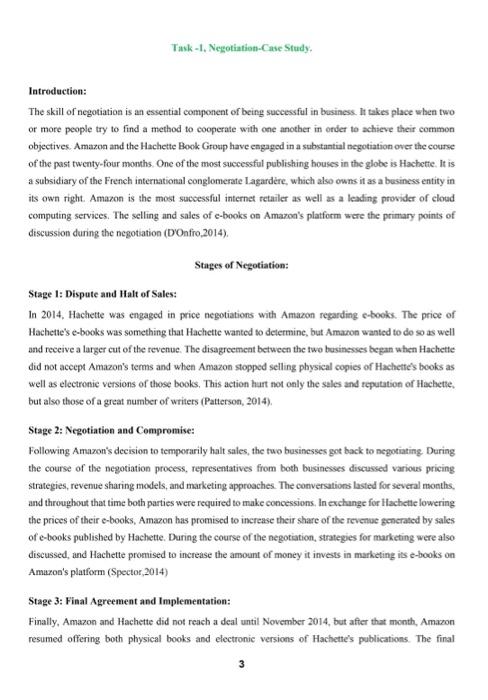
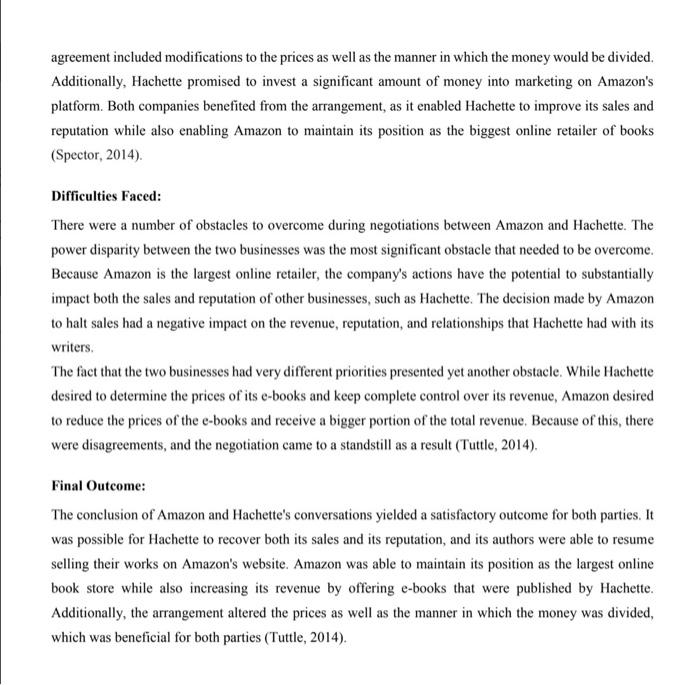
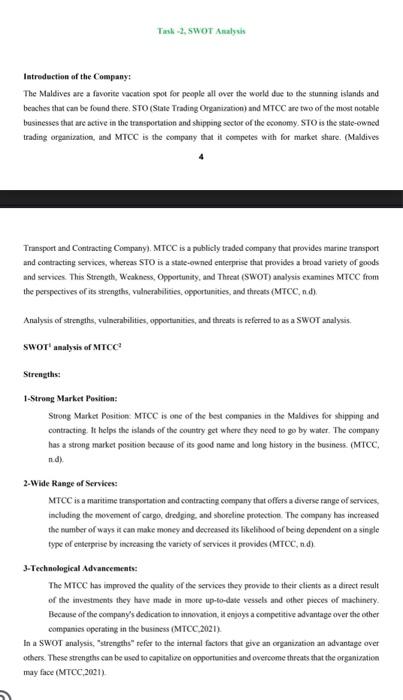
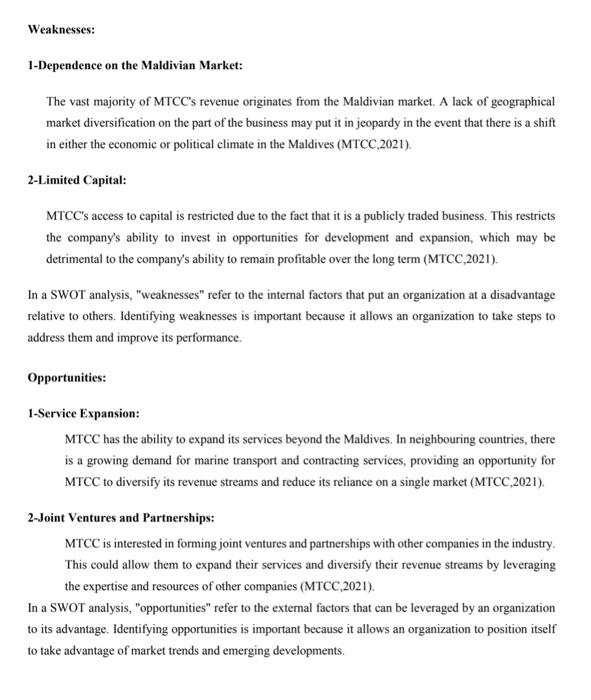
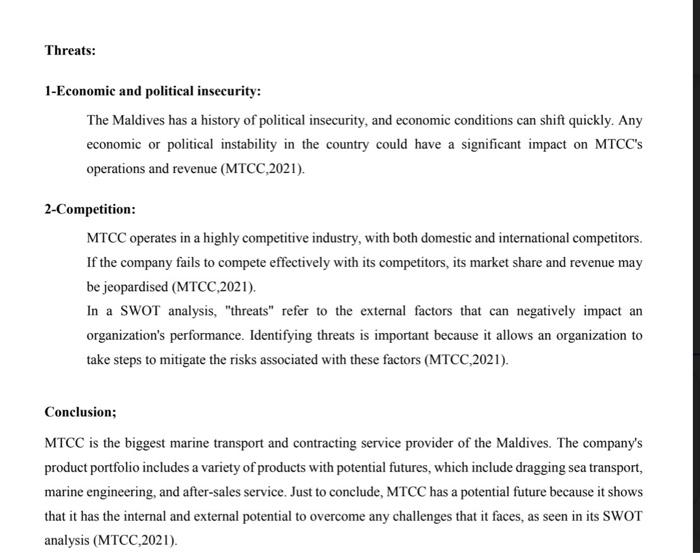
Introduction: The skill of negotiation is an essential component of being suceessful in bosiness. It takes place when two or more people try to find a method to cooperate with one another in order to achieve their common objectives. Amazoa and the Hachette Book Group have engaged in a substantial negotiation over the course of the past twenty-four months. One of the most suceessful publishing bouses in the globe is Hachette. It is a subsidiary of the French international conglomerate Lagardere, which also owns it as a besiness entity in its own right. Amazon is the most sucsessful internet retailer as well as a leading provider of cloud computing services. The selling and sales of e-books on Amazoa's platform were the primary points of discussion during the negotiation (DOnfro, 2014). Stages of Negotiation: Stage 1: Dispute and Halt of Sales: In 2014, Hachette was engaged in price negotiations with Amazon regarding e-books. The price of Hachette's e-books was something that Hachette wanted to delermine, but Amaron wanted to do so as well and receive a larger cut of the revenue. The disagreement between the two businesses began when Hachette did not aceept Amazon's terms and when Amazon stopped selling physical copies of Hachette's books as well as electronic versions of those books. This action hart not only the sales and reputation of Hachette. but also those of a great number of writers (Patterson, 2014). Stage 2: Negotiation and Cempromise: Following Amazon's decision to temporarily halt sales, the two businesses got back to negotiating. During the course of the negotiation process, representatives from both businesses discussed various pricing strategies, revenue sharing models, and marketing approaches. The conversations lasted for several months, and throughout that time both parties were required to make concessions. In exchange for Hachetle lowering the prices of their e-books, Amazon has promised to increase their share of the revenue gencrated by sales of e-books published by Hachette. During the course of the negotiation, strategies for marketing were also discussed, and Hachette promised to increase the amount of money it invests in marketing its e-books on Amuzoa's platform (Spector, 2014) Stage 3: Final Agreement and Implementation: Finally, Amazon and Hachette did not reach a deal until November 2014, but after that month, Amazon resumed offering both physical books and electronic versions of Hachette's publications. The final agreement included modifications to the prices as well as the manner in which the money would be divided. Additionally, Hachette promised to invest a significant amount of money into marketing on Amazon's platform. Both companies benefited from the arrangement, as it enabled Hachette to improve its sales and reputation while also enabling Amazon to maintain its position as the biggest online retailer of books (Spector, 2014). Difficulties Faced: There were a number of obstacles to overcome during negotiations between Amazon and Hachette. The power disparity between the two businesses was the most significant obstacle that needed to be overcome. Because Amazon is the largest online retailer, the company's actions have the potential to substantially impact both the sales and reputation of other businesses, such as Hachette. The decision made by Amazon to halt sales had a negative impact on the revenue, reputation, and relationships that Hachette had with its Writers. The fact that the two businesses had very different priorities presented yet another obstacle. While Hachette desired to determine the prices of its e-books and keep complete control over its revenue, Amazon desired to reduce the prices of the e-books and receive a bigger portion of the total revenue. Because of this, there were disagreements, and the negotiation came to a standstill as a result (Tuttle, 2014). Final Outcome: The conclusion of Amazon and Hachette's conversations yielded a satisfactory outcome for both parties. It was possible for Hachette to recover both its sales and its reputation, and its authors were able to resume selling their works on Amazon's website. Amazon was able to maintain its position as the largest online book store while also increasing its revenue by offering e-books that were published by Hachette. Additionally, the arrangement altered the prices as well as the manner in which the money was divided, which was beneficial for both parties (Tuttle, 2014). Iatrodection of the Company: The Maldives are a favorite vacation spot for people all over the world doe to the stunsing islands and beaches that can be found there, STO (Stale Trading Organization) and MTCC are two of the moot notable businesses that are active in the transportation and shipping sector of the economy. 570 is the stanc-owned trading organization, and MTCC is the company that it competes with for market share. (Maldives 4 Transport and Contracting Company). MTCC is a publicly tradod company that provides marine transport and coetracting services, whereas STO is a state-ewned enterprise that provides a beoad variety of goods and services. This Strength, Weakness, Oppottunity, and Threat (SWOT) analysis examines MTCC Irom the perspectives of its strengths, vulnerabilities, opportunities, and threats (MTCC, nd). Analysis of strengths, vulnerabilities, opportunities, and threats is referred to as a SWOr analysis. SWOT analysis of MTCCC Strengths: 1-Stroeg Market Positien: Strong Market Position: MICC is one of the best companies in the Maldives for shipping and contracting: It helps the ialands of the country get where they necd to go by water. The company has an strong market position because of its pood name and long hisiory is the business. (MTCC. n.d). 2-Wide Range of Services: MTCC is a maritime tramipoetation and contracting coerpany that offers a diverse range of services. including the movement of cargo, dredging, and shorcline protection. The convany has increased the namber of ways if cas make money and decreased its likelihood of being dependent an a single type of enscrpoise by incteasing the variety of services il provides (MTCC, nd). 3-Technological Advancenents: The MTCC has improved the quality of the services they peovide to their clients as a direet result of the investments they have made in more up-to-dase vessels and other picces of machinery. Because of the company's dedication to innovation, it enjoys a competitive advantage over the other companies operating in the busincss (MTCC 2021). In a SWOT analysis, "strengths" refer to the internal factors that give an crganization an advantage aver others. These strengths can be used to capitalixe on epportunities and overcome threats that the organization may face (MTCC,2021) Weaknesses: 1-Dependence on the Maldivian Market: The vast majority of MTCC's revenue originates from the Maldivian market. A lack of geographical market diversification on the part of the business may put it in jeopardy in the event that there is a shift in either the economic or political climate in the Maldives (MTCC,2021). 2-Limited Capital: MTCC's access to capital is restricted due to the fact that it is a publicly traded business. This restricts the company's ability to invest in opportunities for development and expansion, which may be detrimental to the company's ability to remain profitable over the long term (MTCC,2021). In a SWOT analysis, "weaknesses" refer to the internal factors that put an organization at a disadvantage relative to others. Identifying weaknesses is important because it allows an organization to take steps to address them and improve its performance. Opportunities: 1-Service Expansion: MTCC has the ability to expand its services beyond the Maldives. In neighbouring countries, there is a growing demand for marine transport and contracting services, providing an opportunity for MTCC to diversify its revenue streams and reduce its reliance on a single market (MTCC,2021). 2-Joint Ventures and Partnerships: MTCC is interested in forming joint ventures and partnerships with other companies in the industry. This could allow them to expand their services and diversify their revenue streams by leveraging the expertise and resources of other companies (MTCC,2021). In a SWOT analysis, "opportunities" refer to the external factors that can be leveraged by an organization to its advantage. Identifying opportunities is important because it allows an organization to position itself to take advantage of market trends and emerging developments. 1-Economic and political insecurity: The Maldives has a history of political insecurity, and economic conditions can shift quickly. Any economic or political instability in the country could have a significant impact on MTCC's operations and revenue (MTCC,2021). 2-Competition: MTCC operates in a highly competitive industry, with both domestic and international competitors. If the company fails to compete effectively with its competitors, its market share and revenue may be jeopardised (MTCC,2021). In a SWOT analysis, "threats" refer to the external factors that can negatively impact an organization's performance. Identifying threats is important because it allows an organization to take steps to mitigate the risks associated with these factors (MTCC,2021). Conclusion; MTCC is the biggest marine transport and contracting service provider of the Maldives. The company's product portfolio includes a variety of products with potential futures, which include dragging sea transport, marine engineering, and after-sales service. Just to conclude, MTCC has a potential future because it shows that it has the internal and external potential to overcome any challenges that it faces, as seen in its SWOT analysis (MTCC,2021)
Step by Step Solution
There are 3 Steps involved in it

Get step-by-step solutions from verified subject matter experts
 Study Help