



Question: Suppose that in a year an American worker can produce 100 shirts or 20 computers and a Chinese worker can produce 100 shirts or
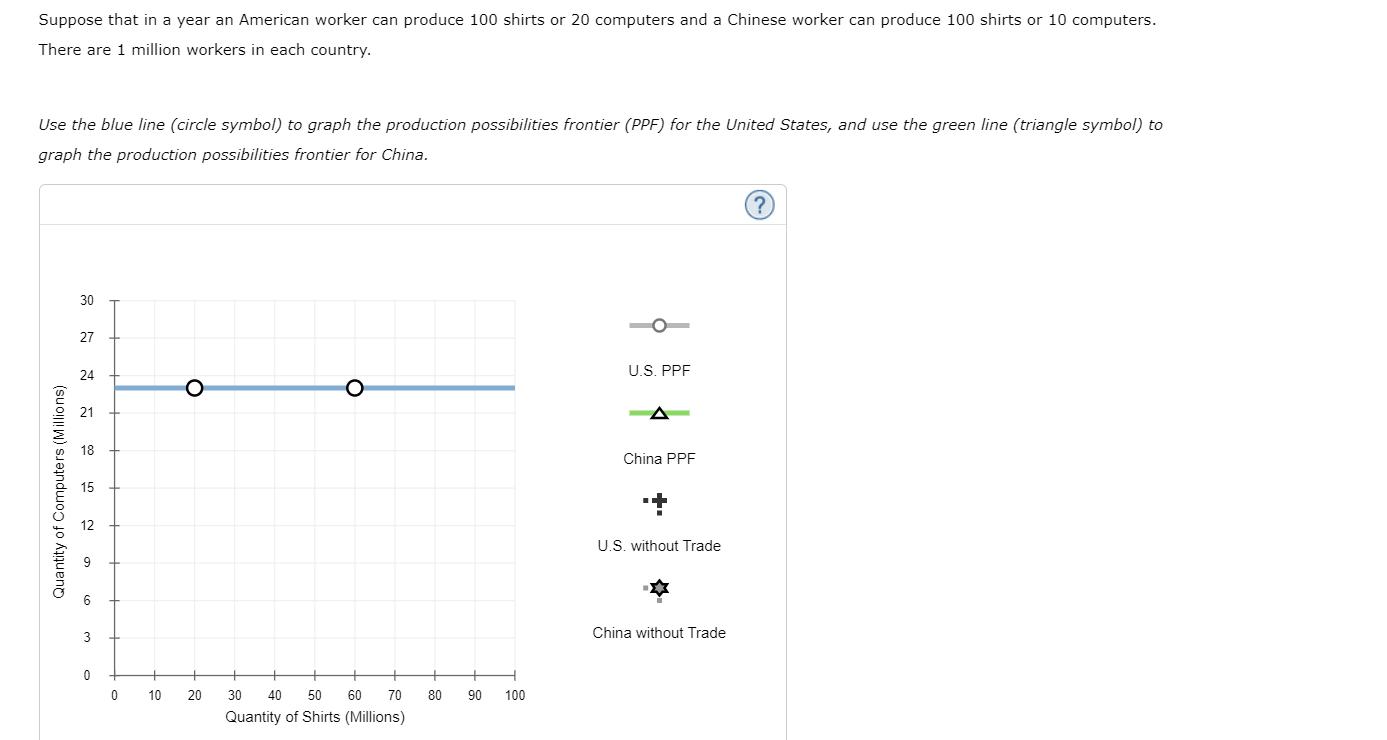
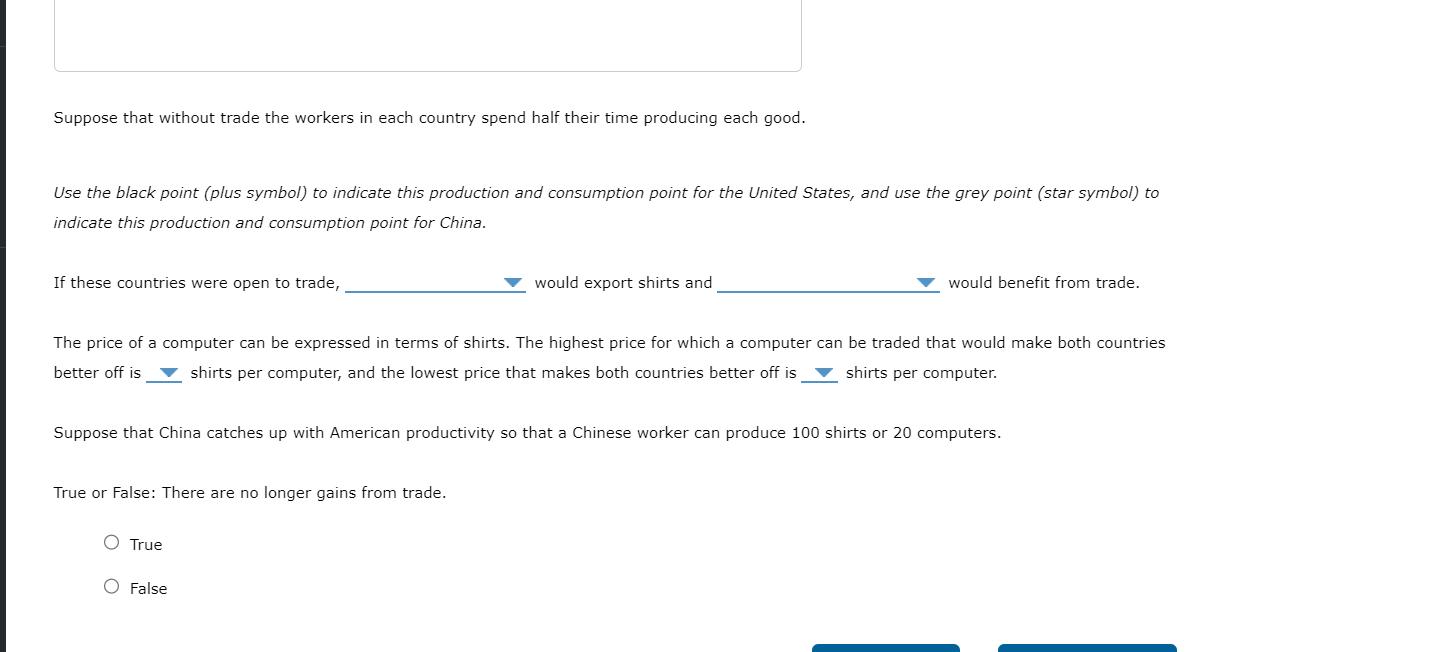
Suppose that in a year an American worker can produce 100 shirts or 20 computers and a Chinese worker can produce 100 shirts or 10 computers. There are 1 million workers in each country. Use the blue line (circle symbol) to graph the production possibilities frontier (PPF) for the United States, and use the green line (triangle symbol) to graph the production possibilities frontier for China. Quantity of Computers (Millions) 30 27 24 21 18 15 6 3 0 0 10 O 20 30 40 50 60 70 Quantity of Shirts (Millions) 80 90 100 U.S. PPF China PPF + U.S. without Trade China without Trade ? Suppose that without trade the workers in each country spend half their time producing each good. Use the black point (plus symbol) to indicate this production and consumption point for the United States, and use the grey point (star symbol) to indicate this production and consumption point for China. If these countries were open to trade, The price of a computer can be expressed in terms of shirts. The highest price for which a computer can be traded that would make both countries better off is shirts per computer, and the lowest price that makes both countries better off is shirts per computer. True or False: There are no longer gains from trade. would export shirts and Suppose that China catches up with American productivity so that a Chinese worker can produce 100 shirts or 20 computers. O True would benefit from trade. O False
Step by Step Solution
3.43 Rating (150 Votes )
There are 3 Steps involved in it
Solution Grains from an international trade From t... View full answer

Get step-by-step solutions from verified subject matter experts