Question: e expe rprise. WHAT WE FEEL el these Ameri- Joan, a U.S. woman who had been married for seven years, had no children. When she
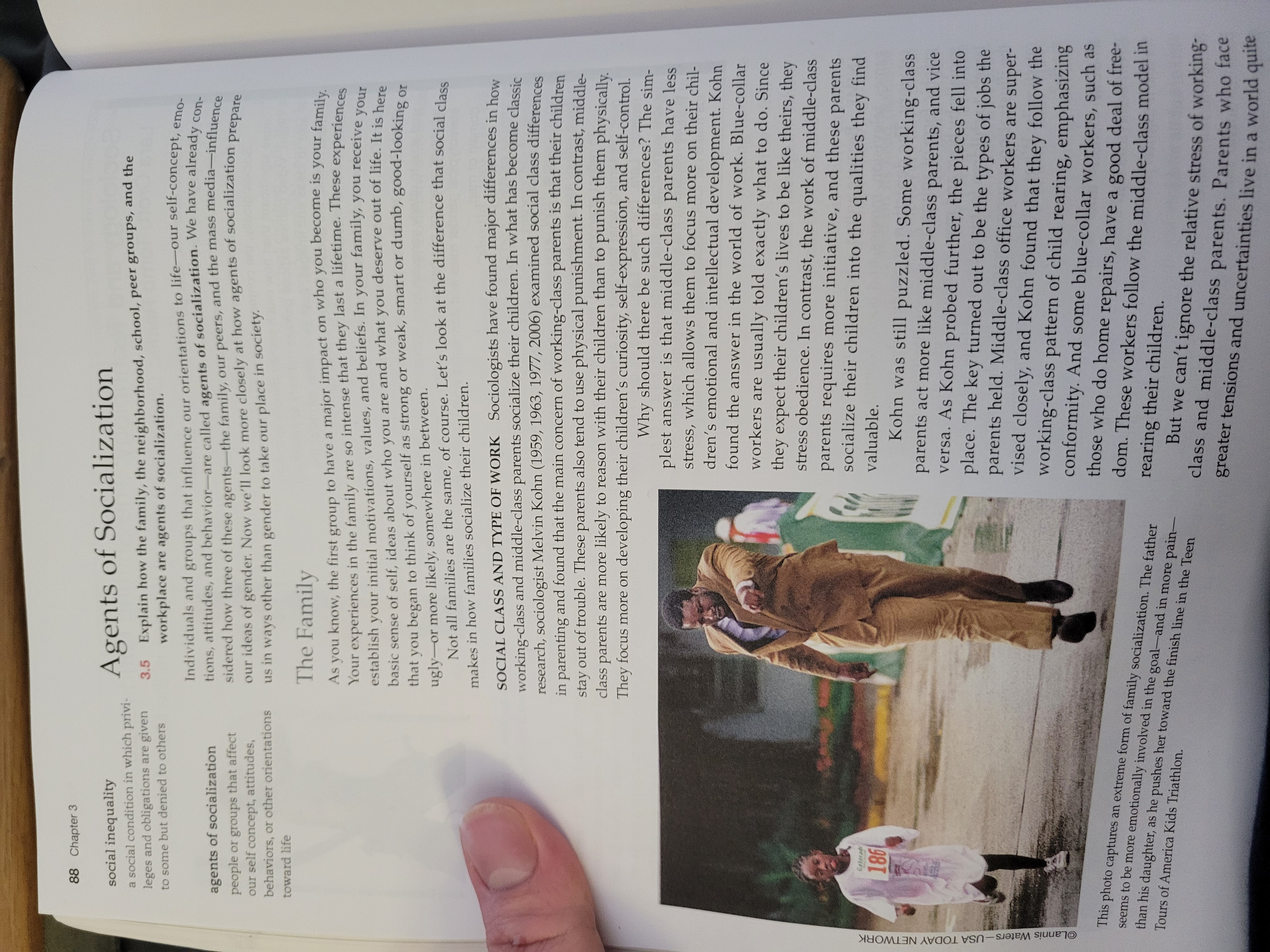
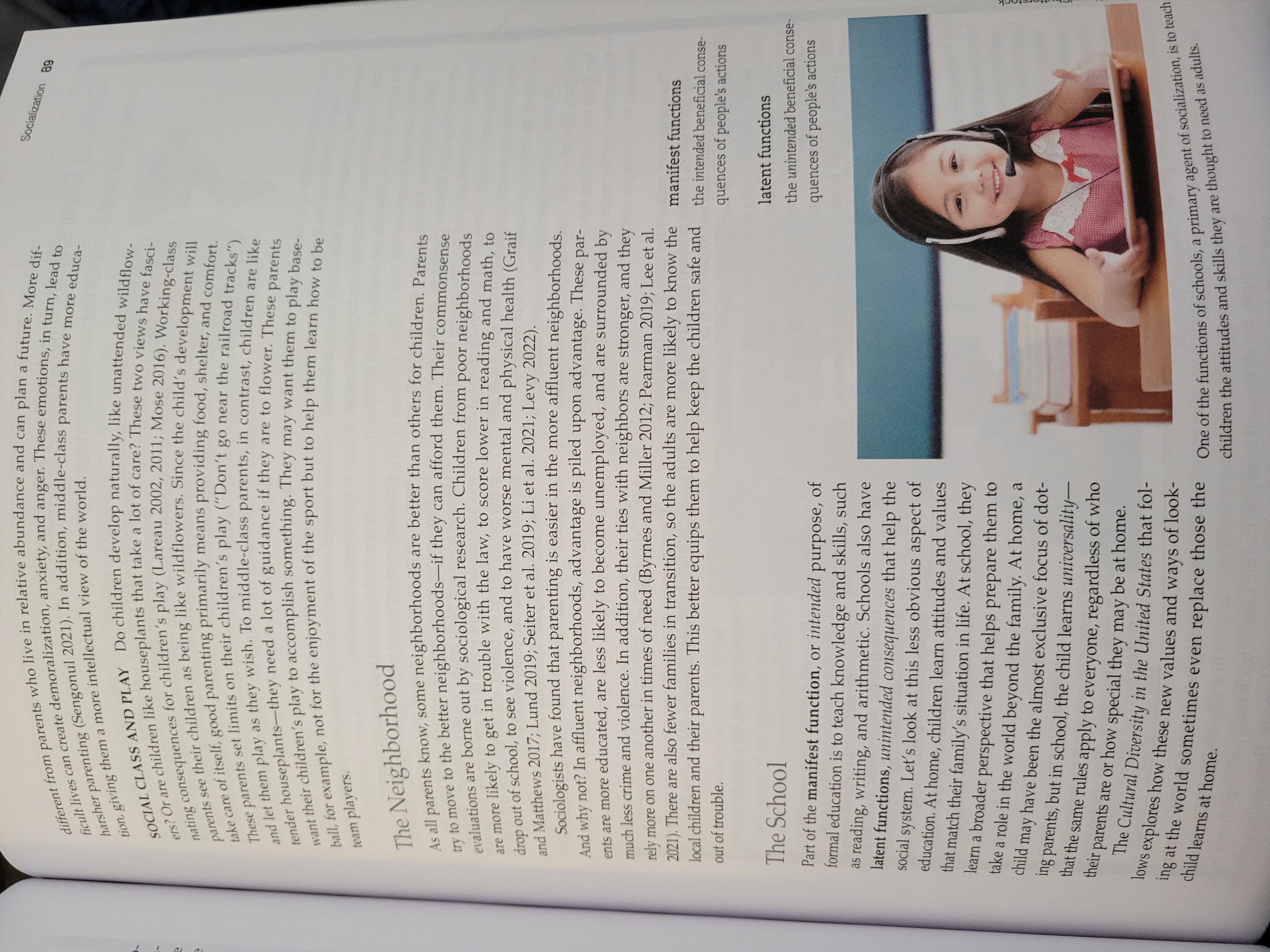
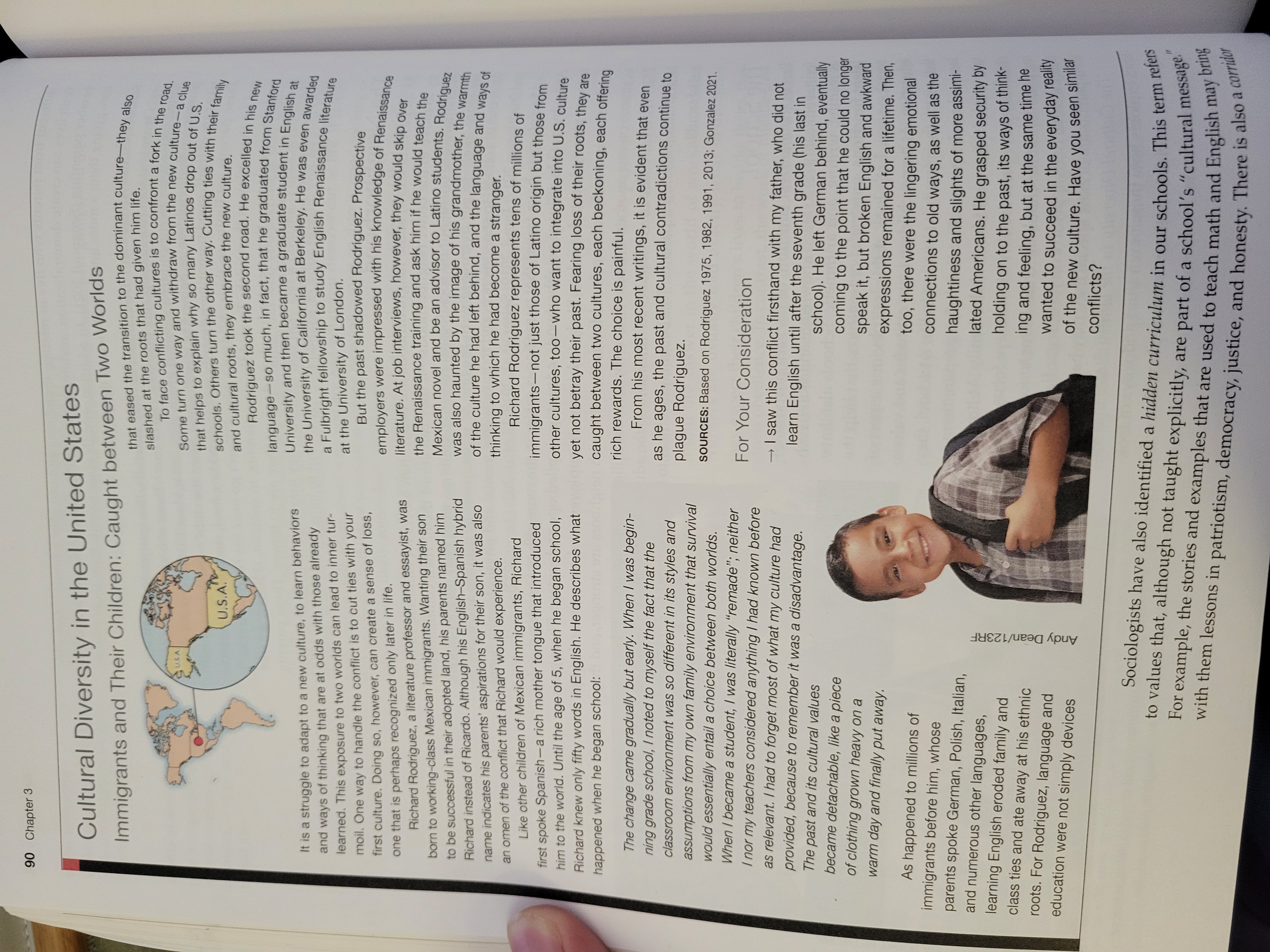
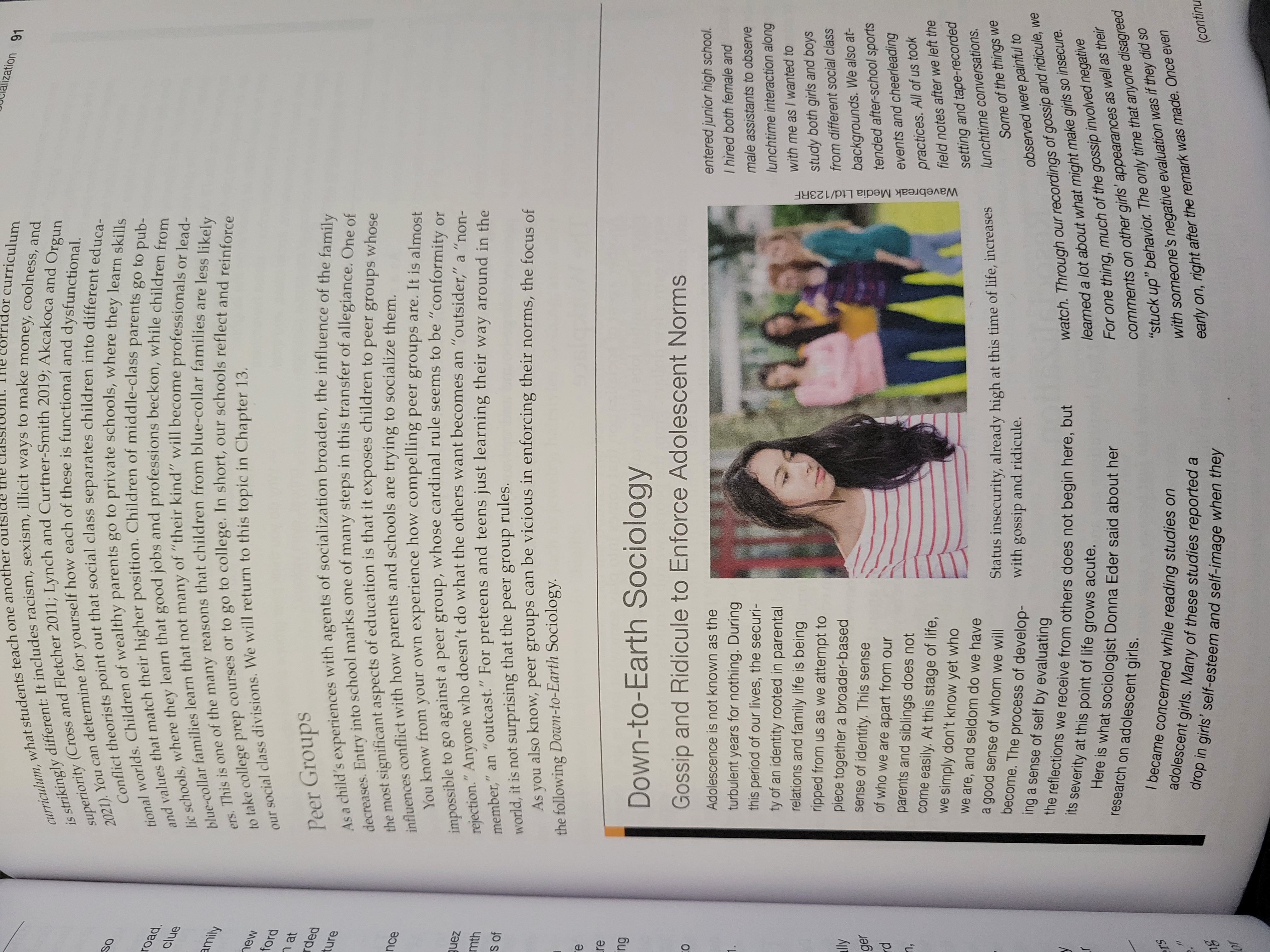
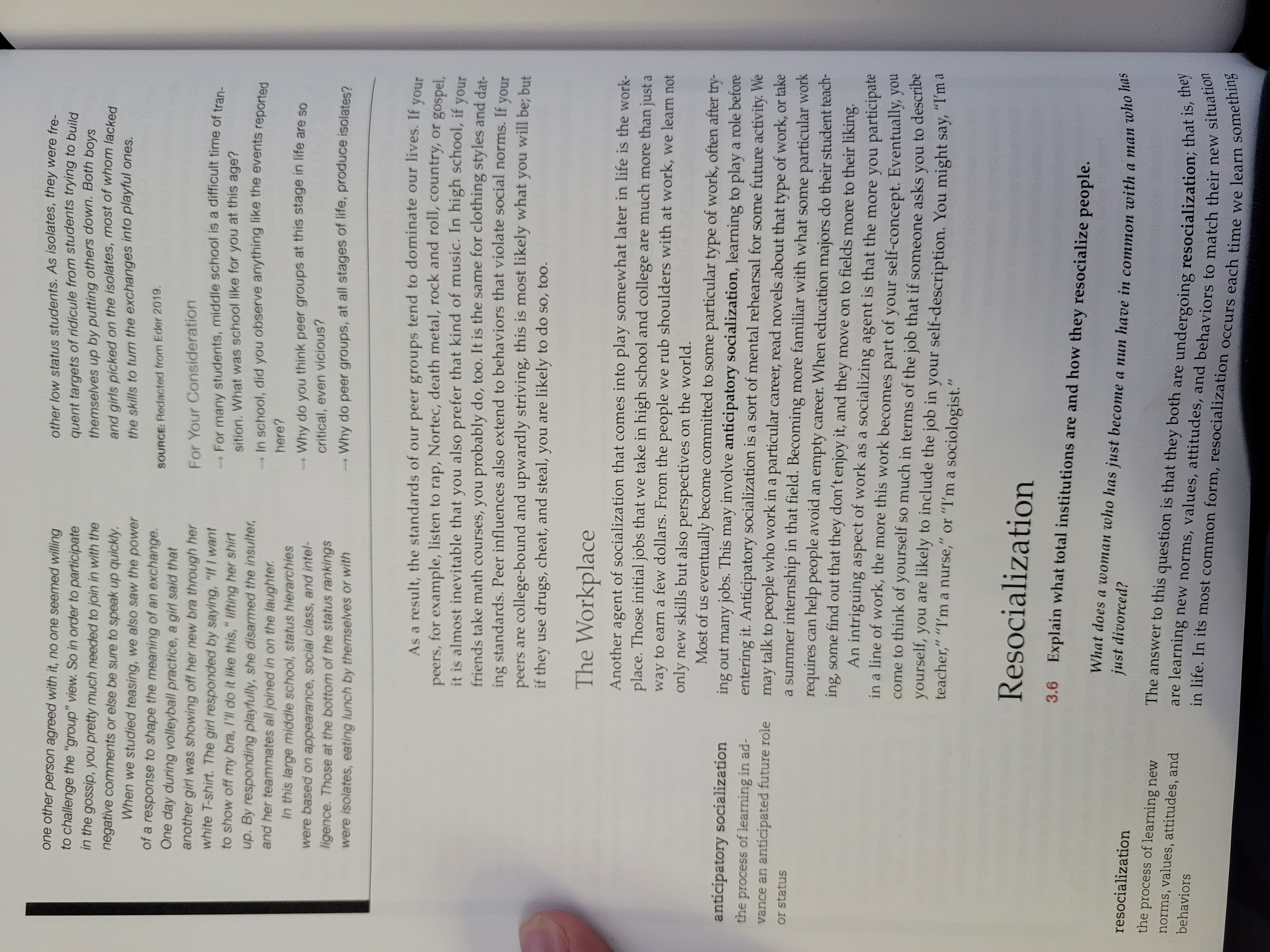
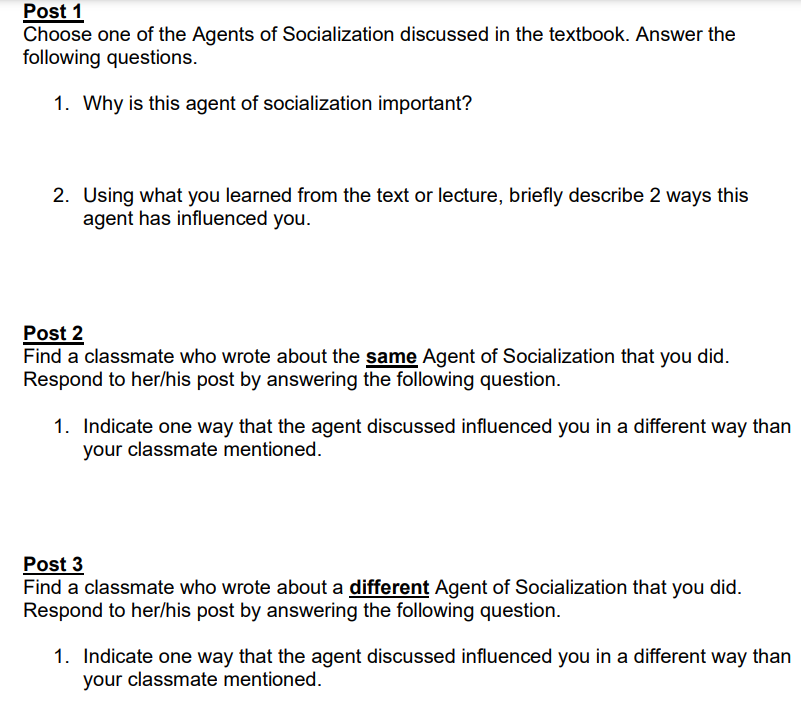
e expe rprise. WHAT WE FEEL el these Ameri- Joan, a U.S. woman who had been married for seven years, had no children. When she e Peru- finally gave birth and the doctor handed her a healthy girl, she was almost overcome with joy. Tafadzwa, in Zimbabwe, had been married for seven years and had no children. facial When the doctor handed her a healthy girl, she was almost overcome with sadness. hey are You can easily understand why the U.S. woman felt happy, but why did the woman in ns in a Zimbabwe feel sad? The effects of socialization on our emotions go much deeper than guid- re they ing how, where, and when we express our feelings. Socialization also affects what we feel. ce that In Zimbabwe culture, to not give birth to a boy lowers a woman's social status. It is even threat. considered a good reason for her husband to divorce her (Horwitz and Wakefield 2007:43). Researchers have also found that in some cultures people experience emotions that are absent in other cultures. For example, Oryian women in Bhubaneswar, India, feel e to do lajya, something close to shame. When a woman feels lajya, she extends her tongue out- sions- ward and downward and bites it between her teeth, her eyebrows rise, and her eyes widen, bulge, and cross (De Leersnyder et al. 2021). On a personal note, I once experienced an emotion that I have never felt since and for r apart waiting which there is no name, a feeling of awe at the first sight of my first born child. Evidently a exits, cultures select and name only some of the things we feel. RESEARCH NEEDED We need more research to discover which facial expressions, if any, are universal. Beyond the six that Ekman identified, what about the emotions of ll from confusion, despair, and helplessness? Or awe, exhilaration, remorse, empathy, sympathy, lee" in triumph, and defeat? How about disappointment and suspicion? We also need to com- S. men pare how cultures guide their members in how to express their feelings. How do "feeling ," they rules" differ by age, gender, social class, status, and race-ethnicity? xpress Society within Us: The Self and Emotions social as a Social Mirror s who en will If in a moment of intense frustration or out of a devilish desire to shock people, you wanted to tear off your clothes and run naked down the street, what would stop you? Upon more The answer is your socialization-society within you. onships Much of our socialization is intended to turn us into conforming members of society. close Socialization into the self and emotions is essential in this process, for both the self and our he set- emotions mold our behavior. Although we like to think that we are "free," consider for a It emo- moment some of the factors that influence how you act: the expectations of your friends and parents; of neighbors and teachers; classroom norms and college rules; city, state, erably and federal laws. Your experiences in society have resulted in a self that thinks along certain lines r early and feels particular emotions. This helps to keep you in line. Thoughts such as "Would I get kicked out of school?" and "What would my friends (parents) think if they found out?" represent an awareness of the self in relationship to others. So does the desire to avoid feelings of shame and embarrassment. Your social mirror, then-the result of your being socialized into a self and emotions-sets up effective internal controls over your behavior. In fact, socialization into self and emotions is so effective that some people feel embarrassed just thinking about running naked in public! IN SUM Socialization is essential for your development as a human being. From your interaction with others, you learn how to think, reason, and feel. The net result is the shaping of your behavior-including your thinking, morality, and emotions-according to cultural standards. This is what sociologists mean when they refer to society within you. Do you remember how we began this chapter-that society makes us human? Socialization into emotions is part of this process.88 Chapter 3 social inequality Agents of Socialization a social condition in which privi- leges and obligations are given 3.5 Explain how the family, the neighborhood, school, peer groups, and the to some but denied to others workplace are agents of socialization. Individuals and groups that influence our orientations to life-our self-concep concept, emo- agents of socialization tions, attitudes, and behavior-are called agents of socialization. We have already con- sidered how three of these agents-the family, our peers, and the mass media-influence people or groups that affect our self concept, attitudes, our ideas of gender. Now we'll look more closely at how agents of socialization prepare behaviors, or other orientations us in ways other than gender to take our place in society. toward life The Family As you know, the first group to have a major impact on who you become is your family. Your experiences in the family are so intense that they last a lifetime. These experiences establish your initial motivations, values, and beliefs. In your family, you receive your basic sense of self, ideas about who you are and what you deserve out of life. It is here that you began to think of yourself as strong or weak, smart or dumb, good-looking or ugly-or more likely, somewhere in between. Not all families are the same, of course. Let's look at the difference that social class makes in how families socialize their children. SOCIAL CLASS AND TYPE OF WORK Sociologists have found major differences in how working-class and middle-class parents socialize their children. In what has become classic research, sociologist Melvin Kohn (1959, 1963, 1977, 2006) examined social class differences in parenting and found that the main concern of working-class parents is that their children stay out of trouble. These parents also tend to use physical punishment. In contrast, middle- class parents are more likely to reason with their children than to punish them physically. They focus more on developing their children's curiosity, self-expression, and self-control. Why should there be such differences? The sim- plest answer is that middle-class parents have less stress, which allows them to focus more on their chil- dren's emotional and intellectual development. Kohn found the answer in the world of work. Blue-collar workers are usually told exactly what to do. Since they expect their children's lives to be like theirs, they stress obedience. In contrast, the work of middle-class parents requires more initiative, and these parents Galerad socialize their children into the qualities they find 186 valuable. Kohn was still puzzled. Some working-class parents act more like middle-class parents, and vice versa. As Kohn probed further, the pieces fell into Lannis Waters-USA TODAY NETWORK place. The key turned out to be the types of jobs the parents held. Middle-class office workers are super- vised closely, and Kohn found that they follow the working-class pattern of child rearing, emphasizing conformity. And some blue-collar workers, such as those who do home repairs, have a good deal of free- This photo captures an extreme form of family socialization. The father seems to be more emotionally involved in the goal-and in more pain- dom. These workers follow the middle-class model in than his daughter, as he pushes her toward the finish line in the Teen rearing their children. Tours of America Kids Triathlon. But we can't ignore the relative stress of working- class and middle-class parents. Parents who face greater tensions and uncertainties live in a world quitedifferent from parents who live in relative abundance and can plan a future. More dif- ficult lives can create demoralizetion, anxiety, and anger. These emotions, in turn, lead to Socialization harsher parenting (Sengonul 2021). In addition, middle-class parents have more educa- tion, giving them a more intellectual view of the world. SOCIAL CLASS AND PLAY Do children develop naturally, like unattended wildflow- ers? Or are children like houseplants that take a lot of care? These two views have fasci- nating consequences for children's play (Lareau 2002, 2011; Mose 2016). Working-class parents see their children as being like wildflowers. Since the child's development will take care of itself, good parenting primarily means providing food, shelter, and comfort. These parents set limits on their children's play ("Don't go near the railroad tracks") and let them play as they wish. To middle-class parents, in contrast, children are like tender houseplants-they need a lot of guidance if they are to flower. These parents want their children's play to accomplish something. They may want them to play base- ball, for example, not for the enjoyment of the sport but to help them learn how to be team players. The Neighborhood As all parents know, some neighborhoods are better than others for children. Parents try to move to the better neighborhoods-if they can afford them. Their commonsense evaluations are borne out by sociological research. Children from poor neighborhoods are more likely to get in trouble with the law, to score lower in reading and math, to drop out of school, to see violence, and to have worse mental and physical health (Graif and Matthews 2017; Lund 2019; Seiter et al. 2019; Li et al. 2021; Levy 2022). Sociologists have found that parenting is easier in the more affluent neighborhoods. And why not? In affluent neighborhoods, advantage is piled upon advantage. These par- ents are more educated, are less likely to become unemployed, and are surrounded by much less crime and violence. In addition, their ties with neighbors are stronger, and they rely more on one another in times of need (Byrnes and Miller 2012; Pearman 2019; Lee et al. 2021). There are also fewer families in transition, so the adults are more likely to know the manifest functions local children and their parents. This better equips them to help keep the children safe and the intended beneficial conse- out of trouble. quences of people's actions The School latent functions the unintended beneficial conse- Part of the manifest function, or intended purpose, of quences of people's actions formal education is to teach knowledge and skills, such as reading, writing, and arithmetic. Schools also have latent functions, unintended consequences that help the social system. Let's look at this less obvious aspect of education. At home, children learn attitudes and values that match their family's situation in life. At school, they learn a broader perspective that helps prepare them to take a role in the world beyond the family. At home, a child may have been the almost exclusive focus of dot- ing parents, but in school, the child learns universality- that the same rules apply to everyone, regardless of who their parents are or how special they may be at home. The Cultural Diversity in the United States that fol- lows explores how these new values and ways of look- ing at the world sometimes even replace those the child learns at home. One of the functions of schools, a primary agent of socialization, is to teach children the attitudes and skills they are thought to need as adults.90 Chapter 3 Cultural Diversity in the United States Immigrants and Their Children: Caught between Two Worlds that eased the transition to the dominant culture-they also slashed at the roots that had given him life. To face conflicting cultures is to confront a fork in the road. Some turn one way and withdraw from the new culture-a clue that helps to explain why so many Latinos drop out of U.S. schools. Others turn the other way. Cutting ties with their family and cultural roots, they embrace the new culture. Rodriguez took the second road. He excelled in his new language-so much, in fact, that he graduated from Stanford University and then became a graduate student in English at It is a struggle to adapt to a new culture, to learn behaviors the University of California at Berkeley. He was even awarded and ways of thinking that are at odds with those already a Fulbright fellowship to study English Renaissance literature learned. This exposure to two worlds can lead to inner tur- at the University of London. moil. One way to handle the conflict is to cut ties with your But the past shadowed Rodriguez. Prospective first culture. Doing so, however, can create a sense of loss, employers were impressed with his knowledge of Renaissance one that is perhaps recognized only later in life. literature. At job interviews, however, they would skip over Richard Rodriguez, a literature professor and essayist, was the Renaissance training and ask him if he would teach the born to working-class Mexican immigrants. Wanting their son to be successful in their adopted land, his parents named him Mexican novel and be an advisor to Latino students. Rodriguez Richard instead of Ricardo. Although his English-Spanish hybrid was also haunted by the image of his grandmother, the warmth name indicates his parents' aspirations for their son, it was also of the culture he had left behind, and the language and ways of thinking to which he had become a stranger. an omen of the conflict that Richard would experience. Like other children of Mexican immigrants, Richard Richard Rodriguez represents tens of millions of first spoke Spanish- a rich mother tongue that introduced immigrants- not just those of Latino origin but those from him to the world. Until the age of 5, when he began school, other cultures, too-who want to integrate into U.S. culture Richard knew only fifty words in English. He describes what yet not betray their past. Fearing loss of their roots, they are happened when he began school: caught between two cultures, each beckoning, each offering rich rewards. The choice is painful. The change came gradually but early. When I was begin- From his most recent writings, it is evident that even ning grade school, I noted to myself the fact that the as he ages, the past and cultural contradictions continue to classroom environment was so different in its styles and plague Rodriguez. assumptions from my own family environment that survival would essentially entail a choice between both worlds. SOURCES: Based on Rodriguez 1975, 1982, 1991, 2013; Gonzalez 2021. When I became a student, I was literally "remade"; neither I nor my teachers considered anything I had known before For Your Consideration as relevant. I had to forget most of what my culture had - I saw this conflict firsthand with my father, who did not provided, because to remember it was a disadvantage. learn English until after the seventh grade (his last in The past and its cultural values school). He left German behind, eventually became detachable, like a piece coming to the point that he could no longer of clothing grown heavy on a speak it, but broken English and awkward warm day and finally put away. expressions remained for a lifetime. Then, As happened to millions of too, there were the lingering emotional immigrants before him, whose connections to old ways, as well as the parents spoke German, Polish, Italian, haughtiness and slights of more assimi- and numerous other languages, lated Americans. He grasped security by learning English eroded family and holding on to the past, its ways of think- class ties and ate away at his ethnic Andy Dean/123RF ing and feeling, but at the same time he roots. For Rodriguez, language and wanted to succeed in the everyday reality education were not simply devices of the new culture. Have you seen similar conflicts? Sociologists have also identified a hidden curriculum in our schools. This term refers to values that, although not taught explicitly, are part of a school's "cultural message. For example, the stories and examples that are used to teach math and English may bring with them lessons in patriotism, democracy, justice, and honesty. There is also a corridorcurriculum, what students teach one another dor curriculum Clalization 91 is strikingly different: It includes racism, sexism, illicit ways to make money, coolness, and superiority (Cross and Fletcher 2011; Lynch and Curtner-Smith 2019; Akcakoca and Orgun 2021). You can determine for yourself how each of the ach of these is functional and dysfunctional. Conflict theorists point out that social class separates chi tes children into different educa- road. tional worlds. Children of wealthy parents go to private schools, where they learn skills clue and values that match their higher position. Children of middle-class parents go to pub- lic schools, where they learn that good jobs and professions beckon, while children from amily blue-collar families learn that not many of "their kind" will become professionals or lead- ers. This is one of the many reasons that children from blue-collar families are less likely lew to take college prep courses or to go to college. In short, our schools reflect and reinforce ford our social class divisions. We will return to this topic in Chapter 13. at ded Peer Groups cure As a child's experiences with agents of socialization broaden, the influence of the family decreases. Entry into school marks one of many steps in this transfer of allegiance. One of nce the most significant aspects of education is that it exposes children to peer groups whose influences conflict with how parents and schools are trying to socialize them. You know from your own experience how compelling peer groups are. It is almost dez impossible to go against a peer group, whose cardinal rule seems to be "conformity or th rejection. " Anyone who doesn't do what the others want becomes an "outsider," a "non- s of member," an "outcast. " For preteens and teens just learning their way around in the world, it is not surprising that the peer group rules. As you also know, peer groups can be vicious in enforcing their norms, the focus of the following Down-to-Earth Sociology. Down-to-Earth Sociology Gossip and Ridicule to Enforce Adolescent Norms Adolescence is not known as the entered junior high school. turbulent years for nothing. During I hired both female and this period of our lives, the securi- male assistants to observe ty of an identity rooted in parental lunchtime interaction along relations and family life is being with me as I wanted to ipped from us as we attempt to study both girls and boys piece together a broader-based from different social class sense of identity. This sense backgrounds. We also at- of who we are apart from our Wavebreak Media Ltd/123RF tended after-school sports parents and siblings does not events and cheerleading come easily. At this stage of life, practices. All of us took we simply don't know yet who field notes after we left the we are, and seldom do we have setting and tape-recorded a good sense of whom we will Status insecurity, already high at this time of life, increases lunchtime conversations. become. The process of develop- with gossip and ridicule. Some of the things we ng a sense of self by evaluating observed were painful to the reflections we receive from others does not begin here, but watch. Through our recordings of gossip and ridicule, we its severity at this point of life grows acute. learned a lot about what might make girls so insecure. Here is what sociologist Donna Eder said about her For one thing, much of the gossip involved negative research on adolescent girls. comments on other girls' appearances as well as their "stuck up" behavior. The only time that anyone disagreed I became concerned while reading studies on with someone's negative evaluation was if they did so adolescent girls. Many of these studies reported a early on, right after the remark was made. Once even drop in girls' self-esteem and self-image when they (continone other person agreed with it, no one seemed willing other low status students. As isolates, they were fre- to challenge the "group" view. So in order to participate quent targets of ridicule from students trying to build in the gossip, you pretty much needed to join in with the themselves up by putting others down. Both boys negative comments or else be sure to speak up quickly. and girls picked on the isolates, most of whom lacked When we studied teasing, we also saw the power the skills to turn the exchanges into playful ones. of a response to shape the meaning of an exchange. SOURCE: Redacted from Eder 2019. One day during volleyball practice, a girl said that another girl was showing off her new bra through her For Your Consideration white T-shirt. The girl responded by saying, "If I want For many students, middle school is a difficult time of tran- to show off my bra, I'll do it like this, " lifting her shirt sition. What was school like for you at this age? up. By responding playfully, she disarmed the insulter, - In school, did you observe anything like the events reported and her teammates all joined in on the laughter. here? In this large middle school, status hierarchies were based on appearance, social class, and intel- Why do you think peer groups at this stage in life are so ligence. Those at the bottom of the status rankings critical, even vicious? were isolates, eating lunch by themselves or with - Why do peer groups, at all stages of life, produce isolates? As a result, the standards of our peer groups tend to dominate our lives. If your peers, for example, listen to rap, Nortec, death metal, rock and roll, country, or gospel, it is almost inevitable that you also prefer that kind of music. In high school, if your friends take math courses, you probably do, too. It is the same for clothing styles and dat- ing standards. Peer influences also extend to behaviors that violate social norms. If your peers are college-bound and upwardly striving, this is most likely what you will be; but if they use drugs, cheat, and steal, you are likely to do so, too. The Workplace Another agent of socialization that comes into play somewhat later in life is the work- place. Those initial jobs that we take in high school and college are much more than just a way to earn a few dollars. From the people we rub shoulders with at work, we learn not only new skills but also perspectives on the world. Most of us eventually become committed to some particular type of work, often after try- anticipatory socialization ing out many jobs. This may involve anticipatory socialization, learning to play a role before the process of learning in ad- entering it. Anticipatory socialization is a sort of mental rehearsal for some future activity. We vance an anticipated future role may talk to people who work in a particular career, read novels about that type of work, or take or status a summer internship in that field. Becoming more familiar with what some particular work requires can help people avoid an empty career. When education majors do their student teach- ing, some find out that they don't enjoy it, and they move on to fields more to their liking. An intriguing aspect of work as a socializing agent is that the more you participate in a line of work, the more this work becomes part of your self-concept. Eventually, you come to think of yourself so much in terms of the job that if someone asks you to describe yourself, you are likely to include the job in your self-description. You might say, "I'm a teacher," "I'm a nurse," or "I'm a sociologist." Resocialization 3.6 Explain what total institutions are and how they resocialize people. resocialization just divorced? What does a woman who has just become a nun have in common with a man who has the process of learning new norms, values, attitudes, and The answer to this question is that they both are undergoing resocialization; that is, they behaviors are learning new norms, values, attitudes, and behaviors to match their new situation in life. In its most common form, resocialization occurs each time we learn somethingPost 1 Choose one of the Agents of Socialization discussed in the textbook. Answer the following questions. 1. Why is this agent of socialization important? 2. Using what you learned from the text or lecture, briefly describe 2 ways this agent has influenced you. Post 2 Find a classmate who wrote about the same Agent of Socialization that you did. Respond to her/his post by answering the following question. 1. Indicate one way that the agent discussed influenced you in a different way than your classmate mentioned. Post 3 Find a classmate who wrote about a different Agent of Socialization that you did. Respond to her/his post by answering the following question. 1. Indicate one way that the agent discussed influenced you in a different way than your classmate mentioned
Step by Step Solution
There are 3 Steps involved in it
1 Expert Approved Answer
Step: 1 Unlock
Question Has Been Solved by an Expert!
Get step-by-step solutions from verified subject matter experts
Step: 2 Unlock
Step: 3 Unlock
Students Have Also Explored These Related Sociology Questions!









 Study Help