







Question: E ( X ) / ( M ) E ( M 2 ) / ( P ) ( C ) / ( B ) (
EXMEMPCBT
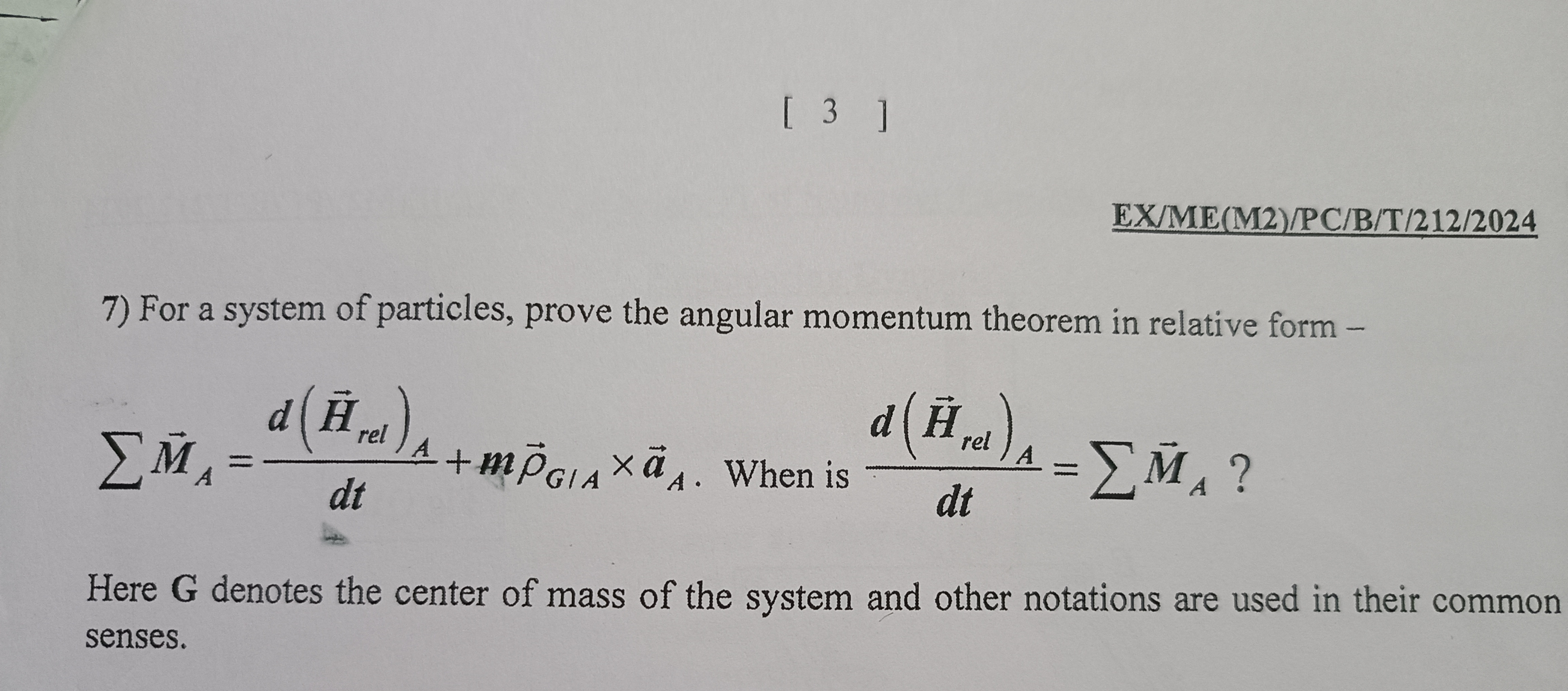
For a system of particles, prove the angular momentum theorem in relative form
sum vecMAdvecHrelAdtmvecrho GAtimes vecaA When is dvecHrelAdtsum vecMA
Here G denotes the center of mass of the system and other notations are used in their common
senses
Step by Step Solution
There are 3 Steps involved in it
1 Expert Approved Answer
Step: 1 Unlock

Question Has Been Solved by an Expert!
Get step-by-step solutions from verified subject matter experts
Step: 2 Unlock
Step: 3 Unlock
 Study Help