



Question: E8-8 Recording and Reporting Allowance for Doubtful Accounts Using the Percentage of Credit Sales and Aging of Accounts Receivable Methods [LO 8-2] Innovative Tech Inc.
![of Credit Sales and Aging of Accounts Receivable Methods [LO 8-2] Innovative](https://dsd5zvtm8ll6.cloudfront.net/si.experts.images/questions/2024/09/66ea993d0dd59_68466ea993c9e227.jpg)
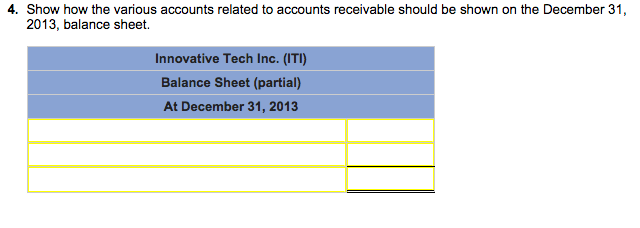
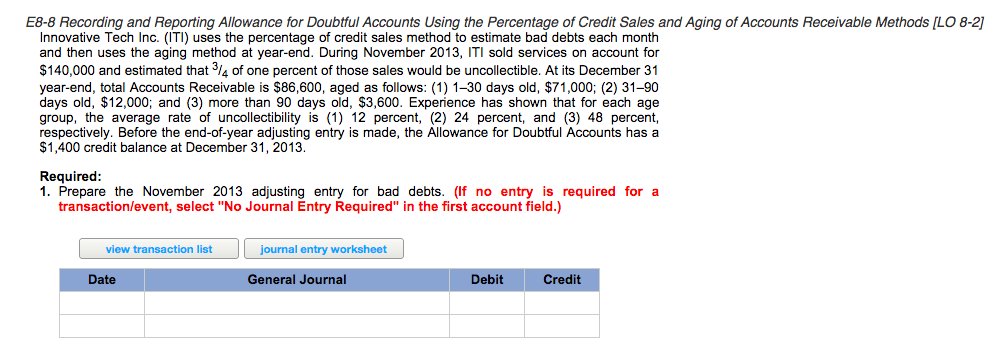
E8-8 Recording and Reporting Allowance for Doubtful Accounts Using the Percentage of Credit Sales and Aging of Accounts Receivable Methods [LO 8-2] Innovative Tech Inc. (ITI) uses the percentage of credit sales method to estimate bad debts each month and then uses the aging method at year-end. During November 2013, ITI sold services on account for $140,000 and estimated that 3/4 of one percent of those sales would be uncollectible. At its December 31 year-end, total Accounts Receivable is $86,600, aged as follows: (1) 1-30 days old, $71,000; (2) 31-90 days old, $12,000; and (3) more than 90 days old, $3,600. Experience has shown that for each age group, the average rate of uncollectibility is (1) 12 percent, (2) 24 percent, and (3) 48 percent, respectively. Before the end-of-year adjusting entry is made, the Allowance for Doubtful Accounts has a $1,400 credit balance at December 31, 2013. Required: 1. Prepare the November 2013 adjusting entry for bad debts. (If no entry is required for a Transaction/ event, select No Journal Entry Required in the first account field.) 2. Prepare a schedule to estimate an appropriate year-end balance for the Allowance for Doubtful Accounts. 3. Prepare the December 31, 2013, adjusting entry. (If no entry is required for a transaction/event, select No Journal Entry Required in the first account field.) 4. Show how the various accounts related to accounts receivable should be shown on the December 31, 2013, balance sheet
Step by Step Solution
There are 3 Steps involved in it

Get step-by-step solutions from verified subject matter experts