







Question: eBook Problem Walk-Through Stock Xhes a 10.0% expected return, a beta coefficient of 0.9, and a 30% standard deviation of expected returns. Stock Y has
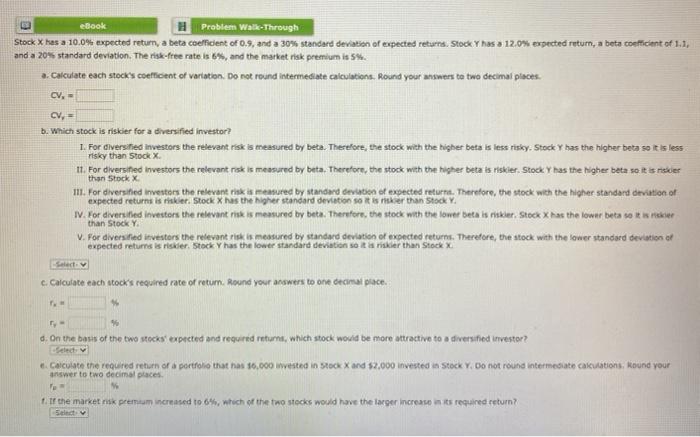
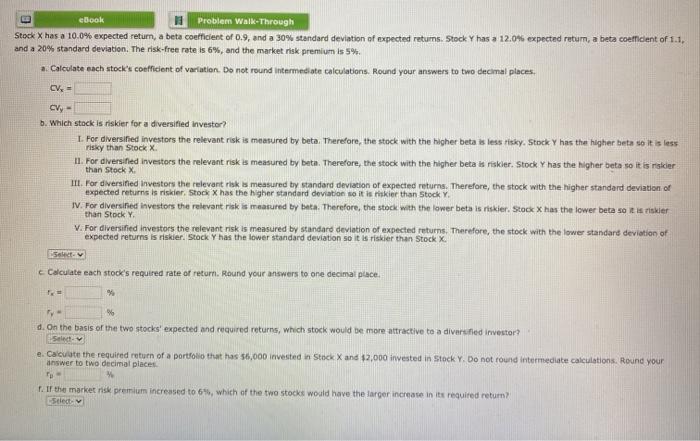
eBook Problem Walk-Through Stock Xhes a 10.0% expected return, a beta coefficient of 0.9, and a 30% standard deviation of expected returns. Stock Y has a 12,0% expected return, a beta coeficient of 1.), and a 20% standard deviation. The risk-free rate is 6%, and the market risk premium is 5%. Calculate each stock's coefficient of variation. Do not round intermediate calculations. Round your answers to two decimal places CV, - CV, - b. Which stock is riskier for a diversified investor? 1. For diversified investors the relevant risk is measured by beta. Therefore, the stock with the higher beta is less risky Stock Y has the higher beta so it is less risky than Stock X 11. For diversified investors the relevant risk is measured by beta. Therefore, the stock with the higher detais riskier. Stock Y has the higher beta so it's rider 11. For diversified investors the relevane rask is measured by standard dewoon of expected returre. Therefore, the stock with the higher standard deviation of the higher so IV. For diversified investors the relevant risk is measured by beta. Therefore, the stock with the lower Detais riskler, Stock x has the lower beta so it is nice than Stock Y V. For diversified investors the relevant risk is measured by standard deviation of expected returns. Therefore, the stock with the lower standard deviation of than Stock X Select c. Calculate each stock's required rate of retum. Round your answers to one decimat place d. On the basis of the two stocks expected and required returns, which stock wovid be more attractive to a diversified investor e. Carculate the required return of a portfolio that has 80.000 wested in stock X and $2,000 invested in stock Y. Do not round intermediate calculations, kound your answer to two decimal places 1. If the market risk premium increased to 6%, which of the two stocks would have the larger increase in its required return? Select cbook Problem Walk Through Stock X has a 10.0% expected return, a beta coefficient of 0.9, and a 30% standard deviation of expected returns Stock Y has a 12.0% expected return, abeta coefficient of 1.1, and a 20% standard deviation. The risk-free rate is 6%, and the market risk premium is 5% 2. Calculate each stock's coefficient of variation. Do not round Intermediate calculations. Round your answers to two decimal places. CV CV- b. Which stock is risker for a diversified investor? I For diversified investors the relevant risk is measured by beta. Therefore, the stock with the higher beta is less risky Stock Y has the higher beta so it is less risky than Stock X 11. For diversified investors the relevant risk is measured by beta. Therefore, the stock with the higher betais riskler. Stock Y has the higher beta so it is riskler than Stock X III. For diversified Investors the relevant rok is measured by standard deviation of expected returne, Therefore, the stock with the higher standard deviation of expected returns is riskier, Stock X has the higher standard deviation so it is iskier than Stock Y. IV. For diversi ed investors the relevant rok is meatured by beta. Therefore, the stock with the lower betais riskler. Stock X has the lower beta so it is rinkler than Stock Y. V. For diversified investors the relevant risk is measured by standard deviation of expected returns, Therefore, the stock with the lower standard deviation of expected returns is niskier. Stock Y has the lower standard deviation so it is riskier than Stock IFSAlery c Calculate each stock's required rate of return. Round your answers to one decimal place, % Ty * d. On the basis of the two stocks' expected and required returns, which stock would be more attractive to a diversified investor? Select e. Calculate the required return of a portfolio that has 56,000 invested in Stock X and $2,000 invested in Stock Y. Do not found intermediate calculations. Round your answer to two decimal places F. If the market nike premium increased to 6%, which of the two stocks would have the larger increase in its required return Select
Step by Step Solution
There are 3 Steps involved in it

Get step-by-step solutions from verified subject matter experts
 Study Help