







Question: ect Section Date Name CONCEPTUAL PHYSICAL SCIENCE Activity Wave Mechanics Simulation Waves and Sound Water Waves in an Electric Sink Purpose To observe and control
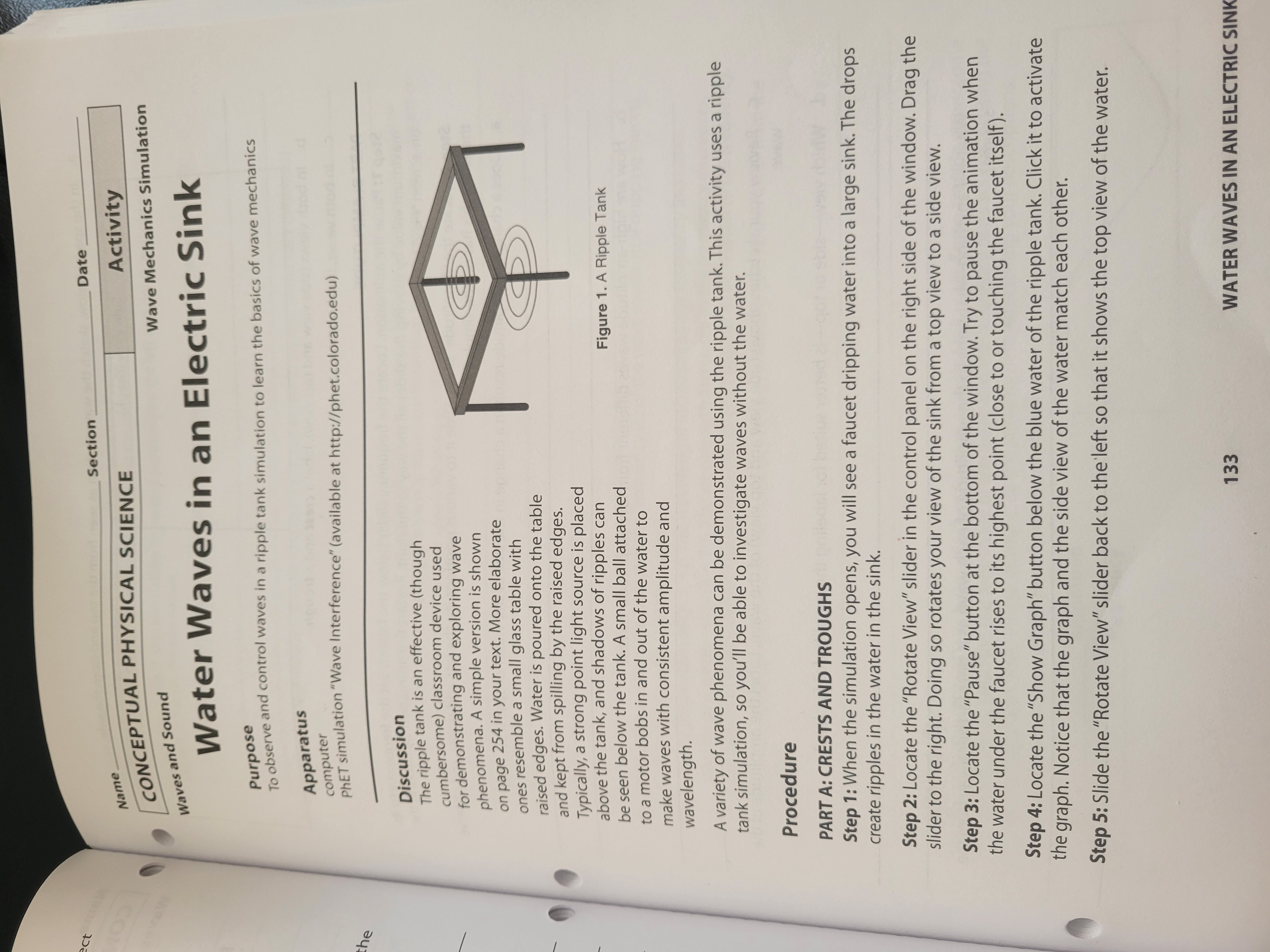
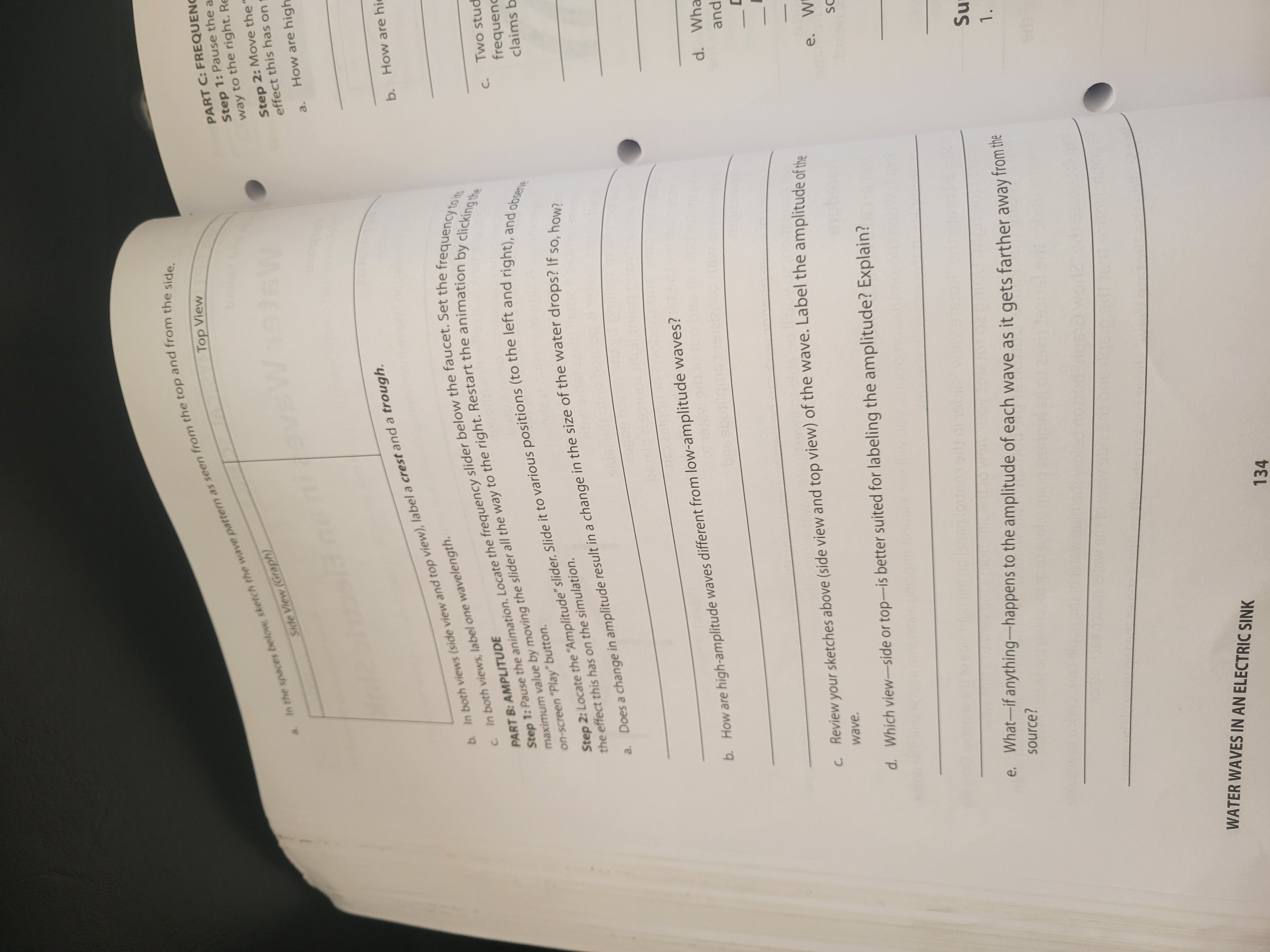
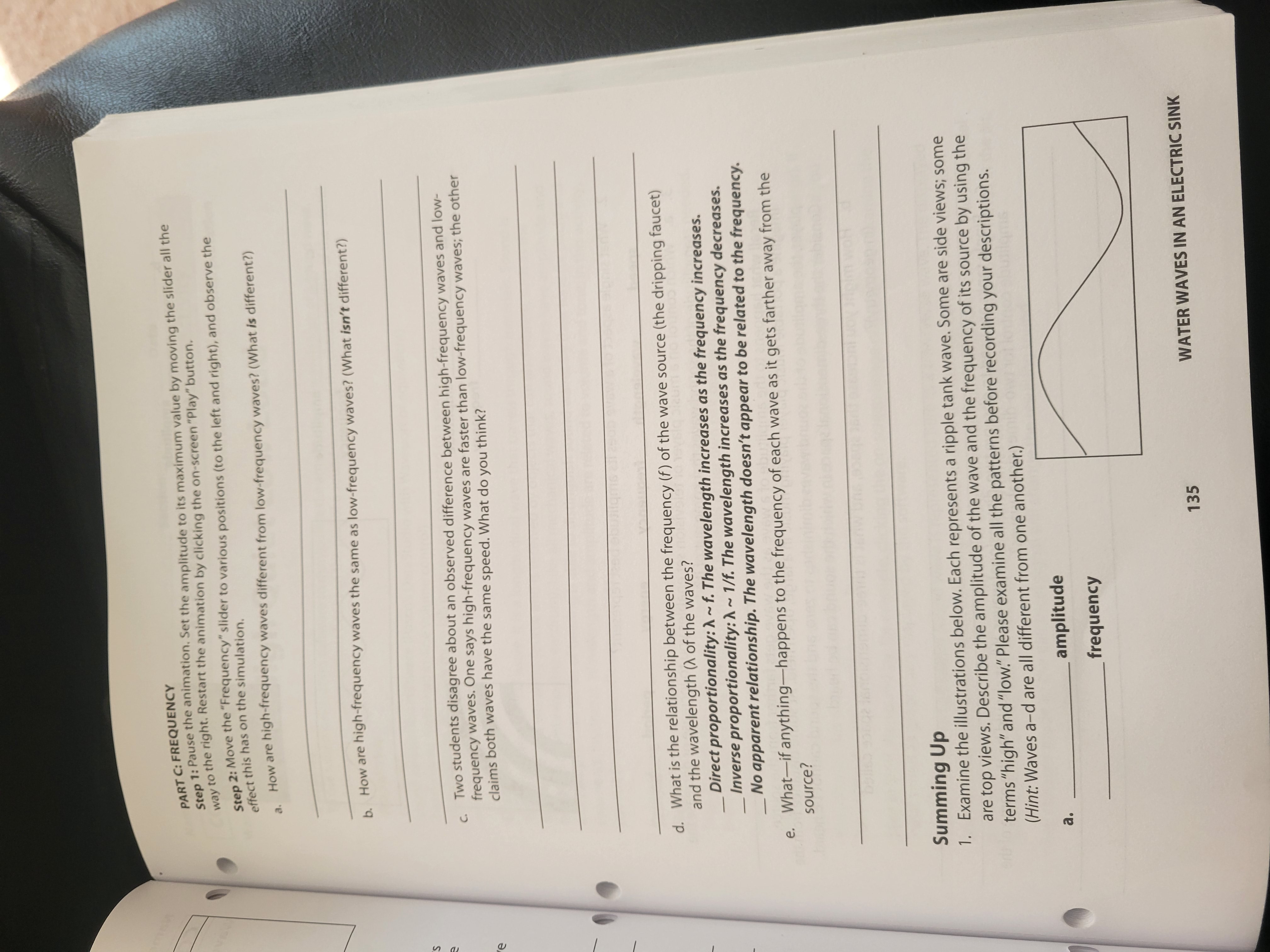
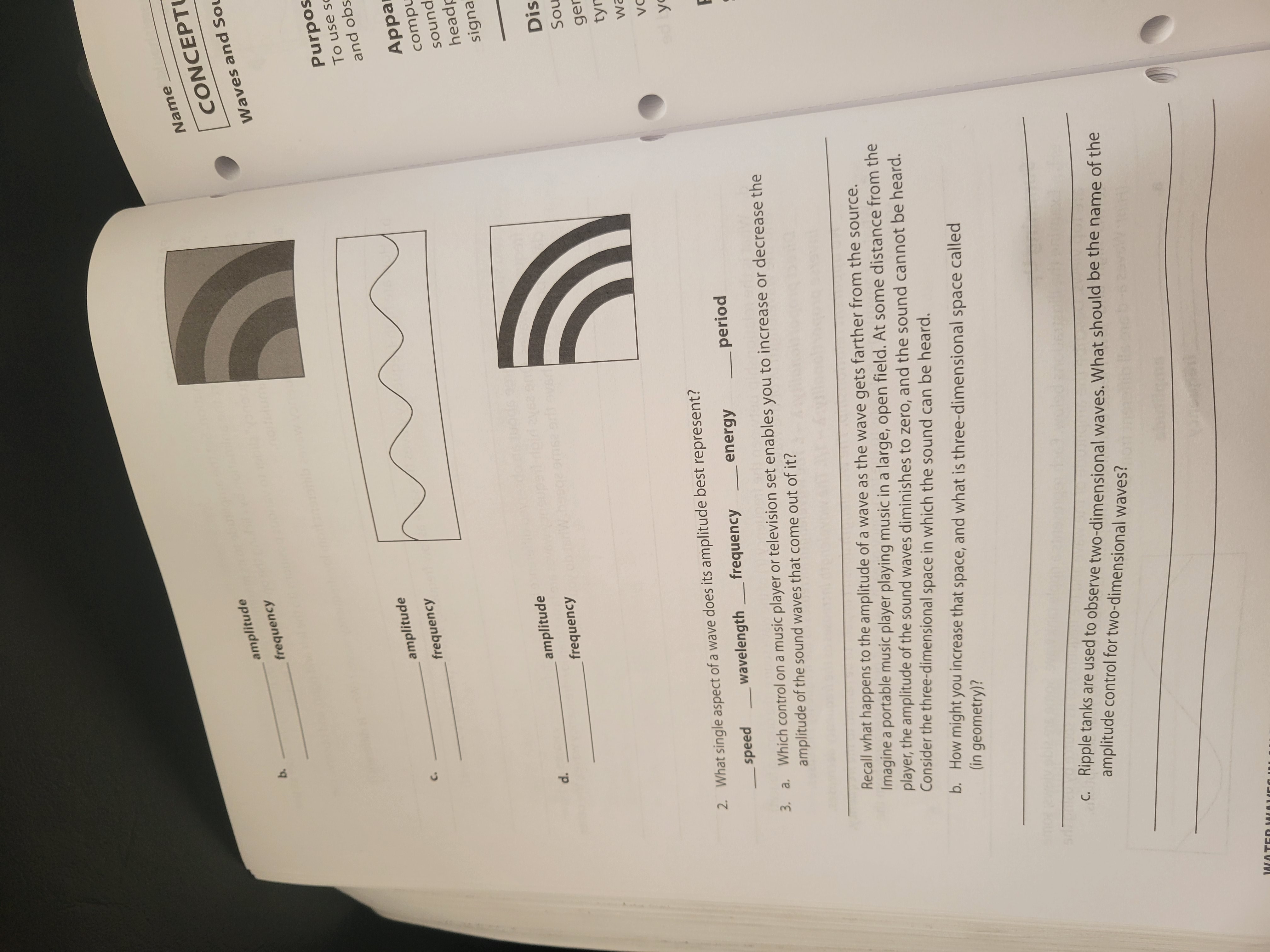
ect Section Date Name CONCEPTUAL PHYSICAL SCIENCE Activity Wave Mechanics Simulation Waves and Sound Water Waves in an Electric Sink Purpose To observe and control waves in a ripple tank simulation to learn the basics of wave mechanics Apparatus computer PhET simulation "Wave Interference" (available at http://phet.colorado.edu) Discussion The ripple tank is an effective (though cumbersome) classroom device used for demonstrating and exploring wave phenomena. A simple version is shown on page 254 in your text. More elaborate ones resemble a small glass table with raised edges. Water is poured onto the table and kept from spilling by the raised edges. Typically, a strong point light source is placed above the tank, and shadows of ripples can be seen below the tank. A small ball attached Figure 1. A Ripple Tank to a motor bobs in and out of the water to make waves with consistent amplitude and wavelength. A variety of wave phenomena can be demonstrated using the ripple tank. This activity uses a ripple tank simulation, so you'll be able to investigate waves without the water. Procedure PART A: CRESTS AND TROUGHS Step 1: When the simulation opens, you will see a faucet dripping water into a large sink. The drops create ripples in the water in the sink. Step 2: Locate the "Rotate View" slider in the control panel on the right side of the window. Drag the slider to the right. Doing so rotates your view of the sink from a top view to a side view. Step 3: Locate the "Pause" button at the bottom of the window. Try to pause the animation when the water under the faucet rises to its highest point (close to or touching the faucet itself). Step 4: Locate the "Show Graph" button below the blue water of the ripple tank. Click it to activate the graph. Notice that the graph and the side view of the water match each other. Step 5: Slide the "Rotate View" slider back to the left so that it shows the top view of the water. 133 WATER WAVES IN AN ELECTRIC SINKin the spaces below, sketch the wave pattern as seen from the top and from the sir Top View a PART C: FREQUEN Side View (Graph) Step 1: Pause the way to the right. R Step 2: Move the effect this has on a. How are high b. In both views (side view and top view), label a crest and a trough. C. In both views, label one wavelength. b. How are h PART B: AMPLITUDE 1: Pause the animation. Locate the frequency slider below the faucet. set the frequency to maximum value by moving the slider all the way to the right. Restart the animation by clickingits on-screen "Play" button. yep 2: Locate the "Amplitude" slider. Slide it to various positions (to the left and right), and obse C. Two stu frequen the effect this has on the simulation. a. Does a change in amplitude result in a change in the size of the water drops? If so, how? claims b b. How are high-amplitude waves different from low-amplitude waves? d. Wha and wave. Review your sketches above (side view and top view) of the wave. Label the amplitude of the d. Which view-side or top-is better suited for labeling the amplitude? Explain? e. w source? e. What-if anything-happens to the amplitude of each wave as it gets farther away from the Su 1 . WATER WAVES IN AN ELECTRIC SINK 134PART C: FREQUENCY Step 1: Pause the animation. Set the amplitude to its maximum value by moving the slider all the way to the right. Restart the animation by clicking the on-screen "Play" button. Step 2: Move the "Frequency" slider to various positions (to the left and right), and observe the effect this has on the simulation. a. How are high-frequency waves different from low-frequency waves? (What is different?) b. How are high-frequency waves the same as low-frequency waves? (What isn't different?) c. Two students disagree about an observed difference between high-frequency waves and low- frequency waves. One says high-frequency waves are faster than low-frequency waves; the other claims both waves have the same speed. What do you think? d. What is the relationship between the frequency (f) of the wave source (the dripping faucet) and the wavelength () of the waves? Direct proportionality: ) ~ f. The wavelength increases as the frequency increases. Inverse proportionality: ) ~ 1/f. The wavelength increases as the frequency decreases. No apparent relationship. The wavelength doesn't appear to be related to the frequency. e. What-if anything-happens to the frequency of each wave as it gets farther away from the source? Summing Up 1. Examine the illustrations below. Each represents a ripple tank wave. Some are side views; some are top views. Describe the amplitude of the wave and the frequency of its source by using the terms "high" and "low." Please examine all the patterns before recording your descriptions. (Hint: Waves a-d are all different from one another.) a. amplitude frequency 135 WATER WAVES IN AN ELECTRIC SINKName amplitude CONCEPT b. frequency Waves and So Purpos To use s amplitude C. and obs frequency Appa comp sound head amplitude signa d frequency Dis SOL ge tyr Wa 2. What single aspect of a wave does its amplitude best represent? speed y wavelength _ frequency energy period 3. a. Which control on a music player or television set enables you to increase or decrease the amplitude of the sound waves that come out of it? Recall what happens to the amplitude of a wave as the wave gets farther from the source. Imagine a portable music player playing music in a large, open field. At some distance from the player, the amplitude of the sound waves diminishes to zero, and the sound cannot be heard. Consider the three-dimensional space in which the sound can be heard. (in geometry)? b. How might you increase that space, and what is three-dimensional space called c. Ripple tanks are used to observe two-dimensional waves. What should be the name of the amplitude control for two-dimensional waves
Step by Step Solution
There are 3 Steps involved in it

Get step-by-step solutions from verified subject matter experts
 Study Help