







Question: Eileen Murphy often cared for her elderly neighbor, Thomas Kenney. He paid her $ 2 5 per day for her help and once gave her
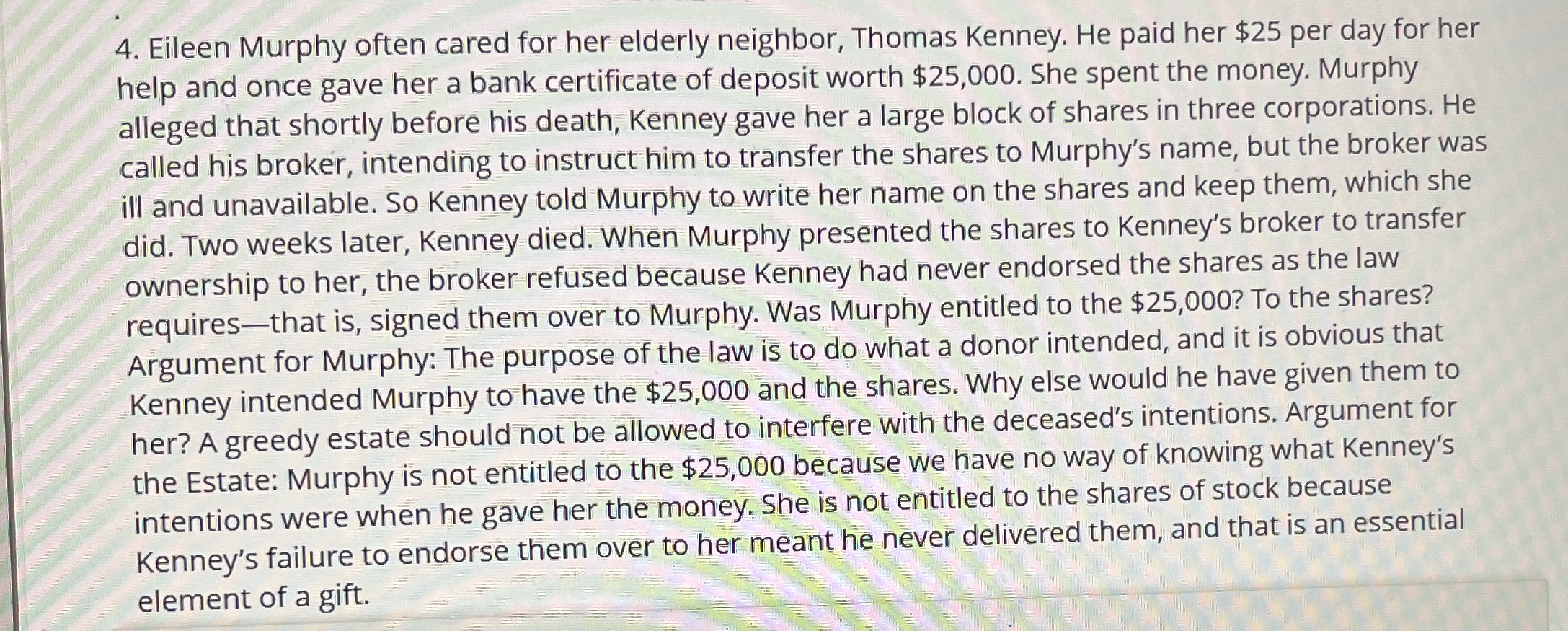
Eileen Murphy often cared for her elderly neighbor, Thomas Kenney. He paid her $ per day for her help and once gave her a bank certificate of deposit worth $ She spent the money. Murphy alleged that shortly before his death, Kenney gave her a large block of shares in three corporations. He called his broker, intending to instruct him to transfer the shares to Murphy's name, but the broker was ill and unavailable. So Kenney told Murphy to write her name on the shares and keep them, which she did. Two weeks later, Kenney died. When Murphy presented the shares to Kenney's broker to transfer ownership to her, the broker refused because Kenney had never endorsed the shares as the law requiresthat is signed them over to Murphy. Was Murphy entitled to the $ To the shares? Argument for Murphy: The purpose of the law is to do what a donor intended, and it is obvious that Kenney intended Murphy to have the $ and the shares. Why else would he have given them to her? A greedy estate should not be allowed to interfere with the deceased's intentions. Argument for the Estate: Murphy is not entitled to the $ because we have no way of knowing what Kenney's intentions were when he gave her the money. She is not entitled to the shares of stock because Kenney's failure to endorse them over to her meant he never delivered them, and that is an essential element of a gift.Eileen Murphy often cared for her elderly neighbor, Thomas Kenney. He paid her $ per day for her help and once gave her a bank certificate of deposit worth $ She spent the money. Murphy alleged that shortly before his death, Kenney gave her a large block of shares in three corporations. He called his broker, intending to instruct him to transfer the shares to Murphy's name, but the broker was ill and unavailable. So Kenney told Murphy to write her name on the shares and keep them, which she did. Two weeks later, Kenney died. When Murphy presented the shares to Kenney's broker to transfer ownership to her, the broker refused because Kenney had never endorsed the shares as the law requiresthat is signed them over to Murphy. Was Murphy entitled to the $ To the shares? Argument for Murphy: The purpose of the law is to do what a donor intended, and it is obvious that Kenney intended Murphy to have the $ and the shares. Why else would he have given them to her? A greedy estate should not be allowed to interfere with the deceased's intentions. Argument for the Estate: Murphy is not entitled to the $ because we have no way of knowing what Kenney's intentions were when he gave her the money. She is not entitled to the shares of stock because Kenney's failure to endorse them over to her meant he never delivered them, and that is an essential element of a gift.
Step by Step Solution
There are 3 Steps involved in it
1 Expert Approved Answer
Step: 1 Unlock

Question Has Been Solved by an Expert!
Get step-by-step solutions from verified subject matter experts
Step: 2 Unlock
Step: 3 Unlock
 Study Help