







Question: Energy International (El), a multinational organization, proposed the setting up of the Kaup power plant on the western coast of India in the state
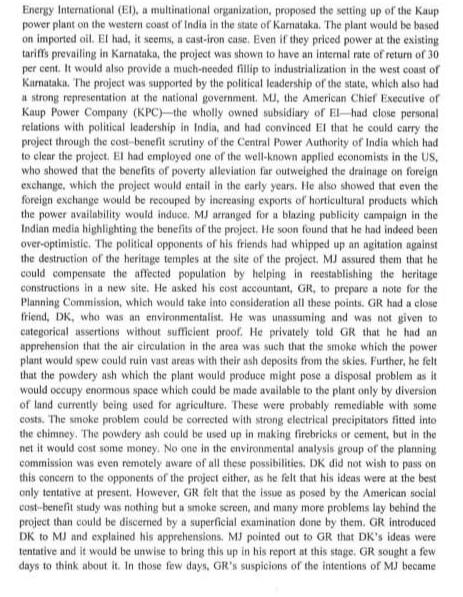
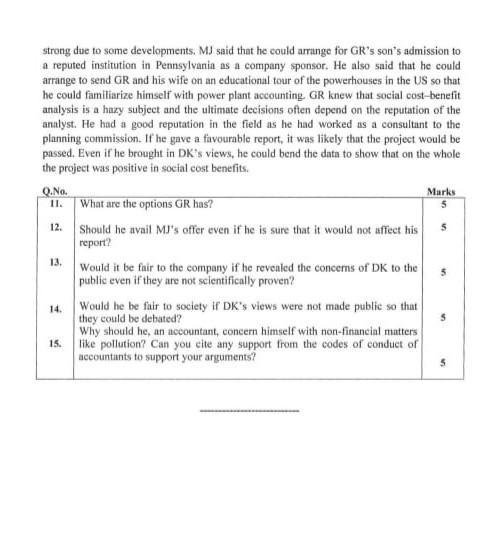
Energy International (El), a multinational organization, proposed the setting up of the Kaup power plant on the western coast of India in the state of Karmataka. The plant would be based on imported oil. El had, it seems, a cast-iron case. Even if they priced power at the existing tariffs prevailing in Karnataka, the project was shown to have an internal rate of return of 30 per cent. It would also provide a much-needed fillip to industrialization in the west coast of Kurmataka. The project was supported by the political leadership of the state, which also had a strong representation at the national government. MJ, the American Chief Executive of Kaup Power Company (KPC)-the wholly owned subsidiary of El-had close personal relations with political leadership in India, and had convinced El that he could carry the project through the cost-benefit serutiny of the Central Power Authority of India which had to clear the project. El had employed one of the well-known applied economists in the US, who showed that the benefits of poverty alleviation far outweighed the drainage on foreign exchange, which the project would entail in the carly years. He also showed that even the foreign exchange would be recouped by inereasing exports of horticultural products which the power availability would induce. MJ arranged for a blazing publicity campaign in the Indian media highlighting the benefits of the project, He soon found that he had indeed been over-optimistic. The political opponents of his friends had whipped up an agitation against the destruction of the heritage temples at the site of the project, MJ assured them that he could compensate the affected population by helping in reestablishing the heritage constructions in a new site. He asked his cost accountant, GR, to prepare a note for the Planning Commission, which would take into consideration all these points. GR had a close friend, DK, who was an environmentalist. He was unassuming and was not given to categorical assertions without sufficient proof. He privately told GR that he had an apprehension that the air circulation in the area was such that the smoke which the power plant would spew could ruin vast areas with their ash deposits from the skies. Further, he felt that the powdery ash which the plant would produce might pose a disposal problem as it would occupy enormous space which could be made available to the plant only by diversion of land currently being used for agriculture. These were probably remediable with some costs. The smoke problem could be corrected with strong electrical precipitators fitted into the chimney. The powdery ash could be used up in making firebricks or cement, but in the net it would cost some money. No one in the environmental analysis group of the planning commission was even remotely aware of all these possibilities. DK did not wish to pass on this concern to the opponents of the project either, as he felt that his ideas were at the best only tentative at present, However, GR felt that the issue as posed by the American social cost-benefit study was nothing but a smoke screen, and many more problems lay behind the project than could be discerned by a superficial examination done by them. GR introduced DK to MJ and explained his apprehensions. MJ pointed out to GR that DK's ideas were tentative and it would be unwise to bring this up in his report at this stage. GR sought a few. days to think about it. In those few days, GR's suspicions of the intentions of MJ became strong due to some developments. MJ said that he could arraunge for GR's son's admission to a reputed institution in Pennsylvania as a company sponsor. He also said that he could arrange to send GR and his wife on an educational tour of the powerhouses in the US so that he could familiarize himself with power plant accounting. GR knew that social cost-benefit analysis is a hazy subject and the ultimate decisions often depend on the reputation of the analyst. He had a good reputation in the field as he had worked as a consultant to the planning commission. If he gave a favourable report, it was likely that the project would be passed. Even if he brought in DK's views, he could bend the data to show that on the whole the project was positive in social cost benefits. Q.No. What are the options GR has? Marks I. 12. Should he avail MJ's offer even if he is sure that it would not affect his report? 13. Would it be fair to the company if he revenled the concerns of DK to the public even if they are not scientifically proven? 14. Would he be fair to society if DK's views were not made public so that Why should he, an accountant, concern himself with non-financial matters like pollution? Can you cite any support from the codes of conduct of accountants to support your arguments? 15.
Step by Step Solution
3.36 Rating (159 Votes )
There are 3 Steps involved in it
1 GR has the option of either availing MJs offer or declining it He may also choose to reveal the co... View full answer

Get step-by-step solutions from verified subject matter experts
 Study Help