



Question: Engineering Ethics the naussbaum is at the end Read the following case study and answer the questions which follow: Robin's firm operates a large pineapple
Engineering Ethics
the naussbaum is at the end
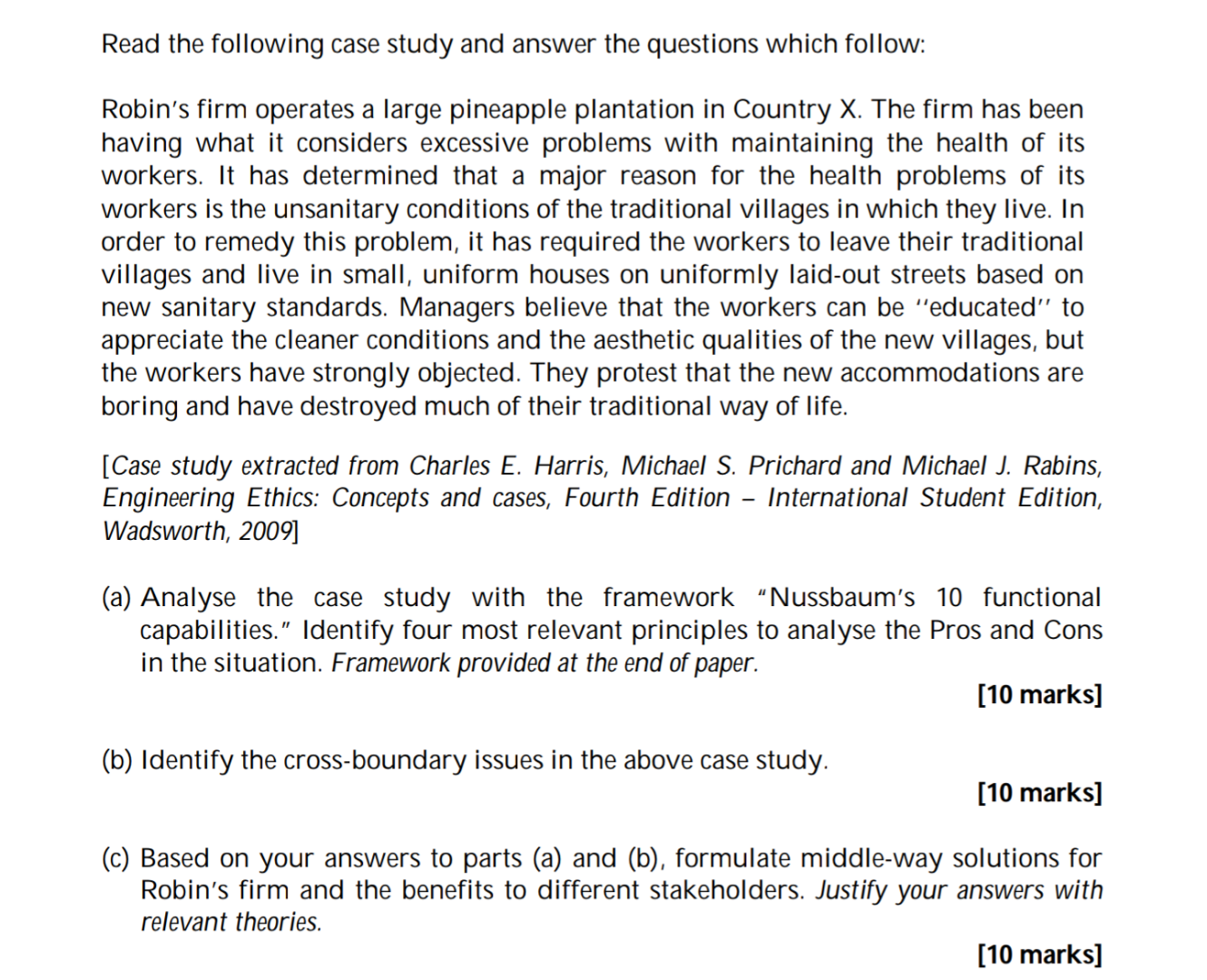
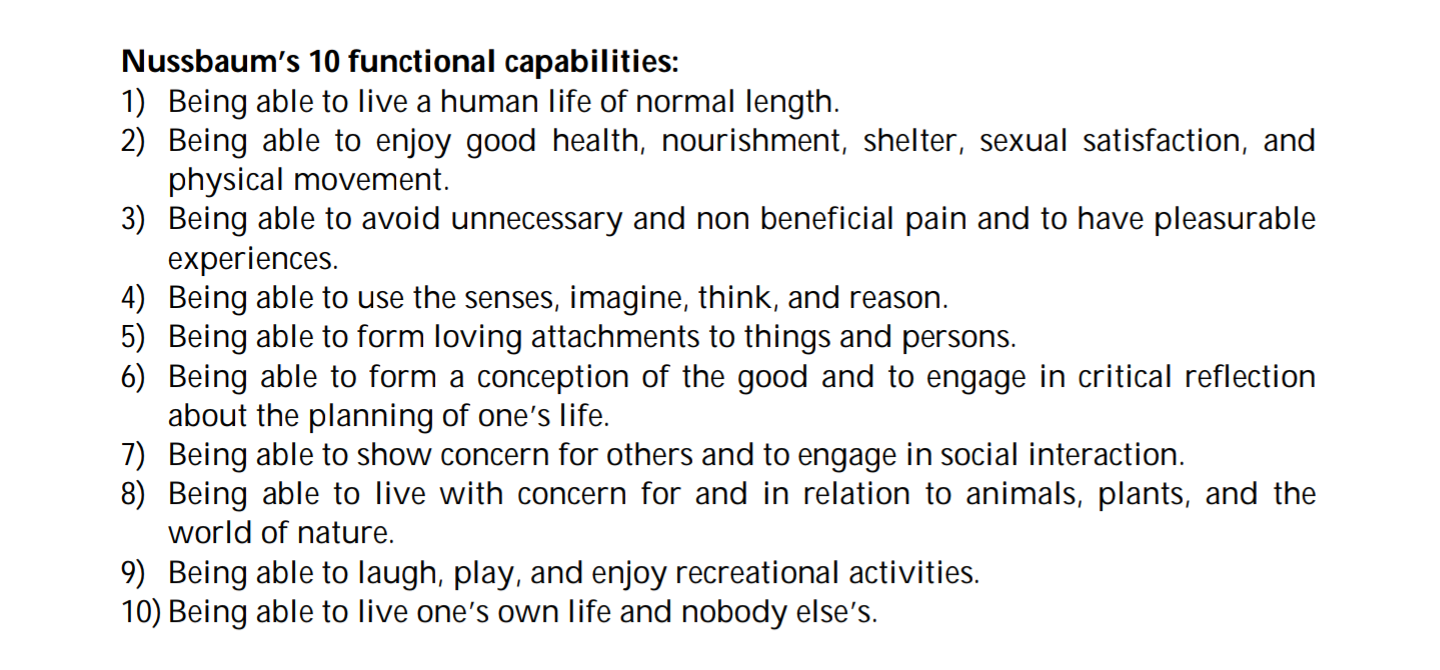
Read the following case study and answer the questions which follow: Robin's firm operates a large pineapple plantation in Country X. The firm has been having what it considers excessive problems with maintaining the health of its workers. It has determined that a major reason for the health problems of its workers is the unsanitary conditions of the traditional villages in which they live. In order to remedy this problem, it has required the workers to leave their traditional villages and live in small, uniform houses on uniformly laid-out streets based on new sanitary standards. Managers believe that the workers can be "educated" to appreciate the cleaner conditions and the aesthetic qualities of the new villages, but the workers have strongly objected. They protest that the new accommodations are boring and have destroyed much of their traditional way of life. [Case study extracted from Charles E. Harris, Michael S. Prichard and Michael J. Rabins, Engineering Ethics: Concepts and cases, Fourth Edition - International Student Edition, Wadsworth, 2009] (a) Analyse the case study with the framework "Nussbaum's 10 functional capabilities." Identify four most relevant principles to analyse the Pros and Cons in the situation. Framework provided at the end of paper. [10 marks] (b) Identify the cross-boundary issues in the above case study. [10 marks] (c) Based on your answers to parts (a) and (b), formulate middle-way solutions for Robin's firm and the benefits to different stakeholders. Justify your answers with relevant theories. Nussbaum's 10 functional capabilities: 1) Being able to live a human life of normal length. 2) Being able to enjoy good health, nourishment, shelter, sexual satisfaction, and physical movement. 3) Being able to avoid unnecessary and non beneficial pain and to have pleasurable experiences. 4) Being able to use the senses, imagine, think, and reason. 5) Being able to form loving attachments to things and persons. 6) Being able to form a conception of the good and to engage in critical reflection about the planning of one's life. 7) Being able to show concern for others and to engage in social interaction. 8) Being able to live with concern for and in relation to animals, plants, and the world of nature. 9) Being able to laugh, play, and enjoy recreational activities. 10) Being able to live one's own life and nobody else'sStep by Step Solution
There are 3 Steps involved in it
1 Expert Approved Answer
Step: 1 Unlock

Question Has Been Solved by an Expert!
Get step-by-step solutions from verified subject matter experts
Step: 2 Unlock
Step: 3 Unlock