Question: entrepreneurial management please dont answer the same as two experts already answer and i already know what they answered as i already posted the same
entrepreneurial management
please dont answer the same as two experts already answer and i already know what they answered as i already posted the same question twice.
only instruction:
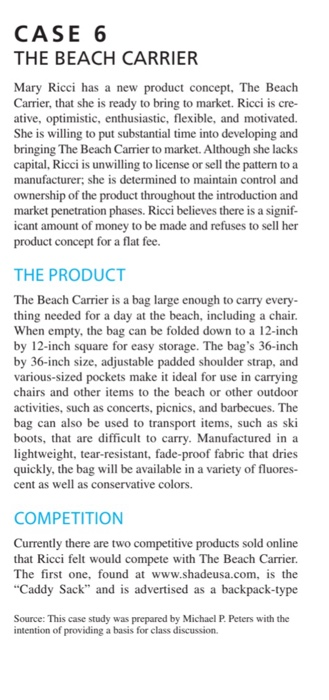
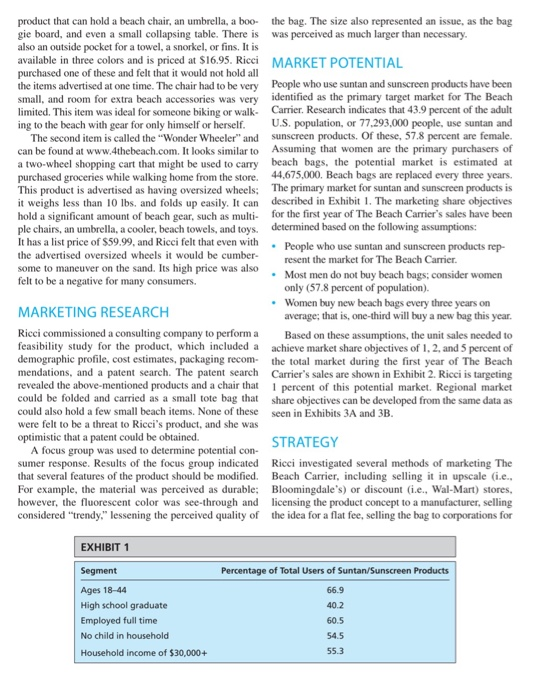
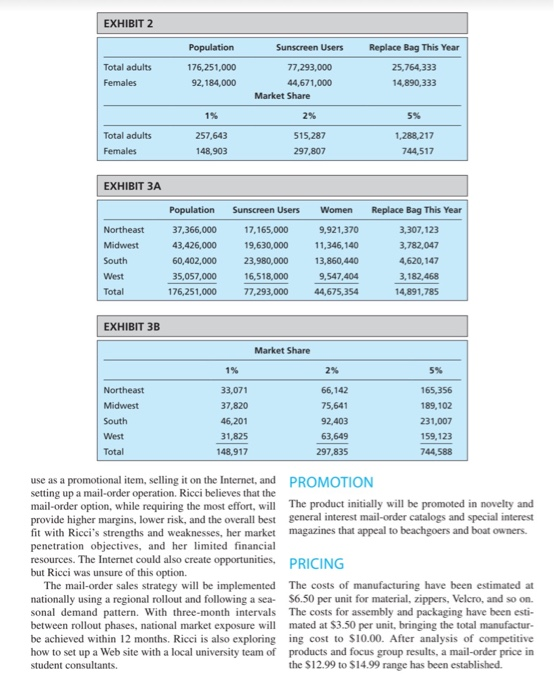
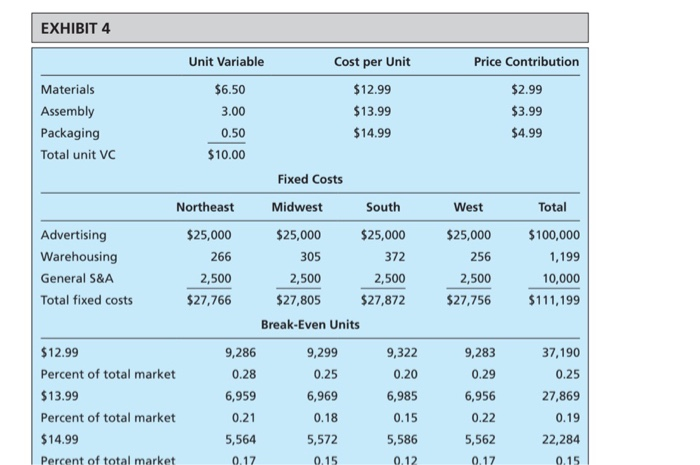
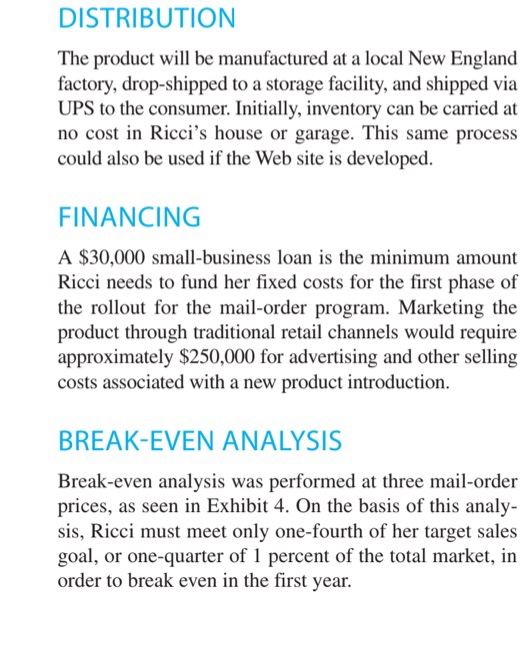
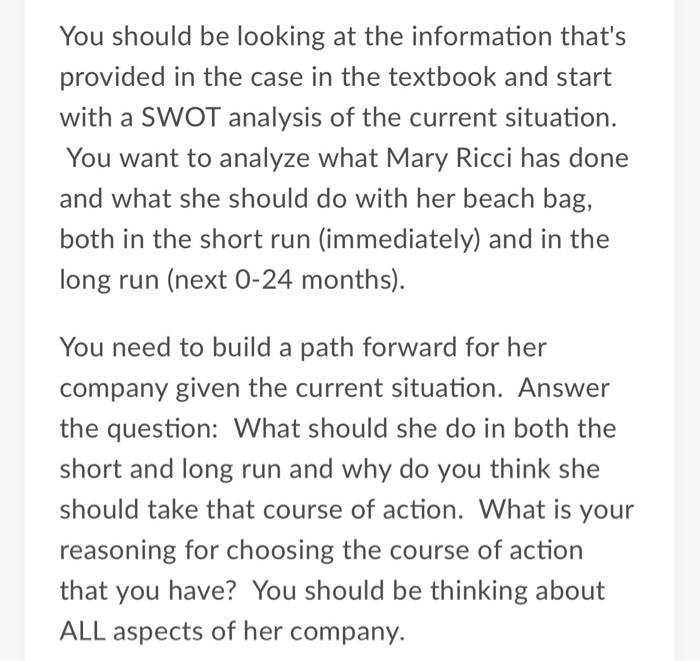
CASE 6 THE BEACH CARRIER Mary Ricci has a new product concept, The Beach Carrier, that she is ready to bring to market. Ricci is cre- ative, optimistic, enthusiastic, flexible, and motivated. She is willing to put substantial time into developing and bringing The Beach Carrier to market. Although she lacks capital, Ricci is unwilling to license or sell the pattern to a manufacturer, she is determined to maintain control and ownership of the product throughout the introduction and market penetration phases. Ricci believes there is a signif- icant amount of money to be made and refuses to sell her product concept for a flat fee. THE PRODUCT The Beach Carrier is a bag large enough to carry every- thing needed for a day at the beach, including a chair. When empty, the bag can be folded down to a 12-inch by 12-inch square for easy storage. The bag's 36-inch by 36-inch size, adjustable padded shoulder strap, and various-sized pockets make it ideal for use in carrying chairs and other items to the beach or other outdoor activities, such as concerts, picnics, and barbecues. The bag can also be used to transport items, such as ski boots, that are difficult to carry. Manufactured in a lightweight, tear-resistant, fade-proof fabric that dries quickly, the bag will be available in a variety of fluores- cent as well as conservative colors. COMPETITION Currently there are two competitive products sold online that Ricci felt would compete with The Beach Carrier. The first one, found at www.shadeusa.com, is the "Caddy Sack" and is advertised as a backpack-type Source: This case study was prepared by Michael P. Peters with the intention of providing a basis for class discussion. product that can hold a beach chair, an umbrella, a boo- the bag. The size also represented an issue, as the bag gie board, and even a small collapsing table. There is was perceived as much larger than necessary. also an outside pocket for a towel, a snorkel, or fins. It is available in three colors and is priced at $16.95. Ricci MARKET POTENTIAL purchased one of these and felt that it would not hold all the items advertised at one time. The chair had to be very People who use suntan and sunscreen products have been small, and room for extra beach accessories was very identified as the primary target market for The Beach limited. This item was ideal for someone biking or walk- Carrier Research indicates that 43.9 percent of the adult ing to the beach with gear for only himself or herself. U.S. Population, or 77.293.000 people, use suntan and The second item is called the "Wonder Wheeler" and sunscreen products. Of these, 578 percent are female, can be found at www.4thebeach.com. It looks similar to Assuming that women are the primary purchasers of a two-wheel shopping cart that might be used to carry beach bags, the potential market is estimated at purchased groceries while walking home from the store. 44,675,000. Beach bags are replaced every three years. This product is advertised as having oversized wheels: The primary market for suntan and sunscreen products is it weighs less than 10 lbs, and folds up easily. It can described in Exhibit 1. The marketing share objectives hold a significant amount of beach gear, such as multi- for the first year of The Beach Carrier's sales have been ple chairs, an umbrella, a cooler, beach towels, and toys. determined based on the following assumptions: It has a list price of $59.99, and Ricci felt that even with People who use suntan and sunscreen products rep- the advertised oversized wheels it would be cumber- resent the market for The Beach Carrier some to maneuver on the sand. Its high price was also . Most men do not buy beach bags: consider women felt to be a negative for many consumers. only (57.8 percent of population) Women buy new beach bags every three years on MARKETING RESEARCH average; that is, one-third will buy a new bag this year. Ricci commissioned a consulting company to perform a Based on these assumptions, the unit sales needed to feasibility study for the product, which included a achieve market share objectives of 1, 2, and 5 percent of demographic profile, cost estimates, packaging recom- the total market during the first year of The Beach mendations, and a patent search. The patent search Carrier's sales are shown in Exhibit 2. Ricci is targeting revealed the above-mentioned products and a chair that percent of this potential market. Regional market could be folded and carried as a small tote bag that share objectives can be developed from the same data as could also hold a few small beach items. None of these seen in Exhibits 3A and 3B. were felt to be a threat to Ricci's product, and she was optimistic that a patent could be obtained STRATEGY A focus group was used to determine potential con- sumer response. Results of the focus group indicated Ricci investigated several methods of marketing The that several features of the product should be modified. Beach Carrier, including selling it in upscale (i... For example, the material was perceived as durable; Bloomingdale's) or discount (i.e., Wal-Mart) stores, however, the fluorescent color was see-through and licensing the product concept to a manufacturer, selling considered "trendy." lessening the perceived quality of the idea for a flat fee, selling the bag to corporations for EXHIBIT 1 Percentage of Total Users of Suntan/Sunscreen Products Segment Ages 18-44 High school graduate Employed full time No child in household Household income of $30,000+ 66.9 40.2 60.5 54.5 55.3 EXHIBIT 2 Population Sunscreen Users Replace Bag This Year Total adults Females 176,251,000 92,184,000 77,293,000 44,671,000 Market Share 25,764,333 14,890,333 5% Total adults Females 1% 257,643 148,903 2% 515,287 297,807 1,288,217 744,517 EXHIBIT Replace Bag This Year Northeast Midwest South Population 37,366,000 43,426,000 60,402,000 35,057,000 176,251,000 Sunscreen Users 17,165,000 19,630,000 23,980,000 16,518,000 77,293,000 Women 9,921,370 11,346,140 13,860,440 9,547,404 44,675,354 3,307,123 3,782,047 4,620,147 3,182,468 14,891,785 West Total EXHIBIT 3B Market Share 1% 2% Northeast Midwest South West Total 33,071 37,820 46,201 66,142 75,641 92,403 63,649 297,835 165,356 189,102 231,007 159,123 744,588 31,825 148,917 use as a promotional item, selling it on the Internet, and PROMOTION setting up a mail-order operation. Ricci believes that the mail-order option, while requiring the most effort, will The product initially will be promoted in novelty and provide higher margins, lower risk, and the overall best general interest mail-order catalogs and special interest fit with Ricci's strengths and weaknesses, her market magazines that appeal to beachgoers and boat owners. penetration objectives, and her limited financial resources. The Internet could also create opportunities, PRICING but Ricci was unsure of this option The mail-order sales strategy will be implemented The costs of manufacturing have been estimated at nationally using a regional rollout and following a sea- $6.50 per unit for material, zippers, Velcro, and so on. sonal demand pattern. With three-month intervals The costs for assembly and packaging have been esti- between rollout phases, national market exposure will mated at $3.50 per unit, bringing the total manufactur- be achieved within 12 months. Ricci is also exploring ing cost to $10.00. After analysis of competitive how to set up a Web site with a local university team of products and focus group results, a mail-order price in student consultants. the $12.99 to $14.99 range has been established. EXHIBIT 4 Unit Variable Cost per Unit Price Contribution Materials Assembly Packaging Total unit VC $6.50 3.00 0.50 $10.00 $12.99 $13.99 $14.99 $2.99 $3.99 $4.99 Total Advertising Warehousing General S&A Total fixed costs Northeast $25,000 266 2,500 $27,766 Fixed Costs Midwest South $25,000 $25,000 305 372 2,500 $27,805 $27,872 Break-Even Units West $25,000 256 2,500 $27,756 $100,000 1,199 10,000 $111,199 2,500 9,299 9,283 37,190 9,322 0.20 0.25 0.29 6,956 6,985 $12.99 Percent of total market $13.99 Percent of total market $14.99 Percent of total market 9,286 0.28 6,959 0.21 5,564 0.17 0.25 6,969 0.18 5,572 0.15 0.22 0.15 5,586 0.12 27,869 0.19 22,284 0.15 5,562 0.17 DISTRIBUTION The product will be manufactured at a local New England factory, drop-shipped to a storage facility, and shipped via UPS to the consumer. Initially, inventory can be carried at no cost in Ricci's house or garage. This same process could also be used if the Web site is developed. FINANCING A $30,000 small-business loan is the minimum amount Ricci needs to fund her fixed costs for the first phase of the rollout for the mail-order program. Marketing the product through traditional retail channels would require approximately $250,000 for advertising and other selling costs associated with a new product introduction. BREAK-EVEN ANALYSIS Break-even analysis was performed at three mail-order prices, as seen in Exhibit 4. On the basis of this analy- sis, Ricci must meet only one-fourth of her target sales goal, or one-quarter of 1 percent of the total market, in order to break even in the first year. When you're an entrepreneur, there is no 'guide' or a set of instructions. You need to look at the entire situation that Mary Ricci is presented with and the limited information that is available and you need to decide what you would do if it was your company. As an entrepreneur, no one is going to be there to tell you what to do and this assignment is just like that. I would start by looking at the strengths, weaknesses, opportunities and threats that the case / business environment presents, and determine what you would do in the long and short run, in order to have the business survive and thrive. The strengths and weaknesses will originate inside the company and the opportunities and threats will be found in the external environment. Survival is a key 'moment' in the life of a new or fledgling business. In the short run. what do you need to do to survive and in the long run, thrive? I'm sure if you look on the net, you can find many of them. Basically you need to look at the case from many different perspectives: marketing, finance, human resources, operations etc. Given Mary's situation right now, based on your group's thinking about the problem, what should she do? You really have to put yourself in her shoes and determine what needs to be done in the short and long run. Entrepreneurs are faced with this dilemma all the time: short of cash, market pressures, competition, design or operations issues and they need to determine what are the most intense pressure points which, if not addressed, will result in the failure of the business. Certain things need to be addressed like RIGHT NOW! So you need to look at that as well as the long term. What needs to be done in the short and long term in order for the business to survive and thrive? Likely a good idea to include the SWOT analysis in your assignment / would like to see your logic for building your strategy. +/- 5 pages double spaced Usually 11 font with normal 1" margins. Structure might look like this: Intro, you would lay out the current state of affairs in the case, what's happening right now Then your SWOT Then your analysis providing options that she "might" use, Then in your conclusion, your chosen alternative and why you selected that option and what you hope to achieve by choosing that option. You should be looking at the information that's provided in the case in the textbook and start with a SWOT analysis of the current situation. You want to analyze what Mary Ricci has done and what she should do with her beach bag, both in the short run (immediately) and in the long run (next 0-24 months). You need to build a path forward for her company given the current situation. Answer the question: What should she do in both the short and long run and why do you think she should take that course of action. What is your reasoning for choosing the course of action that you have? You should be thinking about ALL aspects of her company









 Study Help