







Question: subject : AIR CARGO OPERATIONS MANAGEMENT. Based on case study above. please answer the questions :- 1. Do you think air cargo provider responsible for
subject : AIR CARGO OPERATIONS MANAGEMENT.
Based on case study above. please answer the questions :-
1. Do you think air cargo provider responsible for innovation activities in their services?
2.What about innovation effort in a Covid-19 crisis? Why or why not?
***INSTRUCTIONS***
* PLEASE READ THE CASE STUDY , FOLLOW THE INSTRUCTIONS AND QUESTIONS GIVEN.
* PLEASE ELABORATE AND JUSTIFY YOUR REASONING WITH LATEST ISSUE AND INCLUDING EXAMPLE.
* PLEASE INCLUDE THE REFERENCE BELOW.
* PLEASE ANSWER IT ATLEAST 2 PAGES.
* PLEASE DON'T ANSWER IF YOU DON'T HAVE ANY IDEA ABOUT IT, DON'T WASTE MY QUESTION. I DONT WANT NONSENSE ANSWERS.
* HELP ME THEN I'LL UPVOTE YOU.
* IF YOU'RE NOT FOLLOWING THE QUESTIONS AND INSTRUCTION GIVEN , I'LL DOWNVOTE.
THANKS....
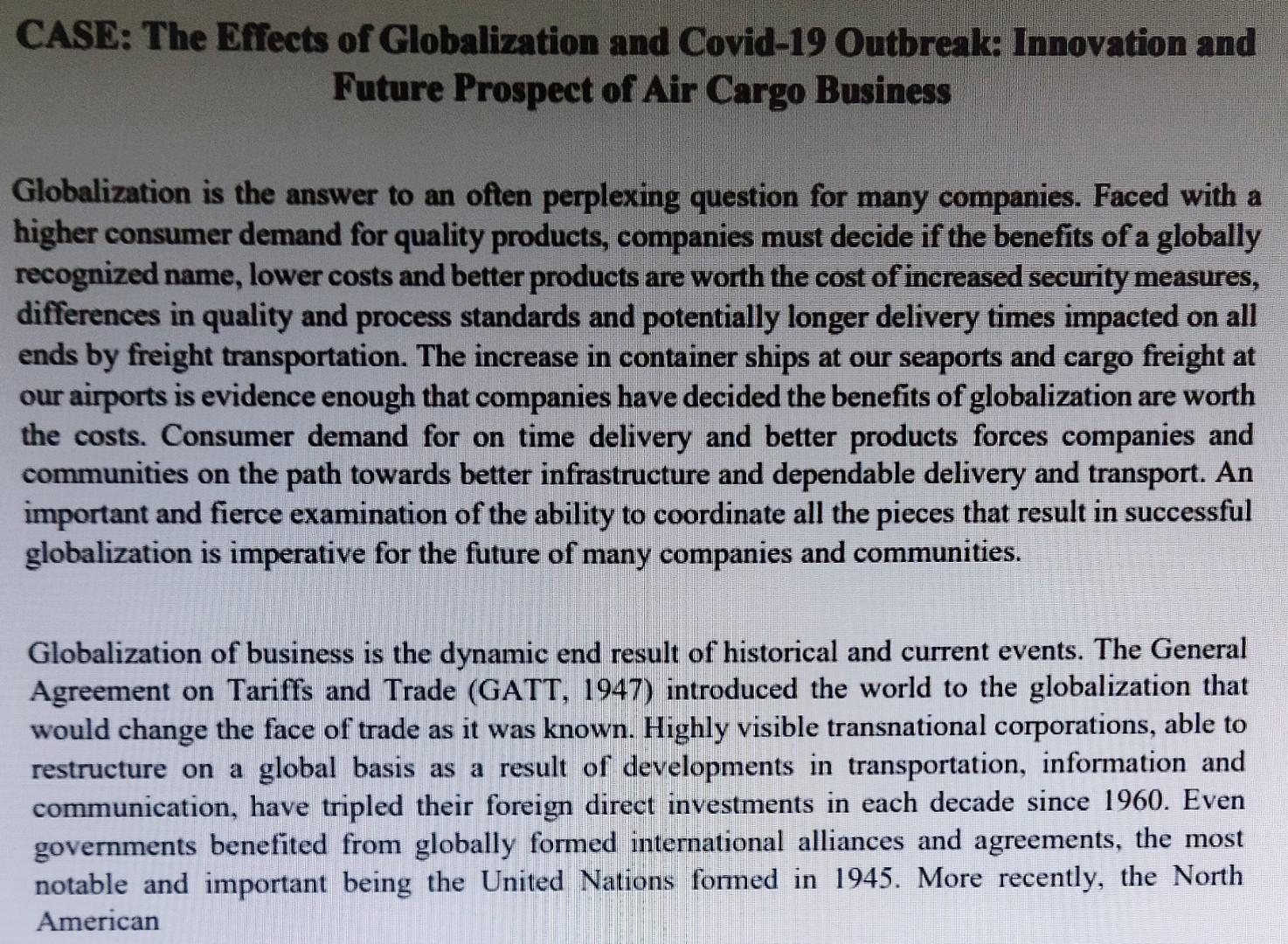
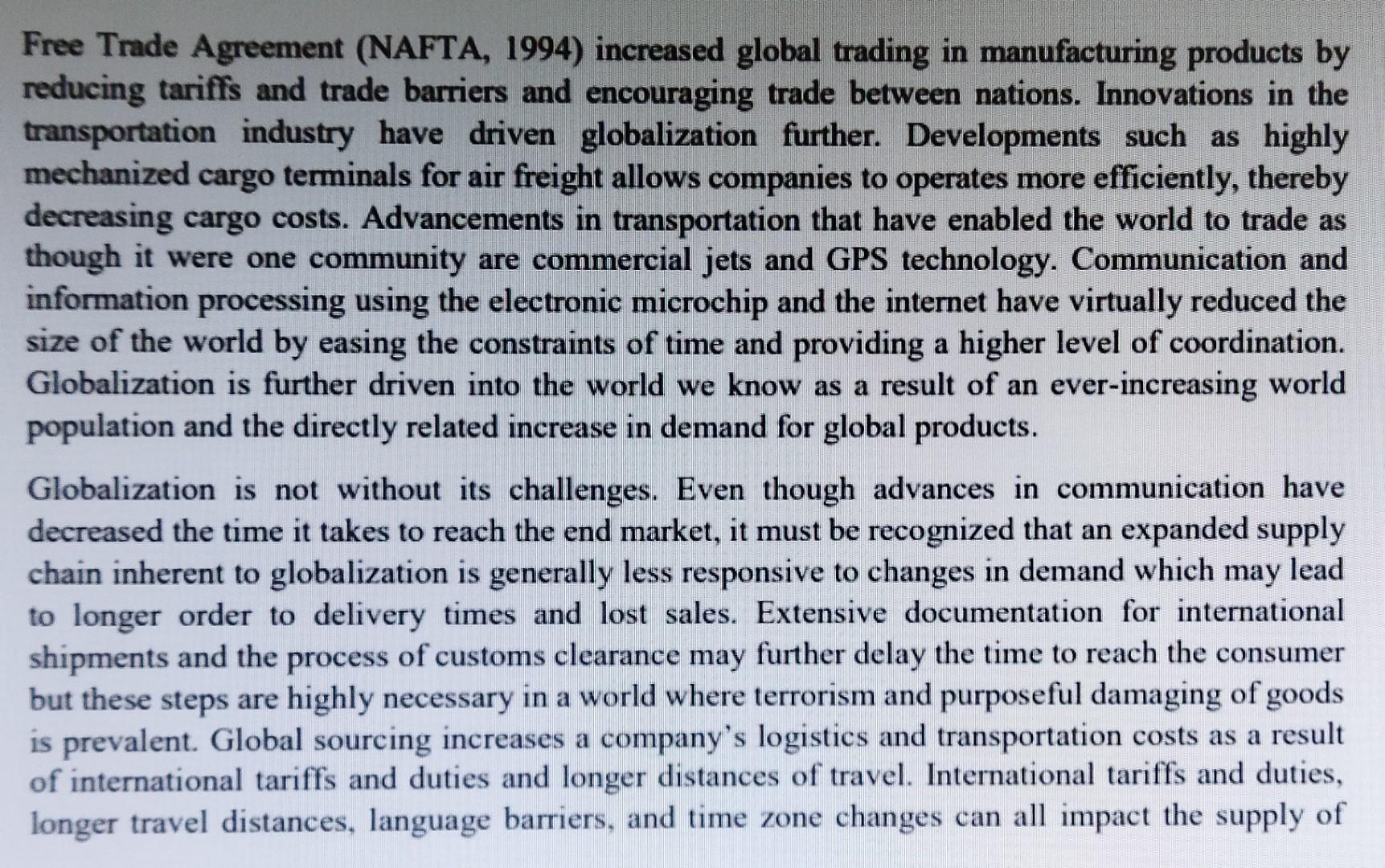
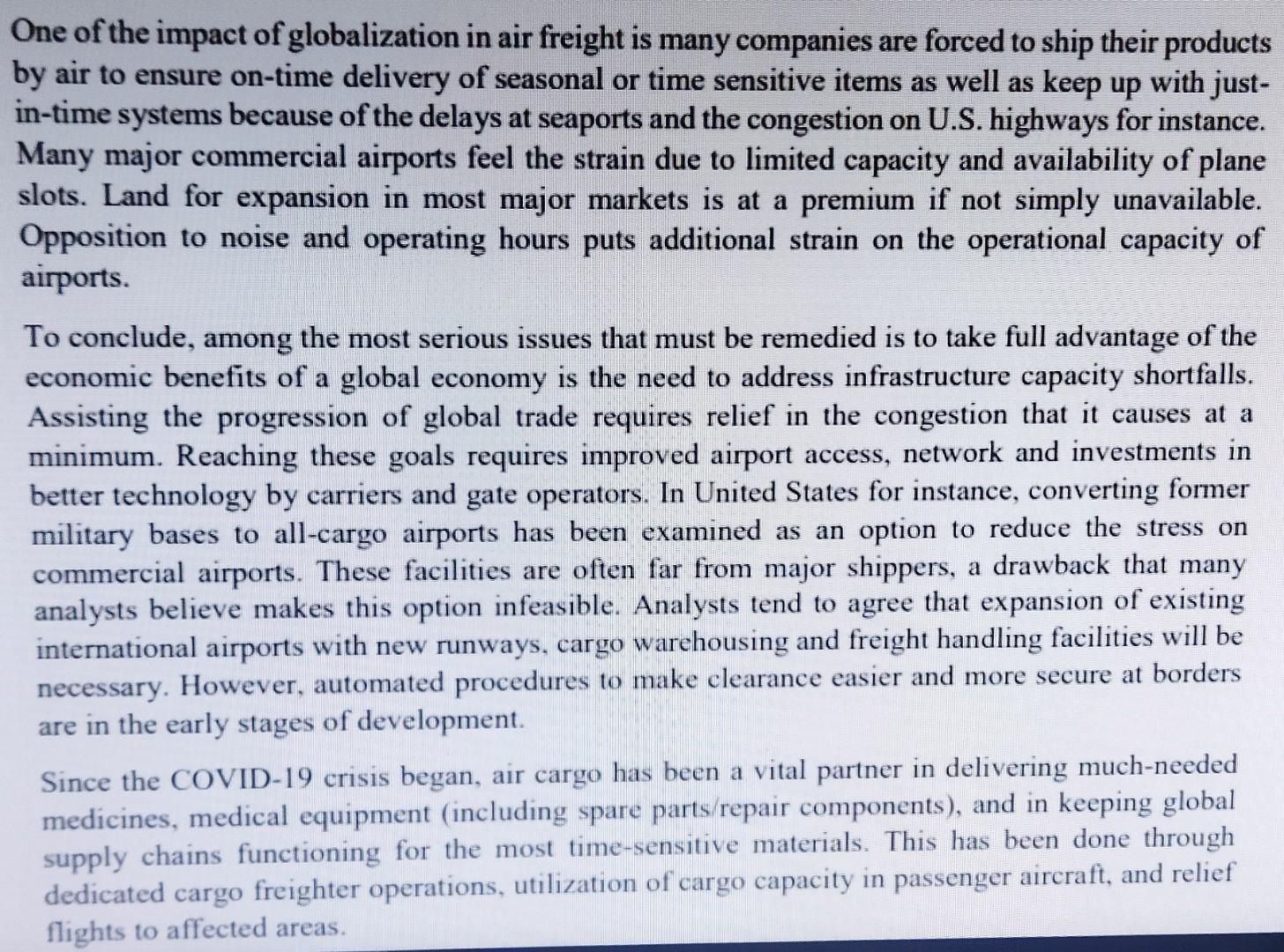
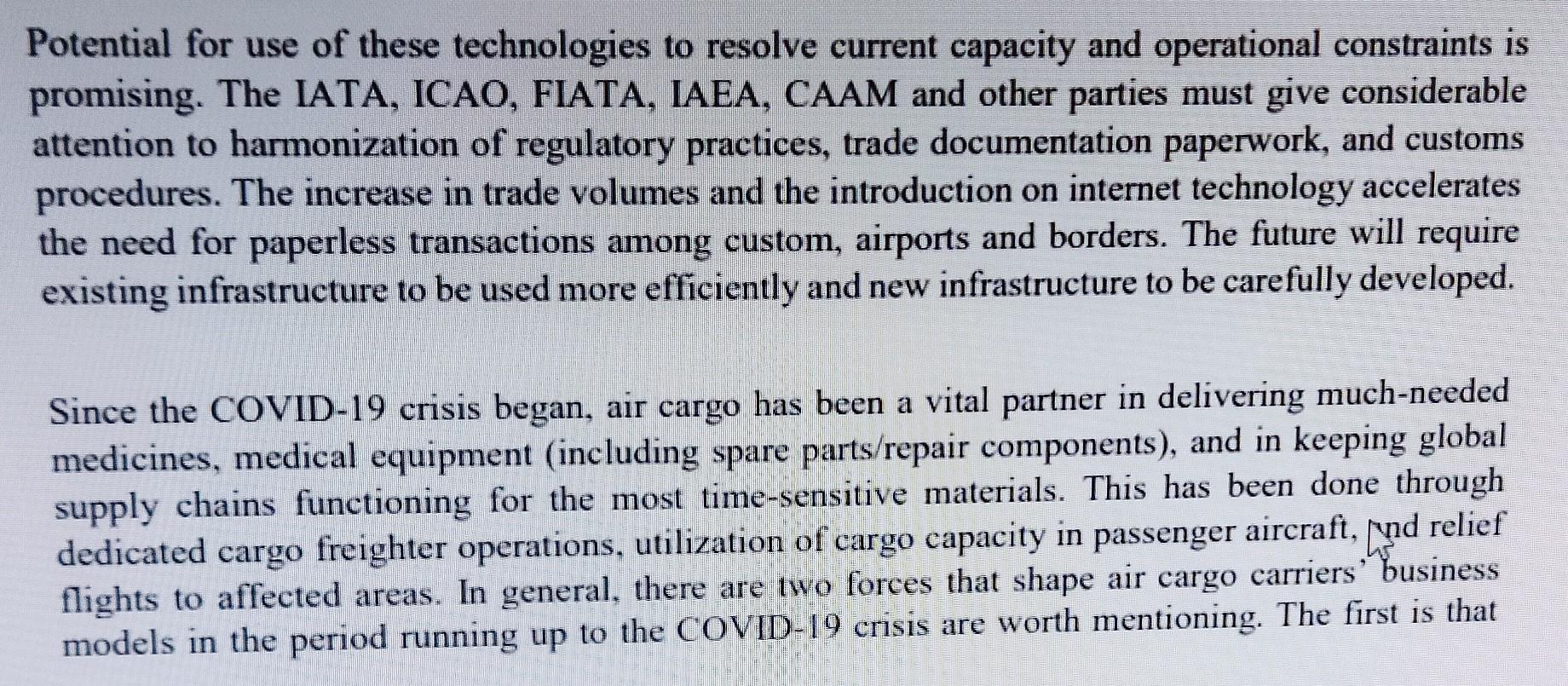
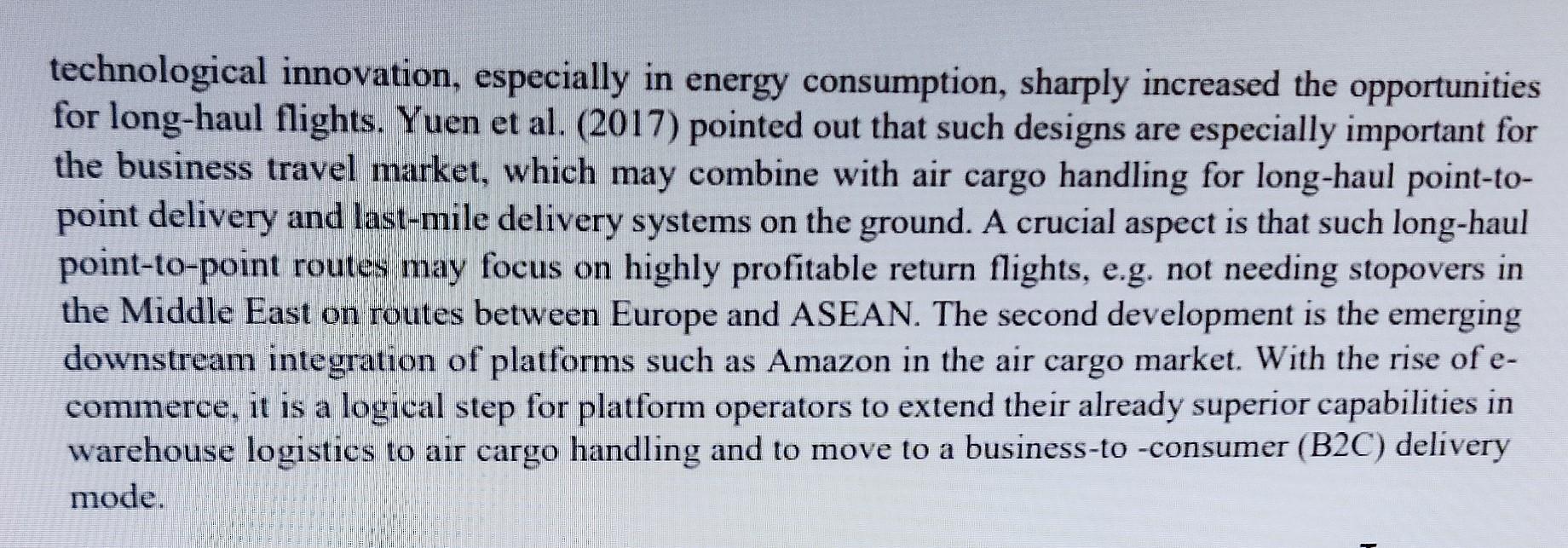
CASE: The Effects of Globalization and Covid-19 Outbreak: Innovation and Future Prospect of Air Cargo Business Globalization is the answer to an often perplexing question for many companies. Faced with a higher consumer demand for quality products, companies must decide if the benefits of a globally recognized name, lower costs and better products are worth the cost of increased security measures, differences in quality and process standards and potentially longer delivery times impacted on all ends by freight transportation. The increase in container ships at our seaports and cargo freight at our airports is evidence enough that companies have decided the benefits of globalization are worth the costs. Consumer demand for on time delivery and better products forces companies and communities on the path towards better infrastructure and dependable delivery and transport. An important and fierce examination of the ability to coordinate all the pieces that result in successful globalization is imperative for the future of many companies and communities. Globalization of business is the dynamic end result of historical and current events. The General Agreement on Tariffs and Trade (GATT, 1947) introduced the world to the globalization that would change the face of trade as it was known. Highly visible transnational corporations, able to restructure on a global basis as a result of developments in transportation, information and communication, have tripled their foreign direct investments in each decade since 1960. Even governments benefited from globally formed international alliances and agreements, the most notable and important being the United Nations formed in 1945. More recently, the North American Free Trade Agreement (NAFTA, 1994) increased global trading in manufacturing products by reducing tariffs and trade barriers and encouraging trade between nations. Innovations in the transportation industry have driven globalization further. Developments such as highly mechanized cargo terminals for air freight allows companies to operates more efficiently, thereby decreasing cargo costs. Advancements in transportation that have enabled the world to trade as though it were one community are commercial jets and GPS technology. Communication and information processing using the electronic microchip and the internet have virtually reduced the size of the world by easing the constraints of time and providing a higher level of coordination. Globalization is further driven into the world we know as a result of an ever-increasing world population and the directly related increase in demand for global products. Globalization is not without its challenges. Even though advances in communication have decreased the time it takes to reach the end market, it must be recognized that an expanded supply chain inherent to globalization is generally less responsive to changes in demand which may lead to longer order to delivery times and lost sales. Extensive documentation for international shipments and the process of customs clearance may further delay the time to reach the consumer but these steps are highly necessary in a world where terrorism and purposeful damaging of goods is prevalent. Global sourcing increases a company's logistics and transportation costs as a result of international tariffs and duties and longer distances of travel. International tariffs and duties, longer travel distances, language barriers, and time zone changes can all impact the supply of a One of the impact of globalization in air freight is many companies are forced to ship their products by air to ensure on-time delivery of seasonal or time sensitive items as well as keep up with just- in-time systems because of the delays at seaports and the congestion on U.S. highways for instance. Many major commercial airports feel the strain due to limited capacity and availability of plane slots. Land for expansion in most major markets is at a premium if not simply unavailable. Opposition to noise and operating hours puts additional strain on the operational capacity of airports. To conclude, among the most serious issues that must be remedied is to take full advantage of the economic benefits of a global economy is the need to address infrastructure capacity shortfalls. Assisting the progression of global trade requires relief in the congestion that it causes at a minimum. Reaching these goals requires improved airport access, network and investments in better technology by carriers and gate operators. In United States for instance, converting former military bases to all-cargo airports has been examined as an option to reduce the stress on commercial airports. These facilities are often far from major shippers, a drawback that many analysts believe makes this option infeasible. Analysts tend to agree that expansion of existing international airports with new runways, cargo warehousing and freight handling facilities will be necessary. However, automated procedures to make clearance easier and more secure at borders are in the early stages of development. Since the COVID-19 crisis began, air cargo has been a vital partner in delivering much-needed medicines, medical equipment (including spare parts/repair components), and in keeping global supply chains functioning for the most time-sensitive materials. This has been done through dedicated cargo freighter operations, utilization of cargo capacity in passenger aircraft, and relief flights to affected areas. Potential for use of these technologies to resolve current capacity and operational constraints is promising. The IATA, ICAO, FIATA, IAEA, CAAM and other parties must give considerable attention to harmonization of regulatory practices, trade documentation paperwork, and customs procedures. The increase in trade volumes and the introduction on internet technology accelerates the need for paperless transactions among custom, airports and borders. The future will require existing infrastructure to be used more efficiently and new infrastructure to be carefully developed. Since the COVID-19 crisis began, air cargo has been a vital partner in delivering much-needed medicines, medical equipment (including spare parts/repair components), and in keeping global supply chains functioning for the most time-sensitive materials. This has been done through dedicated cargo freighter operations, utilization of cargo capacity in passenger aircraft, (nd relief flights to affected areas. In general, there are two forces that shape air cargo carriers' business models in the period running up to the COVID-19 crisis are worth mentioning. The first is that technological innovation, especially in energy consumption, sharply increased the opportunities for long-haul flights. Yuen et al. (2017) pointed out that such designs are especially important for the business travel market, which may combine with air cargo handling for long-haul point-to- point delivery and last-mile delivery systems on the ground. A crucial aspect is that such long-haul point-to-point routes may focus on highly profitable return flights, e.g. not needing stopovers in the Middle East on routes between Europe and ASEAN. The second development is the emerging downstream integration of platforms such as Amazon in the air cargo market. With the rise of e- commerce, it is a logical step for platform operators to extend their already superior capabilities in warehouse logistics to air cargo handling and to move to a business-to-consumer (B2C) delivery modeStep by Step Solution
There are 3 Steps involved in it

Get step-by-step solutions from verified subject matter experts
 Study Help