



Question: ERP and Systems Integration Enterprise Resource Planning (ERP) systems are integrated, multi-module application software packages designed to serve and support several business functions across an
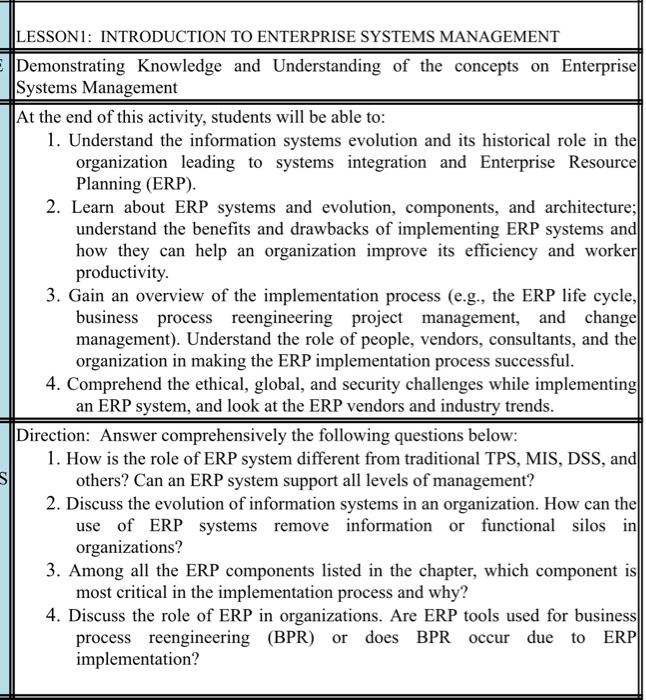
LESSON1: INTRODUCTION TO ENTERPRISE SYSTEMS MANAGEMENT Demonstrating Knowledge and Understanding of the concepts on Enterprise Systems Management At the end of this activity, students will be able to: 1. Understand the information systems evolution and its historical role in the organization leading to systems integration and Enterprise Resource Planning (ERP). 2. Learn about ERP systems and evolution, components, and architecture; understand the benefits and drawbacks of implementing ERP systems and how they can help an organization improve its efficiency and worker productivity. 3. Gain an overview of the implementation process (e.g., the ERP life cycle, business process reengineering project management, and change management). Understand the role of people, vendors, consultants, and the organization in making the ERP implementation process successful. 4. Comprehend the ethical, global, and security challenges while implementing an ERP system, and look at the ERP vendors and industry trends. Direction: Answer comprehensively the following questions below: 1. How is the role of ERP system different from traditional TPS, MIS, DSS, and others? Can an ERP system support all levels of management? 2. Discuss the evolution of information systems in an organization. How can the use of ERP systems remove information or functional silos in organizations? 3. Among all the ERP components listed in the chapter, which component is most critical in the implementation process and why? 4. Discuss the role of ERP in organizations. Are ERP tools used for business process reengineering (BPR) or does BPR occur due to ERP implementation
Step by Step Solution
There are 3 Steps involved in it

Get step-by-step solutions from verified subject matter experts