







Question: Ethics Problem Diane Dennison is a financial analyst working for a large chain of discount retail stores. Her company is looking at the possibility of
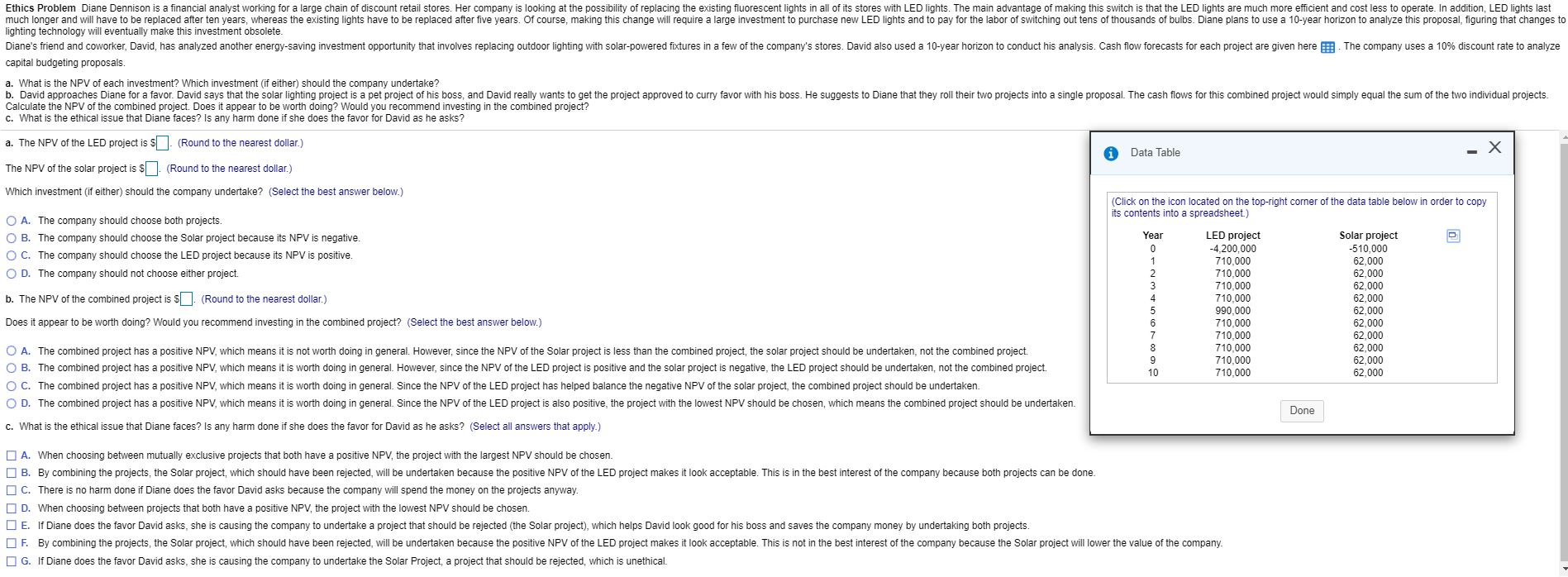
Ethics Problem Diane Dennison is a financial analyst working for a large chain of discount retail stores. Her company is looking at the possibility of replacing the existing fluorescent lights in all of its stores with LED lights. The main advantage of making this switch is that the LED lights are much more efficient and cost less to operate. In addition, LED lights last much longer and will have to be replaced after ten years, whereas the existing lights have to be replaced after five years. Of course, making this change will require a large investment to purchase new LED lights and to pay for the labor of switching out tens of thousands of bulbs. Diane plans to use a 10-year horizon to analyze this proposal, figuring that changes to lighting technology will eventually make this investment obsolete. Diane's friend and coworker, David, has analyzed another energy-saving investment opportunity that involves replacing outdoor lighting with solar-powered fixtures in a few of the company's stores. David also used a 10-year horizon to conduct his analysis. Cash flow forecasts for each project are given here . The company uses a 10% discount rate to analyze capital budgeting proposals. a. What is the NPV of each investment? Which investment (if either) should the company undertake? b. David approaches Diane for a favor. David says that the solar lighting project is a pet project of his boss, and David really wants to get the project approved to curry favor with his boss. He suggests to Diane that they roll their two projects into a single proposal. The cash flows for this combined project would simply equal the sum of the two individual projects. Calculate the NPV of the combined project. Does it appear to be worth doing? Would you recommend investing in the combined project? c. What is the ethical issue that Diane faces? Is any harm done if she does the favor for David as he asks? a. The NPV of the LED project is sl - (Round to the nearest dollar.) A Data Table The NPV of the solar project is $17. (Round to the nearest dollar.) Which investment (if either) should the company undertake? (Select the best answer below.) (Click on the icon located on the top-right corner of the data table below in order to copy its contents into a spreadsheet.) Year O A. The company should choose both projects. OB. The company should choose the Solar project because its NPV is negative. OC. The company should choose the LED project because its NPV is positive. OD. The company should not choose either project. b. The NPV of the combined project is $7. (Round to the nearest dollar.) LED project -4,200,000 710,000 710,000 710,000 710,000 990,000 710,000 710,000 710,000 710,000 710,000 Solar project -510,000 62,000 62,000 62,000 62,000 62,000 62,000 62,000 62,000 62,000 62,000 Does it appear to be worth doing? Would you recommend investing in the combined project? (Select the best answer below.) O A. The combined project has a positive NPV, which means it is not worth doing in general. However, since the NPV of the Solar project is less than the combined project, the solar project should be undertaken, not the combined project. O B. The combined project has a positive NPV, which means it is worth doing in general. However, since the NPV of the LED project is positive and the solar project is negative, the LED project should be undertaken, not the combined project. O C. The combined project has a positive NPV, which means it is worth doing in general. Since the NPV of the LED project has helped balance the negative NPV of the solar project, the combined project should be undertaken. OD. The combined project has a positive NPV, which means it is worth doing in general. Since the NPV of the LED project is also positive, the project with the lowest NPV should be chosen, which means the combined project should be undertaken. Done c. What is the ethical issue that Diane faces? Is any harm done if she does the favor for David as he asks? (Select all answers that apply.) A. When choosing between mutually exclusive projects that both have a positive NPV, the project with the largest NPV should be chosen. B. By combining the projects, the Solar project, which should have been rejected, will be undertaken because the positive NPV of the LED project makes it look acceptable. This is in the best interest of the company because both projects can be done. C. There is no harm done if Diane does the favor David asks because the company will spend the money on the projects anyway. D. When choosing between projects that both have a positive NPV, the project with the lowest NPV should be chosen. E. If Diane does the favor David asks, she is causing the company to undertake a project that should be rejected (the Solar project), which helps David look good for his boss and saves the company money by undertaking both projects. F. By combining the projects, the Solar project, which should have been rejected, will be undertaken because the positive NPV of the LED project makes it look acceptable. This is not in the best interest of the company because the Solar project will lower the value of the company. G. If Diane does the favor David asks, she is causing the company to undertake the Solar Project, a project that should be rejected, which is unethical Ethics Problem Diane Dennison is a financial analyst working for a large chain of discount retail stores. Her company is looking at the possibility of replacing the existing fluorescent lights in all of its stores with LED lights. The main advantage of making this switch is that the LED lights are much more efficient and cost less to operate. In addition, LED lights last much longer and will have to be replaced after ten years, whereas the existing lights have to be replaced after five years. Of course, making this change will require a large investment to purchase new LED lights and to pay for the labor of switching out tens of thousands of bulbs. Diane plans to use a 10-year horizon to analyze this proposal, figuring that changes to lighting technology will eventually make this investment obsolete. Diane's friend and coworker, David, has analyzed another energy-saving investment opportunity that involves replacing outdoor lighting with solar-powered fixtures in a few of the company's stores. David also used a 10-year horizon to conduct his analysis. Cash flow forecasts for each project are given here . The company uses a 10% discount rate to analyze capital budgeting proposals. a. What is the NPV of each investment? Which investment (if either) should the company undertake? b. David approaches Diane for a favor. David says that the solar lighting project is a pet project of his boss, and David really wants to get the project approved to curry favor with his boss. He suggests to Diane that they roll their two projects into a single proposal. The cash flows for this combined project would simply equal the sum of the two individual projects. Calculate the NPV of the combined project. Does it appear to be worth doing? Would you recommend investing in the combined project? c. What is the ethical issue that Diane faces? Is any harm done if she does the favor for David as he asks? a. The NPV of the LED project is sl - (Round to the nearest dollar.) A Data Table The NPV of the solar project is $17. (Round to the nearest dollar.) Which investment (if either) should the company undertake? (Select the best answer below.) (Click on the icon located on the top-right corner of the data table below in order to copy its contents into a spreadsheet.) Year O A. The company should choose both projects. OB. The company should choose the Solar project because its NPV is negative. OC. The company should choose the LED project because its NPV is positive. OD. The company should not choose either project. b. The NPV of the combined project is $7. (Round to the nearest dollar.) LED project -4,200,000 710,000 710,000 710,000 710,000 990,000 710,000 710,000 710,000 710,000 710,000 Solar project -510,000 62,000 62,000 62,000 62,000 62,000 62,000 62,000 62,000 62,000 62,000 Does it appear to be worth doing? Would you recommend investing in the combined project? (Select the best answer below.) O A. The combined project has a positive NPV, which means it is not worth doing in general. However, since the NPV of the Solar project is less than the combined project, the solar project should be undertaken, not the combined project. O B. The combined project has a positive NPV, which means it is worth doing in general. However, since the NPV of the LED project is positive and the solar project is negative, the LED project should be undertaken, not the combined project. O C. The combined project has a positive NPV, which means it is worth doing in general. Since the NPV of the LED project has helped balance the negative NPV of the solar project, the combined project should be undertaken. OD. The combined project has a positive NPV, which means it is worth doing in general. Since the NPV of the LED project is also positive, the project with the lowest NPV should be chosen, which means the combined project should be undertaken. Done c. What is the ethical issue that Diane faces? Is any harm done if she does the favor for David as he asks? (Select all answers that apply.) A. When choosing between mutually exclusive projects that both have a positive NPV, the project with the largest NPV should be chosen. B. By combining the projects, the Solar project, which should have been rejected, will be undertaken because the positive NPV of the LED project makes it look acceptable. This is in the best interest of the company because both projects can be done. C. There is no harm done if Diane does the favor David asks because the company will spend the money on the projects anyway. D. When choosing between projects that both have a positive NPV, the project with the lowest NPV should be chosen. E. If Diane does the favor David asks, she is causing the company to undertake a project that should be rejected (the Solar project), which helps David look good for his boss and saves the company money by undertaking both projects. F. By combining the projects, the Solar project, which should have been rejected, will be undertaken because the positive NPV of the LED project makes it look acceptable. This is not in the best interest of the company because the Solar project will lower the value of the company. G. If Diane does the favor David asks, she is causing the company to undertake the Solar Project, a project that should be rejected, which is unethical
Step by Step Solution
There are 3 Steps involved in it

Get step-by-step solutions from verified subject matter experts
 Study Help