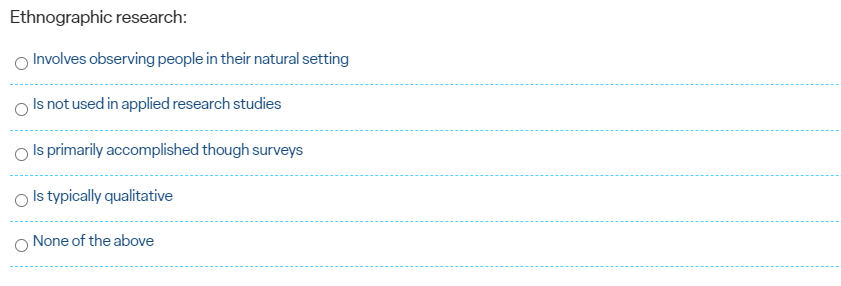
Question: Ethnographic research: Involves observing people in their natural setting Is not used in applied research studies Is primarily accomplished though surveys Is typically qualitative None
Ethnographic research: Involves observing peopleEthnographic research: Involves observing peopleEthnographic research: Involves observing peopleEthnographic research: Involves observing peopleEthnographic research: Involves observing peopleEthnographic research: Involves observing peopleEthnographic research: Involves observing peopleEthnographic research: Involves observing peopleEthnographic research: Involves observing peopleEthnographic research: Involves observing peopleEthnographic research: Involves observing peopleEthnographic research: Involves observing peopleEthnographic research: Involves observing people

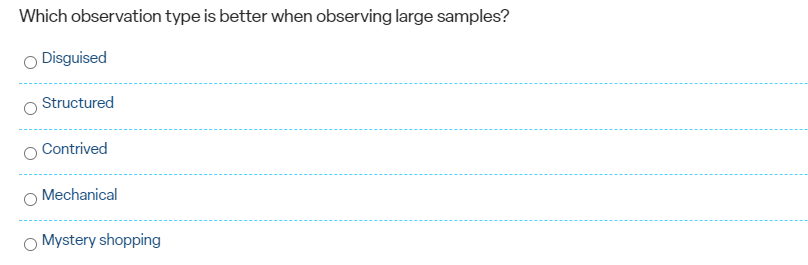
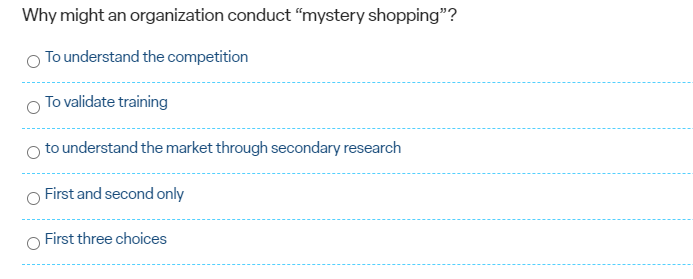
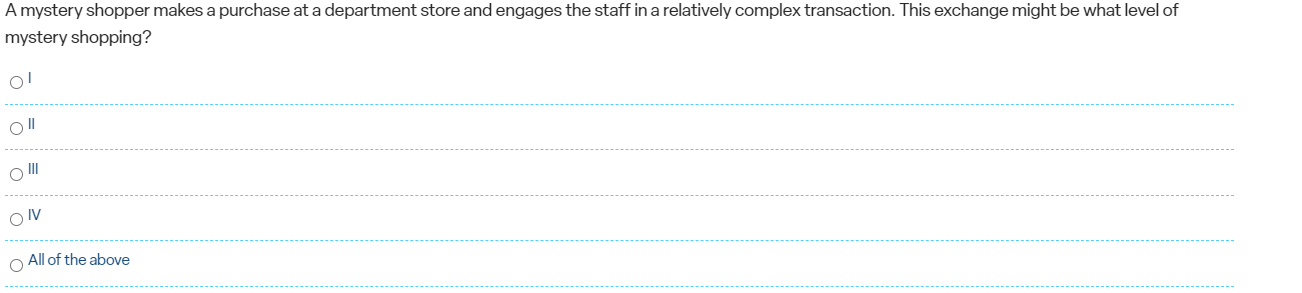
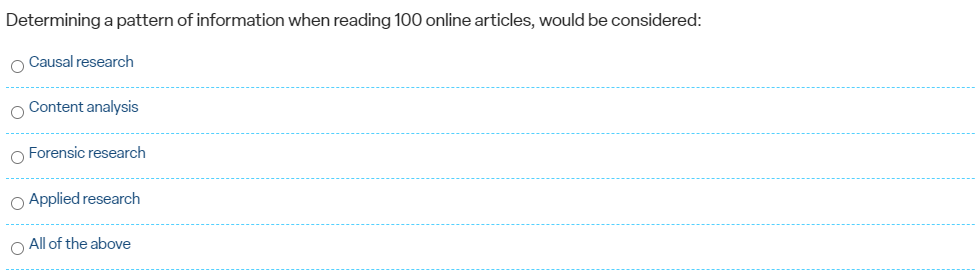
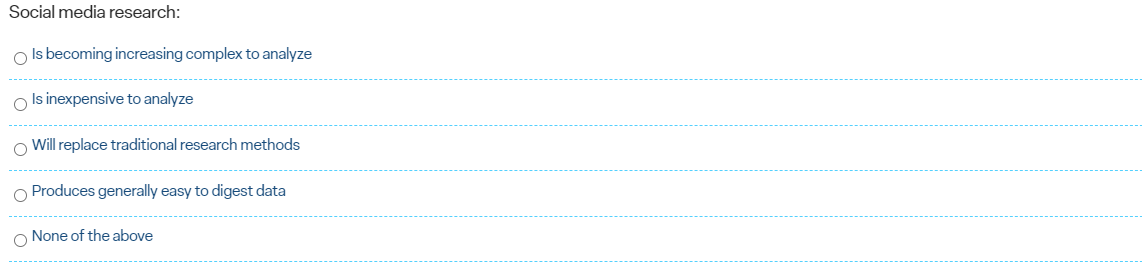
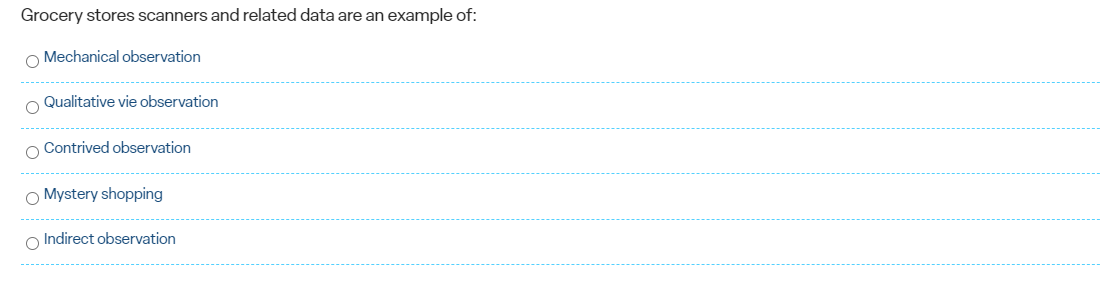
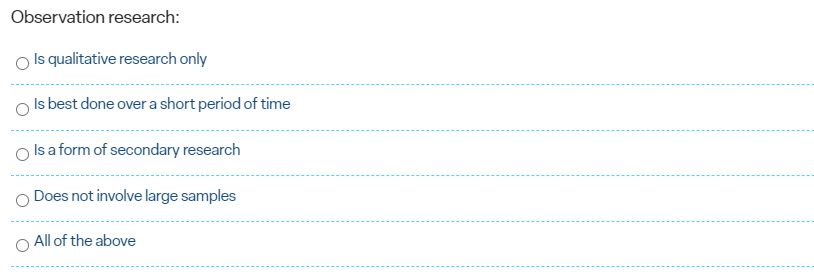
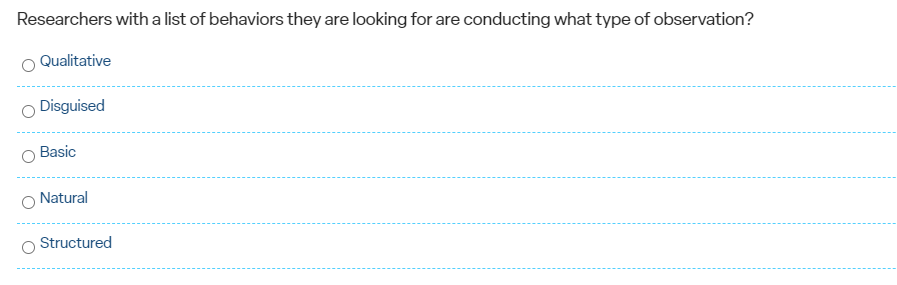
Ethnographic research: Involves observing people in their natural setting Is not used in applied research studies Is primarily accomplished though surveys Is typically qualitative None of the above Observation research: Is qualitative research only Is best done over a short period of time Is a form of secondary research Does not involve large samples All of the above Researchers with a list of behaviors they are looking for are conducting what type of observation? Qualitative Disguised Basic Natural Structured "Contrived" observation: Is considered an unethical practice Often does not yield useful data Enables researchers to control aspects of the observation Is usually unstructured All of the above Which observation type is better when observing large samples? Disguised Structured Contrived Mechanical Mystery shopping Why might an organization conduct "mystery shopping"? To understand the competition To validate training to understand the market through secondary research First and second only First three choices A mystery shopper makes a purchase at a department store and engages the staff in a relatively complex transaction. This exchange might be what level of mystery shopping? II III IV All of the above Determining a pattern of information when reading 100 online articles, would be considered: Causal research Content analysis Forensic research Applied research All of the above Social media research: Is becoming increasing complex to analyze Is inexpensive to analyze Will replace traditional research methods Produces generally easy to digest data None of the above Analyzing Twitter posts is a form of: Content analysis longitudinal analysis Secondary research All of the above Qualitative observation research generally results in a good representation of the general population: Grocery stores scanners and related data are an example of: Mechanical observation Qualitative vie observation Contrived observation Mystery shopping Indirect observation Determining data patterns in writings is an example of? Causal research Forensic analysis Primary research Direct observation Content analysis
Step by Step Solution

There are 3 Steps involved in it

1 Expert Approved Answer
Step: 1 Unlock blur-text-image

Question Has Been Solved by an Expert!

Get step-by-step solutions from verified subject matter experts

Step: 2 Unlock
Step: 3 Unlock

Students Have Also Explored These Related General Management Questions!