







Question: Evaluating cash flows with the NPV method The net present value (NPV) rule is considered one of the most common and preferred criteria that generally

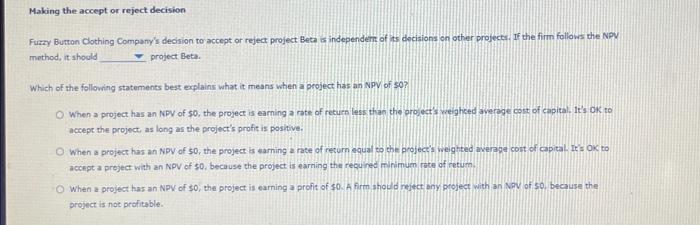
Evaluating cash flows with the NPV method The net present value (NPV) rule is considered one of the most common and preferred criteria that generally lead to good investment decsions. Consider this case: Suppose Furzy Button Clothing Company is evaluating a progosed capizal budgeting project (oroject Becta) that will mequire an initial investrnent of $3,000,000. The project is expected to gonerate the following net cash flows: Fuezy Button Clothing Company's weighted average cost of capical is 7%, and project Beta has the sarna nak as the firmis average project. Based on the cash floves, what is project Beta's NPV? (Notet Do not round your intermediats calculations.) 51,567,784 51.092 .784 51.432 .216 31742,704 Making the accept or reject decision Furzy Burton Clothing Compary's decision to accept or reject project Beca is independern of its decisions on other projects. If the firm follows the NPV method, it should project Beta. Which of the following statements best explains what it means when a project has an NPV of so? When a project has an NPV of $0, the project is earning a rate of recuro fess tian the project's veighsed awarage cont of capital. 1t 's ok to accept the project, as long as the project's profit is positive. When a project has an NPV of 50 , the project is earning a rate of return equal to the project's weighted average cont of capital te's ox to accent a project with an NPV of $0, because the project is earning the recuined firimum rote of retum. project is not profitable
Step by Step Solution
There are 3 Steps involved in it

Get step-by-step solutions from verified subject matter experts
 Study Help