



Question: Exercise 1: (5+10+1+3) We consider the network architecture and the IP plan described in Figure 1. Within this network, 6 end user's LANs (LANs with
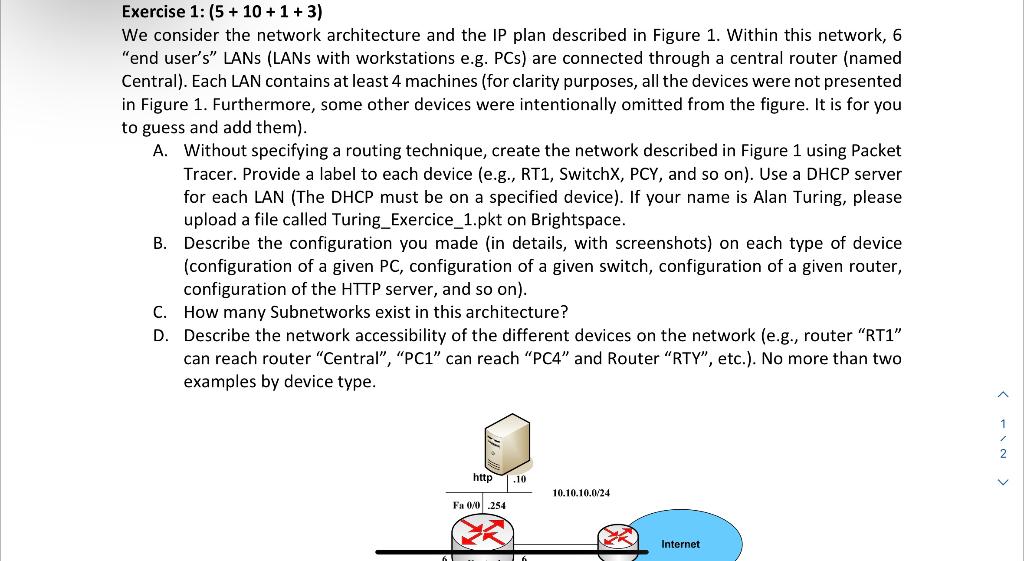
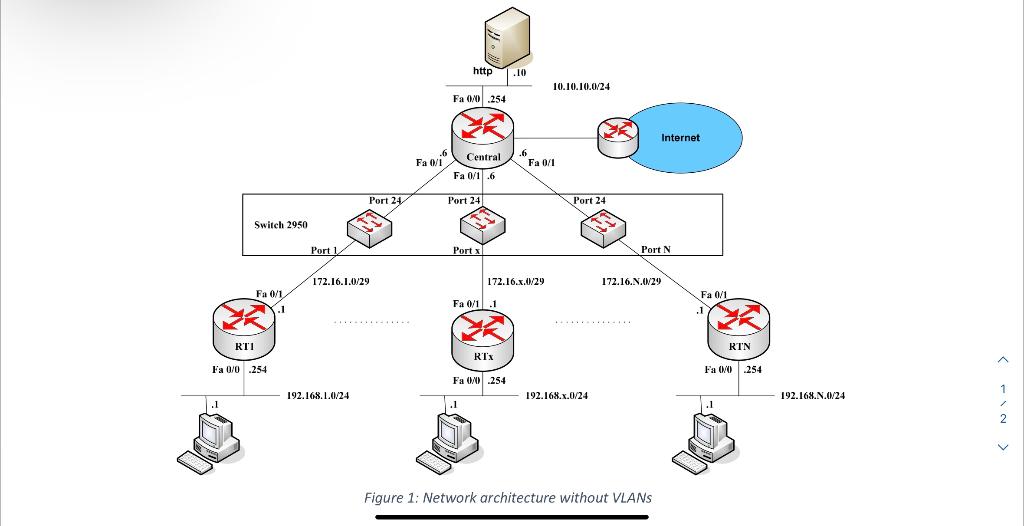
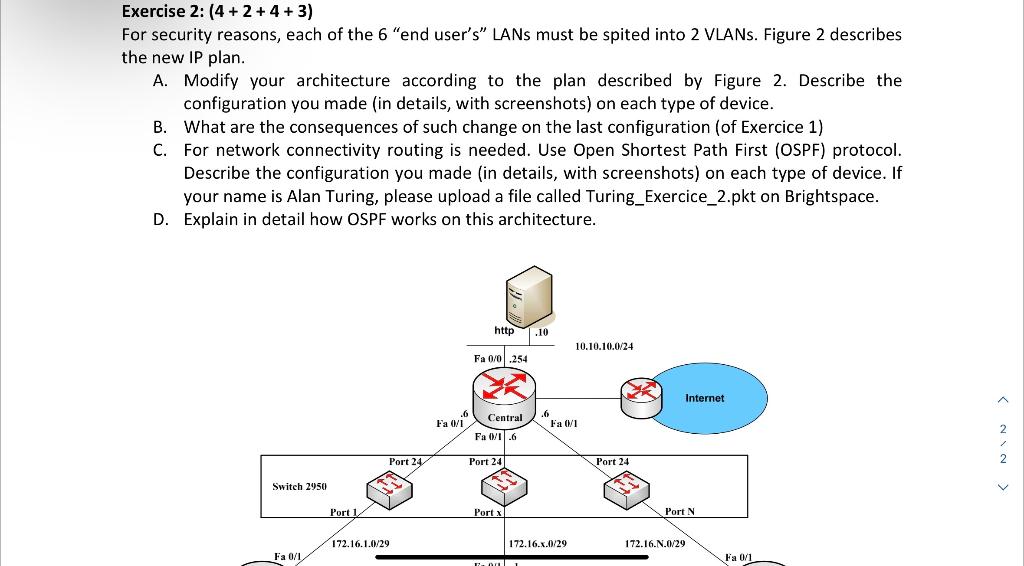
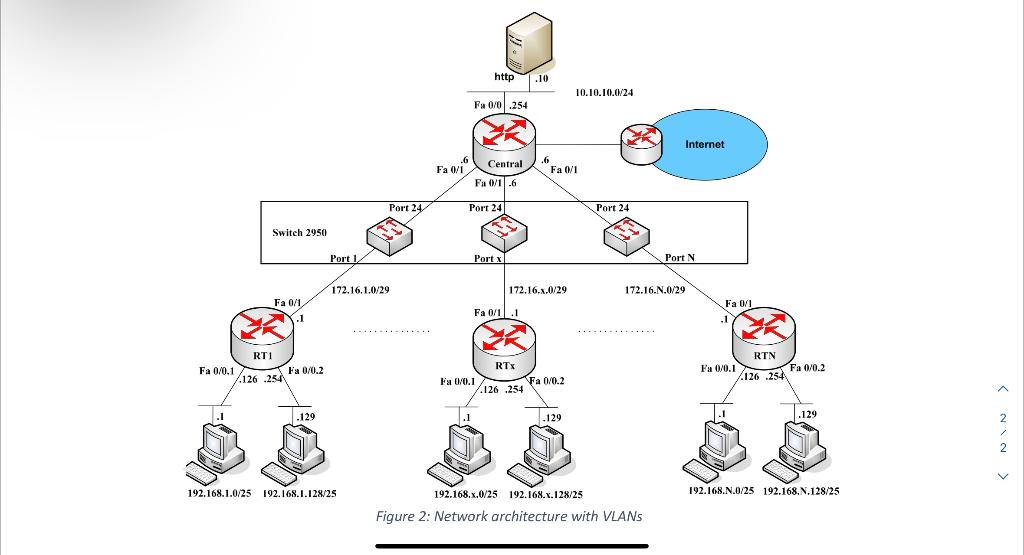

Exercise 1: (5+10+1+3) We consider the network architecture and the IP plan described in Figure 1. Within this network, 6 "end user's" LANs (LANs with workstations e.g. PCs) are connected through a central router (named Central). Each LAN contains at least 4 machines (for clarity purposes, all the devices were not presented in Figure 1. Furthermore, some other devices were intentionally omitted from the figure. It is for you to guess and add them). A. Without specifying a routing technique, create the network described in Figure 1 using Packet Tracer. Provide a label to each device (e.g., RT1, SwitchX, PCY, and so on). Use a DHCP server for each LAN (The DHCP must be on a specified device). If your name is Alan Turing, please upload a file called Turing_Exercice_1.pkt on Brightspace. B. Describe the configuration you made (in details, with screenshots) on each type of device (configuration of a given PC, configuration of a given switch, configuration of a given router, configuration of the HTTP server, and so on). C. How many Subnetworks exist in this architecture? D. Describe the network accessibility of the different devices on the network (e.g., router "RT1" can reach router "Central", "PC1" can reach "PC4" and Router "RTY", etc.). No more than two examples by device type. Figure 1: Network architecture without VLANS Exercise 2:(4+2+4+3) For security reasons, each of the 6 "end user's" LANs must be spited into 2 VLANs. Figure 2 describes the new IP plan. A. Modify your architecture according to the plan described by Figure 2. Describe the configuration you made (in details, with screenshots) on each type of device. B. What are the consequences of such change on the last configuration (of Exercice 1) C. For network connectivity routing is needed. Use Open Shortest Path First (OSPF) protocol. Describe the configuration you made (in details, with screenshots) on each type of device. If your name is Alan Turing, please upload a file called Turing_Exercice_2.pkt on Brightspace. D. Explain in detail how OSPF works on this architecture. Exercise 3: (5+1+6) The architecture presented in exercise 2 represents the Autonomous System (AS) 1. For this project you need to create four Autonomous Systems (you need to create just the routers). Create a web server on AS4. Make sure that the machines of AS1 reach the web server on AS4. Explain in detail the BGP configurations you provided. Exercise 1: (5+10+1+3) We consider the network architecture and the IP plan described in Figure 1. Within this network, 6 "end user's" LANs (LANs with workstations e.g. PCs) are connected through a central router (named Central). Each LAN contains at least 4 machines (for clarity purposes, all the devices were not presented in Figure 1. Furthermore, some other devices were intentionally omitted from the figure. It is for you to guess and add them). A. Without specifying a routing technique, create the network described in Figure 1 using Packet Tracer. Provide a label to each device (e.g., RT1, SwitchX, PCY, and so on). Use a DHCP server for each LAN (The DHCP must be on a specified device). If your name is Alan Turing, please upload a file called Turing_Exercice_1.pkt on Brightspace. B. Describe the configuration you made (in details, with screenshots) on each type of device (configuration of a given PC, configuration of a given switch, configuration of a given router, configuration of the HTTP server, and so on). C. How many Subnetworks exist in this architecture? D. Describe the network accessibility of the different devices on the network (e.g., router "RT1" can reach router "Central", "PC1" can reach "PC4" and Router "RTY", etc.). No more than two examples by device type. Figure 1: Network architecture without VLANS Exercise 2:(4+2+4+3) For security reasons, each of the 6 "end user's" LANs must be spited into 2 VLANs. Figure 2 describes the new IP plan. A. Modify your architecture according to the plan described by Figure 2. Describe the configuration you made (in details, with screenshots) on each type of device. B. What are the consequences of such change on the last configuration (of Exercice 1) C. For network connectivity routing is needed. Use Open Shortest Path First (OSPF) protocol. Describe the configuration you made (in details, with screenshots) on each type of device. If your name is Alan Turing, please upload a file called Turing_Exercice_2.pkt on Brightspace. D. Explain in detail how OSPF works on this architecture. Exercise 3: (5+1+6) The architecture presented in exercise 2 represents the Autonomous System (AS) 1. For this project you need to create four Autonomous Systems (you need to create just the routers). Create a web server on AS4. Make sure that the machines of AS1 reach the web server on AS4. Explain in detail the BGP configurations you provided
Step by Step Solution
There are 3 Steps involved in it

Get step-by-step solutions from verified subject matter experts