







Question: Exercise B-19 Using present and future value tables LO C1, P1, P2, P3, P4 For each of the following situations, identify (1) the case as
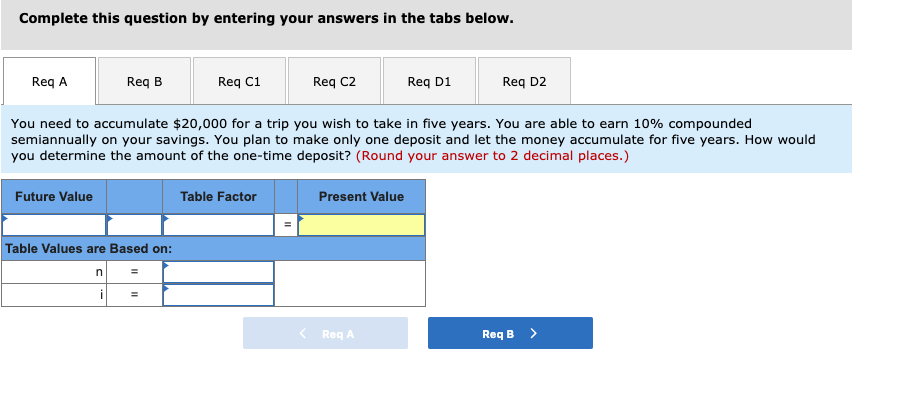
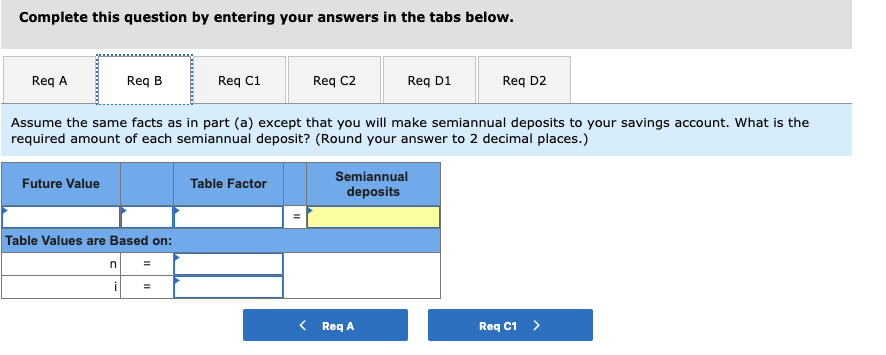
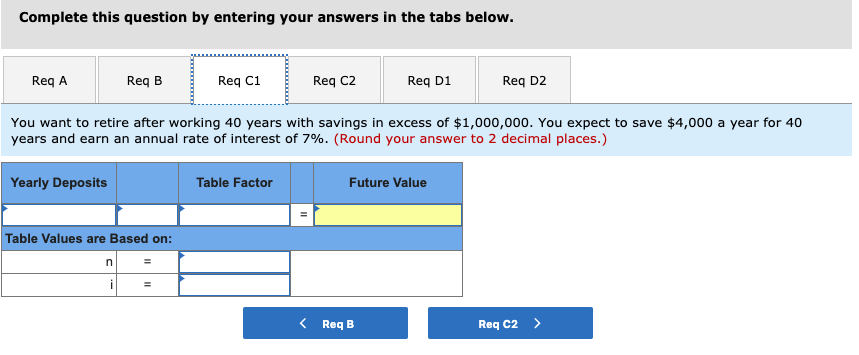
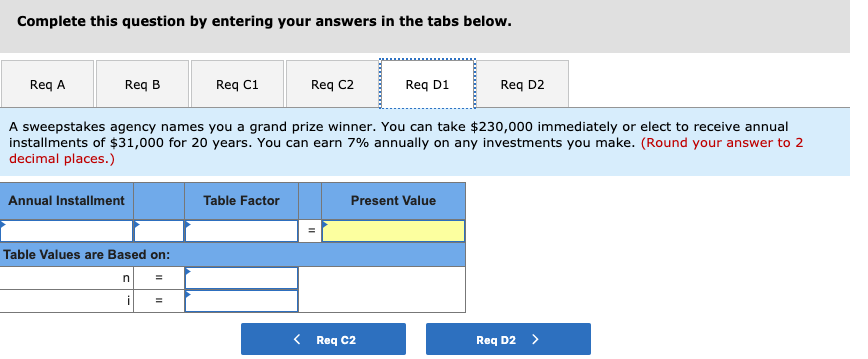
Exercise B-19 Using present and future value tables LO C1, P1, P2, P3, P4 For each of the following situations, identify (1) the case as either (a) a present or a future value and (b) a single amount or an annuity, (2) the table you would use in your computations (but do not solve the problem), and (3) the interest rate and time periods you would use. (PV of $1, FV of $1, PVA of $1, and FVA of $1) (Use appropriate factor(s) from the tables provided. Round "Table Factors" to 4 decimal places.) a. You need to accumulate $20,000 for a trip you wish to take in five years. You are able to earn 10% compounded semiannually on your savings. You plan to make only one deposit and let the money accumulate for five years. How would you determine the amount of the one-time deposit? (Round your answer to 2 decimal places.) b. Assume the same facts as in part (a) except that you will make semiannual deposits to your savings account. What is the required amount of each semiannual deposit? (Round your answer to 2 decimal places.) C-1. You want to retire after working 40 years with savings in excess of $1,000,000. You expect to save $4,000 a year for 40 years and earn an annual rate of interest of 7%. (Round your answer to 2 decimal places.) C-2. Will you be able to retire with more than $1,000,000 in 40 years? d-1. A sweepstakes agency names you a grand prize winner. You can take $230,000 immediately or elect to receive annual installments of $31,000 for 20 years. You can earn 7% annually on any investments you make. (Round your answer to 2 decimal places.) d-2. Which prize do you choose to receive? Complete this question by entering your answers in the tabs below. Req A Req B Reg C1 Reg C2 Req Di Req D2 You need to accumulate $20,000 for a trip you wish to take in five years. You are able to earn 10% compounded semiannually on your savings. You plan to make only one deposit and let the money accumulate for five years. How would you determine the amount of the one-time deposit? (Round your answer to 2 decimal places.) Future Value Table Factor Present Value Table Values are Based on: Complete this question by entering your answers in the tabs below. Req A Req B Req C1 Reg C2 Req Di Req D2 Assume the same facts as in part (a) except that you will make semiannual deposits to your savings account. What is the required amount of each semiannual deposit? (Round your answer to 2 decimal places.) Future Value Table Factor Semiannual deposits Table Values are Based on: Req A ReqC1 > Complete this question by entering your answers in the tabs below. Req A Req B Reg Ci Reg C2 Req D1 Req D2 You want to retire after working 40 years with savings in excess of $1,000,000. You expect to save $4,000 a year for 40 years and earn an annual rate of interest of 7%. (Round your answer to 2 decimal places.) Yearly Deposits Table Factor Future Value Table Values are Based on: ( ReqB Reg C2 > Complete this question by entering your answers in the tabs below. Req A Req B Req c1 Req c2 Req D1 Req D2 A sweepstakes agency names you a grand prize winner. You can take $230,000 immediately or elect to receive annual installments of $31,000 for 20 years. You can earn 7% annually on any investments you make. (Round your answer to 2 decimal places.) Annual Installment Table Factor Present Value mallinen tiene unter Fram Value Table Values are Based on:
Step by Step Solution
There are 3 Steps involved in it

Get step-by-step solutions from verified subject matter experts
 Study Help