







Question: Exercise III: Volume Record your findings in the data sheet. Examine the labeling on your soda bottle. Somewhere on the bottle or can you should
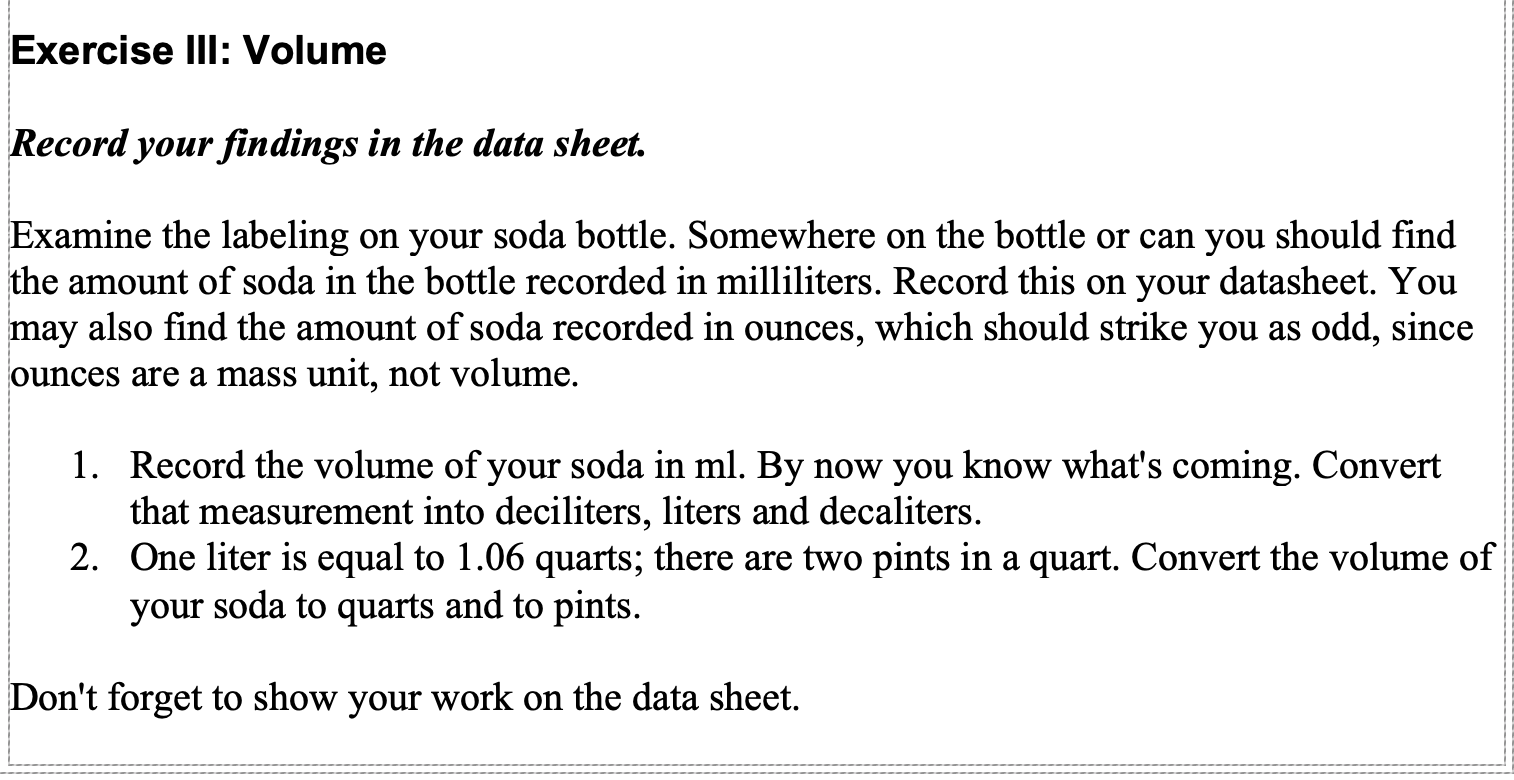
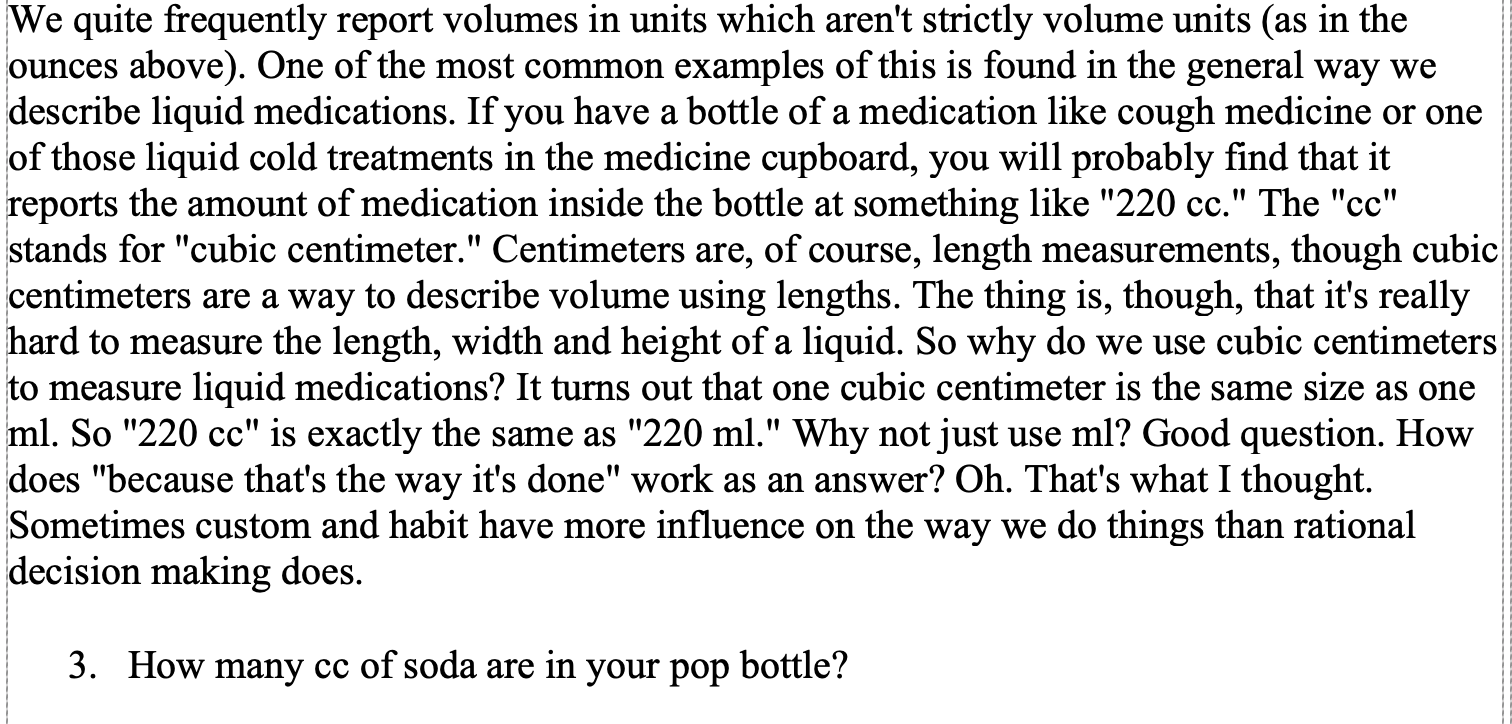
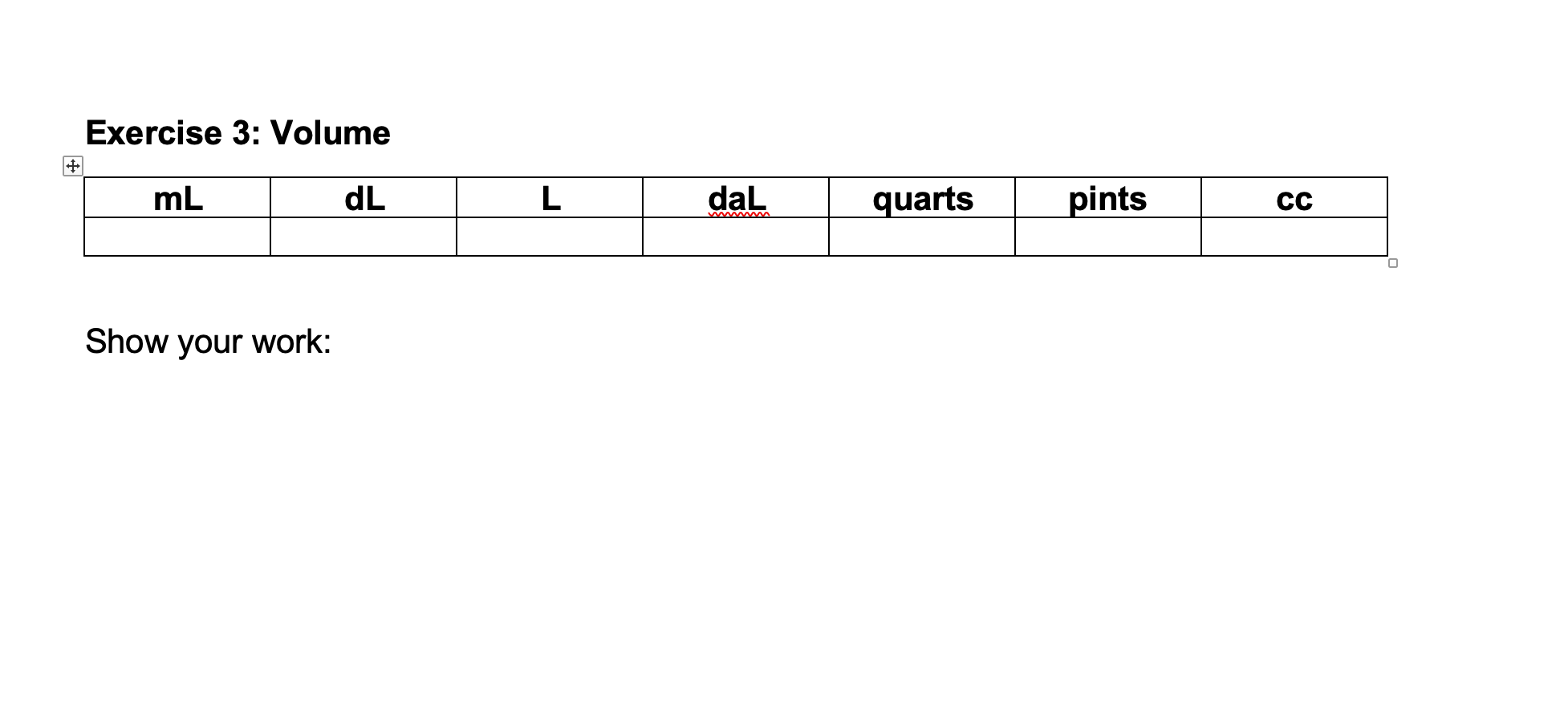
Exercise III: Volume Record your findings in the data sheet. Examine the labeling on your soda bottle. Somewhere on the bottle or can you should find the amount of soda in the bottle recorded in milliliters. Record this on your datasheet. You may also find the amount of soda recorded in ounces, which should strike you as odd, since ounces are a mass unit, not volume. 1. Record the volume of your soda in ml. By now you know what's coming. Convert that measurement into deciliters, liters and decaliters. 2. One liter is equal to 1.06 quarts; there are two pints in a quart. Convert the volume of your soda to quarts and to pints. Don't forget to show your work on the data sheet. We quite frequently report volumes in units which aren't strictly volume units (as in the ounces above). One of the most common examples of this is found in the general way we describe liquid medications. If you have a bottle of a medication like cough medicine or one of those liquid cold treatments in the medicine cupboard, you will probably find that it reports the amount of medication inside the bottle at something like "220 cc." The "cc" stands for "cubic centimeter." Centimeters are, of course, length measurements, though cubic centimeters are a way to describe volume using lengths. The thing is, though, that it's really hard to measure the length, width and height of a liquid. So why do we use cubic centimeters to measure liquid medications? It turns out that one cubic centimeter is the same size as one ml. So "220 cc" is exactly the same as "220 ml." Why not just use ml? Good question. How does "because that's the way it's done" work as an answer? Oh. That's what I thought. Sometimes custom and habit have more influence on the way we do things than rational decision making does. 3. How many cc of soda are in your pop bottle? Exercise 3: Volume mL dL L dal quarts pints CC Show your work: Exercise III: Volume Record your findings in the data sheet. Examine the labeling on your soda bottle. Somewhere on the bottle or can you should find the amount of soda in the bottle recorded in milliliters. Record this on your datasheet. You may also find the amount of soda recorded in ounces, which should strike you as odd, since ounces are a mass unit, not volume. 1. Record the volume of your soda in ml. By now you know what's coming. Convert that measurement into deciliters, liters and decaliters. 2. One liter is equal to 1.06 quarts; there are two pints in a quart. Convert the volume of your soda to quarts and to pints. Don't forget to show your work on the data sheet. We quite frequently report volumes in units which aren't strictly volume units (as in the ounces above). One of the most common examples of this is found in the general way we describe liquid medications. If you have a bottle of a medication like cough medicine or one of those liquid cold treatments in the medicine cupboard, you will probably find that it reports the amount of medication inside the bottle at something like "220 cc." The "cc" stands for "cubic centimeter." Centimeters are, of course, length measurements, though cubic centimeters are a way to describe volume using lengths. The thing is, though, that it's really hard to measure the length, width and height of a liquid. So why do we use cubic centimeters to measure liquid medications? It turns out that one cubic centimeter is the same size as one ml. So "220 cc" is exactly the same as "220 ml." Why not just use ml? Good question. How does "because that's the way it's done" work as an answer? Oh. That's what I thought. Sometimes custom and habit have more influence on the way we do things than rational decision making does. 3. How many cc of soda are in your pop bottle? Exercise 3: Volume mL dL L dal quarts pints CC Show your work
Step by Step Solution
There are 3 Steps involved in it

Get step-by-step solutions from verified subject matter experts
 Study Help