







Question: Exercises Section 1 1. Count the next 10 numbers (a) in octal starting from 267,(b) in base 3 starting from 2102, (c) In binary starting
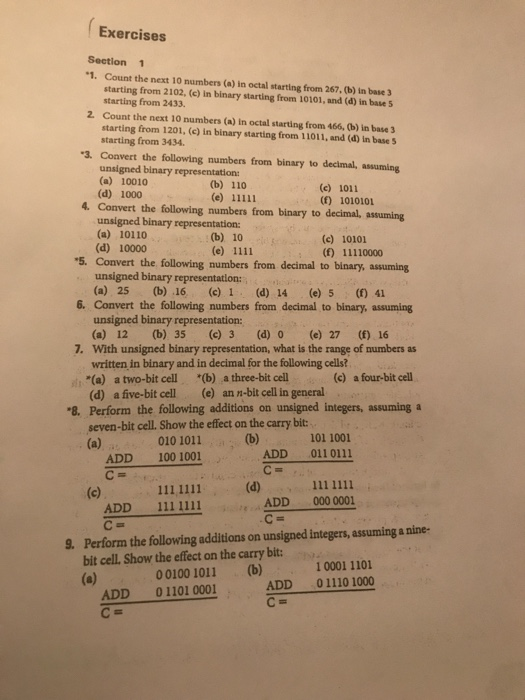
Exercises Section 1 1. Count the next 10 numbers (a) in octal starting from 267,(b) in base 3 starting from 2102, (c) In binary starting from 10101, and (d) in base 5 starting from 2433. 2 Count the next 10 numbers (a) in octal starting from 466, (b) in base 3 starting from 1201, (e) in binary starting from 11011, and (d) in base starting from 3434. 3. Convert the following numbers from binary to decimal, assuming unsigned binary representation (a) 10010 (d) 1000 (b) 110 (c) 1011 (f) 1010101 0 4 Convert the following numbers from binary to decimal, assuming unsigned binary representation: (a) 10110 (d) 10000 (b) 10 (e) 1111 (c) 10101 (f) 11110000 5. Convert the following numbers from decimal to binary, assuming unsigned binary representation: (a) 25 (b) 16 (c) 1 (d) 14 (e) 5 () 41 6. Convert the following numbers from decimal to binary, assuming unsigned binary representation: (a) 12 (b) 35 (c) 3 (d) 0 With unsigned binary representation, what is the range of numbers as written in binary and in decimal for the following cells? (e) 27 (f) 16 7. (a) a two-bit cell(b) a three-bit cell (c) a four-bit cell (d) a five-bit cell (e) ann-bit cell in general 8. Perform the following additions on unsigned integers, assuming a seven-bit cell. Show the effect on the carry bit: 101 1001 011 0111 ADD ADD 100 1001 ADD 000 0001 9. Perform the following additions on unsigned integers, assuming a nine bit cell. Show the effect on the carry bit: 0 0100 1011 1 0001 1101 01110 1000 (b) ADD ADD 01101 0001
Step by Step Solution
There are 3 Steps involved in it

Get step-by-step solutions from verified subject matter experts
 Study Help