







Question: Exhibit 1 Getting Started (A) Point Matrix Holland: Issues and Possible Results Points Base Salary $2,500 400 $2,000 200 $1,800 0 Year 2 Salary Increase
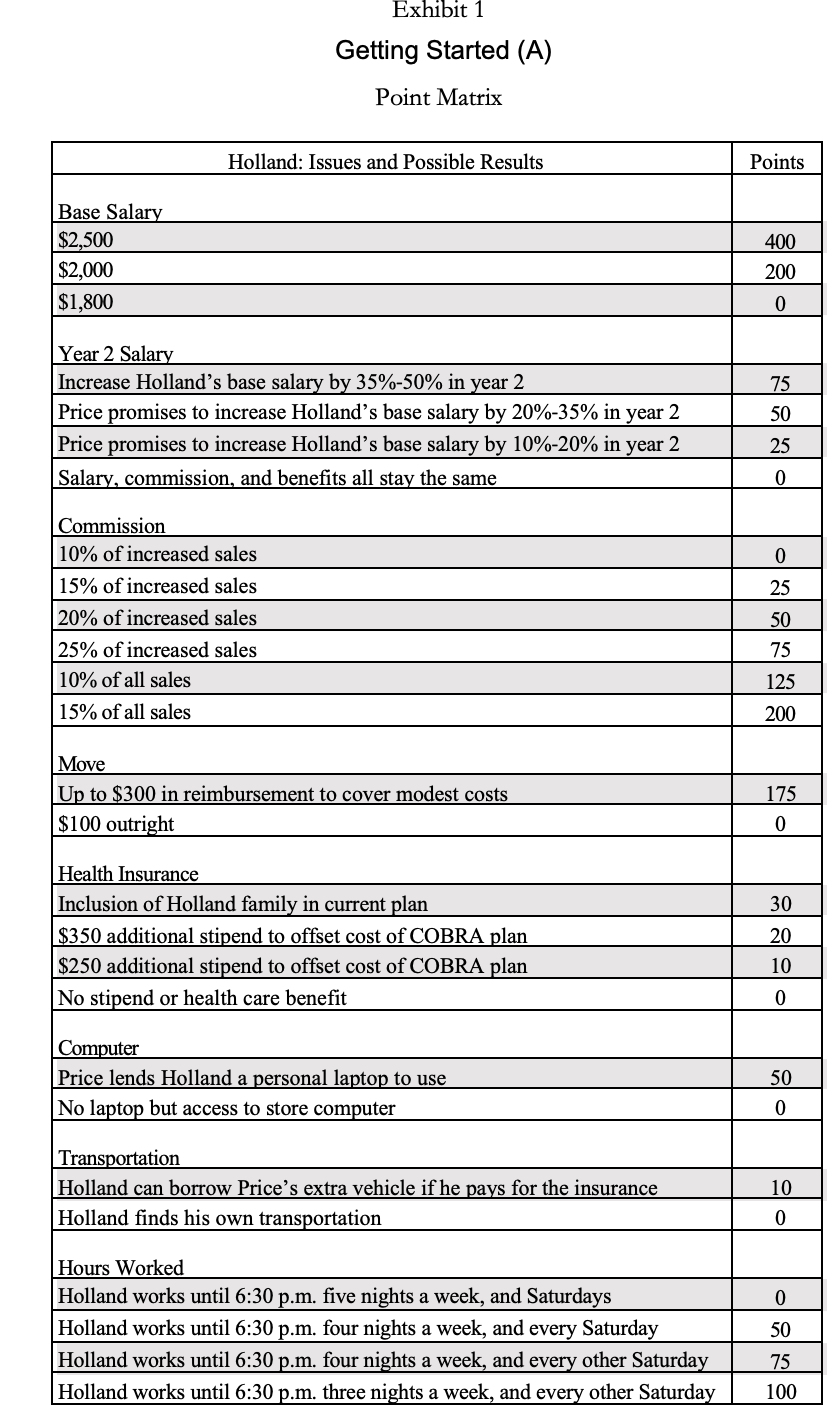
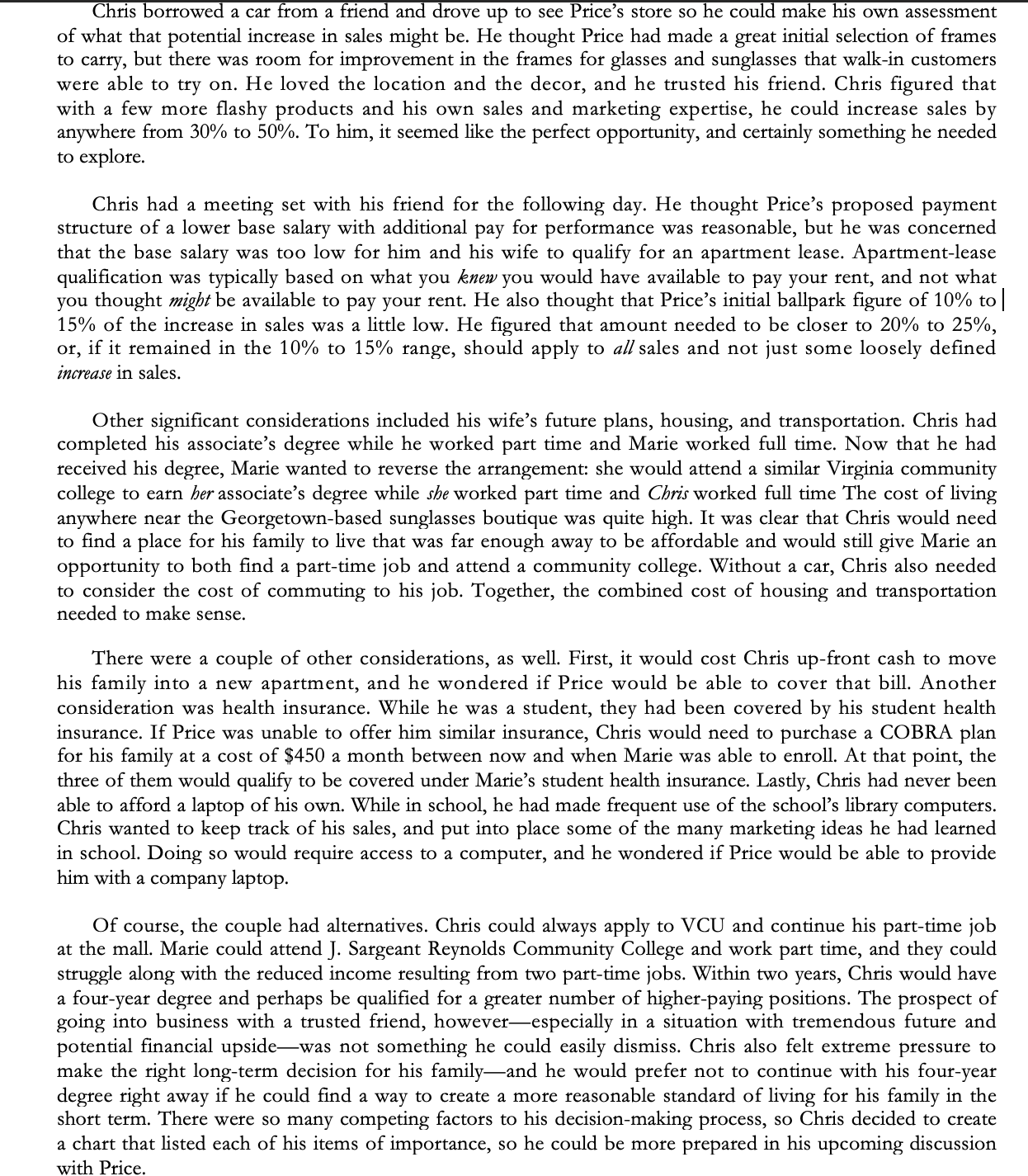
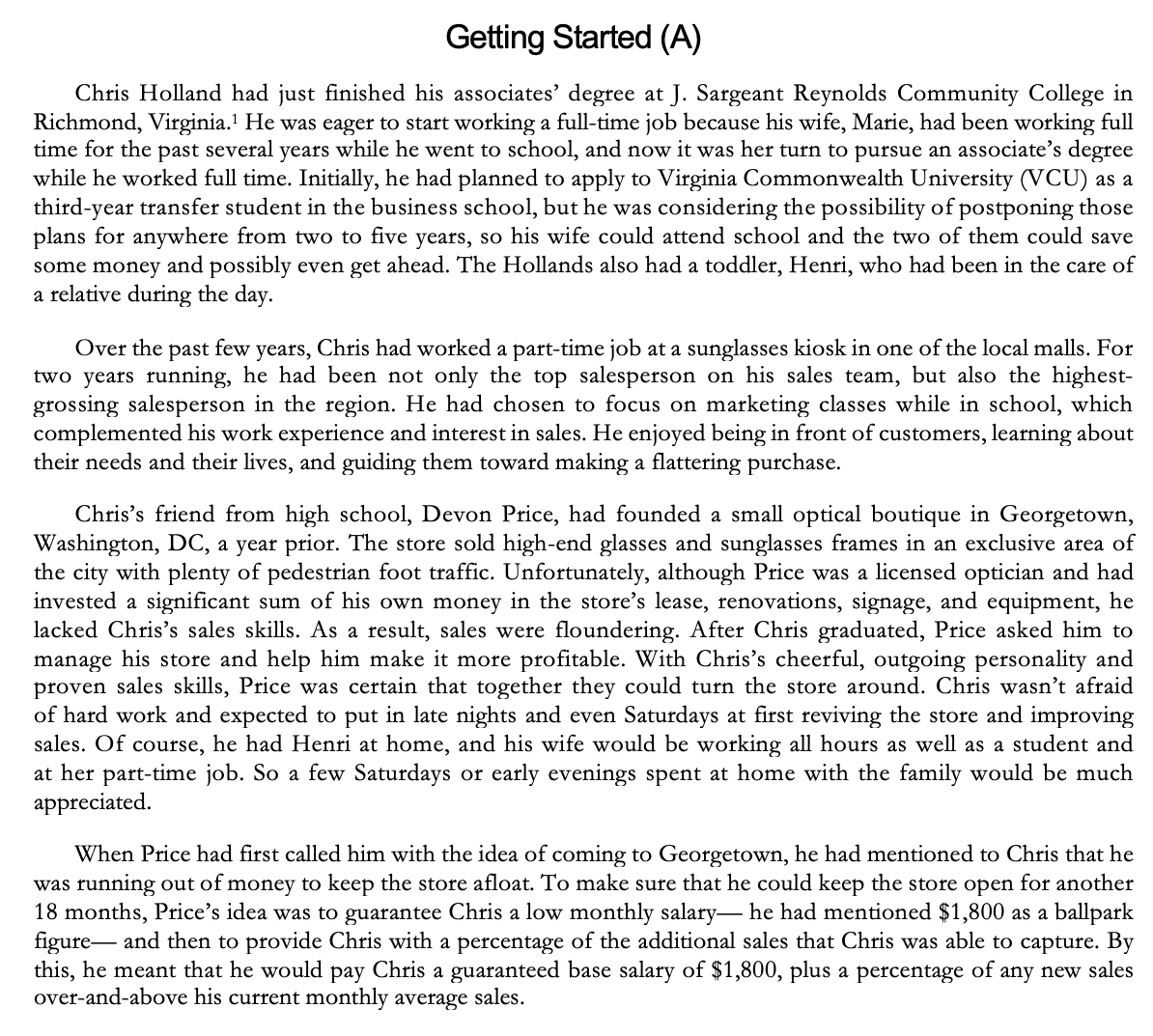
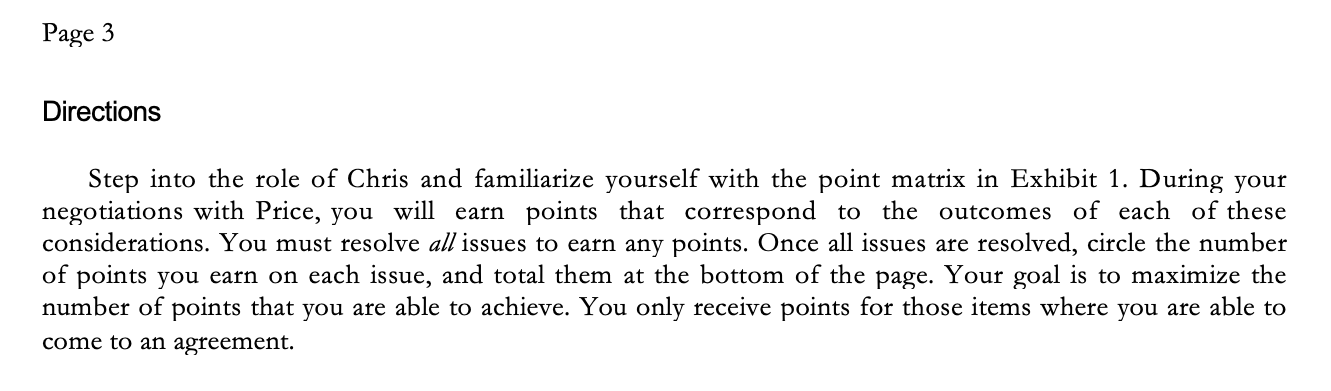
Exhibit 1 Getting Started (A) Point Matrix Holland: Issues and Possible Results Points Base Salary $2,500 400 $2,000 200 $1,800 0 Year 2 Salary Increase Holland's base salary by 35%-50% in year 2 75 Price promises to increase Holland's base salary by 20%-35% in year 2 50 Price promises to increase Holland's base salary by 10%-20% in year 2 25 Salary, commission, and benefits all stay the same 0 Commission 10% of increased sales 0 15% of increased sales 25 20% of increased sales 50 25% of increased sales 75 10% of all sales 125 15% of all sales 200 Move Up to $300 in reimbursement to cover modest costs 175 $100 outright 0 Health Insurance Inclusion of Holland family in current plan 30 $350 additional stipend to offset cost of COBRA plan 20 $250 additional stipend to offset cost of COBRA plan 10 No stipend or health care benefit 0 Computer Price lends Holland a personal laptop to use 50 No laptop but access to store computer 0 Transportation Holland can borrow Price's extra vehicle if he pays for the insurance 10 Holland finds his own transportation 0 Hours Worked Holland works until 6:30 p.m. five nights a week, and Saturdays 0 Holland works until 6:30 p.m. four nights a week, and every Saturday 50 Holland works until 6:30 p.m. four nights a week, and every other Saturday 75 Holland works until 6:30 p.m. three nights a week, and every other Saturday 100Chris borrowed a car Eom a end and dfove up to see Price's store so he could me his own assessment of what that potential increase in sales might be. He thought Price had made a great initial selection of frames to carry, but there was room for improvement in the frames for glasses and sunglasses that walkin customers were able to try on. He loved the location and the decor, and he trusted his friend. Chris gured that with a few more ashy products and his own sales and marketing expertise, he could increase sales by anywhere from 30% to 50%. To him, it seemed like the perfect opportunity, and certainly something he needed to explore. Chris had a meeting set with his friend for the following day. He thought Price's proposed payment structure of a lower base salary with additional pay for performance was reasonable, but he was concerned that the base salary was too low for him and his wife to qualify for an apartment lease. Apartment-lease qualication was typically based on what you knew you would have available to pay your rent, and not what you thought might be available to pay your rent. He also thought that Price's initial ballpark figure of 10% to I 15% of the increase in sales was a little low. He figured that amount needed to be closer to 20% to 25%, or, if it remained in the 10% to 15% range, should apply to all sales and not just some loosely defined framers in sales. Other signicant considerations included his wife's future plans, housing, and transportation. Chris had completed his associate's degree while he worked part time and Marie worked full time. Now that he had received his degree, Marie wanted to reverse the arrangement: she would attend a similar Virginia community college to earn bar associate's degree while she worked part time and Chris worked full time The cost of living anywhere near the Georgetown-based sunglasses boutique was quite high. It was clear that Chris would need to nd a place for his family to live that was far enough away to be affordable and would still give Marie an opportunity to both nd a parttime job and attend a community college. Without a car, Chris also needed to consider the cost of commuting to his job. Together, the combined cost of housing and transportation needed to make sense. There were a couple of other considerations, as well. First, it would cost Chris up-front cash to move his family into a new apartment, and he wondered if Price would be able to cover that bill. Another consideration was health insurance. While he was a student, they had been covered by his student health insurance. If Price was unable to offer him similar insurance, Chris would need to purchase a COBRA plan for his family at a cost of $450 a month between now and when Marie was able to enroll. At that point, the three of them would qualify to be covered under Marie's student health insurance. Lastly, Chris had never been able to afford a laptop of his own. While in school, he had made frequent use of the school's library computers. Chris wanted to keep track of his sales, and put into place some of the many marketing ideas he had learned in school. Doing so would require access to a computer, and he wondered if Price would be able to provide him with a company laptop. Of course, the couple had alternatives. Chris could always apply to VCU and continue his part-time job at the mall. Marie could attend]. Sargeant Reynolds Community College and work part time, and they could struggle along with the reduced income resulting from two part-time jobs. Within two years, Chiis would have a fouryear degree and perhaps be qualied for a greater number of higher-paying positions. The prospect of going into business with a trusted friend, howeverespecially in a situation with tremendous future and potential nancial upsidewas not something he could easily dismiss. Chris also felt extreme pressure to make the right long-term decision for his familyand he would prefer not to continue with his four-year degree right away if he could nd a way to create a more reasonable standard of living for his family in the short term. There were so many competing factors to his decision-making process, so Chris decided to create a chart that listed each of his items of importance, so he could be more prepared in his upcoming discussion with Price. Getting Started (A) Chris Holland had just nished his associates' degree at J. Sargeant Reynolds Community College in Richmond, Virginia.1 He was eager to start working a full-time job because his wife, Maiie, had been working full time for the past several years while he went to school, and now it was her turn to pursue an associate's degree while he worked full time. Initially, he had planned to apply to Virginia Commonwealth University (V CU) as a thirdyear transfer student in the business school, but he was considering the possibility of postponing those plans for anywhere from two to ve years, so his wife could attend school and the two of them could save some money and possibly even get ahead. The Hollands also had a toddler, Henri, who had been in the care of a relative dun'ng the day. Over the past few years, Chris had worked a part-time job at a sunglasses kiosk in one of the local malls. For two years running, he had been not only the top salesperson on his sales team, but also the highest- grossing salesperson in the region. He had chosen to focus on marketing classes while in school, which complemented his work experience and interest in sales. He enjoyed being in front of customers, learning about their needs and their lives, and guiding them toward making a attering purchase. Chris's friend from high school, Devon Price, had founded a small optical boutique in Georgetown, Washington, DC, a year prior. The store sold high-end glasses and sunglasses frames in an exclusive area of the city with plenty of pedestrian foot trafc. Unfortunately, although Price was a licensed optician and had invested a signicant sum of his own money in the store's lease, renovations, signage, and equipment, he lacked Chris's sales skills. As a result, sales were oundering. After Chris graduated, Price asked him to manage his store and help him make it more profitable. With Chris's cheerful, outgoing personality and proven sales skills, Price was certain that together they could turn the store around. Chris wasn't afraid of hard work and expected to put in late nights and even Saturdays at rst reviving the store and improving sales. Of course, he had Henri at home, and his wife would be working all hours as well as a student and at her part-time job. So a few Saturdays or early evenings spent at home with the family would be much appreciated. When Price had rst called him with the idea of coming to Georgetown, he had mentioned to Chris that he was running out of money to keep the store aoat. To make sure that he could keep the store open for another 18 months, Price's idea was to guarantee Chris a low monthly salary he had mentioned $1,800 as a ballpark gure and then to provide Chris with a percentage of the additional sales that Chris was able to capture. By this, he meant that he would pay Chris a guaranteed base salary of $1,800, plus a percentage of any new sales over-andabove his current monthly average sales. Page 3 Directions Step into the role of Chris and familiarize yourself with the point matrix in Exhibit 1. During your negotiations with Price, you will earn points that correspond to the outcomes of each of these considerations. You must resolve all issues to earn any points. Once all issues are resolved, circle the number of points you earn on each iSSue, and total them at the bottom of the page. Your goal is to maximize the number of points that you are able to achieve. You only receive points for those items where you are able to COI'IIE to an agreement
Step by Step Solution
There are 3 Steps involved in it

Get step-by-step solutions from verified subject matter experts
 Study Help