







Question: Expected Behavior Write a Python function seq_sim(seq1, seq2, k) that takes as arguments two strings seq1 and seq2 and an integer k , and returns
Expected Behavior
Write a Python function seq_sim(seq1, seq2, k) that takes as arguments two strings seq1 and seq2 and an integer k, and returns a floating point value between 0 and 1 (inclusive) giving the similarity between seq1 and seq2. The similarity value should be computed as the Jaccard index applied to the sets of k-grams of seq1 and seq2 (where k is the third argument to the function).
Jaccard index = 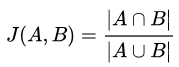
HINT :
to create an empty set: set()
the set corresponding to a list L is given by: set(L)
the union of sets S1 and S2 is given by: S1.union(S2)
the intersection of sets S1 and S2 is given by: S1.intersection(S2)
You can assume that both seq1 and seq2 have length at least k.
Expected output:
Call: seq_sim('aaaaaaaaaa', 'aaaa', 3) Return value: 1.0
Call: seq_sim('aabaacaad', 'abaaba', 3) Return value: 0.42857142857142855
Call: seq_sim('aabaacaad', 'abaaba', 4) Return value: 0.2857142857142857
AnB AUB A. B)
Step by Step Solution
There are 3 Steps involved in it

Get step-by-step solutions from verified subject matter experts
 Study Help