







Question: Explain how the below key concept are linked to this case (i.e. how the key concepts you have learned in this topic is applied in
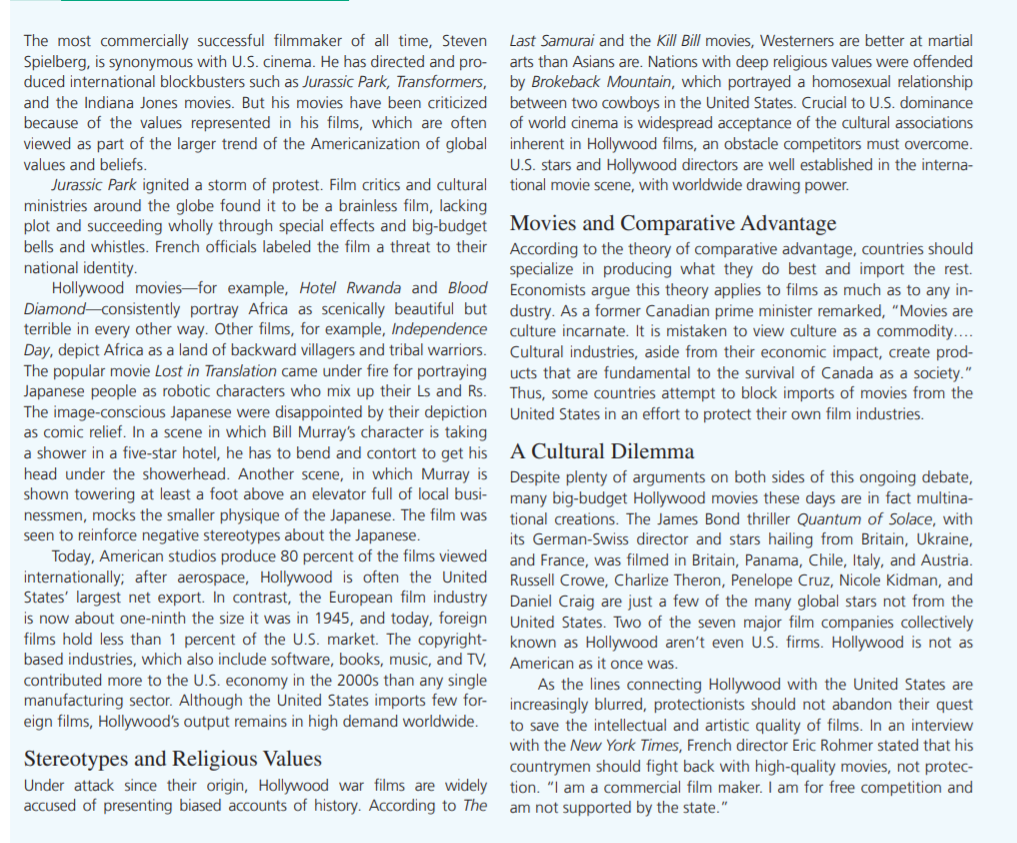
Explain how the below key concept are linked to this case (i.e. how the key concepts you have learned in this topic is applied in this case study?)
Culture and Cross-Cultural Risk
Culture is the values, beliefs, customs, arts, and other products of human thought and work that characterize the people of a given society. Cross-cultural risk arises from a situation or event in which a cultural misunderstanding puts some human value at stake. Values and attitudes are shared beliefs or norms that individuals have internalized.
Dimensions of Culture
Culture is reflected by various dimensions, including our values and attitudes; manners and customs; time and space perceptions; symbolic, material, and creative expressions; education; and social structure. Social structure is characterized by individuals, family, and groups as well as by social stratification and mobility. Monochronic cultures exhibit a rigid orientation to time in which the individual is focused on schedules, punctuality, and time as a resource. Polychronic cultures have a flexible, nonlinear orientation to time in which the individual takes a long-term perspective.
Role of Language and Religion in Culture
There are nearly 7000 active languages in the world, of which Mandarin Chinese, Hindi, English, Spanish, and Arabic are among the most common. Language has both verbal and non- verbal characteristics and is conditioned by our environment. Sometimes it is hard to find words to convey the same meaning in different languages. Religion provides meaning and motivation that define peoples ideals and values and affects culture and international business deeply. The four main religions are Christianity, Islam, Hinduism, and Buddhism.
Cultures Effect in international business
In international business, culture affects management of employees, marketing activities, and interaction with customers and partners. Culture influences the design of products and services. It affects the firms internal environment and how managers perceive and deal with business tasks.
Models and Explanations of Culture
Culture can be interpreted through cultural metaphors, distinctive traditions or institutions that serve as a guide or map for deciphering attitudes, values, and behavior. An idiom is an expression whose symbolic meaning is different from its literal meaning. Low-context cultures rely on elaborated verbal explanations, putting much emphasis on spoken words. High-context cultures emphasize nonverbal communications and a more holistic approach to communication that promotes harmonious relationships. Hofstedes typology of cultural dimensions consists of individualism versus collectivism, power distance, uncertainty avoidance, masculinity versus femininity, long-term versus short-term orientation, and indulgence versus restraint.
Managerial implications of Culture
Most corporations exhibit a distinctive set of norms, values, and beliefs that distinguish them from other organizations. Managers can misinterpret the extent to which a counter- parts behavior is attributable to national, professional, or corporate culture. Ethnocentric orientation refers to using ones own culture as the standard for judging other cultures. Polycentric orientation refers to a host country mindset that gives the manager greater affinity with the country in which she or he conducts business. Geocentric orientation refers to a global mindset by which the manager can understand a business or market without regard to country boundaries. National culture influences consumer behavior, managerial effectiveness, and the range of value-chain operations such as product and service design and marketing activities. Managers need to develop understanding and skills in dealing with other cultures and should avoid cultural bias and engage in critical incident analysis to avoid the self- reference criterion.
The most commercially successful filmmaker of all time, Steven Last Samurai and the Kill Bill movies, Westerners are better at martial Spielberg, is synonymous with U.S. cinema. He has directed and pro arts than Asians are. Nations with deep religious values were offended duced international blockbusters such as Jurassic Park, Transformers, by Brokeback Mountain, which portrayed a homosexual relationship and the Indiana Jones movies. But his movies have been criticized between two cowboys in the United States. Crucial to U.S. dominance because of the values represented in his films, which are often of world cinema is widespread acceptance of the cultural associations viewed as part of the larger trend of the Americanization of global inherent in Hollywood films, an obstacle competitors must overcome. values and beliefs. U.S. stars and Hollywood directors are well established in the interna- Jurassic Park ignited a storm of protest. Film critics and cultural tional movie scene, with worldwide drawing power. ministries around the globe found it to be a brainless film, lacking plot and succeeding wholly through special effects and big-budget Movies and Comparative Advantage bells and whistles. French officials labeled the film a threat to their According to the theory of comparative advantage, countries should national identity specialize in producing what they do best and import the rest. Hollywood movies-for example, Hotel Rwanda and Blood Economists argue this theory applies to films as much as to any in- Diamond-consistently portray Africa as scenically beautiful but dustry. As a former Canadian prime minister remarked, "Movies are terrible in every other way. Other films, for example, Independence culture incarnate. It is mistaken to view culture as a commodity.... Day, depict Africa as a land of backward villagers and tribal warriors. Cultural industries, aside from their economic impact, create prod- The popular movie Lost in Translation came under fire for portraying ucts that are fundamental to the survival of Canada as a society." Japanese people as robotic characters who mix up their Ls and Rs. Thus, some countries attempt to block imports of movies from the The image-conscious Japanese were disappointed by their depiction United States in an effort to protect their own film industries. as comic relief. In a scene in which Bill Murray's character is taking a shower in a five-star hotel, he has to bend and contort to get his A Cultural Dilemma head under the showerhead. Another scene, in which Murray is Despite plenty of arguments on both sides of this ongoing debate, shown towering at least a foot above an elevator full of local busi- many big-budget Hollywood movies these days are fact multina- nessmen, mocks the smaller physique of the Japanese. The film was tional creations. The James Bond thriller Quantum of Solace, with seen to reinforce negative stereotypes about the Japanese. its German-Swiss director and stars hailing from Britain, Ukraine, Today, American studios produce 80 percent of the films viewed and France, was filmed in Britain, Panama, Chile, Italy, and Austria. internationally, after aerospace, Hollywood is often the United Russell Crowe, Charlize Theron, Penelope Cruz, Nicole Kidman, and States' largest net export. In contrast, the European film industry Daniel Craig are just a few of the many global stars not from the is now about one-ninth the size it was in 1945, and today, foreign United States. Two of the seven major film companies collectively films hold less than 1 percent of the U.S. market. The copyright known as Hollywood aren't even U.S. firms. Hollywood is not as based industries, which also include software, books, music, and TV, American as it once was. contributed more to the U.S. economy in the 2000s than any single As the lines connecting Hollywood with the United States are manufacturing sector. Although the United States imports few for increasingly blurred, protectionists should not abandon their quest eign films, Hollywood's output remains in high demand worldwide. to save the intellectual and artistic quality of films. In an interview with the New York Times, French director Eric Rohmer stated that his Stereotypes and Religious Values countrymen should fight back with high-quality movies, not protec- Under attack since their origin, Hollywood war films are widely tion. "I am a commercial film maker. I am for free competition and accused of presenting biased accounts of history. According to The am not supported by the stateStep by Step Solution
There are 3 Steps involved in it

Get step-by-step solutions from verified subject matter experts
 Study Help