



Question: EXplain the attached questions below. Q.3) An institution has a liability to pay Rs.15,000/ per annum, half yearly in arrears, forever. (i) Calculate the present
EXplain the attached questions below.
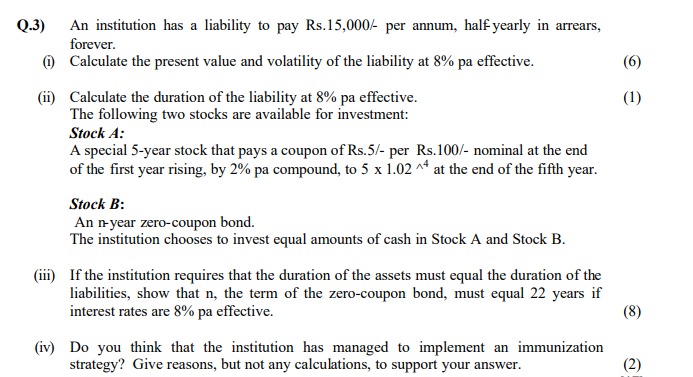
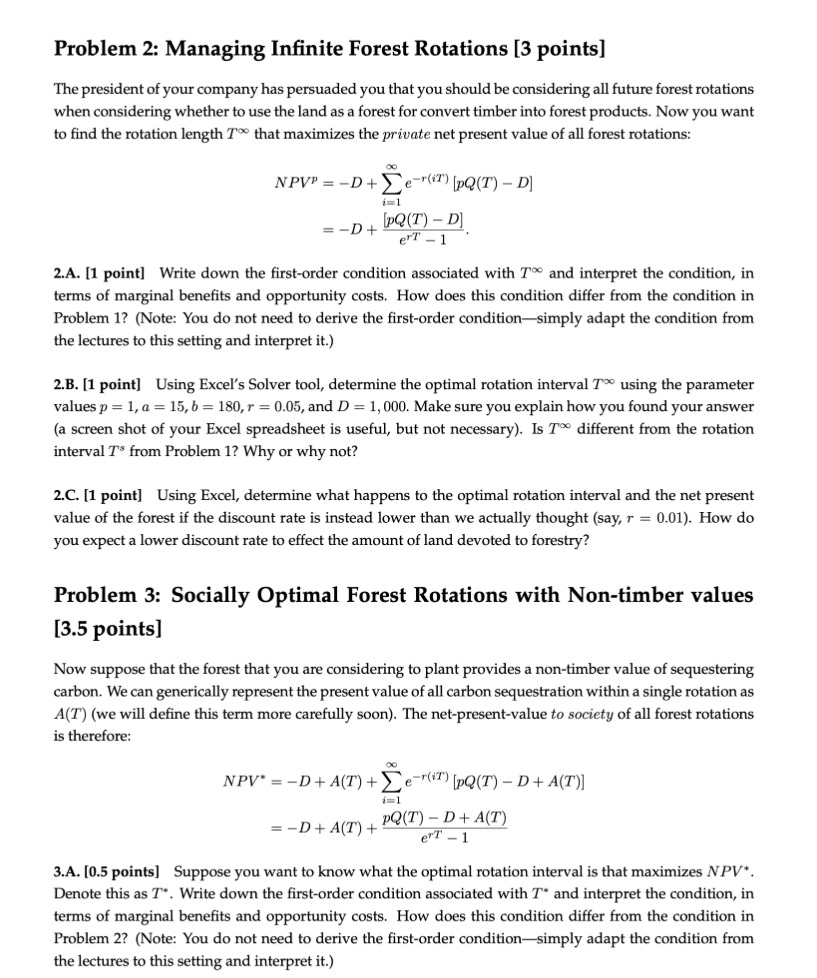
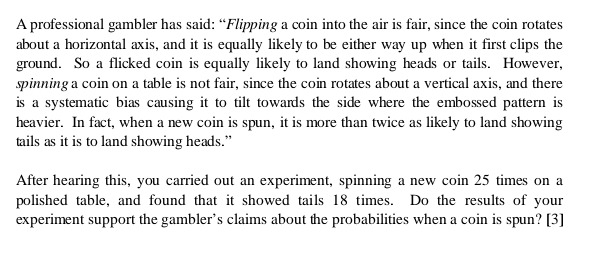
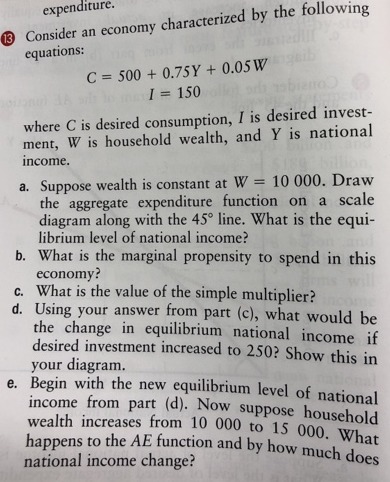
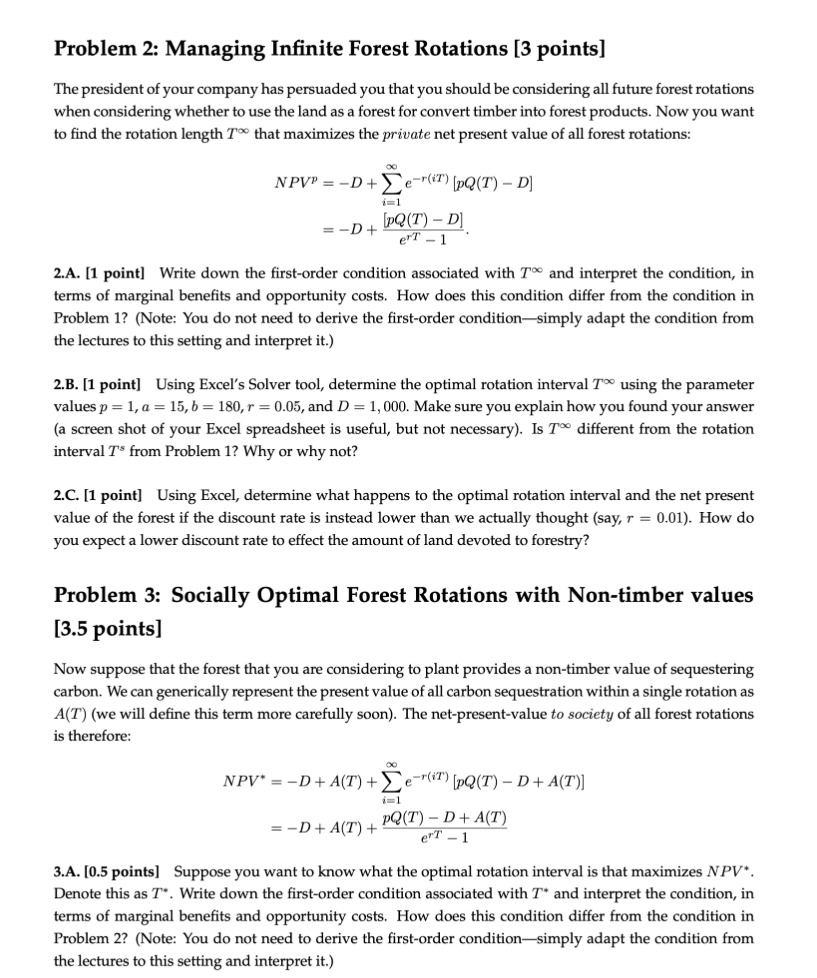
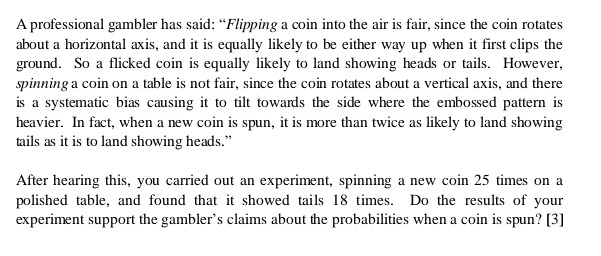
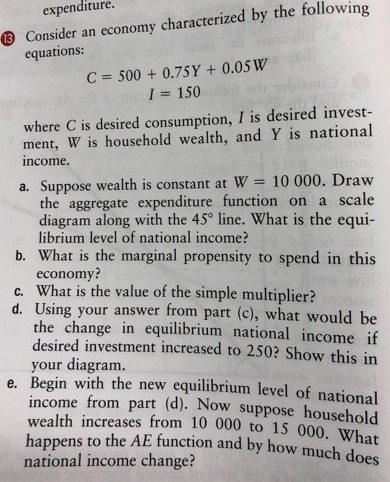
Q.3) An institution has a liability to pay Rs.15,000/ per annum, half yearly in arrears, forever. (i) Calculate the present value and volatility of the liability at 8% pa effective. (6) (ii) Calculate the duration of the liability at 8% pa effective. (1) The following two stocks are available for investment: Stock A: A special 5-year stock that pays a coupon of Rs.5/- per Rs.100/- nominal at the end of the first year rising, by 2% pa compound, to 5 x 1.02 ^* at the end of the fifth year. Stock B: An n- year zero-coupon bond. The institution chooses to invest equal amounts of cash in Stock A and Stock B. (iii) If the institution requires that the duration of the assets must equal the duration of the liabilities, show that n, the term of the zero-coupon bond, must equal 22 years if interest rates are 8% pa effective. (8) (iv) Do you think that the institution has managed to implement an immunization strategy? Give reasons, but not any calculations, to support your answer. (2)Problem 2: Managing Infinite Forest Rotations [3 points] The president of your company has persuaded you that you should be considering all future forest rotations when considering whether to use the land as a forest for convert timber into forest products. Now you want to find the rotation length 7 that maximizes the private net present value of all forest rotations: NPVP = -D + e-"(T) [PQ(T) - D] i=1 = -D+ PQ(T) - DJ err - 1 2.A. [1 point] Write down the first-order condition associated with 7 and interpret the condition, in terms of marginal benefits and opportunity costs. How does this condition differ from the condition in Problem 1? (Note: You do not need to derive the first-order condition-simply adapt the condition from the lectures to this setting and interpret it.) 2.B. [1 point] Using Excel's Solver tool, determine the optimal rotation interval To using the parameter values p = 1, a = 15, b = 180, r = 0.05, and D = 1, 000. Make sure you explain how you found your answer (a screen shot of your Excel spreadsheet is useful, but not necessary). Is To different from the rotation interval T's from Problem 1? Why or why not? 2.C. [1 point] Using Excel, determine what happens to the optimal rotation interval and the net present value of the forest if the discount rate is instead lower than we actually thought (say, r = 0.01). How do you expect a lower discount rate to effect the amount of land devoted to forestry? Problem 3: Socially Optimal Forest Rotations with Non-timber values [3.5 points] Now suppose that the forest that you are considering to plant provides a non-timber value of sequestering carbon. We can generically represent the present value of all carbon sequestration within a single rotation as A(T) (we will define this term more carefully soon). The net-present-value to society of all forest rotations is therefore: NPV* = -D+ A(T) + >e-"(iT) [pQ(T) - D + A(T)] i=1 = -D+ A(T) + PQ(T) - D + A(T) erT - 1 3.A. [0.5 points] Suppose you want to know what the optimal rotation interval is that maximizes NPV*. Denote this as 7". Write down the first-order condition associated with T* and interpret the condition, in terms of marginal benefits and opportunity costs. How does this condition differ from the condition in Problem 2? (Note: You do not need to derive the first-order condition-simply adapt the condition from the lectures to this setting and interpret it.)A. professional gambler has said: \"Flipping a coin into 1e air is fair, since the coin rotates about a horizontal axis, and it is equally likely to be either way up when it rst clips the ground. So a flicked coin is equally likely to land showing heads or tails. However, squirming a coin on a table is not fair, since the coin rotates about a vertical axis, and there is a systematic bias causing it to tilt towards the side where the embossed pattern is heavier. In fa:t, when a new coin is spun, it is more than twice as likely to land showing tails as it is to land showing heais." After hearing this, you carried out an experiment, spinning a new coin 25 times on a polished table, and found that it showed tails 13 times. Do the results of your experiment support the gambler's claims about the probabilities when a coin is spun? [3] expenditure. Consider an economy characterized by the following 13 equations: ng61b C = 500 + 0.75Y + 0.05W I = 150 where C is desired consumption, I is desired invest- ment, W is household wealth, and Y is national income. a. Suppose wealth is constant at W = 10 000. Draw the aggregate expenditure function on a scale diagram along with the 45 line. What is the equi- librium level of national income? b. What is the marginal propensity to spend in this economy? c. What is the value of the simple multiplier? d. Using your answer from part (c), what would be the change in equilibrium national income if desired investment increased to 250? Show this in your diagram. e. Begin with the new equilibrium level of national income from part (d). Now suppose household wealth increases from 10 000 to 15 000. What happens to the AE function and by how much does national income change
Step by Step Solution
There are 3 Steps involved in it

Get step-by-step solutions from verified subject matter experts