







Question: f ( x + h) - f(x) Find the difference quotient of f; that is, find , h #0, for the following function. Be sure
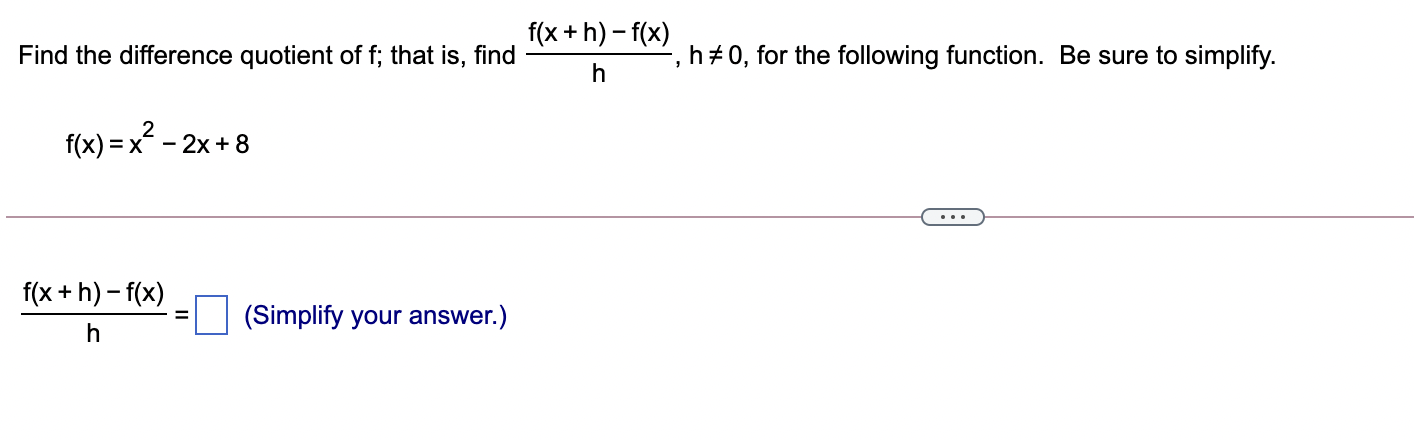
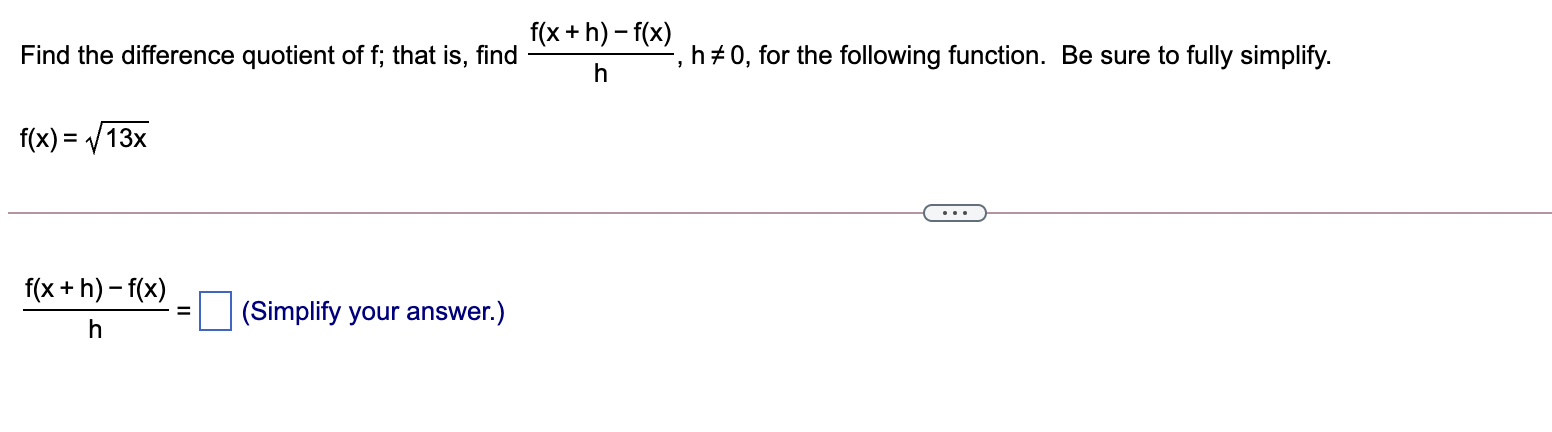
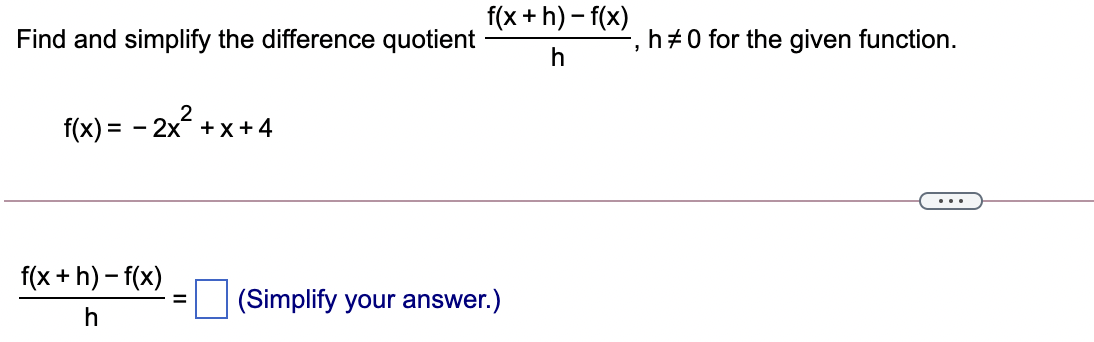
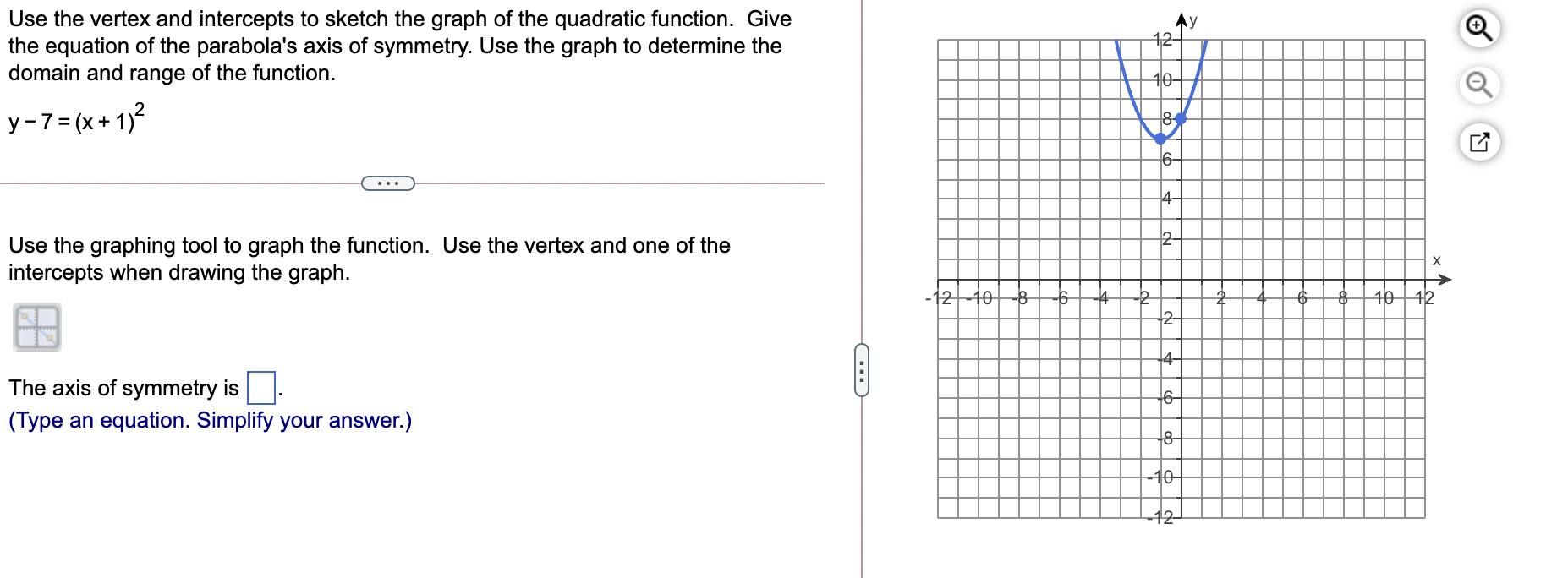
f ( x + h) - f(x) Find the difference quotient of f; that is, find , h #0, for the following function. Be sure to simplify. h f(x) = x - 2x + 8 . . . f(x + h) - f(x) = (Simplify your answer.) hf(x + h) f(x) Find the difference quotient of f; that is, nd h f(x) = 413x E> , h 0, for the following function. Be sure to fully simplify. f(x + h) f(x) h = D (Simplify your answer.) f(x + h) - f(x) Find and simplify the difference quotient h , h i 0 for the given function. f(x)=-2x2+x+4 <:> f()( + h) f(x) h = D (Simplify your answer.) Use the vertex and intercepts to sketch the graph of the quadratic function. Give the equation of the parabola's axis of symmetry. Use the graph to determine the domain and range of the function. y7=(x+1)2 Use the graphing tool to graph the function. Use the vertex and one of the intercepts when drawing the graph. The axis of symmetry is E. (Type an equation. Simplify your answer.)
Step by Step Solution
There are 3 Steps involved in it

Get step-by-step solutions from verified subject matter experts
 Study Help