







Question: failure. However, a rival firm, 3 Dfx Interactive, introduced a very successful 3 D graphics chip for the rapidly - growing PCbased gaming industry. Chastened
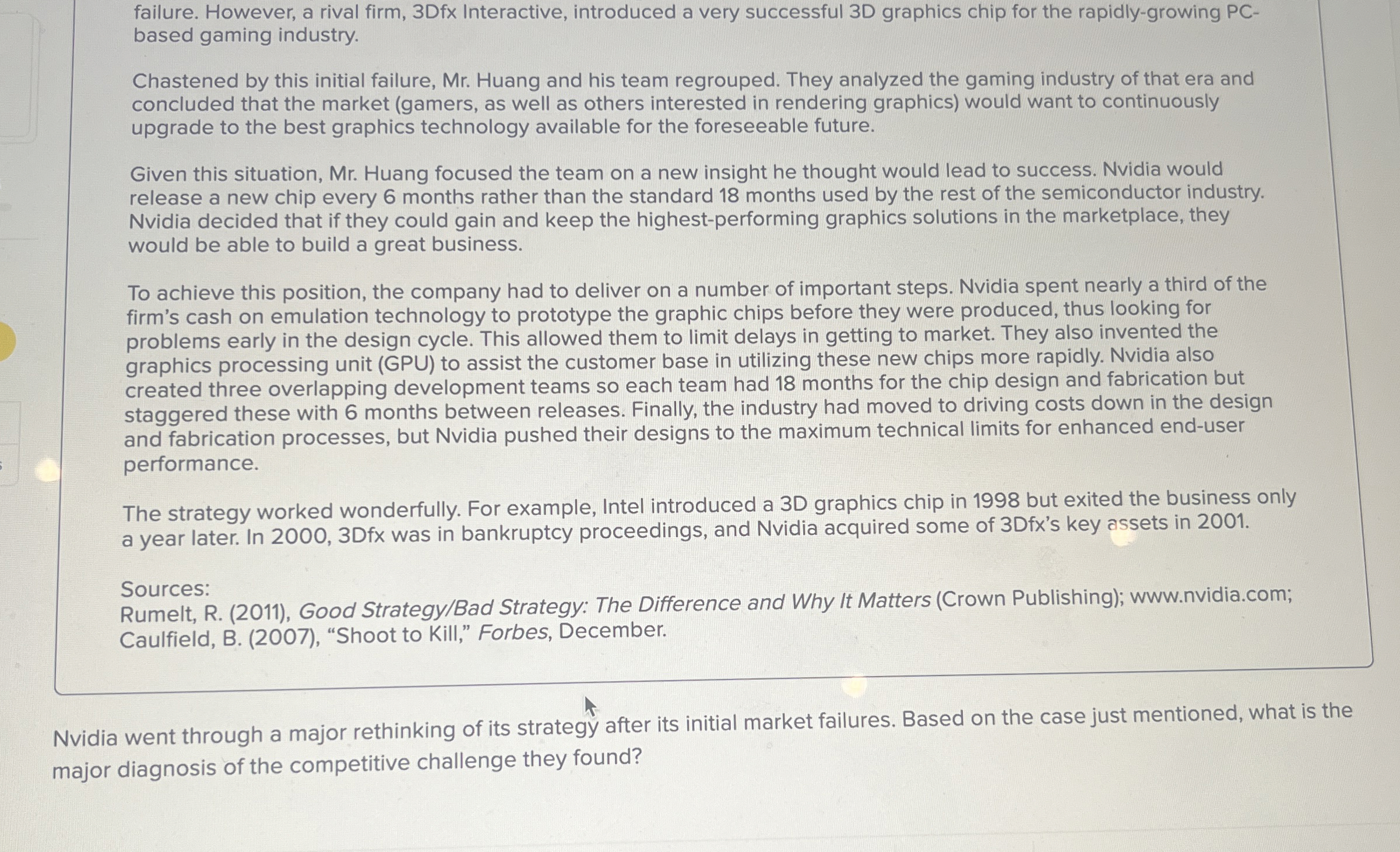
failure. However, a rival firm, Dfx Interactive, introduced a very successful D graphics chip for the rapidlygrowing PCbased gaming industry.
Chastened by this initial failure, Mr Huang and his team regrouped. They analyzed the gaming industry of that era and concluded that the market gamers as well as others interested in rendering graphics would want to continuously upgrade to the best graphics technology available for the foreseeable future.
Given this situation, Mr Huang focused the team on a new insight he thought would lead to success. Nvidia would release a new chip every months rather than the standard months used by the rest of the semiconductor industry. Nvidia decided that if they could gain and keep the highestperforming graphics solutions in the marketplace, they would be able to build a great business.
To achieve this position, the company had to deliver on a number of important steps. Nvidia spent nearly a third of the firm's cash on emulation technology to prototype the graphic chips before they were produced, thus looking for problems early in the design cycle. This allowed them to limit delays in getting to market. They also invented the graphics processing unit GPU to assist the customer base in utilizing these new chips more rapidly. Nvidia also created three overlapping development teams so each team had months for the chip design and fabrication but staggered these with months between releases. Finally, the industry had moved to driving costs down in the design and fabrication processes, but Nvidia pushed their designs to the maximum technical limits for enhanced enduser performance.
The strategy worked wonderfully. For example, Intel introduced a D graphics chip in but exited the business only a year later. In Dfx was in bankruptcy proceedings, and Nvidia acquired some of Dfxs key assets in
Sources:
Rumelt, R Good StrategyBad Strategy: The Difference and Why It Matters Crown Publishing;
wwwnvidia.com; Caulfield, B "Shoot to Kill," Forbes, December.
Nvidia went through a major rethinking of its strategy after its initial market failures. Based on the case just mentioned, what is the major diagnosis of the competitive challenge they found?
Step by Step Solution
There are 3 Steps involved in it
1 Expert Approved Answer
Step: 1 Unlock

Question Has Been Solved by an Expert!
Get step-by-step solutions from verified subject matter experts
Step: 2 Unlock
Step: 3 Unlock
 Study Help