







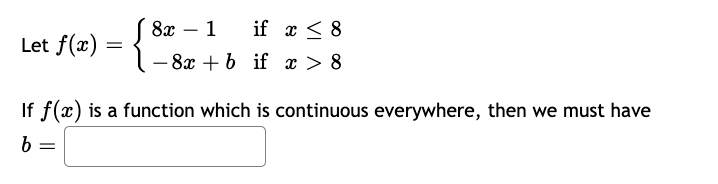
Question: fIf f (9:) is a function which is continuous everywhere, then we must have 8x -1 if x 8 If f (a) is a function
![if 222 C1 1:132 1%) = 112)- C] The function is continuous](https://s3.amazonaws.com/si.experts.images/answers/2024/06/666545d4e92e0_044666545d4c6387.jpg)
![at x = 2. C] The function is not continuous at x](https://s3.amazonaws.com/si.experts.images/answers/2024/06/666545d535939_045666545d528da0.jpg)
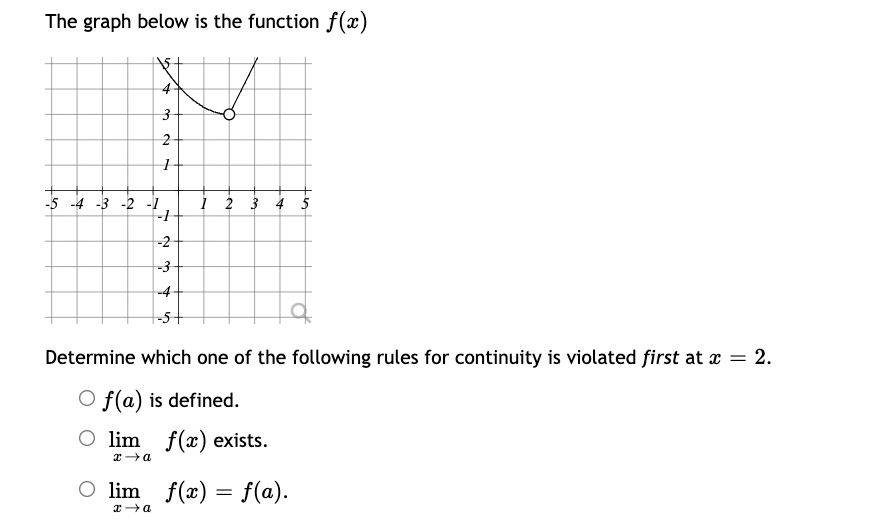
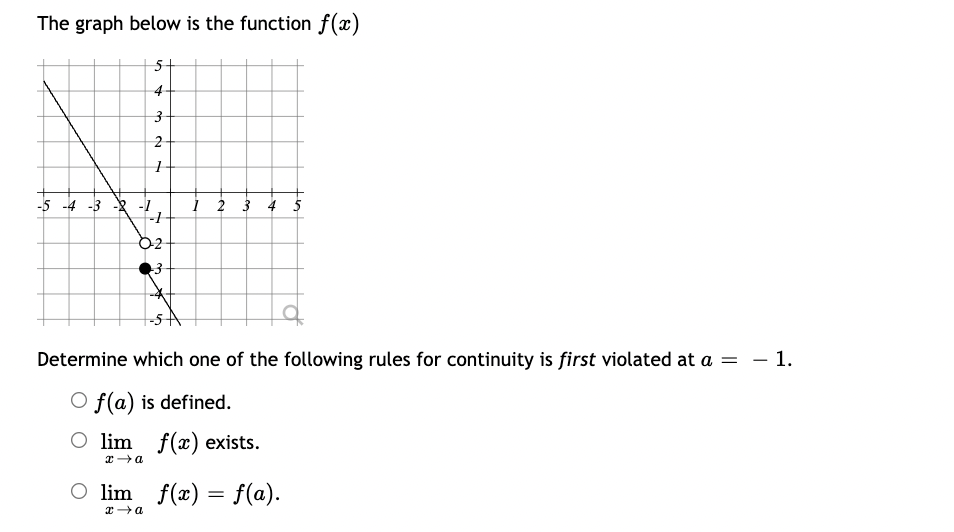
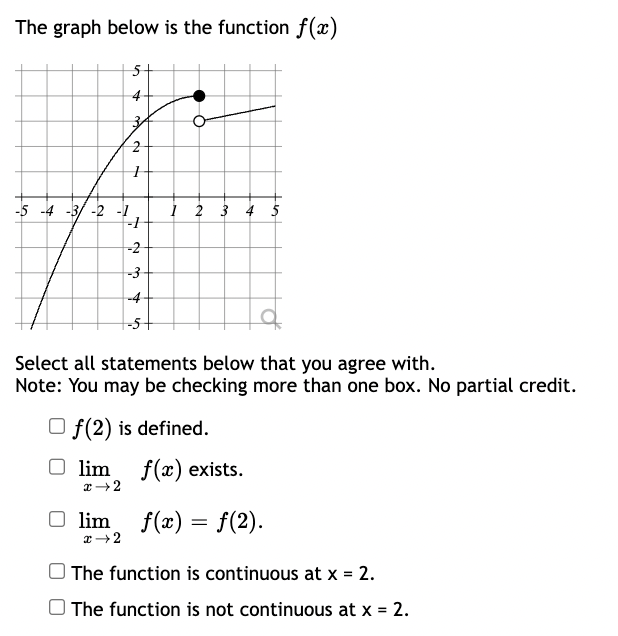
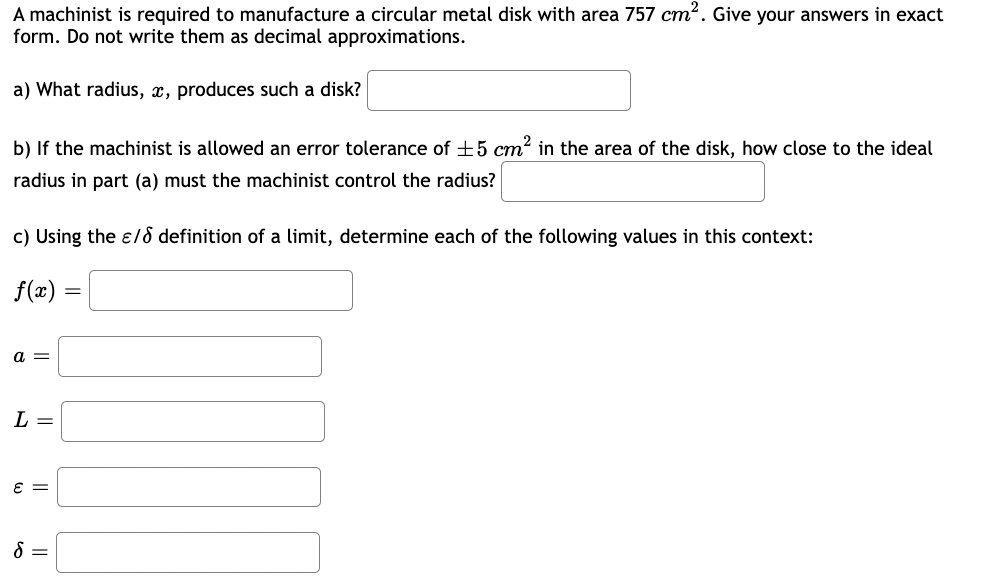
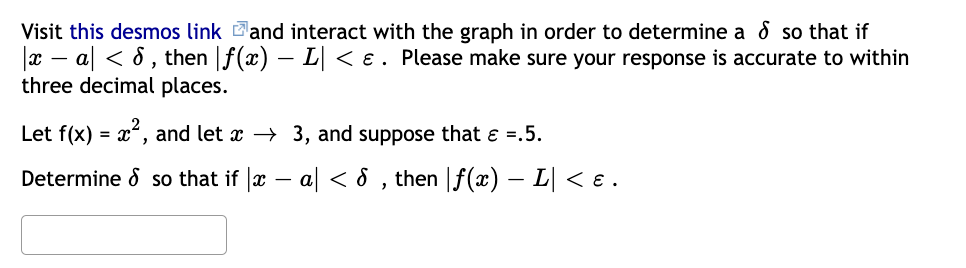

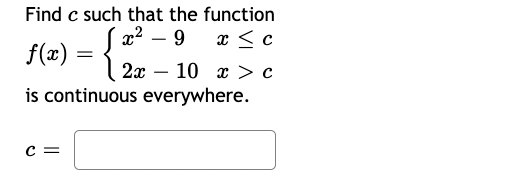
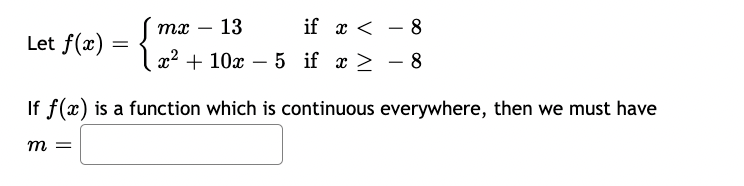
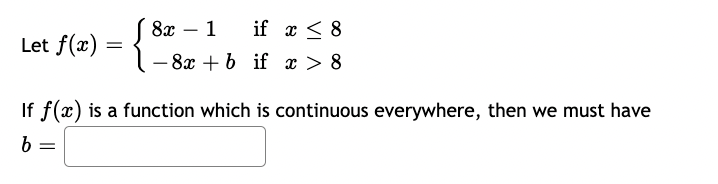
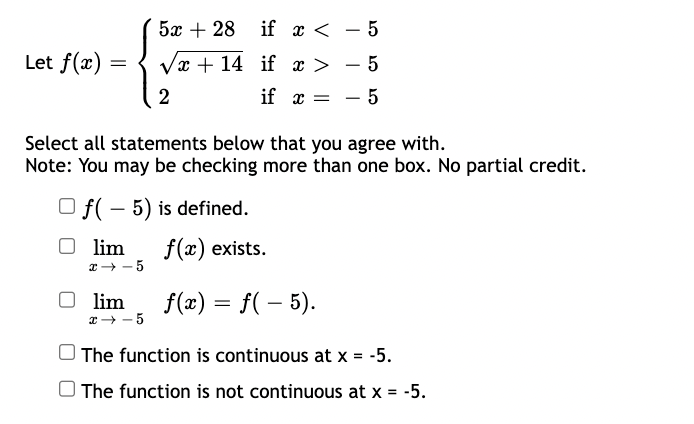
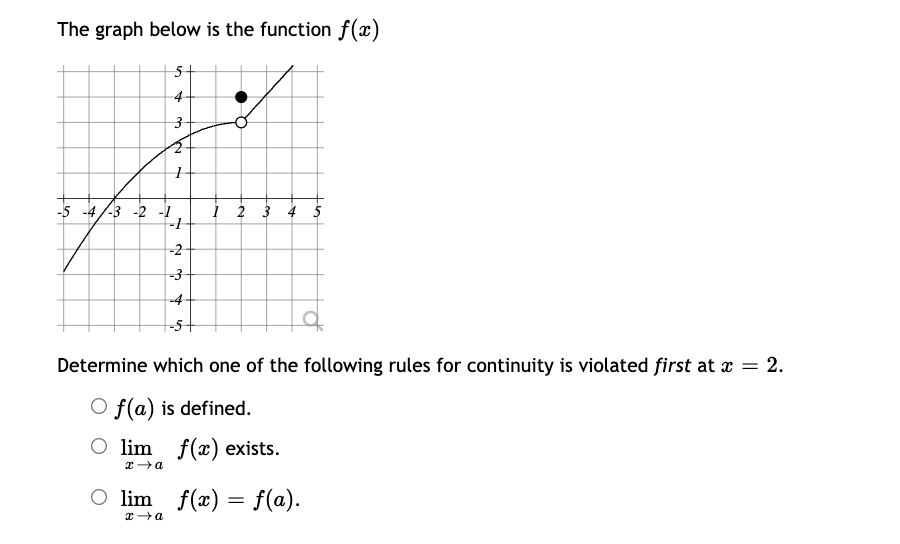
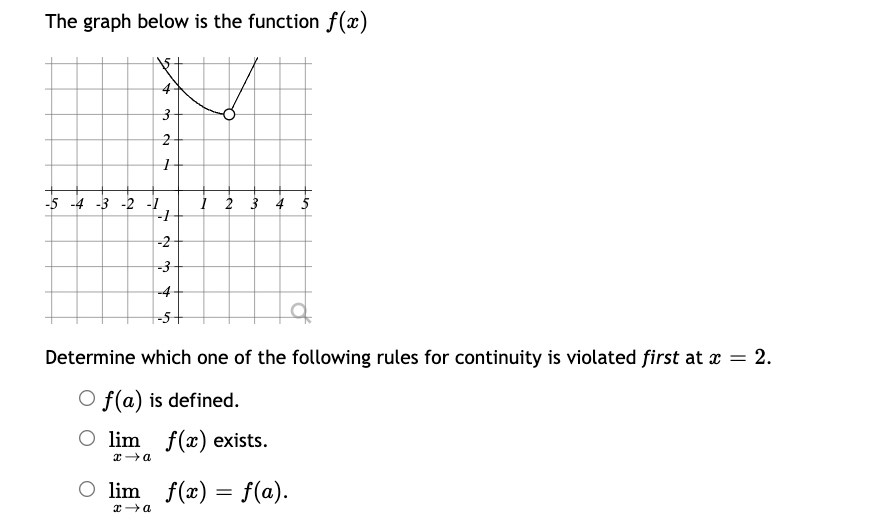
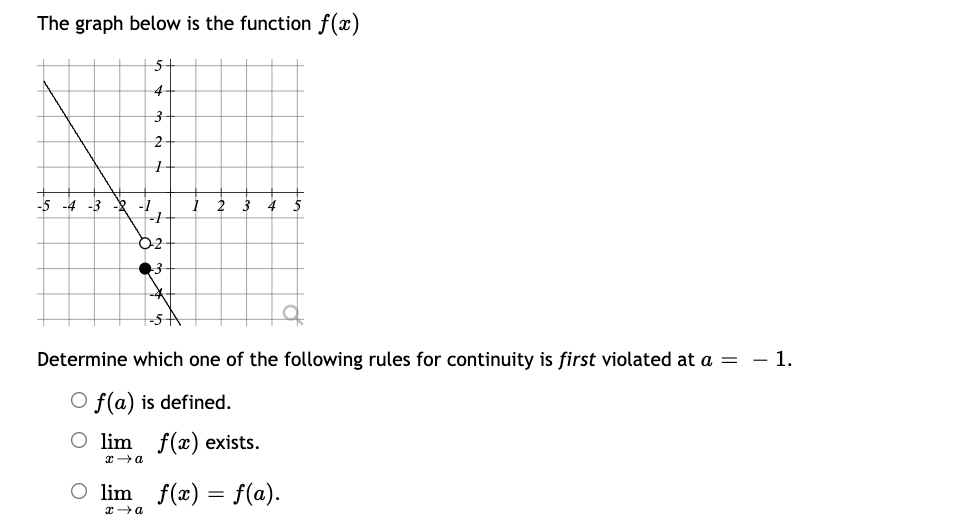
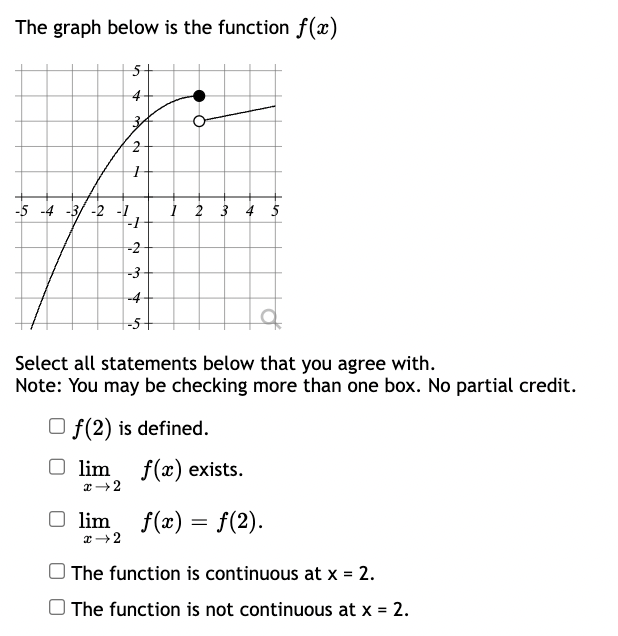
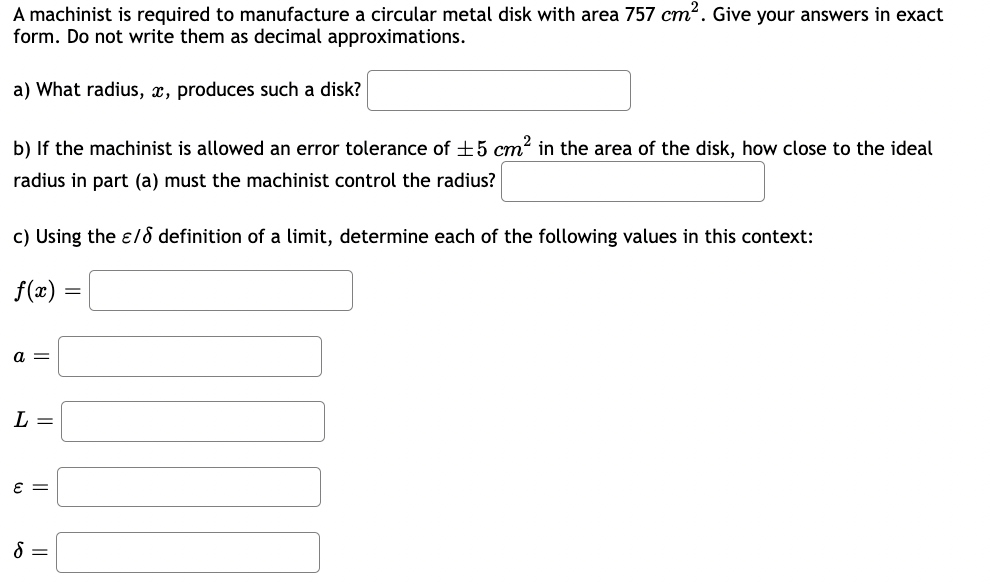
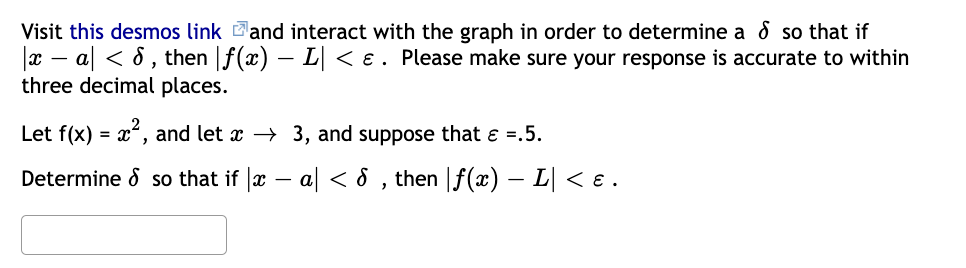

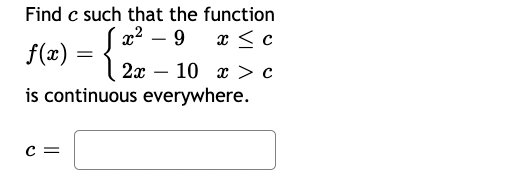
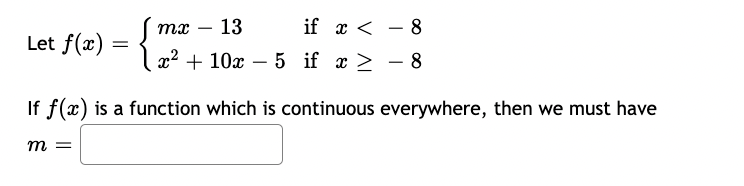
\fIf f (9:) is a function which is continuous everywhere, then we must have 8x -1 if x 8 If f (a) is a function which is continuous everywhere, then we must have b =5z+28 if 222 C1 1:132 1%) = 112)- C] The function is continuous at x = 2. C] The function is not continuous at x = 2. A machinist is required to manufacture a circular metal disk with area 757 m2. Give your answers in exact form. Do not write them as decimal approximations. a) What radius, 2:, produces such a disk? b) If the machinist is allowed an error tolerance of if) m2 in the area of the disk, how close to the ideal radius in part (a) must the machinist control the radius? c) Using the $16 definition of a limit, determine each of the following values in this context: flz) =l l Visit this desmos link and interact with the graph in order to determine a o so that if lac - a U be arbitrary. Choose 5 = min(E , 1). 2+ Determine the smallest value of m that would satisfy the proof
Step by Step Solution
There are 3 Steps involved in it

Get step-by-step solutions from verified subject matter experts
 Study Help