







Question: fIn x For the function f(x) = , find f''(x). Then find f''(0) and f(8). 4x f (x) =2x For the function f(x) = a
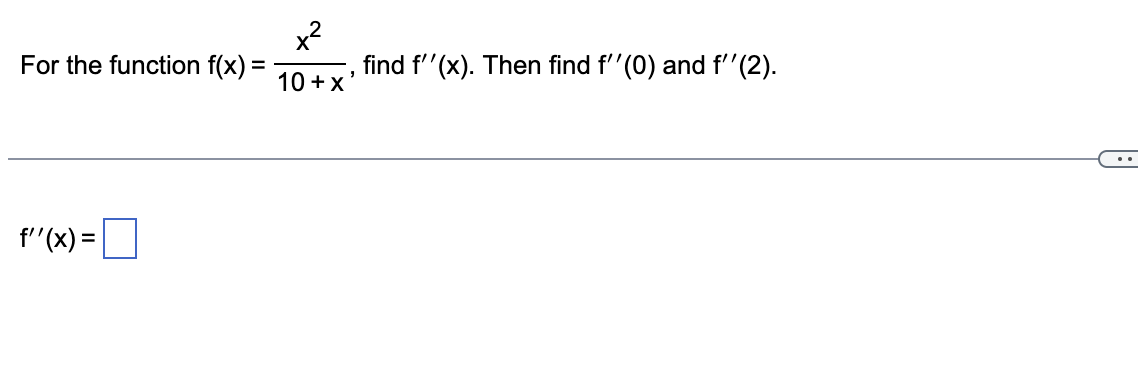
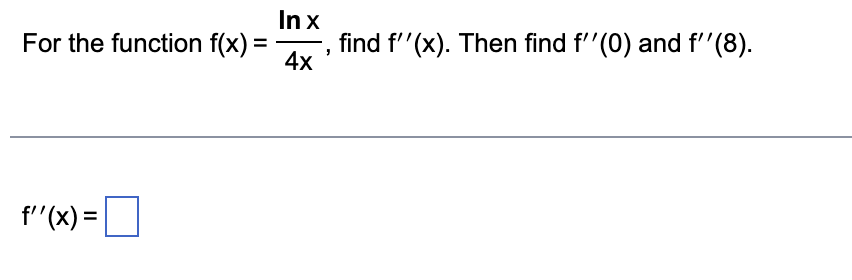
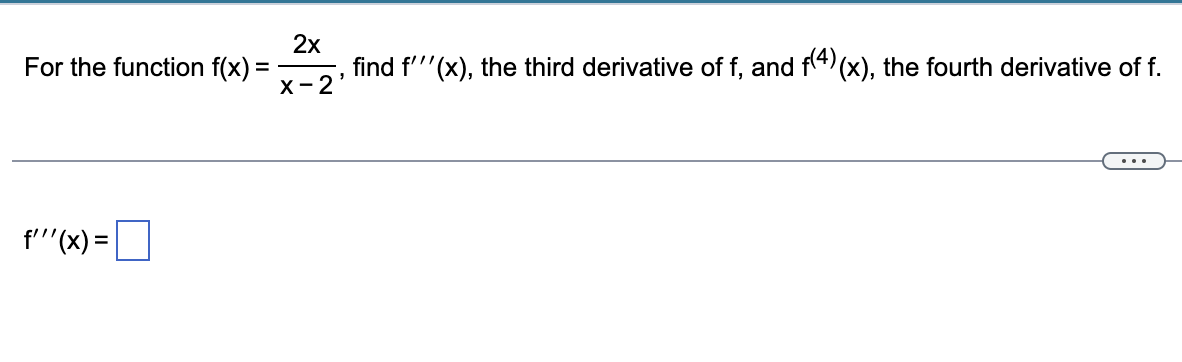
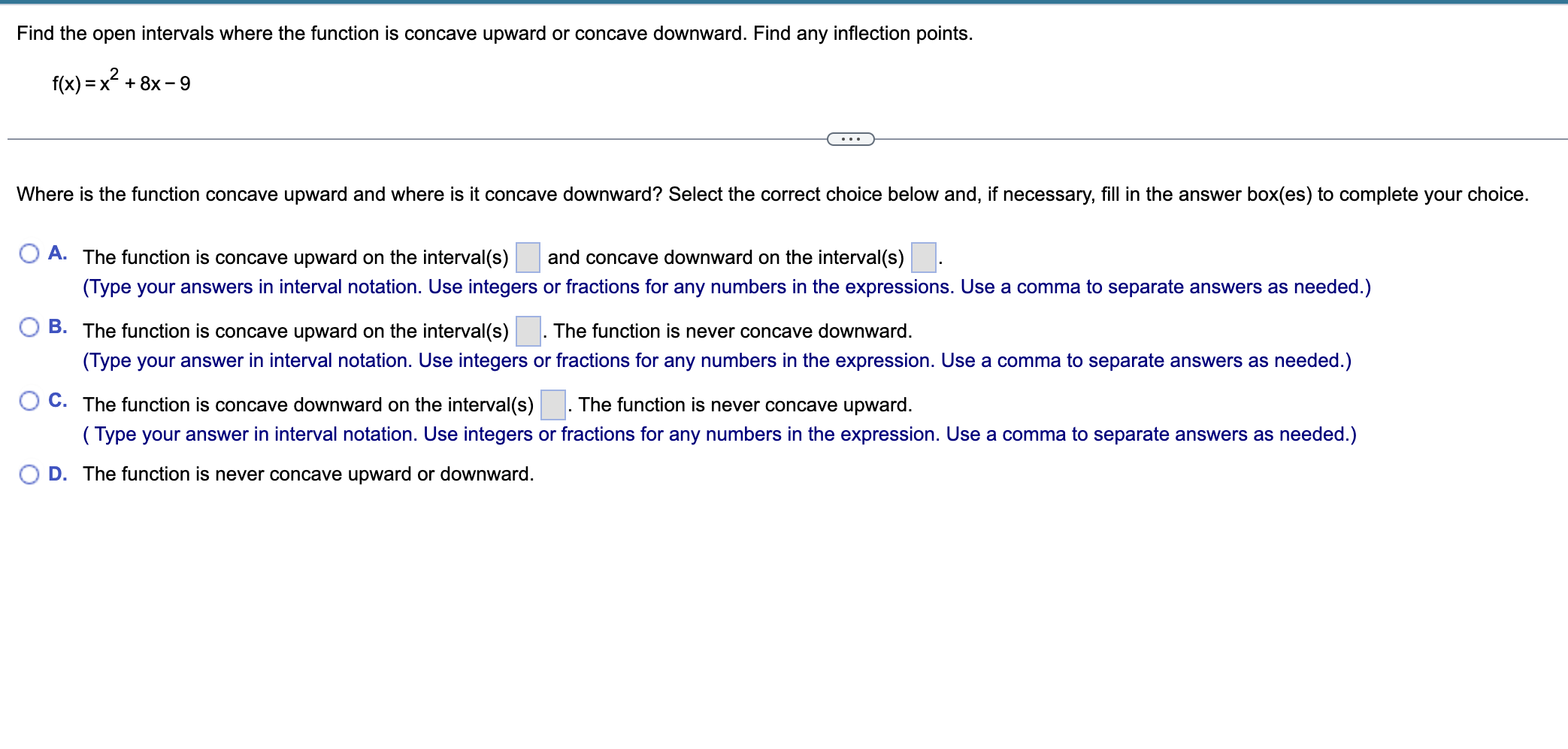
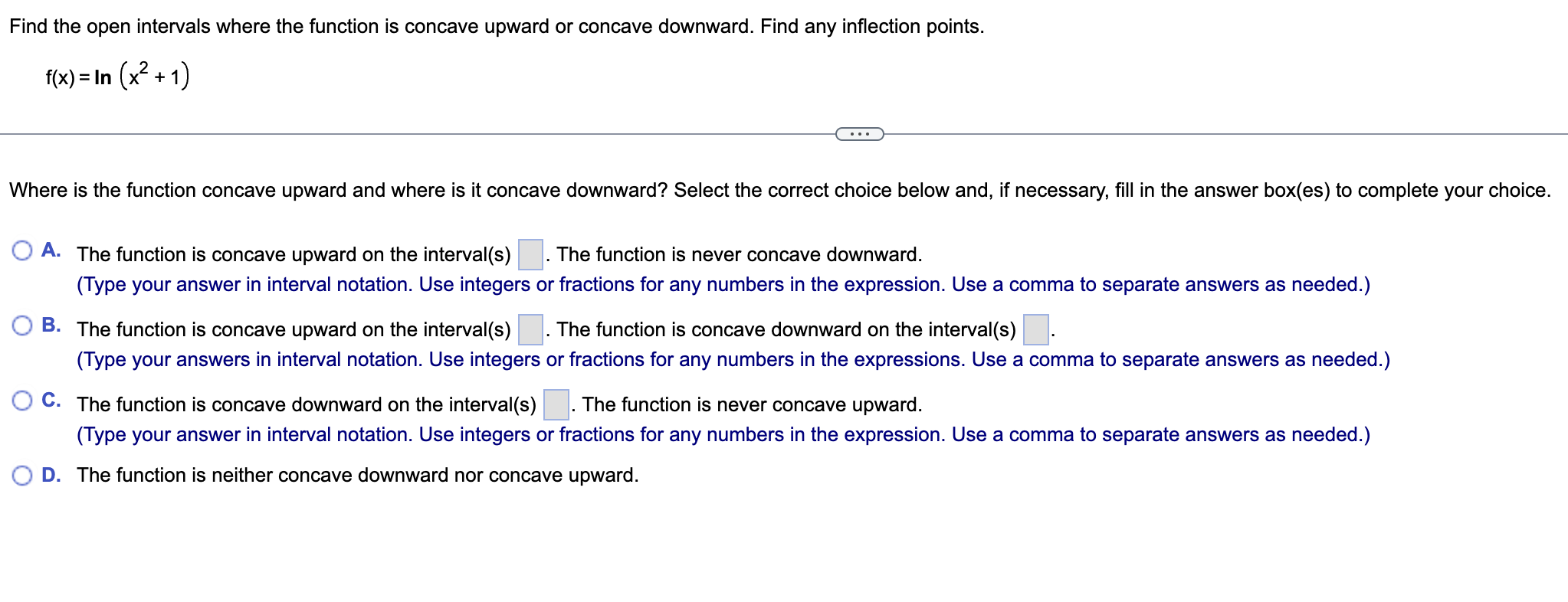
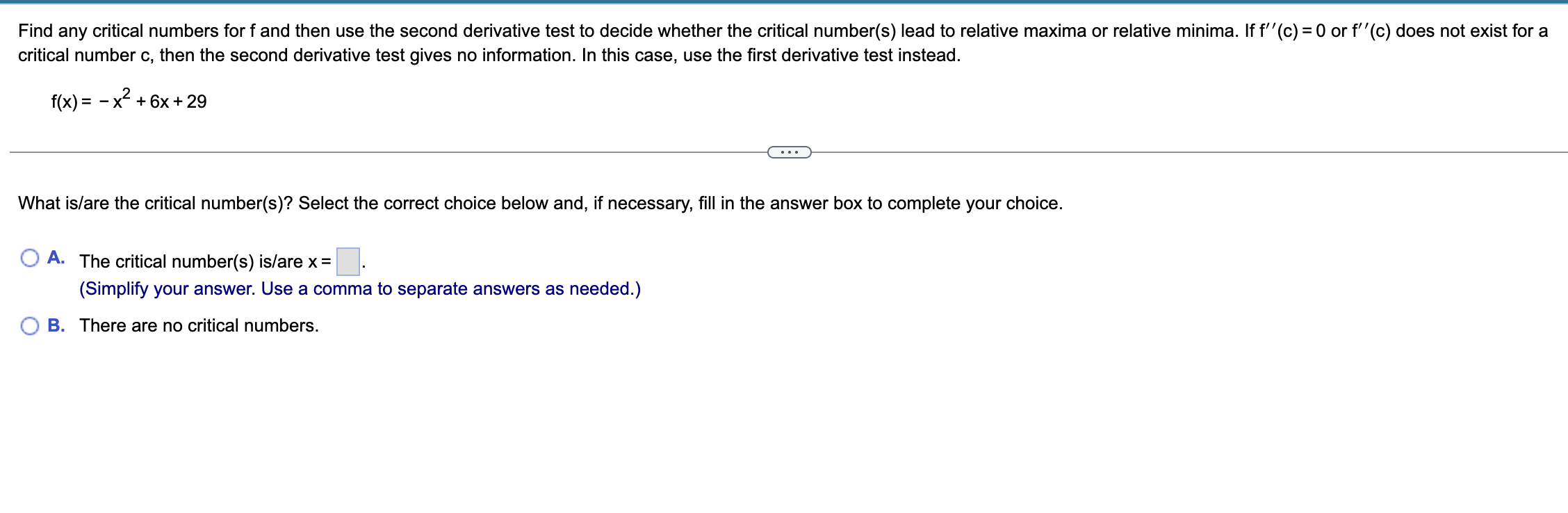
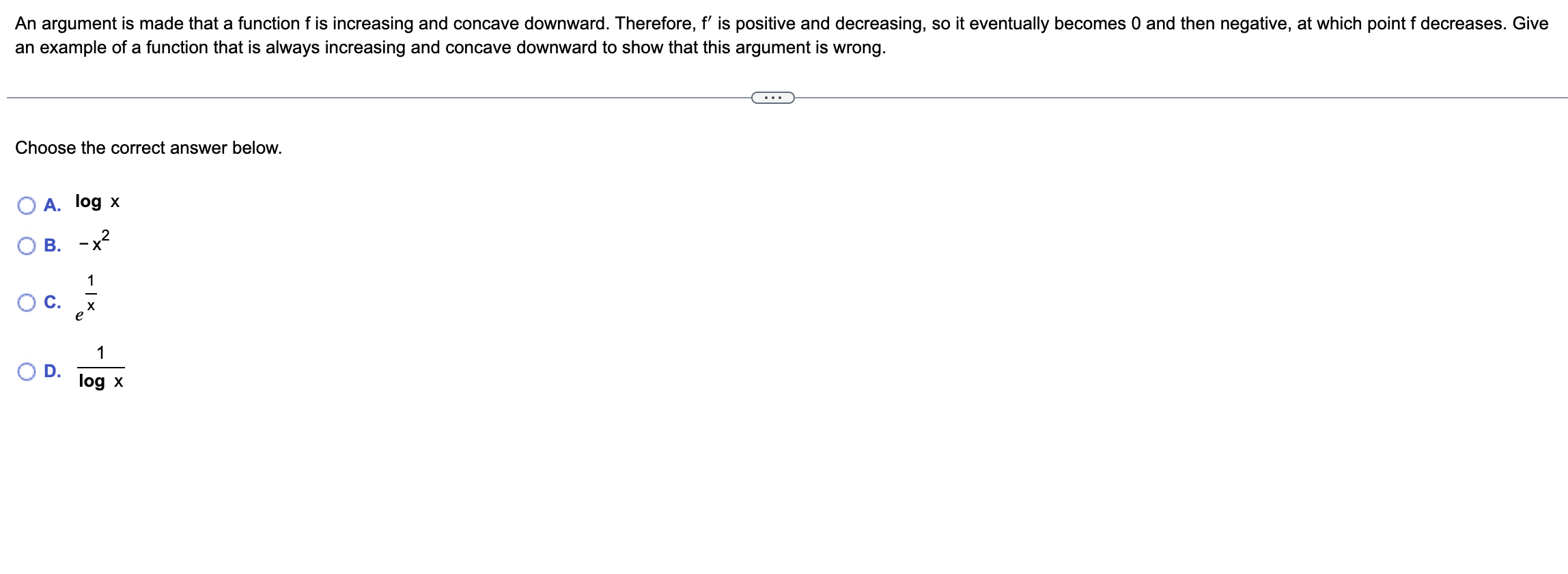
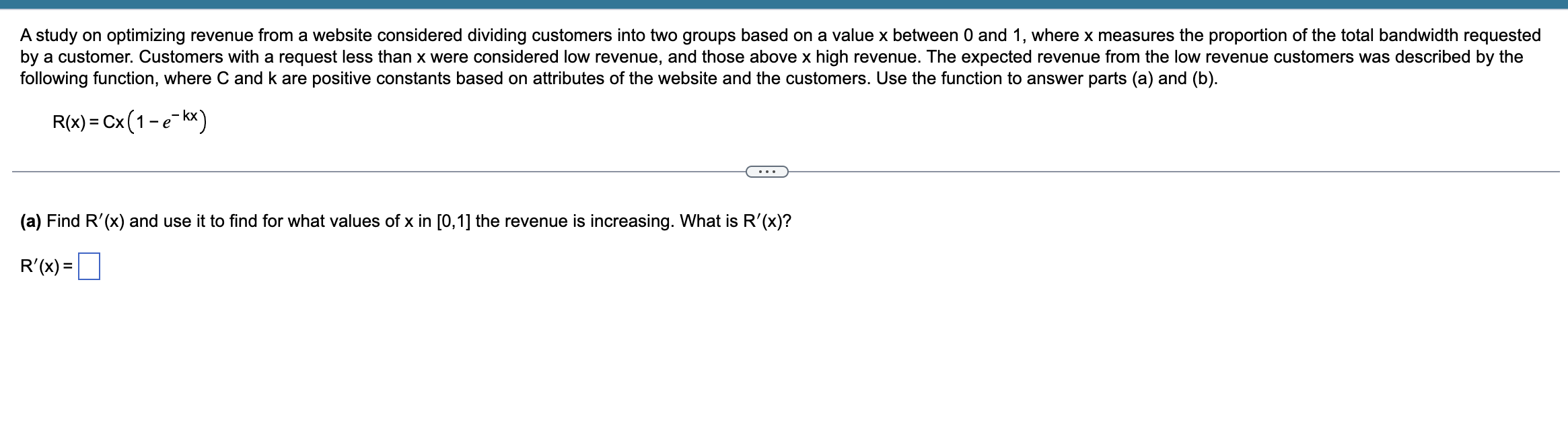
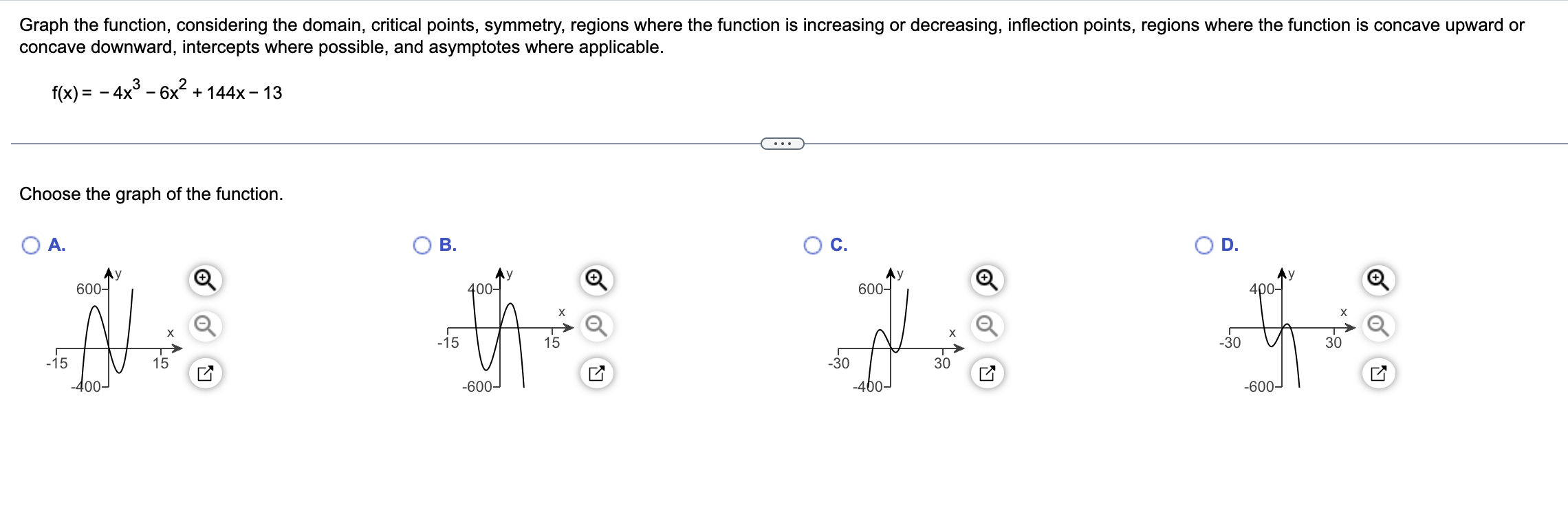
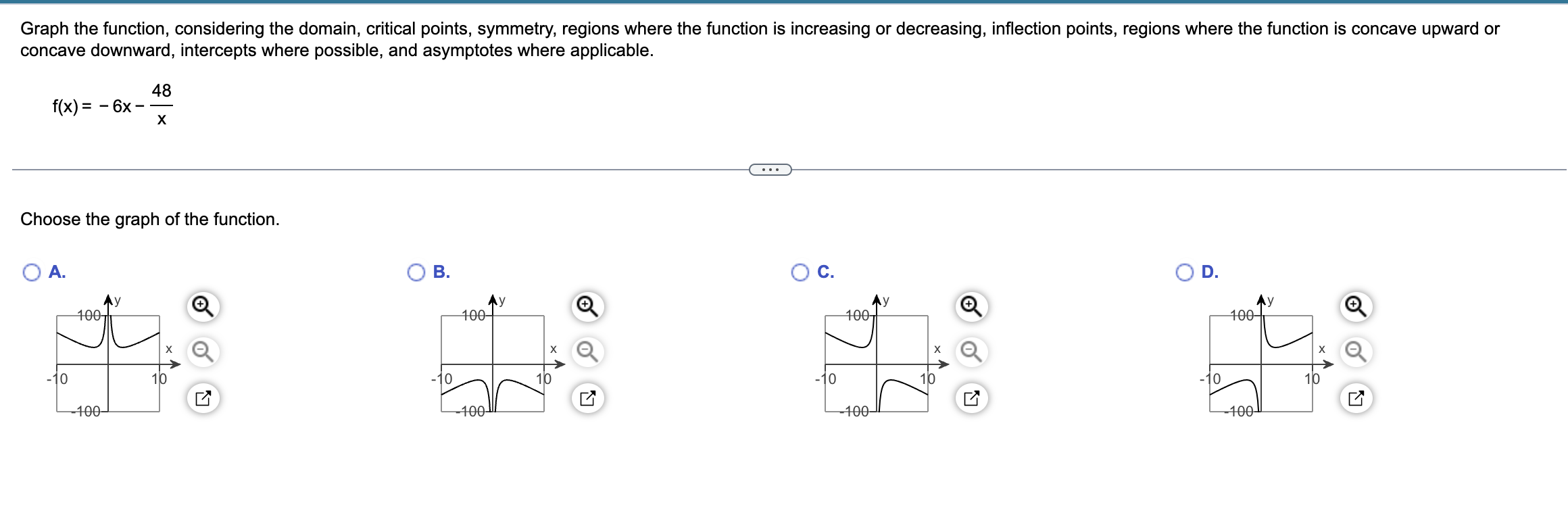
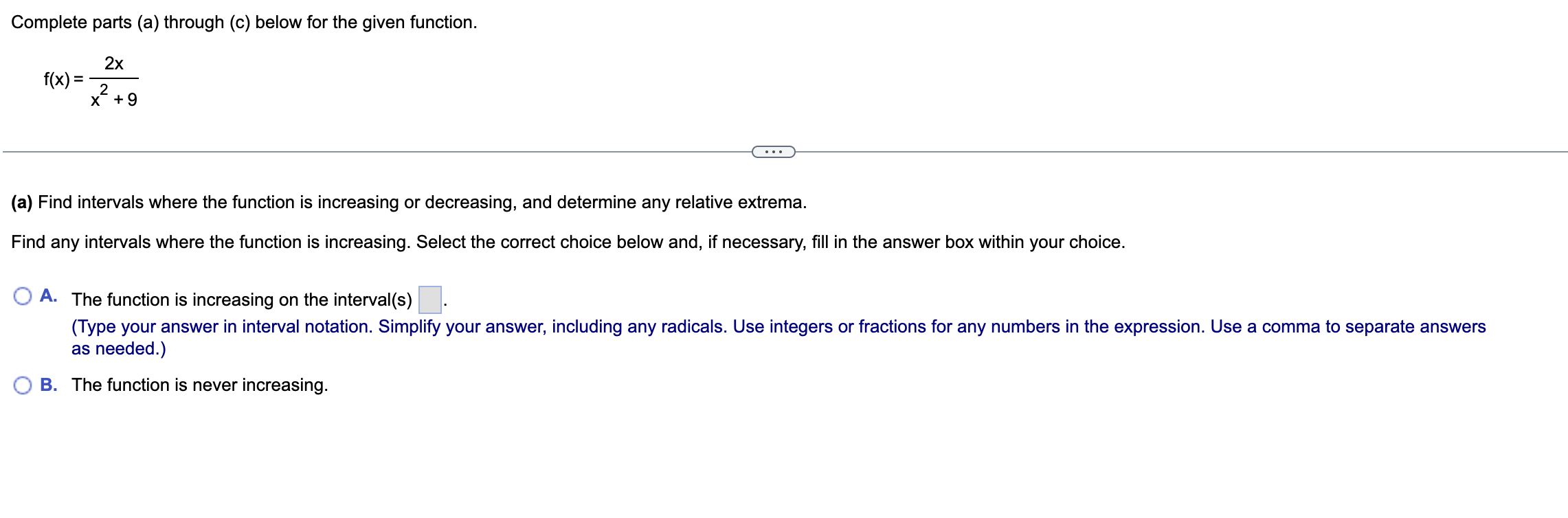
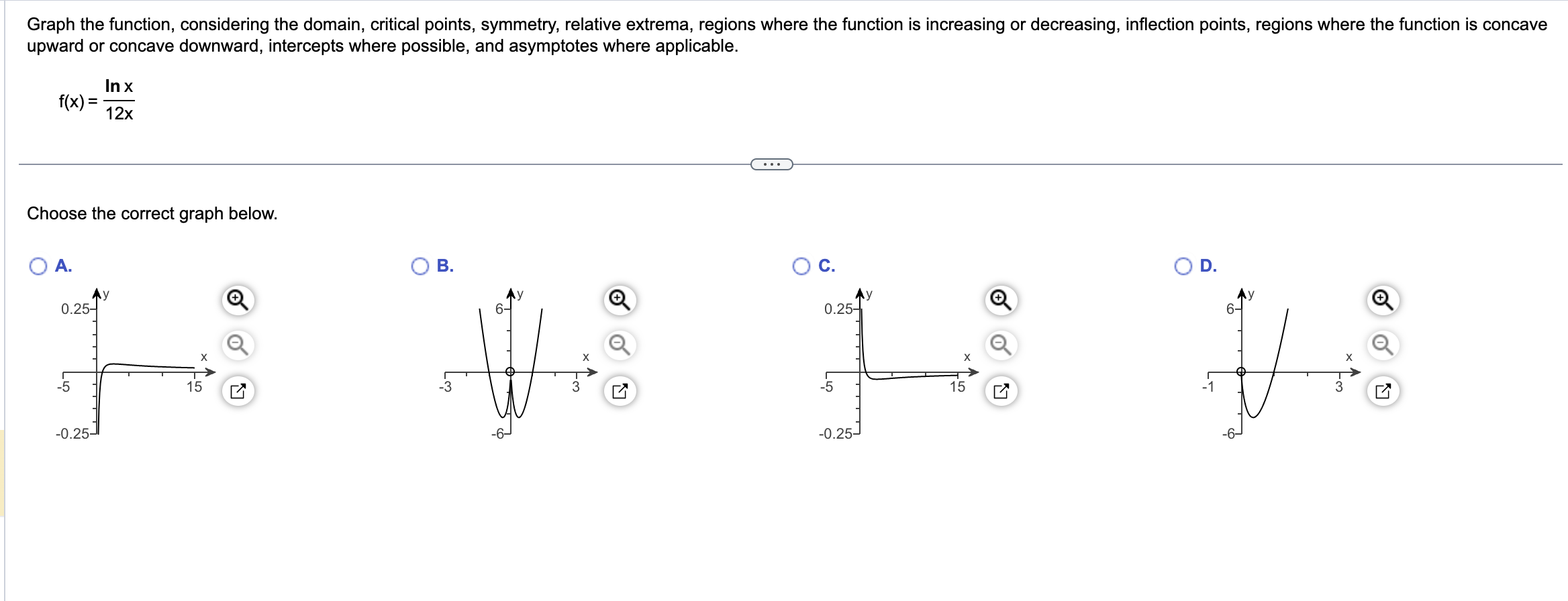
\fIn x For the function f(x) = , find f''(x). Then find f''(0) and f"(8). 4x f" (x) =2x For the function f(x) = a nd f'\"(x), the third derivative of f, and f(4)(x), the fourth derivative of f. E f'\"(x)=|:| Find the open intervals where the function is concave upward or concave downward. Find any inflection points. f(x)=x2+8x-9 Where is the function concave upward and where is it concave downward? Select the correct choice below and, if necessary, ll in the answer box(es) to complete your choice. '33:} A- The function is concave upward on the interval(s) and concave downward on the interval(s) (Type your answers in interval notation. Use integers or fractions for any numbers in the expressions. Use a comma to separate answers as needed.) B- The function is concave upward on the interval(s) . The function is never concave downward. (Type your answer in interval notation. Use integers or fractions for any numbers in the expression. Use a comma to separate answers as needed.) c- The function is concave downward on the interval(s) . The function is never concave upward. (Type your answer in interval notation. Use integers or fractions for any numbers in the expression. Use a comma to separate answers as needed.) '2: 22- D. The function is never concave upward or downward. Find the open intervals where the function is concave upward or concave downward. Find any inflection points. f(x)=ln (x2+1) E) Where is the function concave upward and where is it concave downward? Select the correct choice below and, if necessary, ll in the answer box(es) to complete your choice. 'V 3' A- The function is concave upward on the interval(s) . The function is never concave downward. (Type your answer in interval notation. Use integers or fractions for any numbers in the expression. Use a comma to separate answers as needed.) - The function is concave upward on the interval(s) . The function is concave downward on the interval(s) (Type your answers in interval notation. Use integers or fractions for any numbers in the expressions. Use a comma to separate answers as needed.) 33' C- The function is concave downward on the interval(s) . The function is never concave upward. (Type your answer in interval notation. Use integers or fractions for any numbers in the expression. Use a comma to separate answers as needed.) f} D. The function is neither concave downward nor concave upward. Find any critical numbers for f and then use the second derivative test to decide whether the critical number(s) lead to relative maxima or relative minima. If f\"(c) = 0 or f\"(c) does not exist for a critical number c, then the second derivative test gives no information. In this case, use the rst derivative test instead. f(x)= -x2+5x+29 What is/are the critical number(s)? Select the correct choice below and, if necessary, ll in the answer box to complete your choice. '33:? A- The critical number(s) is/are x = (Simplify your answer. Use a comma to separate answers as needed.) '22:} B. There are no critical numbers. An argument is made that a function f is increasing and concave downward. Therefore, f' is positive and decreasing, so it eventually becomes 0 and then negative, at which point f decreases. Give an example of a function that is always increasing and concave downward to show that this argument is wrong. Choose the correct answer below. A study on optimizing revenue from a website considered dividing customers into two groups based on a value x between 0 and 1, where x measures the proportion of the total bandwidth requested by a customer. Customers with a request less than x were considered low revenue, and those above x high revenue. The expected revenue from the low revenue customers was described by the following function, where C and k are positive constants based on attributes of the website and the customers. Use the function to answer parts (a) and (b). R(x)=Cx(1e'kx) (3) Find R'(x) and use it to nd for what values ofx in [0,1] the revenue is increasing. What is R'(x)? R'(X) = Graph the function, considering the domain, critical points, symmetry, regions where the function is increasing or decreasing, inection points, regions where the function is concave upward or concave downward, intercepts where possible, and asymptotes where applicable. f(x)= 4x3 6x2 +144x- 13 Choose the graph of the function. I_-A I_::-B. l_-c 5-0 600 y Q 00 y Q 600 y Q 4 O y Q X X x Q Q x Q Q >15 15 >30 30 >15 15 [if [if 30 30 [if [if 00 600 4 0 >600 Graph the function, considering the domain, critical points, symmetry, regions where the function is increasing or decreasing, inection points, regions where the function is concave upward or concave downward, intercepts where possible, and asymptotes where applicable. Choose the graph of the function. G A. C) B. C) c. C) D. y Q y Q y Q y x, Q Q Q -10 1D -10 1o 10 1o 40 10 [3' IL" IL" IL" tho 1\" 1" Complete parts (a) through (c) below for the given function. 2x 2 x+9 f(x) = (a) Find intervals where the function is increasing or decreasing, and determine any relative extrema. Find any intervals where the function is increasing. Select the correct choice below and, if necessary, fill in the answer box within your choice. 3:3 - The function is increasing on the interval(s) (Type your answer in interval notation. Simplify your answer, including any radicals. Use integers or fractions for any numbers in the expression. Use a comma to separate answers as needed.) If} B. The function is never increasing. Graph the function, considering the domain, critical points, symmetry, relative extrema, regions where the function is increasing or decreasing, inection points, regions where the function is concave upward or concave downward, intercepts where possible, and asymptotes where applicable. lnx f(X) = E Choose the correct graph below. {:2 A
Step by Step Solution
There are 3 Steps involved in it

Get step-by-step solutions from verified subject matter experts
 Study Help