







Question: Find the linear approximation L(x) to f (x) = 6'5: at x0 = 36. (Use symbolic notation and fractions where needed.) L(x) = Find
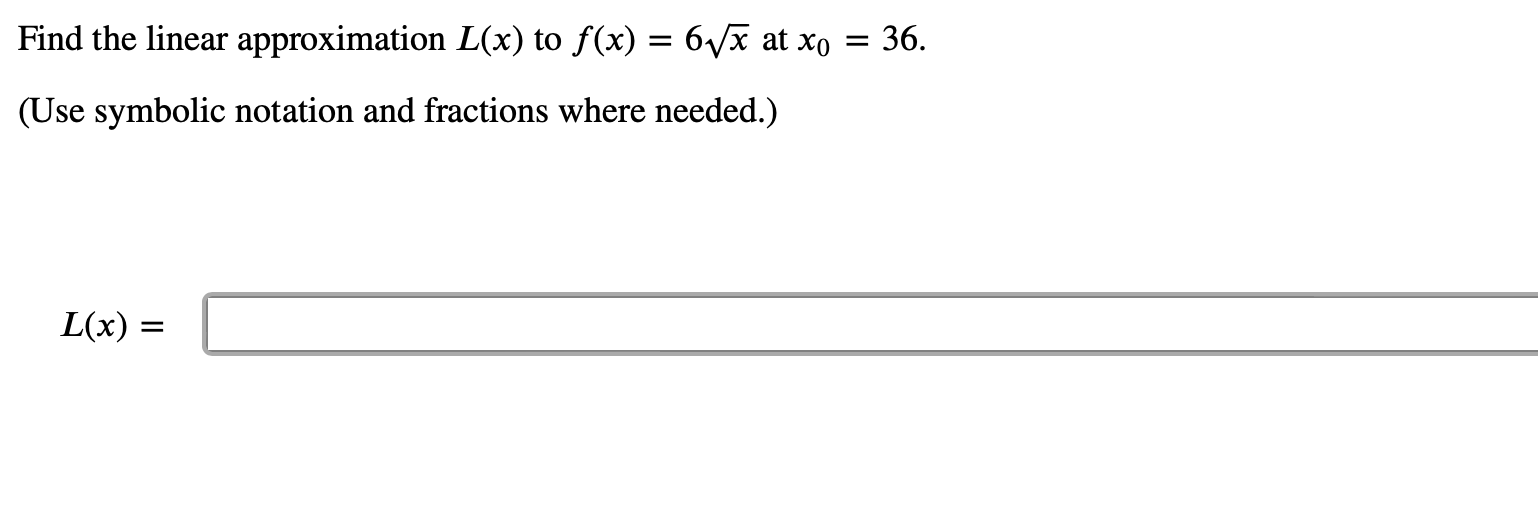
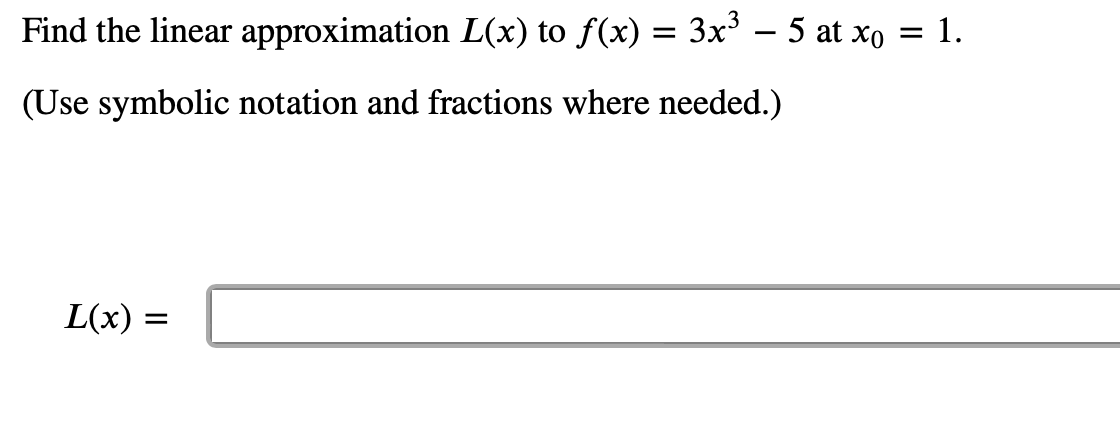
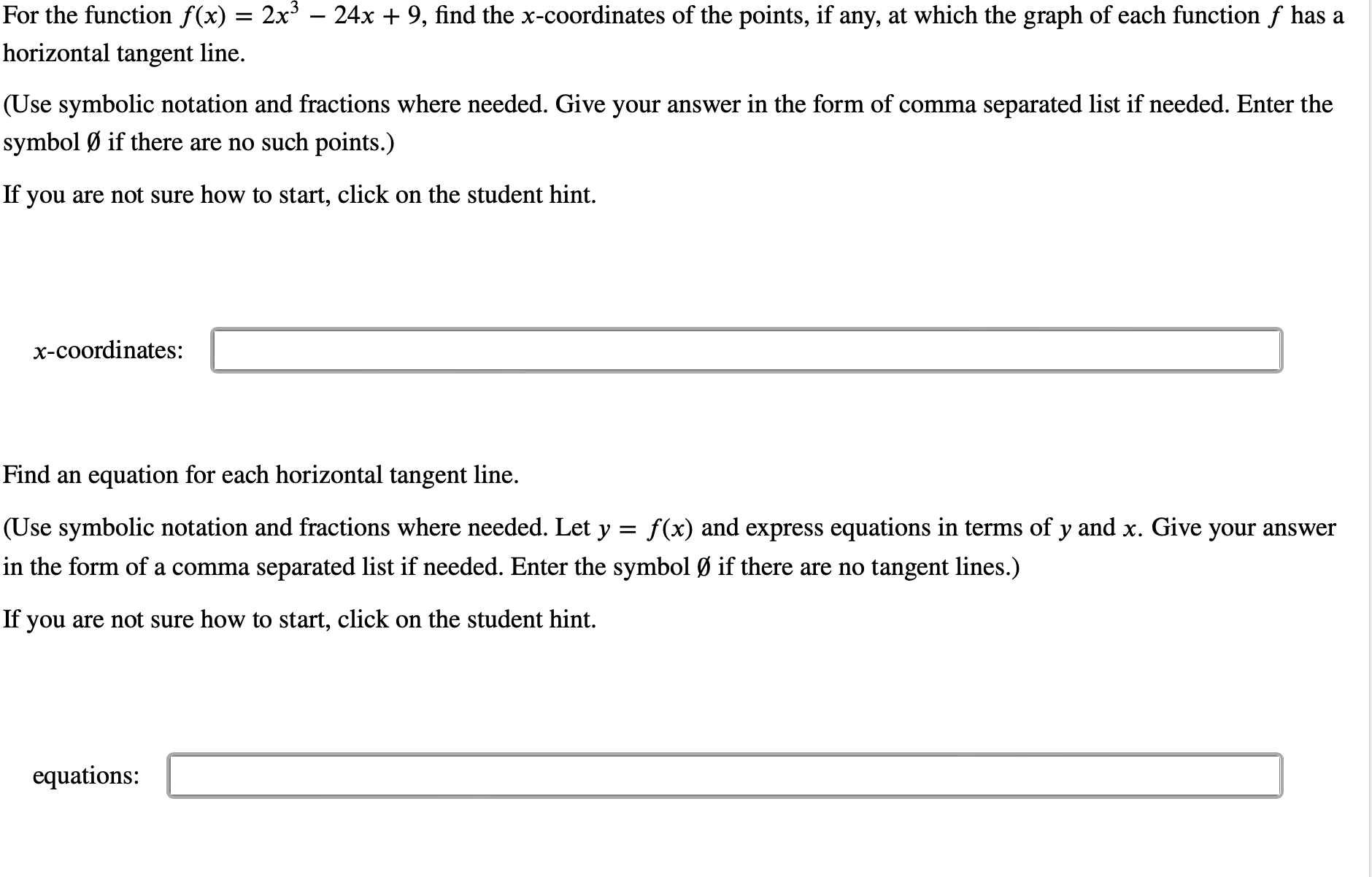
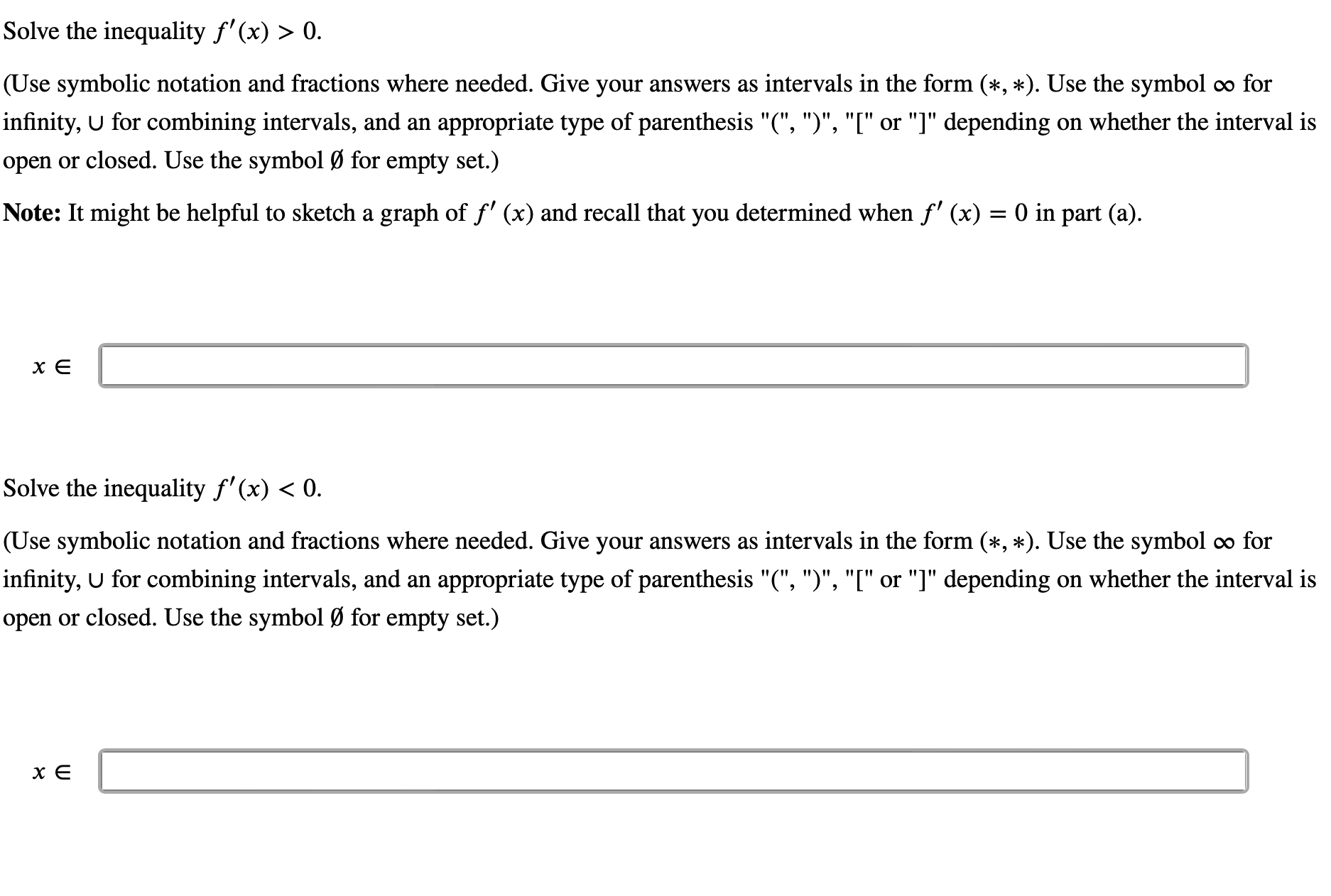
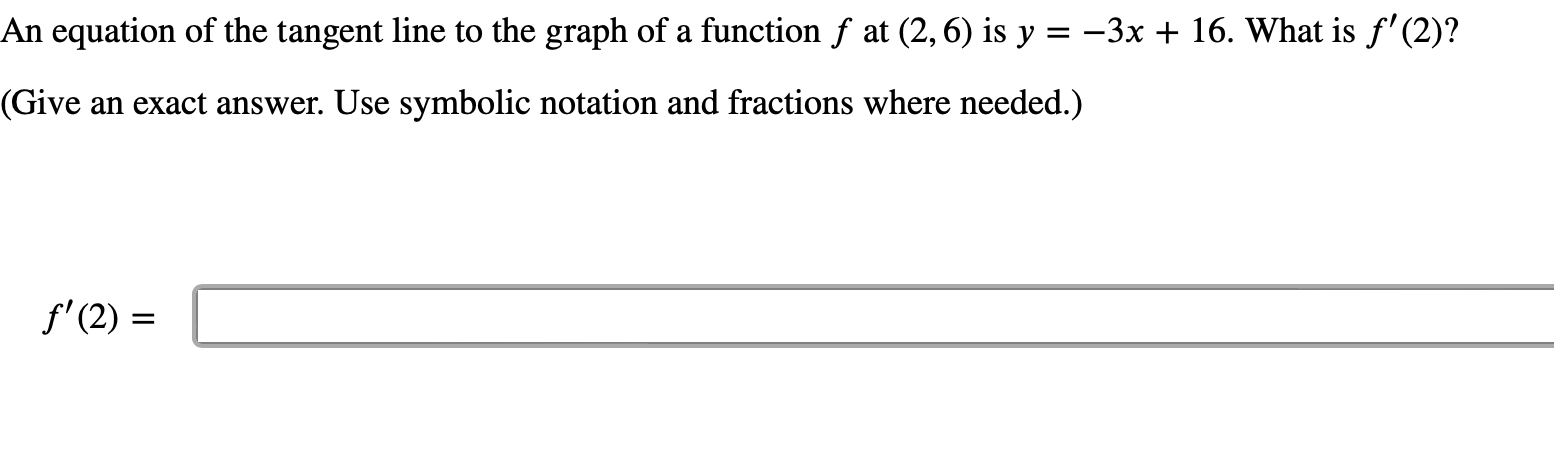
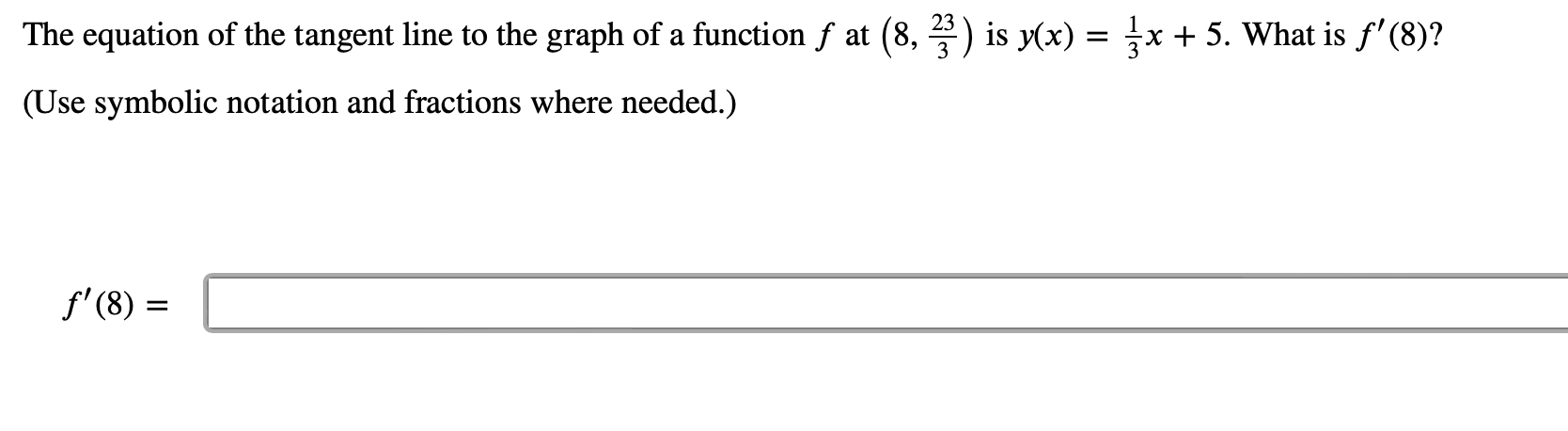
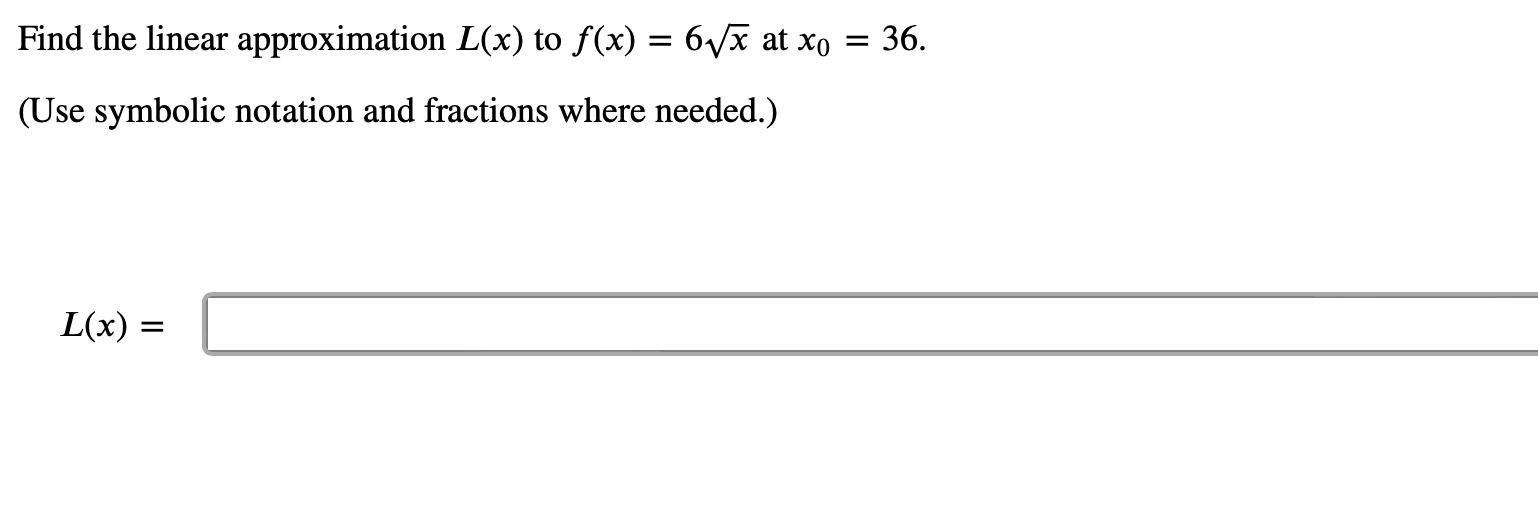
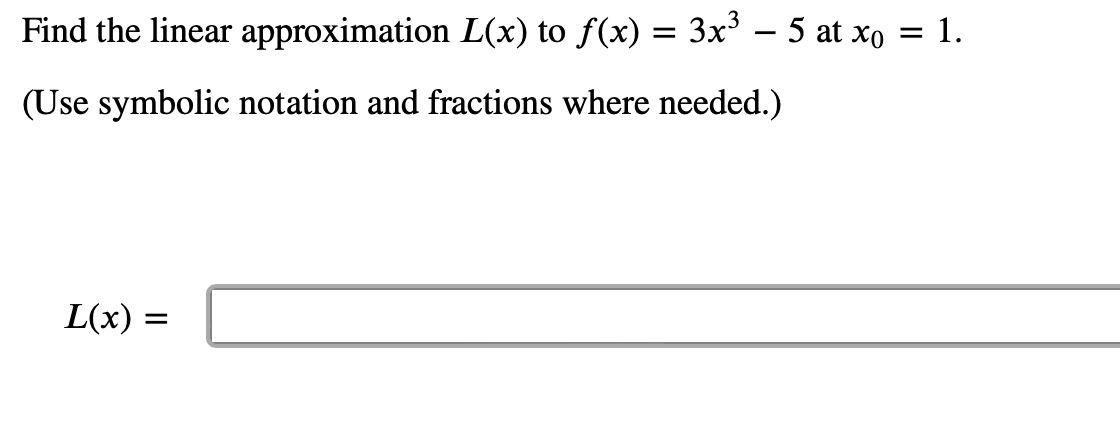
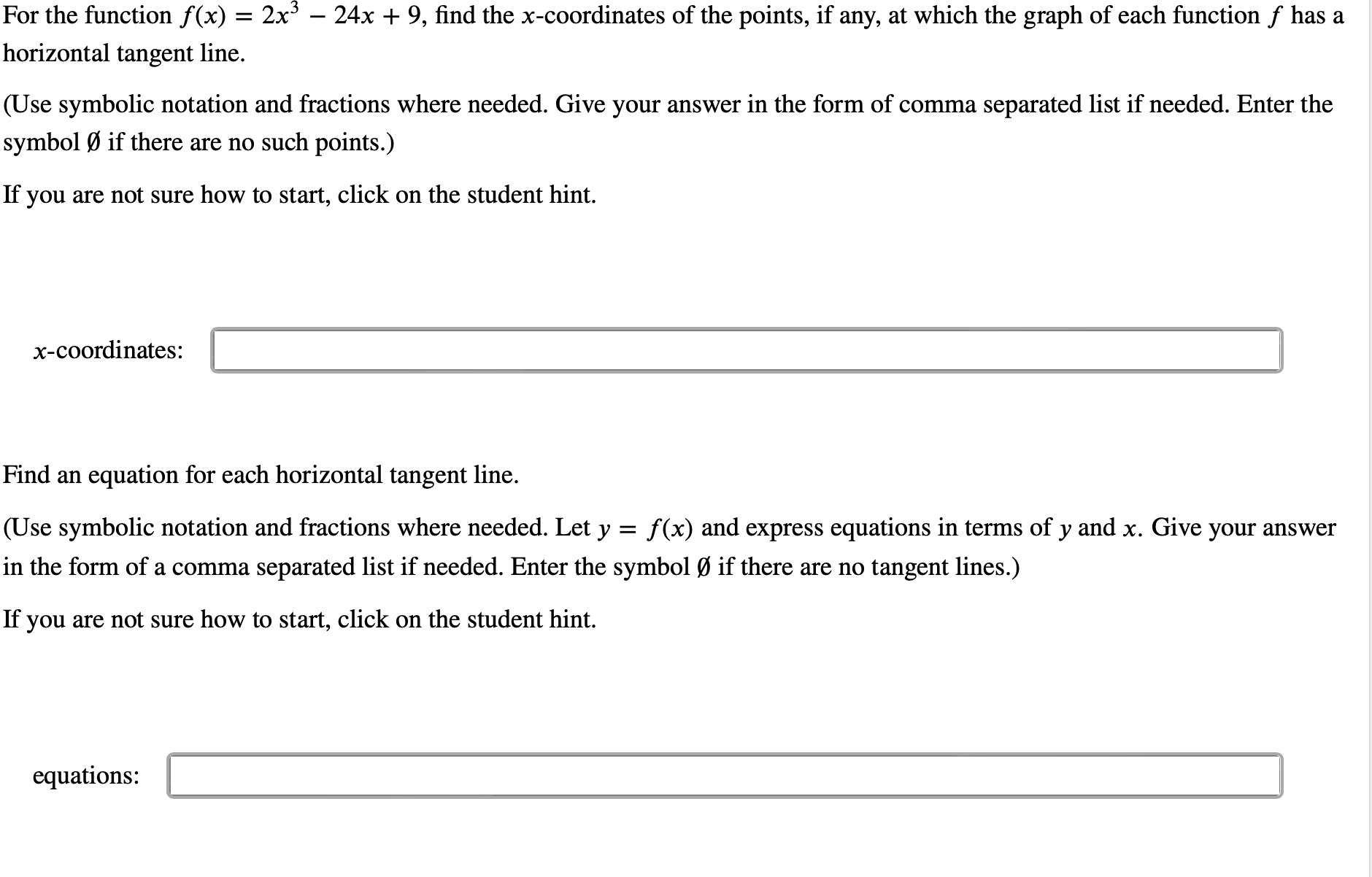
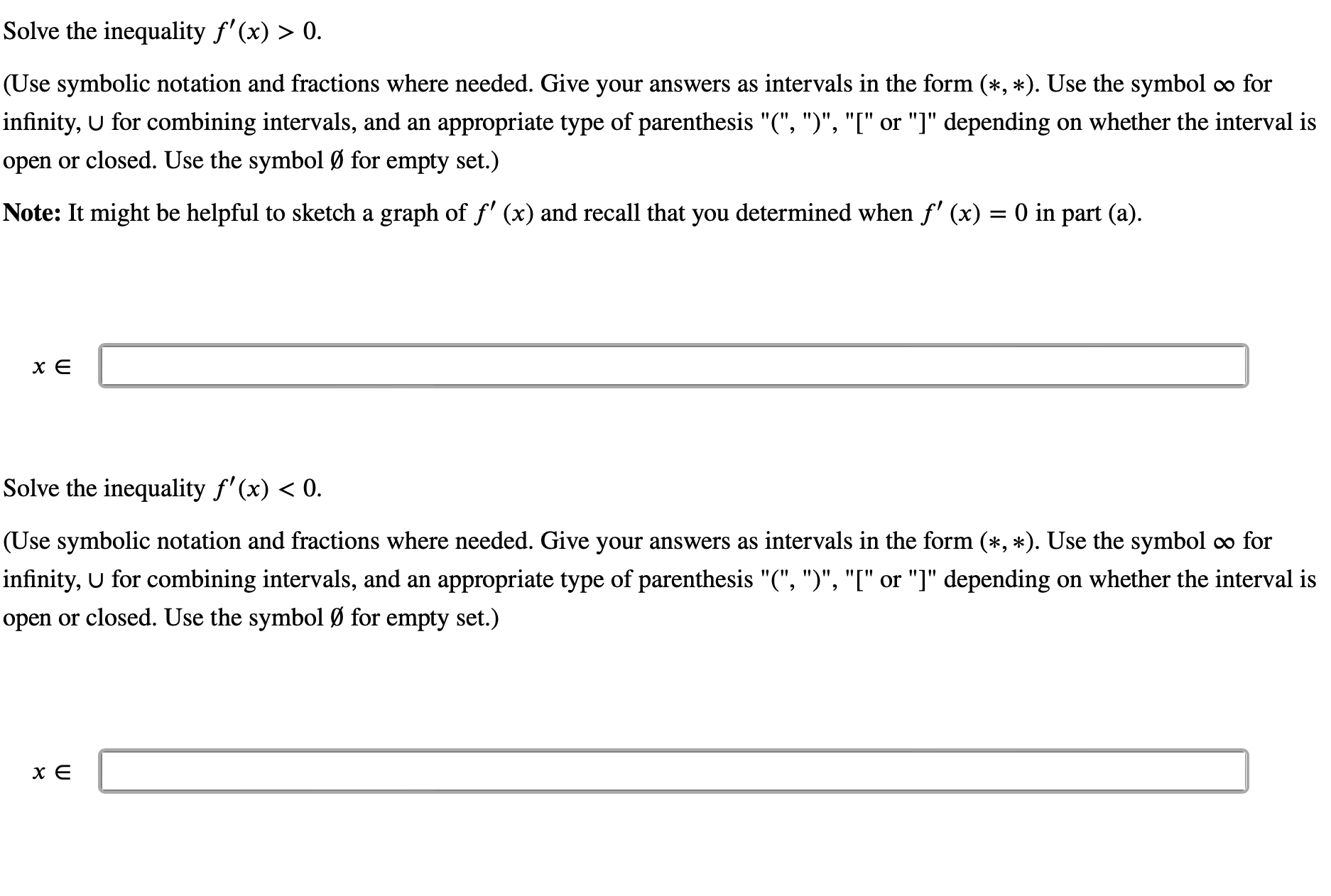
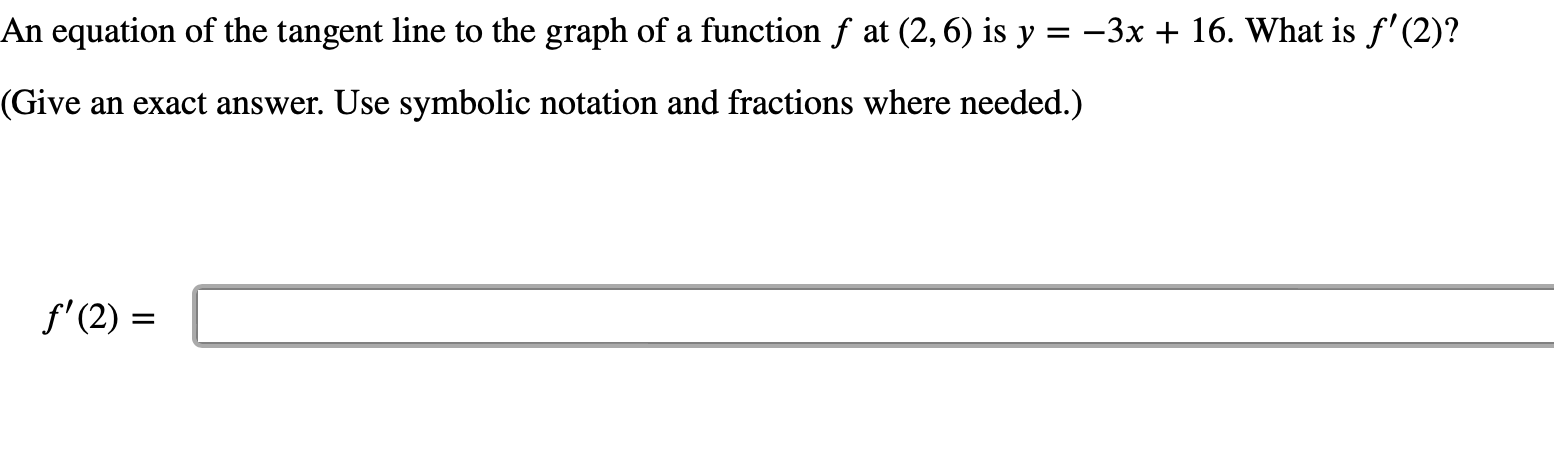
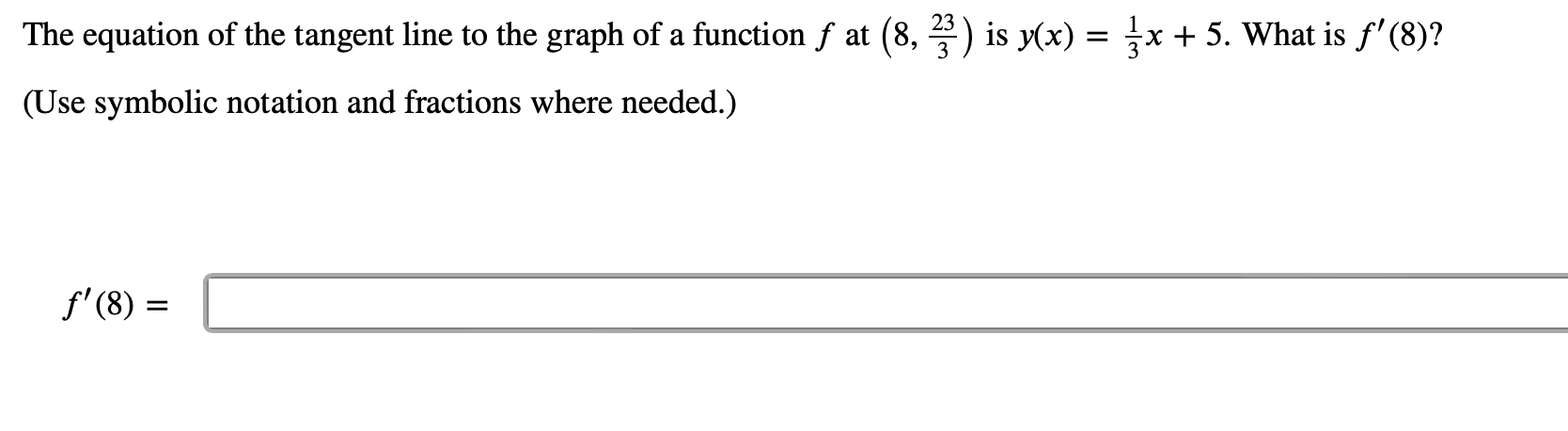
Find the linear approximation L(x) to f (x) = 6'5: at x0 = 36. (Use symbolic notation and fractions where needed.) L(x) = \\ Find the linear approximation L(x) to f(x) = 3x3 5 at x0 = 1. (Use symbolic notation and fractions where needed.) LDC) For the function f (x) = 2x3 24x + 9, nd the xcoordinates of the points, if any, at which the graph of each function f has a horizontal tangent line. (Use symbolic notation and fractions where needed. Give your answer in the form of comma separated list if needed. Enter the symbol [5 if there are no such points.) If you are not sure how to start, click on the student hint. x-coordinates: Find an equation for each horizontal tangent line. (Use symbolic notation and fractions where needed. Let y = f (x) and express equations in terms of y and x. Give your answer in the form of a comma separated list if needed. Enter the symbol if there are no tangent lines.) If you are not sure how to start, click on the student hint. equations: Solve the inequality f ' (x) > 0. (Use symbolic notation and fractions where needed. Give your answers as intervals in the form (*, *). Use the symbol 00 for innity, U for combining intervals, and an appropriate type of parenthesis "(", ")", " " or "]" depending on whether the interval is open or closed. Use the symbol H for empty set.) Note: It might be helpful to sketch a graph of f ' (x) and recall that you determined when f ' (x) = 0 in part (a). x6 Solve the inequality f ' (x)
Step by Step Solution
There are 3 Steps involved in it

Get step-by-step solutions from verified subject matter experts
 Study Help