







Question: Find the standard deviation. Comment on your answer. 10 Consider the following two data sets: Data set I: 13, 25, 27, 15 Data set II:
Find the standard deviation. Comment on your answer.
10 Consider the following two data sets:
Data set I: 13, 25, 27, 15
Data set II: 10, 15, 30, 25
Find the mean and the standard deviations for each data set of
the two data sets above. Comment on your answer.
11 Fatima is currently taking college economics. The instructor
often gives quizzes. On the past five quizzes, Fatima got the
following scores
5, 19, 2, 13, 10
Find the range for her scores.
12 The owner of a small manufacturing plant employs six people.
As part of their personal file, she asked each one to record to
the nearest one-tenth of a mile the distance they travel one
way from home to work. The six distances are listed below.
2.3, 5.5, 1.1, 4.3, 6.4, 3.5
Find the range for these data.

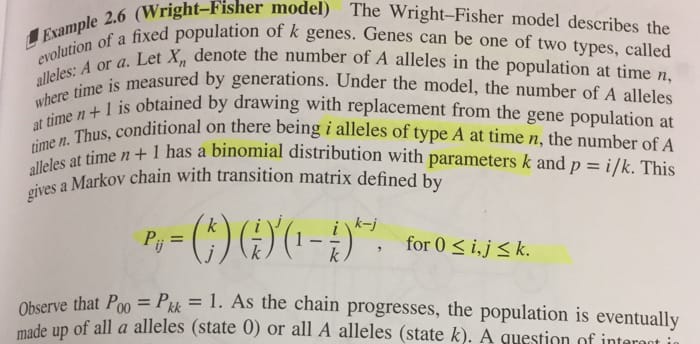
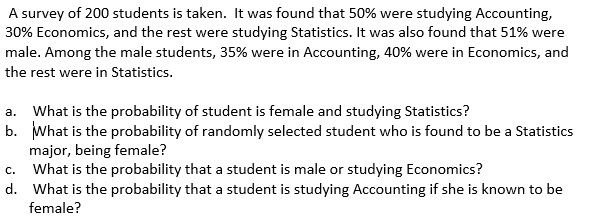
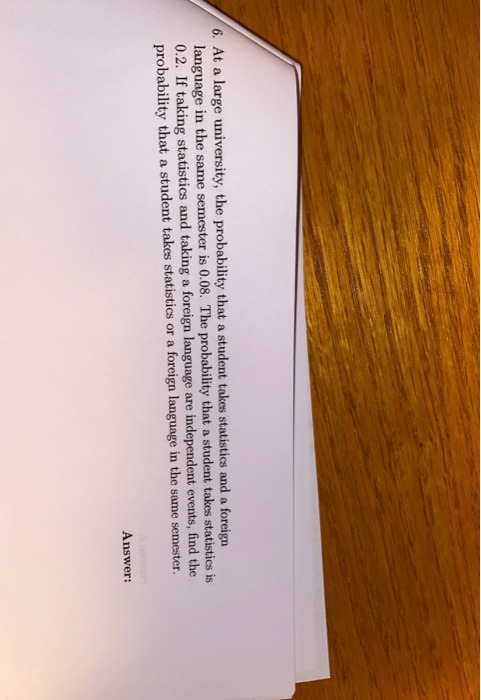
13 Clay is a business entrepreneur who runs his own online store, which he incorporated sew since paid it back. Once his business was stable, he borrowed again to buy a house. He is now thinking of using leverage to invest in segregated funds. Why is Clay's decision to b a. O He could lose his principal and interest, thus magnifying his loss b. O If the investment fails, he could lose both his home and business CO Leveraging to invest can result in longevity risk if he cannot pay back the loan in ti d. O He wants to invest in segregated funds, which is riskier than funding his businessExample 2.6 (Wright-Fisher model) The Wright-Fisher model describes the evolution of a fixed population of k genes. Genes can be one of two types, called alleles: A or a. Let A,, denote the number of A alleles in the population at time n. where time is measured by generations. Under the model, the number of A alleles at time n + 1 is obtained by drawing with replacement from the gene population at time n. Thus, conditional on there being i alleles of type A at time n, the number of A alleles at time n + I has a binomial distribution with parameters k and p = i/k. This gives a Markov chain with transition matrix defined by Py = ( 1 ) ( # ) ( 1 - 2 ) k-j for 0
Step by Step Solution
There are 3 Steps involved in it

Get step-by-step solutions from verified subject matter experts
 Study Help