



Question: first part of question second part last part Question 2 (30 marks) Barely Edible (BARE) has come to your Bank for a $15 million loan
first part of question
second part
last part
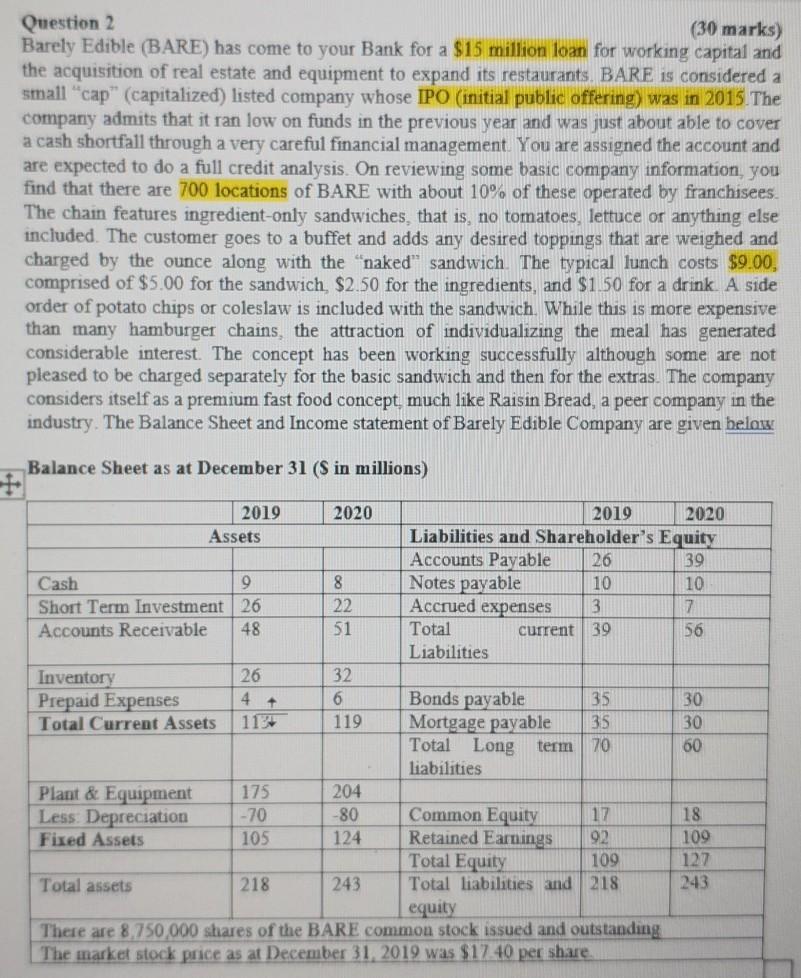
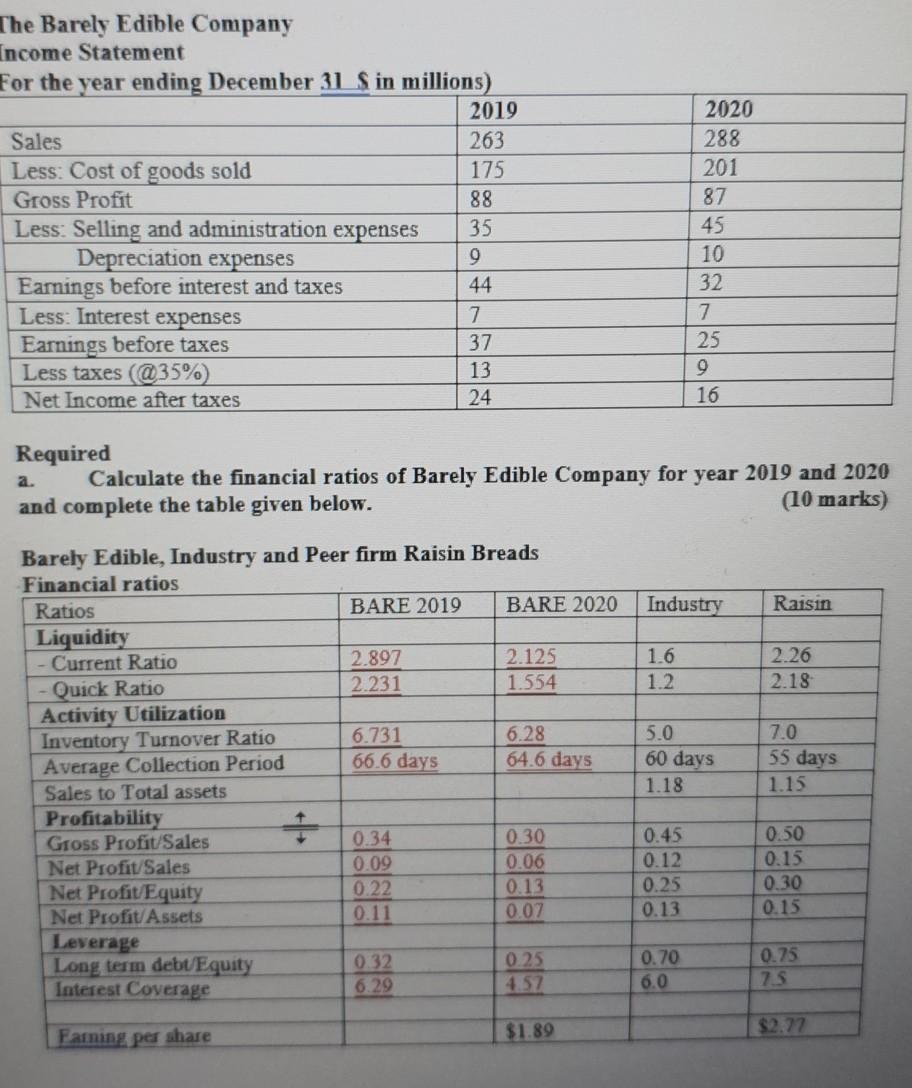
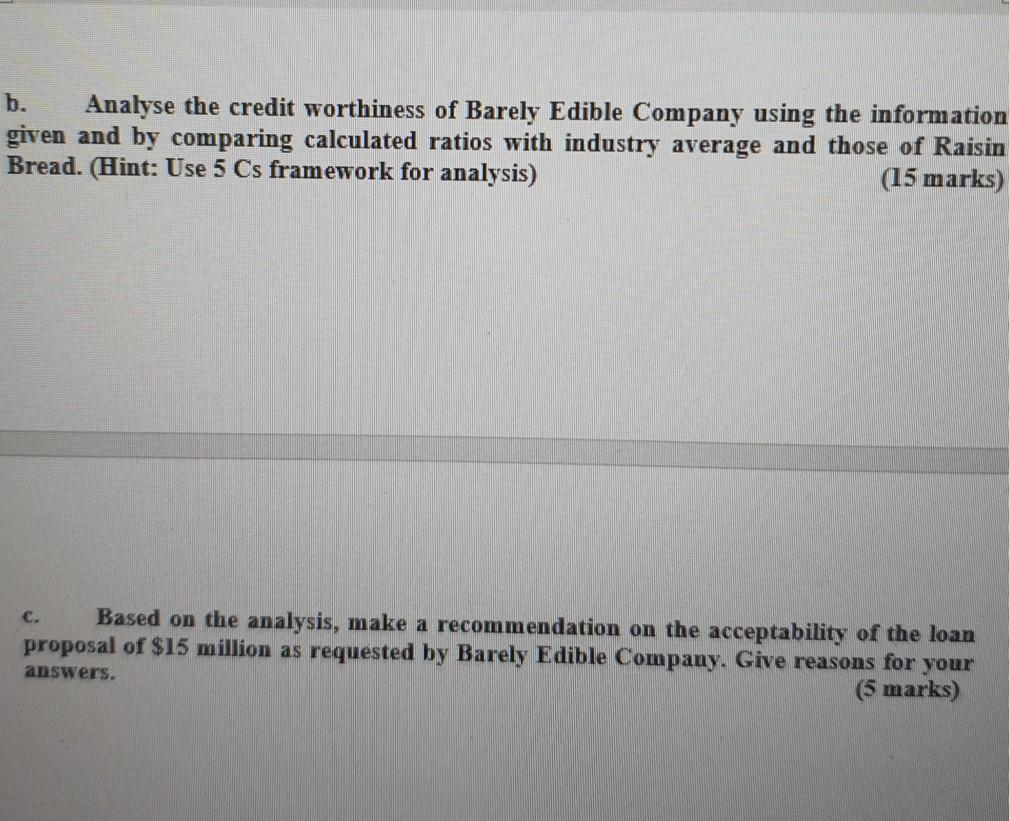
Question 2 (30 marks) Barely Edible (BARE) has come to your Bank for a $15 million loan for working capital and the acquisition of real estate and equipment to expand its restaurants BARE is considered a small "cap" (capitalized) listed company whose IPO (initial public offering) was in 2015. The company admits that it ran low on funds in the previous year and was just about able to cover a cash shortfall through a very careful financial management. You are assigned the account and are expected to do a full credit analysis. On reviewing some basic company information, you find that there are 700 locations of BARE with about 10% of these operated by franchisees. The chain features ingredient-only sandwiches, that is, no tomatoes, lettuce or anything else included. The customer goes to a buffet and adds any desired toppings that are weighed and charged by the ounce along with the "naked" sandwich. The typical lunch costs $9.00, comprised of $5.00 for the sandwich, $2.50 for the ingredients, and $150 for a drink. A side order of potato chips or coleslaw is included with the sandwich. While this is more expensive than many hamburger chains, the attraction of individualizing the meal has generated considerable interest. The concept has been working successfully although some are not pleased to be charged separately for the basic sandwich and then for the extras. The company considers itself as a premium fast food concept, much like Raisin Bread, a peer company in the industry. The Balance Sheet and Income statement of Barely Edible Company are given below Balance Sheet as at December 31 (S in millions) + current 2019 2020 2019 2020 Assets Liabilities and Shareholder's Equity Accounts Payable 26 39 Cash 9 8 Notes payable 10 10 Short Term Investment 26 22 Accrued expenses 3 7 Accounts Receivable 48 51 Total 39 56 Liabilities Inventory 26 32 Prepaid Expenses 4 6 Bonds payable 35 30 Total Current Assets 11 119 Mortgage payable 35 30 Total Long term 70 60 liabilities Plant & Equipment 175 204 Less. Depreciation -70 -80 Common Equity 17 18 Fixed Assets 105 124 Retained Earnings 92 109 Total Equity 109 127 Total assets 218 243 Total liabilities and 218 243 equity There are 8,750,000 shares of the BARE common stock issued and outstanding The market stock price as at December 31, 2019 was $17.40 per share. The Barely Edible Company Income Statement For the year ending December 31 S in millions) 2019 Sales 263 Less: Cost of goods sold 175 Gross Profit 88 Less: Selling and administration expenses 35 Depreciation expenses 9 Earnings before interest and taxes 44 Less: Interest expenses 7 Earnings before taxes 37 Less taxes (@35%) 13 Net Income after taxes 24 2020 288 201 87 45 10 32 7 25 9 16 ml + Required Calculate the financial ratios of Barely Edible Company for year 2019 and 2020 and complete the table given below. (10 marks) a. Industry Raisin 1.6 1.2 2.26 2.18 7.0 Barely Edible, Industry and Peer firm Raisin Breads Financial ratios Ratios BARE 2019 BARE 2020 Liquidity - Current Ratio 2.897 2.125 Quick Ratio 2.231 1.554 Activity Utilization Inventory Turnover Ratio 6.731 6.28 Average Collection Period 66.6 days 64.6 days Sales to Total assets Profitability Gross Profit/Sales 0.34 0.30 Net Profit/Sales 0.09 0.06 Net Profit/Equity 0.22 0.13 Net Profit Assets 0.11 0.07 Leverage Long term debuEquity 0.32 Interest Coverage 6.29 4.57 5.0 60 days 1.18 55 days 1.15 + 0.45 0.12 0.50 0.15 0.30 0.15 0.25 0.13 0.25 0.70 6.0 0.75 75 $1.89 $2.77 Fatning per share b. Analyse the credit worthiness of Barely Edible Company using the information given and by comparing calculated ratios with industry average and those of Raisin Bread. (Hint: Use 5 Cs framework for analysis) (15 marks) C. Based on the analysis, make a recommendation on the acceptability of the loan proposal of $15 million as requested by Barely Edible Company. Give reasons for your answers. (5 marks) Question 2 (30 marks) Barely Edible (BARE) has come to your Bank for a $15 million loan for working capital and the acquisition of real estate and equipment to expand its restaurants BARE is considered a small "cap" (capitalized) listed company whose IPO (initial public offering) was in 2015. The company admits that it ran low on funds in the previous year and was just about able to cover a cash shortfall through a very careful financial management. You are assigned the account and are expected to do a full credit analysis. On reviewing some basic company information, you find that there are 700 locations of BARE with about 10% of these operated by franchisees. The chain features ingredient-only sandwiches, that is, no tomatoes, lettuce or anything else included. The customer goes to a buffet and adds any desired toppings that are weighed and charged by the ounce along with the "naked" sandwich. The typical lunch costs $9.00, comprised of $5.00 for the sandwich, $2.50 for the ingredients, and $150 for a drink. A side order of potato chips or coleslaw is included with the sandwich. While this is more expensive than many hamburger chains, the attraction of individualizing the meal has generated considerable interest. The concept has been working successfully although some are not pleased to be charged separately for the basic sandwich and then for the extras. The company considers itself as a premium fast food concept, much like Raisin Bread, a peer company in the industry. The Balance Sheet and Income statement of Barely Edible Company are given below Balance Sheet as at December 31 (S in millions) + current 2019 2020 2019 2020 Assets Liabilities and Shareholder's Equity Accounts Payable 26 39 Cash 9 8 Notes payable 10 10 Short Term Investment 26 22 Accrued expenses 3 7 Accounts Receivable 48 51 Total 39 56 Liabilities Inventory 26 32 Prepaid Expenses 4 6 Bonds payable 35 30 Total Current Assets 11 119 Mortgage payable 35 30 Total Long term 70 60 liabilities Plant & Equipment 175 204 Less. Depreciation -70 -80 Common Equity 17 18 Fixed Assets 105 124 Retained Earnings 92 109 Total Equity 109 127 Total assets 218 243 Total liabilities and 218 243 equity There are 8,750,000 shares of the BARE common stock issued and outstanding The market stock price as at December 31, 2019 was $17.40 per share. The Barely Edible Company Income Statement For the year ending December 31 S in millions) 2019 Sales 263 Less: Cost of goods sold 175 Gross Profit 88 Less: Selling and administration expenses 35 Depreciation expenses 9 Earnings before interest and taxes 44 Less: Interest expenses 7 Earnings before taxes 37 Less taxes (@35%) 13 Net Income after taxes 24 2020 288 201 87 45 10 32 7 25 9 16 ml + Required Calculate the financial ratios of Barely Edible Company for year 2019 and 2020 and complete the table given below. (10 marks) a. Industry Raisin 1.6 1.2 2.26 2.18 7.0 Barely Edible, Industry and Peer firm Raisin Breads Financial ratios Ratios BARE 2019 BARE 2020 Liquidity - Current Ratio 2.897 2.125 Quick Ratio 2.231 1.554 Activity Utilization Inventory Turnover Ratio 6.731 6.28 Average Collection Period 66.6 days 64.6 days Sales to Total assets Profitability Gross Profit/Sales 0.34 0.30 Net Profit/Sales 0.09 0.06 Net Profit/Equity 0.22 0.13 Net Profit Assets 0.11 0.07 Leverage Long term debuEquity 0.32 Interest Coverage 6.29 4.57 5.0 60 days 1.18 55 days 1.15 + 0.45 0.12 0.50 0.15 0.30 0.15 0.25 0.13 0.25 0.70 6.0 0.75 75 $1.89 $2.77 Fatning per share b. Analyse the credit worthiness of Barely Edible Company using the information given and by comparing calculated ratios with industry average and those of Raisin Bread. (Hint: Use 5 Cs framework for analysis) (15 marks) C. Based on the analysis, make a recommendation on the acceptability of the loan proposal of $15 million as requested by Barely Edible Company. Give reasons for your answers
Step by Step Solution
There are 3 Steps involved in it

Get step-by-step solutions from verified subject matter experts