Question: First, we will look at the design challenges faced by the CEO of one of the world's oldest and largest humanitarian organizations. As you read
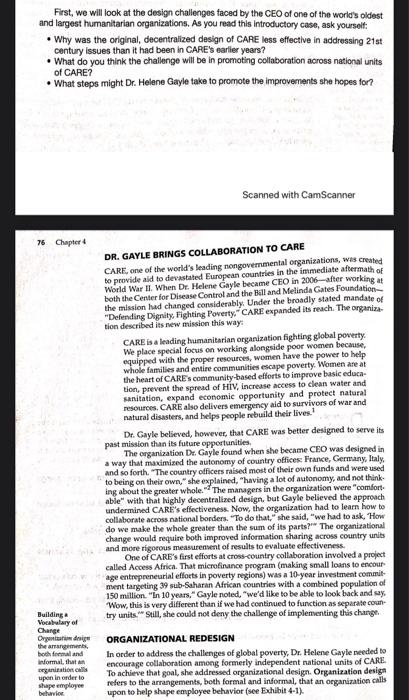
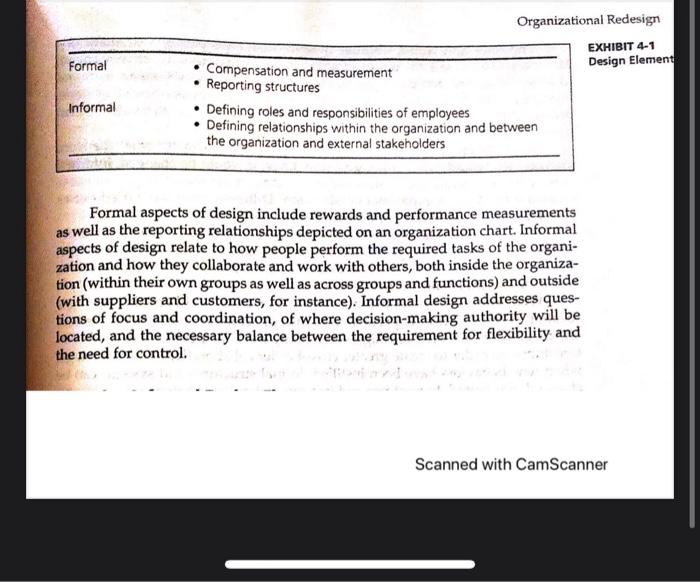
First, we will look at the design challenges faced by the CEO of one of the world's oldest and largest humanitarian organizations. As you read this introductory case, ask yourself: Why was the original, decentralized design of CARE less effective in addressing 21st century issues than it had been in CARE's earlier years? What do you think the challenge will be in promoting collaboration across national units of CARE What steps might Dr. Helene Gayle take to promote the improvements the hopes for? Scanned with CamScanner 76 Chapter 4 DR. GAYLE BRINGS COLLABORATION TO CARE CARE, one of the world's leading nongovernmental organizations, was created to provide aid to devastated European countries in the immediate aftermath of World War II When Dr. Helene Gayle became CEO in 2006-after working at both the Center for Disease Control and the Bill and Melinda Gates Foundation the mission had changed considerably. Under the broadly stated mandate of "Defending Dignity, Fighting Poverty," CARE expanded its reach. The organize tion described its new mission this way CARE is a leading humanitarian organization fighting global poverty We place special focus on working alongside poor women because equipped with the proper resources, women have the power to help whole families and entire communities escape poverty. Women are at the heart of CAREs community-based efforts to improve basic educa tion, prevent the spread of HIV, increase access to clean water and sanitation, expand economic opportunity and protect natural resources. CARE also delivers emergency aid to survivors of war and natural disasters, and helps people rebuild their lives. Dr. Gayle believed, however, that CARE was better designed to serve its past mission than its future opportunities The organization Dr. Gayle found when she became CEO was designed in a way that maximized the autonomy of country offices: France, Germany, Italy, and so forth. The country officers raised most of their own funds and were used to being on their own," she explained. "having a lot of autonomy, and not think ing about the greater whole. The managers in the organization were comfort able" with that highly decentralized design, but Gayle believed the approach undermined CARE's effectiveness. Now, the organization had to learn how to collaborate across national borders. "To do that," she said, "we had to ask, "How do we make the whole greater than the sum of its parts?" The organizational change would require both improved information sharing across country units and more rigorous measurement of results to evaluate effectiveness. One of CARE's first efforts at cross-country collaboration involved a project called Access Africa. That microfinance program (making small loans to encour age entrepreneurial efforts in poverty regions) was a 10 year investment commit ment targeting 39 sub-Saharan African countries with a combined population of 150 million. "In 10 years," Gayle noted, we'd like to be able to look back and say Wow, this is very different than if we had continued to function as separate coun try units. Still, she could not deny the challenge of implementing this change ORGANIZATIONAL REDESIGN In order to address the challenges of global poverty, Dr. Helene Gayle needed to encourage collaboration among formerly independent national units of CARE To achieve that goal, she addressed organizational design. Organization design refers to the arrangements, both formal and informal, that an organization calls upon to help shape employee behavior (see Exhibit 4-1). Change Building Vocabulary of traige the arrangement both formaland informal, that en segination call upon in order to shape employee Formal Organizational Redesign EXHIBIT 4-1 Compensation and measurement Design Element Reporting structures Defining roles and responsibilities of employees Defining relationships within the organization and between the organization and external stakeholders Informal Formal aspects of design include rewards and performance measurements as well as the reporting relationships depicted on an organization chart. Informal aspects of design relate to how people perform the required tasks of the organi- zation and how they collaborate and work with others, both inside the organiza- tion (within their own groups as well as across groups and functions) and outside (with suppliers and customers, for instance). Informal design addresses ques- tions of focus and coordination, of where decision-making authority will be located, and the necessary balance between the requirement for flexibility and the need for control. Scanned with CamScanner









 Study Help