





Question: Fitty Case Studies for Management & Supervisory Training Step 3. Consider whether it is necessary to determine the cause of the problem. In some cases,
Fitty Case Studies for Management & Supervisory
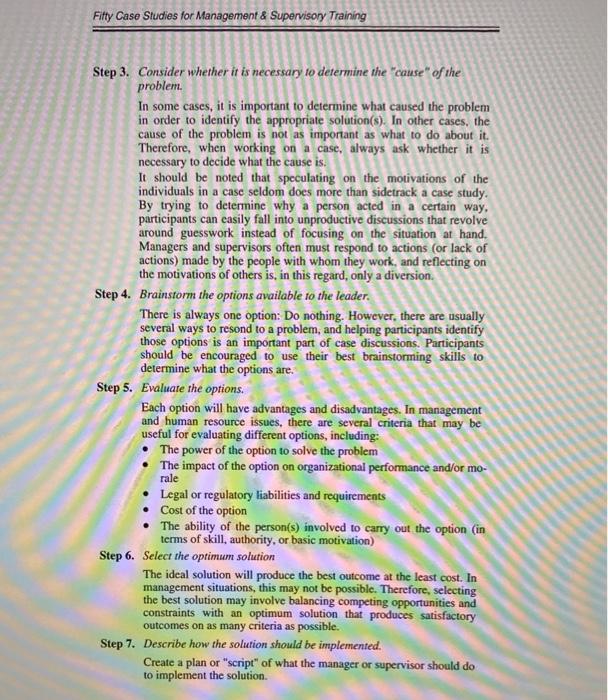
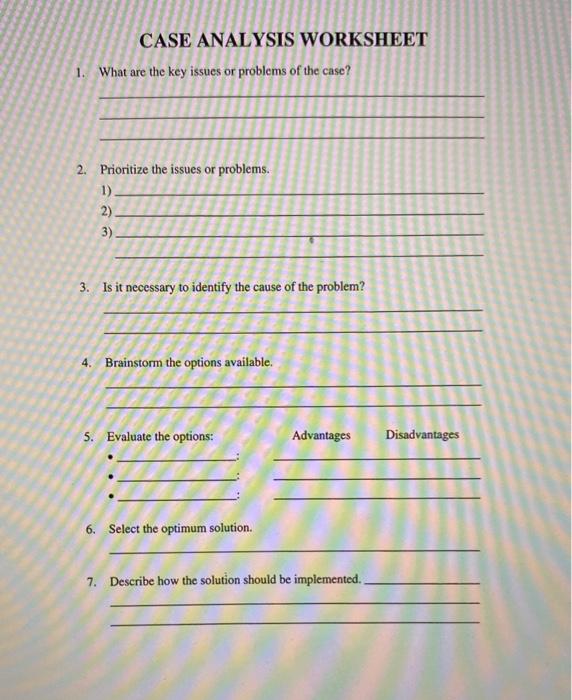
Fitty Case Studies for Management & Supervisory Training Step 3. Consider whether it is necessary to determine the cause of the problem. In some cases, it is important to determine what caused the problem in order to identify the appropriate solution(s). In other cases, the cause of the problem is not as important as what to do about it. Therefore, when working on a case, always ask whether it is necessary to decide what the cause is. It should be noted that speculating on the motivations of the individuals in a case seldom does more than sidetrack a case study. By trying to determine why a person acted in a certain way. participants can easily fall into unproductive discussions that revolve around guesswork instead of focusing on the situation at hand. Managers and supervisors often must respond to actions (or lack of actions made by the people with whom they work, and reflecting on the motivations of others is, in this regard, only a diversion. Step 4. Brainstorm the options available to the leader. There is always one option: Do nothing. However, there are usually several ways to resond to a problem, and helping participants identify those options is an important part of case discussions. Participants should be encouraged to use their best brainstorming skills to determine what the options are. Step 5. Evaluate the options. Each option will have advantages and disadvantages. In management and human resource issues, there are several criteria that may be useful for evaluating different options, including: The power of the option to solve the problem The impact of the option on organizational performance and/or mo- rale Legal or regulatory liabilities and requirements Cost of the option The ability of the person(s) involved to carry out the option (in terms of skill, authority, or basic motivation) Step 6. Select the optimum solution The ideal solution will produce the best outcome at the least cost. In management situations, this may not be possible. Therefore, selecting the best solution may involve balancing competing opportunities and constraints with an optimum solution that produces satisfactory outcomes on as many criteria as possible. Step 7. Describe how the solution should be implemented. Create a plan or "script" of what the manager or supervisor should do to implement the solution. CASE ANALYSIS WORKSHEET 1. What are the key issues or problems of the case? 2. Prioritize the issues or problems. 1). 2) 3) 3. Is it necessary to identify the cause of the problem? 4. Brainstorm the options available. 5. Evaluate the options: Advantages Disadvantages 6. Select the optimum solution. 7. Describe how the solution should be implemented

Step by Step Solution

There are 3 Steps involved in it

1 Expert Approved Answer
Step: 1 Unlock blur-text-image

Question Has Been Solved by an Expert!

Get step-by-step solutions from verified subject matter experts

Step: 2 Unlock
Step: 3 Unlock

Students Have Also Explored These Related General Management Questions!