







Question: For Problems 27 through 29: You estimate that a passive portfolio, for example, one invested in a risky portfolio that mimics the S&P/TSX Composite stock
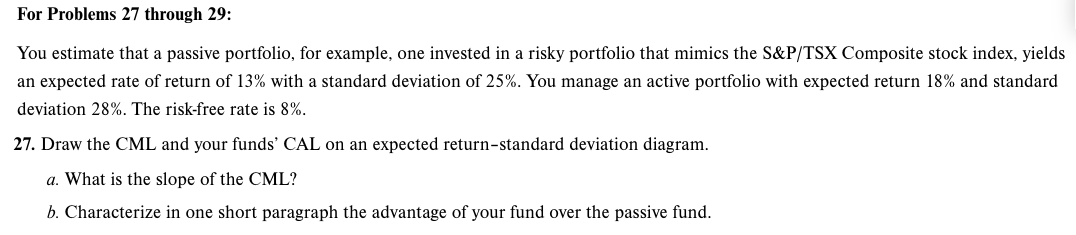
For Problems 27 through 29: You estimate that a passive portfolio, for example, one invested in a risky portfolio that mimics the S&P/TSX Composite stock index, yields an expected rate of return of 13% with a standard deviation of 25%. You manage an active portfolio with expected return 18% and standard deviation 28%. The risk-free rate is 8%. 27. Draw the CML and your funds' CAL on an expected return-standard deviation diagram. a. What is the slope of the CML? b. Characterize in one short paragraph the advantage of your fund over the passive fund. For Problems 27 through 29: You estimate that a passive portfolio, for example, one invested in a risky portfolio that mimics the S&P/TSX Composite stock index, yields an expected rate of return of 13% with a standard deviation of 25%. You manage an active portfolio with expected return 18% and standard deviation 28%. The risk-free rate is 8%. 27. Draw the CML and your funds' CAL on an expected return-standard deviation diagram. a. What is the slope of the CML? b. Characterize in one short paragraph the advantage of your fund over the passive fund
Step by Step Solution
There are 3 Steps involved in it

Get step-by-step solutions from verified subject matter experts
 Study Help