







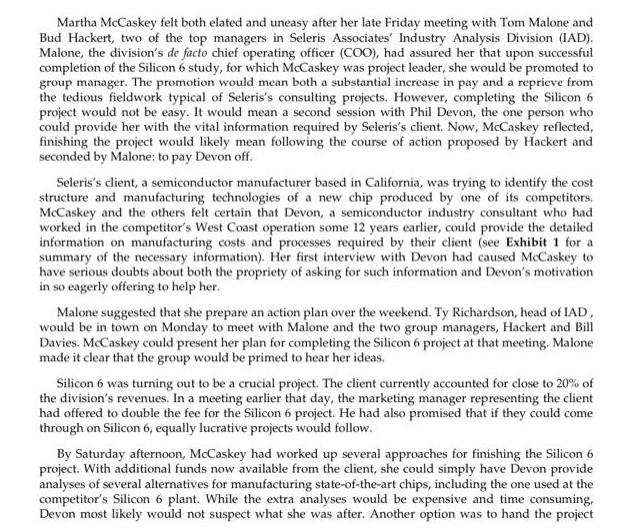
Question: For the following case: 1) Identify ethical issues. 2) Analyze Effects and Underlying causes. Martha McCaskey felt both elated and uneasy after her late Friday
For the following case:
1) Identify ethical issues.
2) Analyze Effects and Underlying causes.
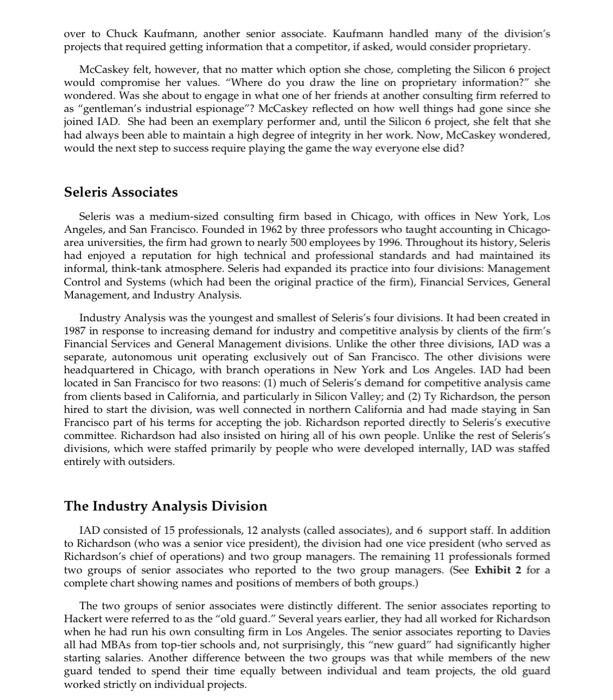
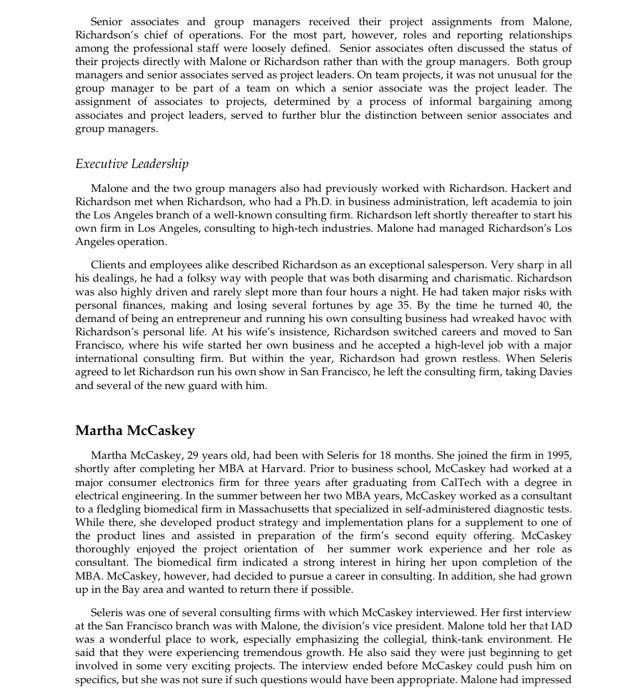
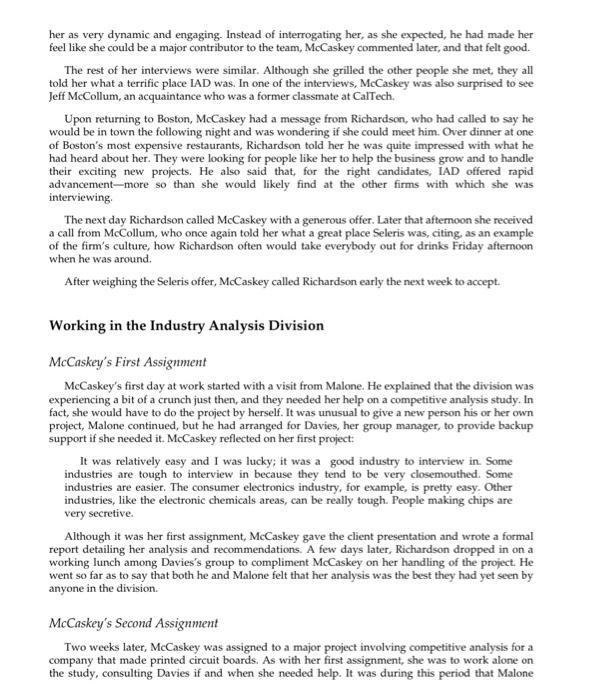
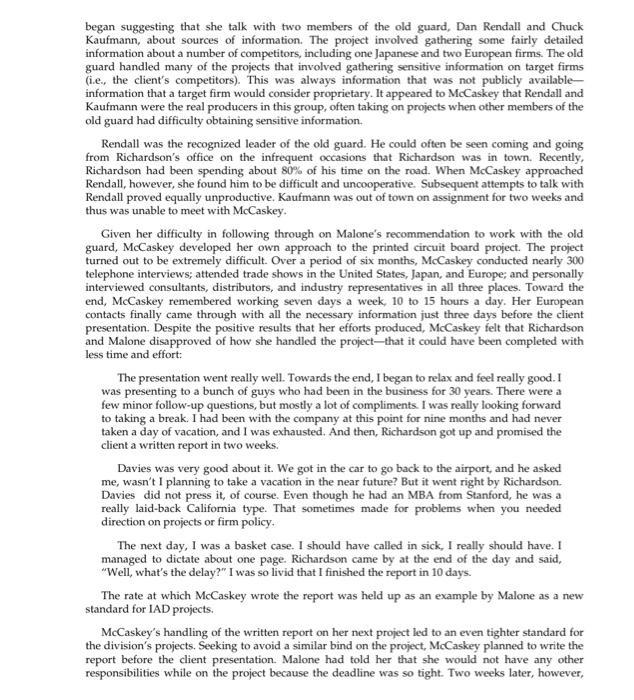
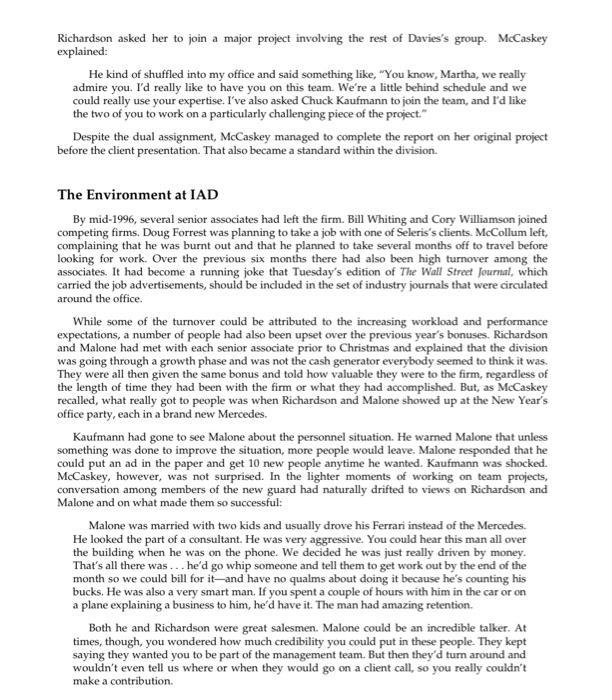
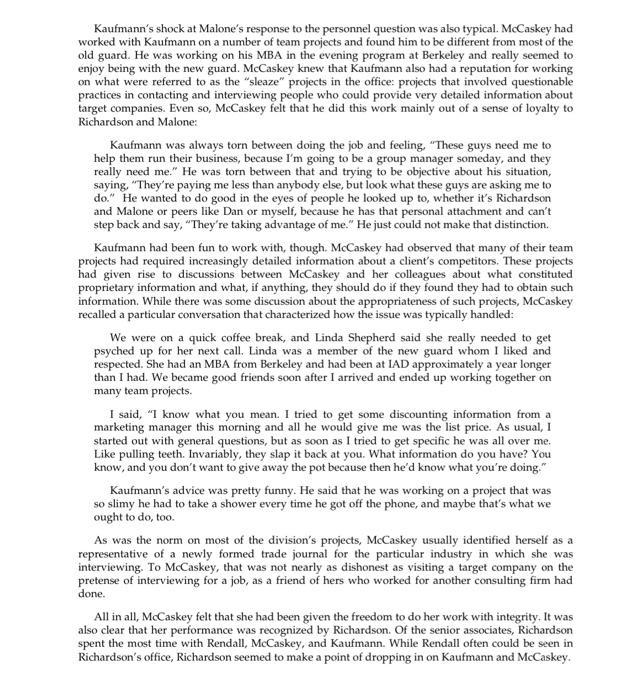
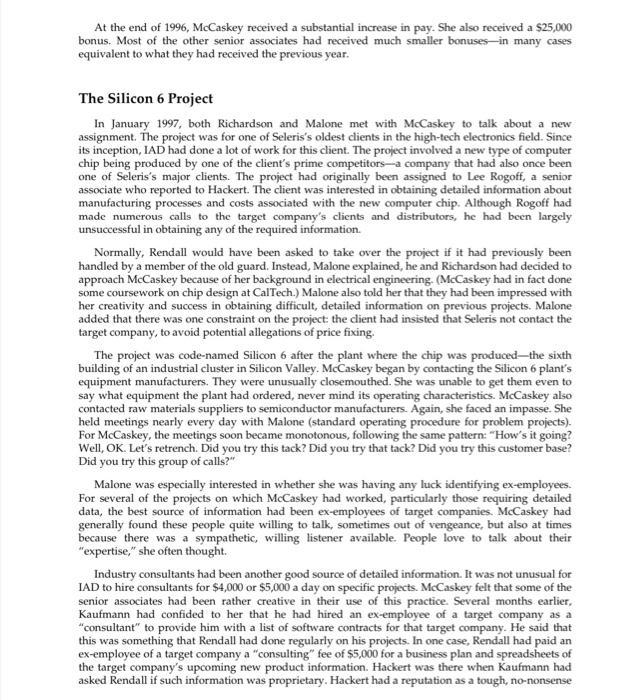
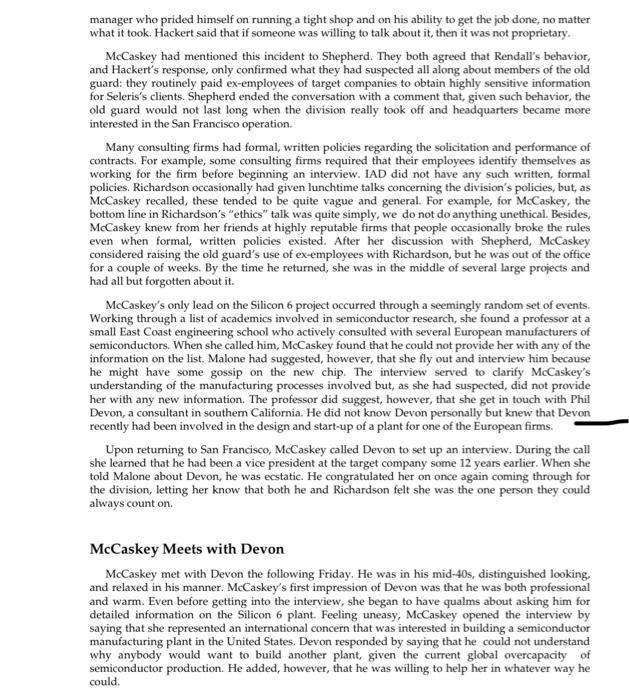
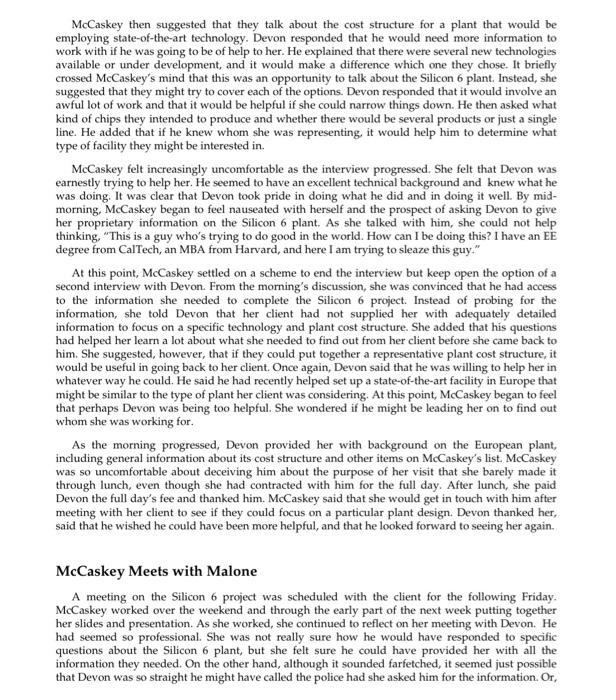
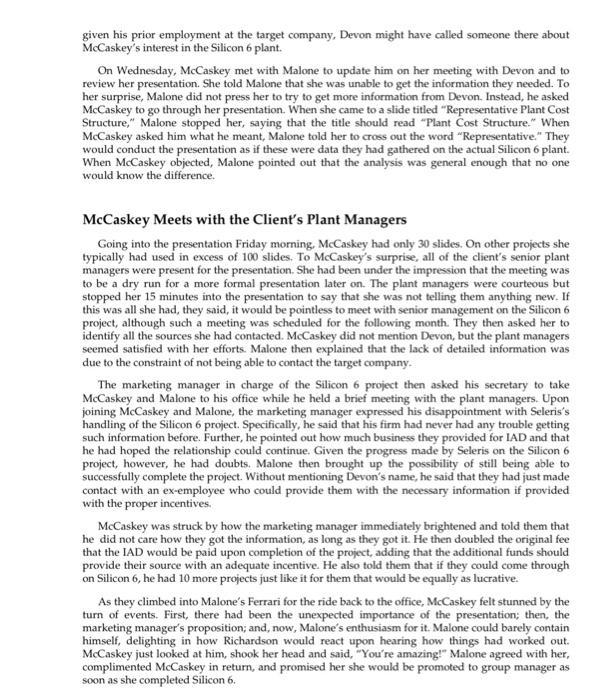
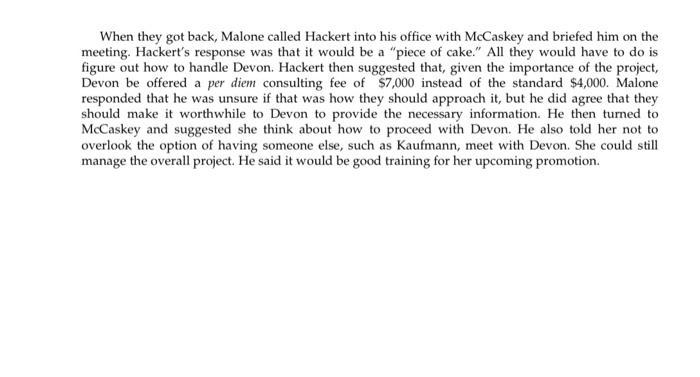
Martha McCaskey felt both elated and uneasy after her late Friday meeting with Tom Malone and Bud Hackert, two of the top managers in Seleris Associates' Industry Analysis Division (IAD). Malone, the division's de facto chief operating officer (COO), had assured her that upon successful completion of the Silicon 6 study, for which McCaskey was project leader, she would be promoted to group manager. The promotion would mean both a substantial increase in pay and a reprieve from the tedious fieldwork typical of Seleris's consulting projects. However, completing the Silicon 6 project would not be easy. It would mean a second session with Phil Devon, the one person who could provide her with the vital information required by Seleris's client. Now, McCaskey reflected, finishing the project would likely mean following the course of action proposed by Hackert and seconded by Malone: to pay Devon off. Seleris's client, a semiconductor manufacturer based in California, was trying to identify the cost structure and manufacturing technologies of a new chip produced by one of its competitors. McCaskey and the others felt certain that Devon, a semiconductor industry consultant who had worked in the competitor's West Coast operation some 12 years earlier, could provide the detailed information on manufacturing costs and processes required by their client (see Exhibit 1 for a summary of the necessary information). Her first interview with Devon had caused McCaskey to have serious doubts about both the propriety of asking for such information and Devon's motivation in so eagerly offering to help her.. Malone suggested that she prepare an action plan over the weekend. Ty Richardson, head of IAD, would be in town on Monday to meet with Malone and the two group managers, Hackert and Bill Davies. McCaskey could present her plan for completing the Silicon 6 project at that meeting. Malone made it clear that the group would be primed to hear her ideas. Silicon 6 was turning out to be a crucial project. The client currently accounted for close to 20% of the division's revenues. In a meeting earlier that day, the marketing manager representing the client had offered to double the fee for the Silicon 6 project. He had also promised that if they could come through on Silicon 6, equally lucrative projects would follow. By Saturday afternoon, McCaskey had worked up several approaches for finishing the Silicon 6 project. With additional funds now available from the client, she could simply have Devon provide analyses of several alternatives for manufacturing state-of-the-art chips, including the one used at the competitor's Silicon 6 plant. While the extra analyses would be expensive and time consuming, Devon most likely would not suspect what she was after. Another option was to hand the project
Step by Step Solution
There are 3 Steps involved in it
For the following case 1 Identify ethical issues Several ethical issues are present in this case Conflict of Interest Theres a potential conflict of i... View full answer

Get step-by-step solutions from verified subject matter experts
 Study Help