





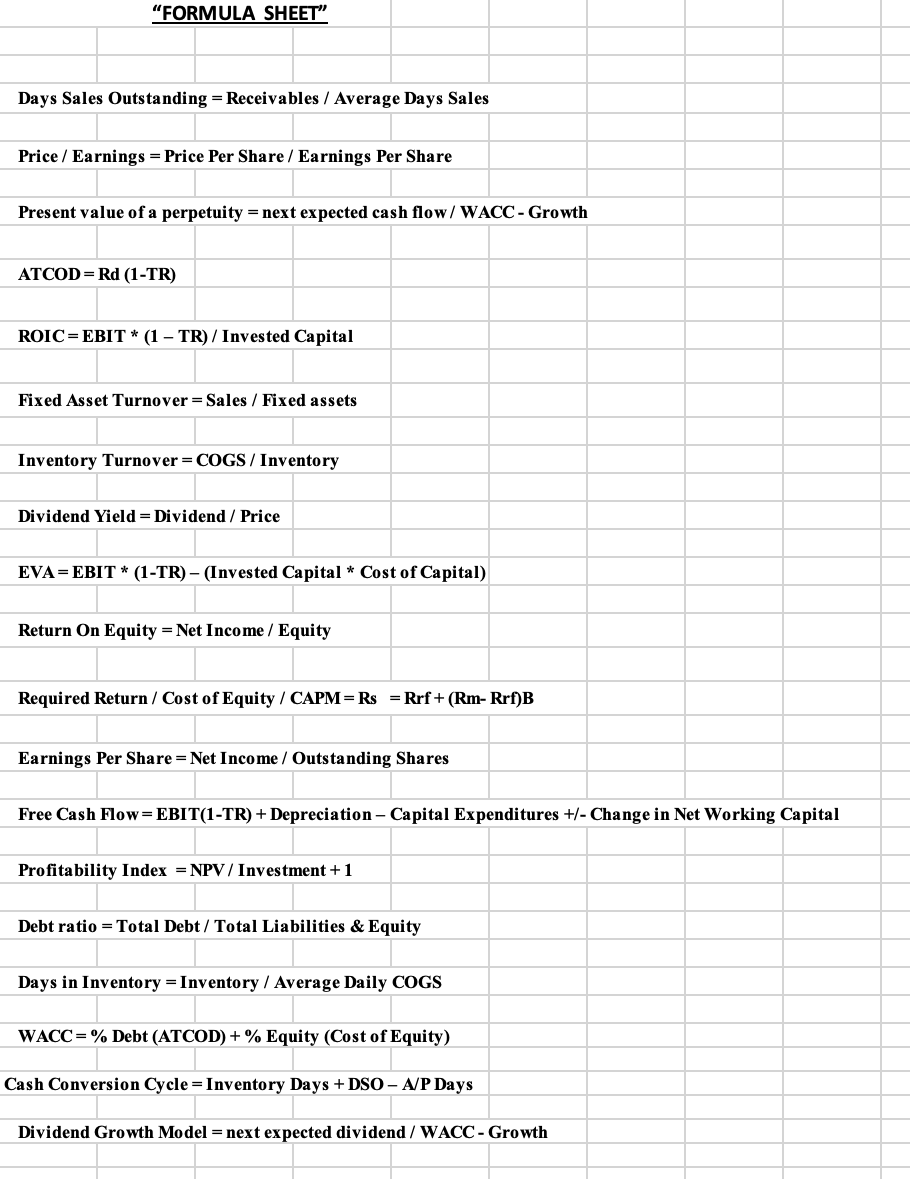
Question: FORMULA SHEET Days Sales Outstanding = Receivables / Average Days Sales Price / Earnings = Price Per Share / Earnings Per Share Present value of
"FORMULA SHEET" Days Sales Outstanding ="FORMULA SHEET" Days Sales Outstanding =
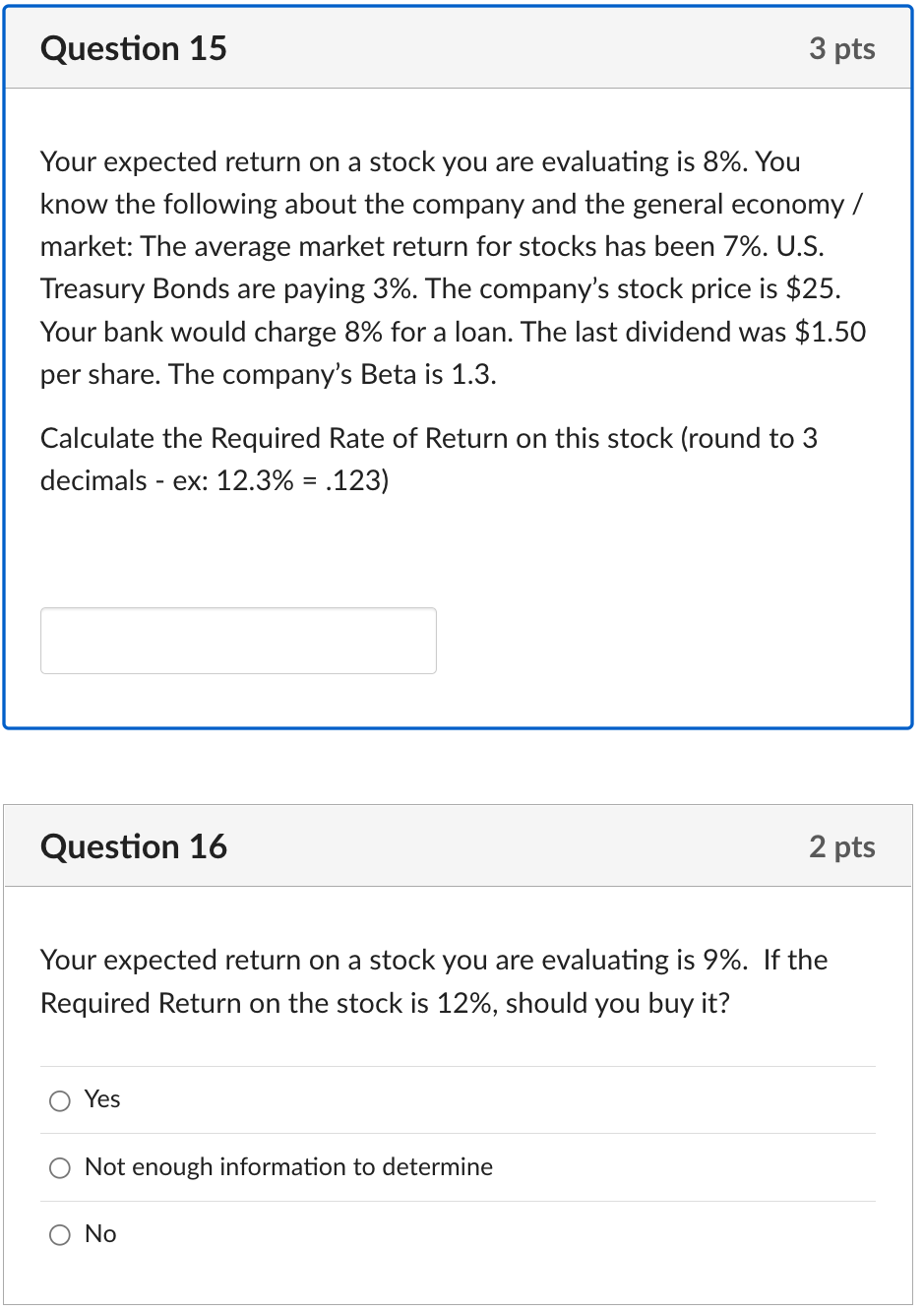
"FORMULA SHEET" Days Sales Outstanding = Receivables / Average Days Sales Price / Earnings = Price Per Share / Earnings Per Share Present value of a perpetuity = next expected cash flow / WACC - Growth ATCOD = Rd (1-TR) ROIC=EBIT * (1 - TR) / Invested Capital Fixed Asset Turnover = Sales / Fixed assets Inventory Turnover = COGS / Inventory Dividend Yield = Dividend / Price EVA = EBIT * (1-TR) - (Invested Capital * Cost of Capital) Return On Equity = Net Income / Equity Required Return / Cost of Equity / CAPM = Rs = Rrf + (Rm- Rrf)B Earnings Per Share = Net Income / Outstanding Shares Free Cash Flow= EBIT(1-TR) + Depreciation - Capital Expenditures +/- Change in Net Working Capital Profitability Index = NPV/ Investment + 1 Debt ratio = Total Debt / Total Liabilities & Equity Days in Inventory = Inventory / Average Daily COGS WACC=% Debt (ATCOD) + % Equity (Cost of Equity) Cash Conversion Cycle = Inventory Days + DSO - A/P Days Dividend Growth Model = next expected dividend / WACC - GrowthQuestion 15 3 pts Your expected return on a stock you are evaluating is 8%. You know the following about the company and the general economy / market: The average market return for stocks has been 7%. U.S. Treasury Bonds are paying 3%. The company's stock price is $25. Your bank would charge 8% for a loan. The last dividend was $1.50 per share. The company's Beta is 1.3. Calculate the Required Rate of Return on this stock (round to 3 decimals - ex: 12.3% = .123) Question 16 2 pts Your expected return on a stock you are evaluating is 9%. If the Required Return on the stock is 12%, should you buy it? 0 Yes 0 Not enough information to determine ONO

Step by Step Solution

There are 3 Steps involved in it

1 Expert Approved Answer
Step: 1 Unlock blur-text-image
Question Has Been Solved by an Expert!

Get step-by-step solutions from verified subject matter experts

Step: 2 Unlock
Step: 3 Unlock

Students Have Also Explored These Related Finance Questions!