







Question: from case study : Lululemon: turning lemon into lemonade. question: Which corporate social responsibility approach is used in the case? Explain and provide evidence of
from case study : Lululemon: turning lemon into lemonade.
question: Which corporate social responsibility approach is used in the case? Explain and provide evidence of your selection?
please provide answer related to the case study and in details
Please provide an answer quickly will you give you 5 likes.
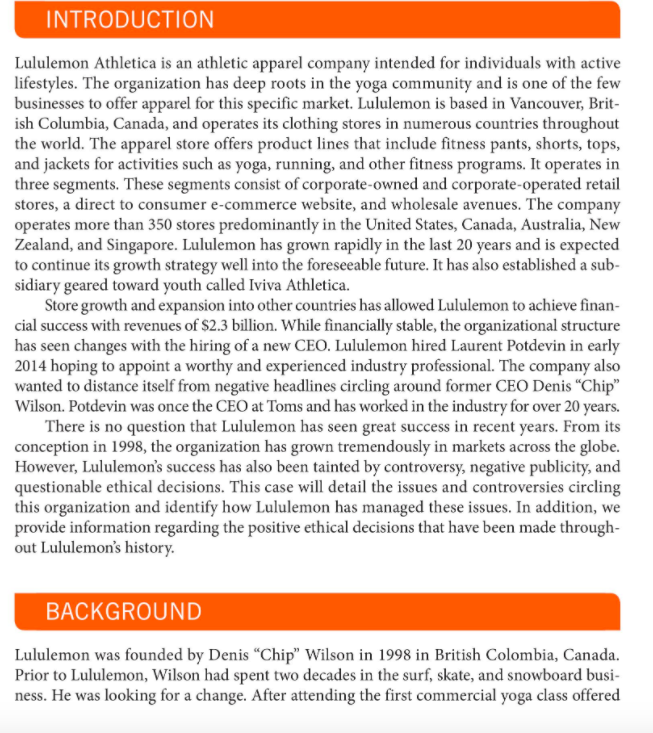
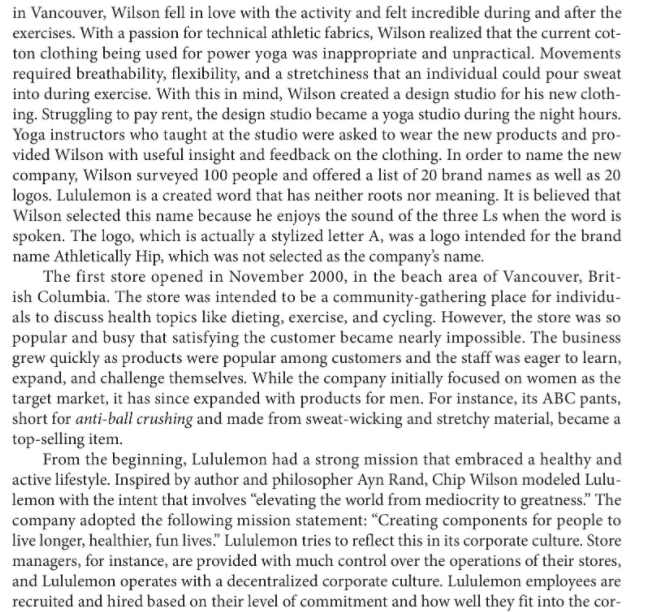
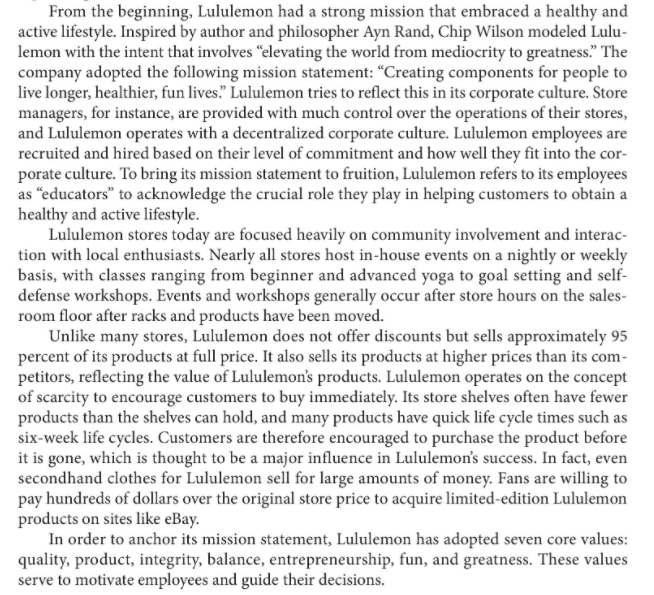
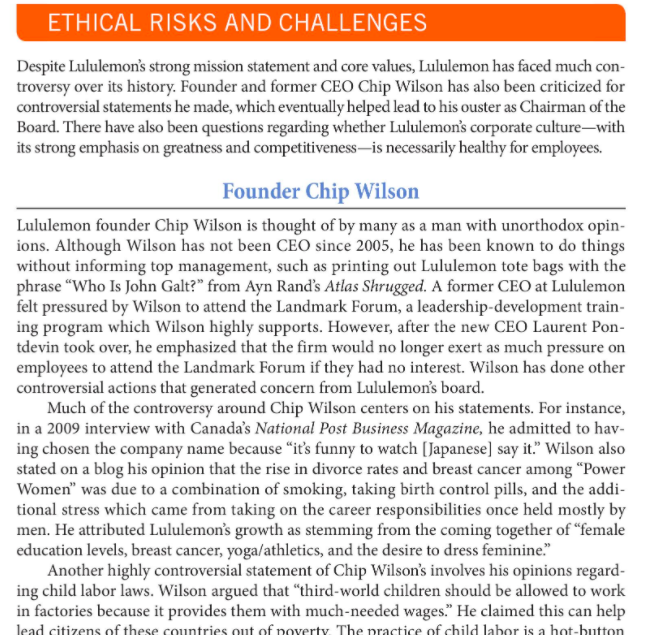
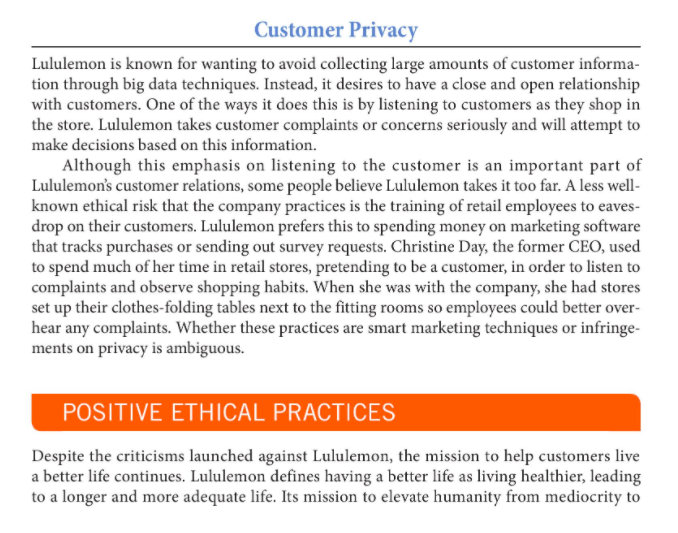
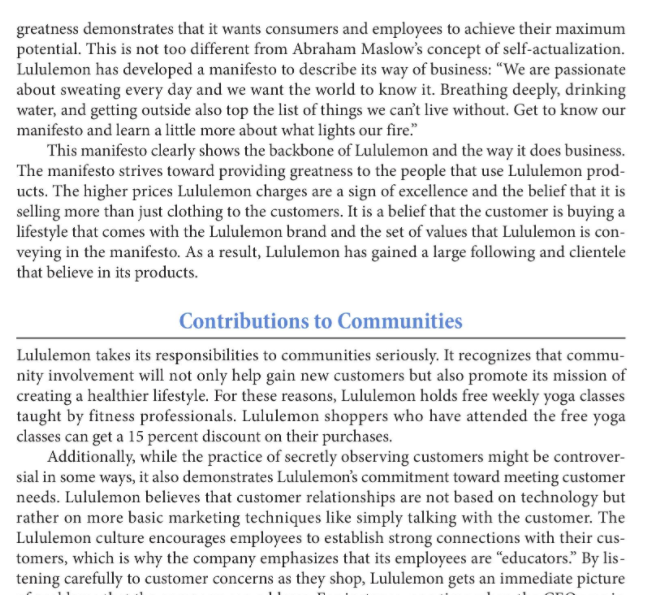
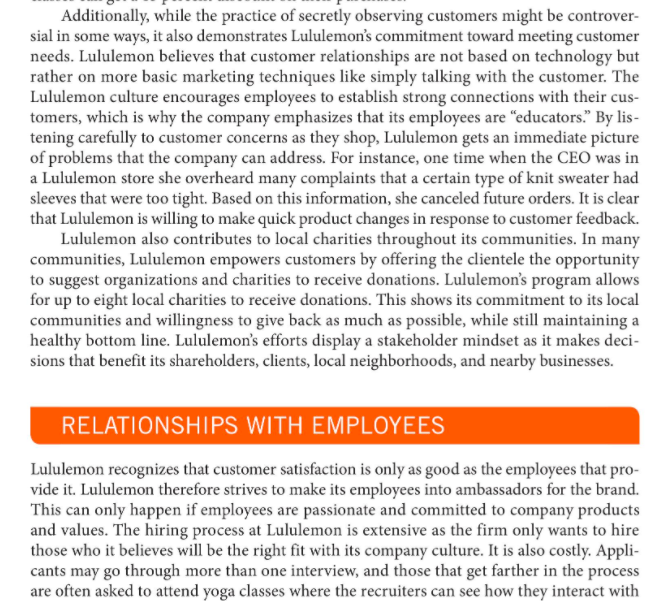
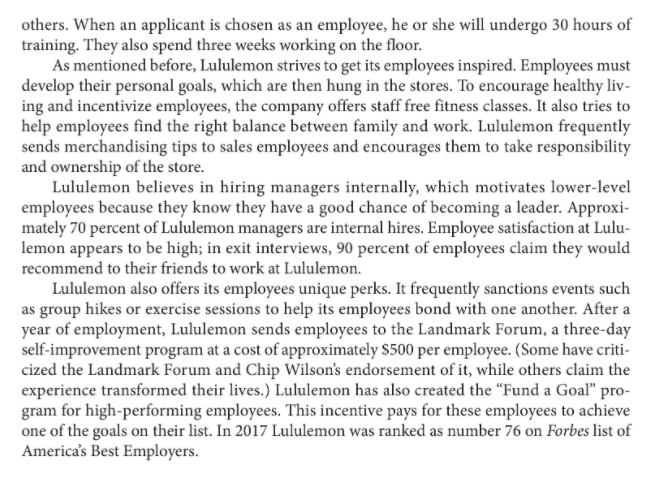
INTRODUCTION Lululemon Athletica is an athletic apparel company intended for individuals with active lifestyles. The organization has deep roots in the yoga community and is one of the few businesses to offer apparel for this specific market. Lululemon is based in Vancouver, Brit- ish Columbia, Canada, and operates its clothing stores in numerous countries throughout the world. The apparel store offers product lines that include fitness pants, shorts, tops, and jackets for activities such as yoga, running, and other fitness programs. It operates in three segments. These segments consist of corporate-owned and corporate-operated retail stores, a direct to consumer e-commerce website, and wholesale avenues. The company operates more than 350 stores predominantly in the United States, Canada, Australia, New Zealand, and Singapore. Lululemon has grown rapidly in the last 20 years and is expected to continue its growth strategy well into the foreseeable future. It has also established a sub- sidiary geared toward youth called Iviva Athletica. Store growth and expansion into other countries has allowed Lululemon to achieve finan- cial success with revenues of $2.3 billion. While financially stable, the organizational structure has seen changes with the hiring of a new CEO. Lululemon hired Laurent Potdevin in early 2014 hoping to appoint a worthy and experienced industry professional. The company also wanted to distance itself from negative headlines circling around former CEO Denis Chip" Wilson. Potdevin was once the CEO at Toms and has worked in the industry for over 20 years. There is no question that Lululemon has seen great success in recent years. From its conception in 1998, the organization has grown tremendously in markets across the globe. However, Lululemon's success has also been tainted by controversy, negative publicity, and questionable ethical decisions. This case will detail the issues and controversies circling this organization and identify how Lululemon has managed these issues. In addition, we provide information regarding the positive ethical decisions that have been made through- out Lululemon's history. BACKGROUND Lululemon was founded by Denis Chip Wilson in 1998 in British Colombia, Canada. Prior to Lululemon, Wilson had spent two decades in the surf, skate, and snowboard busi- ness. He was looking for a change. After attending the first commercial yoga class offered in Vancouver, Wilson fell in love with the activity and felt incredible during and after the exercises. With a passion for technical athletic fabrics, Wilson realized that the current cot- ton clothing being used for power yoga was inappropriate and unpractical. Movements required breathability, flexibility, and a stretchiness that an individual could pour sweat into during exercise. With this in mind, Wilson created a design studio for his new cloth- ing. Struggling to pay rent, the design studio became a yoga studio during the night hours. Yoga instructors who taught at the studio were asked to wear the new products and pro- vided Wilson with useful insight and feedback on the clothing. In order to name the new company, Wilson surveyed 100 people and offered a list of 20 brand names as well as 20 logos. Lululemon is a created word that has neither roots nor meaning. It is believed that Wilson selected this name because he enjoys the sound of the three Ls when the word is spoken. The logo, which is actually a stylized letter A, was a logo intended for the brand name Athletically Hip, which was not selected as the company's name. The first store opened in November 2000, in the beach area of Vancouver, Brit- ish Columbia. The store was intended to be a community-gathering place for individu- als to discuss health topics like dieting, exercise, and cycling. However, the store was so popular and busy that satisfying the customer became nearly impossible. The business grew quickly as products were popular among customers and the staff was eager to learn, expand, and challenge themselves. While the company initially focused on women as the target market, it has since expanded with products for men. For instance, its ABC pants, short for anti-ball crushing and made from sweat-wicking and stretchy material, became a top-selling item. From the beginning, Lululemon had a strong mission that embraced a healthy and active lifestyle. Inspired by author and philosopher Ayn Rand, Chip Wilson modeled Lulu- lemon with the intent that involves elevating the world from mediocrity to greatness. The company adopted the following mission statement: Creating components for people to live longer, healthier, fun lives? Lululemon tries to reflect this in its corporate culture. Store managers, for instance, are provided with much control over the operations of their stores, and Lululemon operates with a decentralized corporate culture. Lululemon employees are recruited and hired based on their level of commitment and how well they fit into the cor- From the beginning, Lululemon had a strong mission that embraced a healthy and active lifestyle. Inspired by author and philosopher Ayn Rand, Chip Wilson modeled Lulu- lemon with the intent that involves "elevating the world from mediocrity to greatness. The company adopted the following mission statement: "Creating components for people to live longer, healthier, fun lives. Lululemon tries to reflect this in its corporate culture. Store managers, for instance, are provided with much control over the operations of their stores, and Lululemon operates with a decentralized corporate culture. Lululemon employees are recruited and hired based on their level of commitment and how well they fit into the cor- porate culture. To bring its mission statement to fruition, Lululemon refers to its employees as educators to acknowledge the crucial role they play in helping customers to obtain a healthy and active lifestyle. Lululemon stores today are focused heavily on community involvement and interac- tion with local enthusiasts. Nearly all stores host in-house events on a nightly or weekly basis, with classes ranging from beginner and advanced yoga to goal setting and self- defense workshops. Events and workshops generally occur after store hours on the sales- room floor after racks and products have been moved. Unlike many stores, Lululemon does not offer discounts but sells approximately 95 percent of its products at full price. It also sells its products at higher prices than its com- petitors, reflecting the value of Lululemon's products. Lululemon operates on the concept of scarcity to encourage customers to buy immediately. Its store shelves often have fewer products than the shelves can hold, and many products have quick life cycle times such as six-week life cycles. Customers are therefore encouraged to purchase the product before it is gone, which is thought to be a major influence in Lululemon's success. In fact, even secondhand clothes for Lululemon sell for large amounts of money. Fans are willing to pay hundreds of dollars over the original store price to acquire limited-edition Lululemon products on sites like eBay. In order to anchor its mission statement, Lululemon has adopted seven core values: quality, product, integrity, balance, entrepreneurship, fun, and greatness. These values serve to motivate employees and guide their decisions. ETHICAL RISKS AND CHALLENGES Despite Lululemon's strong mission statement and core values, Lululemon has faced much con- troversy over its history. Founder and former CEO Chip Wilson has also been criticized for controversial statements he made, which eventually helped lead to his ouster as Chairman of the Board. There have also been questions regarding whether Lululemon's corporate culturewith its strong emphasis on greatness and competitivenessis necessarily healthy for employees. Founder Chip Wilson Lululemon founder Chip Wilson is thought of by many as a man with unorthodox opin- ions. Although Wilson has not been CEO since 2005, he has been known to do things without informing top management, such as printing out Lululemon tote bags with the phrase Who Is John Galt? from Ayn Rand's Atlas Shrugged. A former CEO at Lululemon felt pressured by Wilson to attend the Landmark Forum, a leadership-development train- ing program which Wilson highly supports. However, after the new CEO Laurent Pon- tdevin took over, he emphasized that the firm would no longer exert as much pressure on employees to attend the Landmark Forum if they had no interest. Wilson has done other controversial actions that generated concern from Lululemon's board. Much of the controversy around Chip Wilson centers on his statements. For instance, in a 2009 interview with Canada's National Post Business Magazine, he admitted to hav- ing chosen the company name because it's funny to watch (Japanese) say it." Wilson also stated on a blog his opinion that the rise in divorce rates and breast cancer among "Power Women was due to a combination of smoking, taking birth control pills, and the addi- tional stress which came from taking on the career responsibilities once held mostly by men. He attributed Lululemon's growth as stemming from the coming together of female education levels, breast cancer, yoga/athletics, and the desire to dress feminine." Another highly controversial statement of Chip Wilson's involves his opinions regard- ing child labor laws. Wilson argued that third-world children should be allowed to work in factories because it provides them with much-needed wages." He claimed this can help lead citizens of these countries out of poverty The practice of child labor is a hot-button Another highly controversial statement of Chip Wilson's involves his opinions regard- ing child labor laws. Wilson argued that third-world children should be allowed to work in factories because it provides them with much-needed wages." He claimed this can help lead citizens of these countries out of poverty. The practice of child labor is a hot-button issue in the Western world because of the poor working conditions and rampant abuse worldwide. This support of child labor has angered critics, who believe Lululemon might be exploiting children in developing countries. They argue that providing children with more education is much more likely to lift them out of poverty than having them earn low wages at a dangerous job. Lululemon founder Chip Wilson would continue to make con- troversial statements, eventually leading to his resignation as Chairman of the Board. Chip Wilson later challenged the board, claiming that the current board was not aligned with Lululemon's core values. He released this statement at the June 2014 share- holders meeting and voted against the board's chairman and another director. Both men were reelected. A few months later, Wilson sold half of his 27 percent stake to private equity organization Advent International, who in turn received two board seats on Lulu- lemon's board. With less of a stake in the firm, Wilson's impact on decision making at the organization is likely reduced. MISLEADING ADVERTISING In 2007 the New York Times cast doubt on the authenticity of Lululemon's VitaSea line of products. Lululemon claimed that its VitaSea products were infused with seaweed, which had medicinal properties including stress relief. In November 2007, The New York Times released an article claiming that it had tested VitaSea products and could not find seaweed fiber in the product. This claim unleashed a storm of criticism. Lululemon responded by refuting the claims of The New York Times. It cited inde- pendent tests performed the previous year. It also responded to the accusations by stating that a lab in Hong Kong had performed different tests on the product throughout the year, all of which confirmed that the products contained everything that it advertised. However, Canada's Competition Bureau challenged Lululemon, not due to the content of the VitaSea product but rather the company's claims about the product's health benefits. The bureau believed that these claims of health benefits from seaweed were unsubstanti- ated and ordered Lululemon to remove all such labeling. Corporate Culture As mentioned earlier, Wilson founded his company based upon the values of Ayn Rand. The notion of striving for greatness resonated with Wilson after having read Rand's book Atlas Shrugged at the age of 18. Since then, he has utilized the concept as a way to mar- ket his brand. This idea of "greatness contributes to a competitive organizational culture. Wilson admits that the firm tries to hire employees with Type A personalities, or those with more competitive personalities who are concerned with achievement and personal improvement. New hires read books selected by Chip Wilson that he felt were critical to personal development. Employees are also required to write out their goals for the next 10 years, which are then posted in Lululemon stores. Employees are encouraged to exercise regularly and remain close-knit. Some have questioned how this competitive culture obsessed with greatness fits in with the yoga tradition based on Buddhist and Hindu philosophies. Both ideologies pro- mote the notion of ridding one's self of the Ego. The Ego is seen as a source of suffering, and Buddhism is based on the absolution of suffering. Enlightenment is achieved when the Ego has been successfully removed. There are specific postures used to accomplish this, and it can take years of practice. On the other hand, one of the criticisms of Lululemon goes back to Ayn Rand's teachings and their promotion of "rugged individualism," the ele- Some have questioned how this competitive culture obsessed with greatness fits in with the yoga tradition based on Buddhist and Hindu philosophies. Both ideologies pro- mote the notion of ridding one's self of the Ego. The Ego is seen as a source of suffering, and Buddhism is based on the absolution of suffering. Enlightenment is achieved when the Ego has been successfully removed. There are specific postures used to accomplish this, and it can take years of practice. On the other hand, one of the criticisms of Lululemon goes back to Ayn Rand's teachings and their promotion of rugged individualism," the ele- vation of mediocrity to greatness, and the relentless pursuit of happiness. Despite it being a business, some believe that these individual teachings do not belong in the yoga clothing industry because they directly contradict the Vedic philosophy that underlies yoga. Others have claimed that Lululemon's corporate culture is almost "cultish in its style. When Lulu- lemon donated $750,000 to the Dalai Lama Center for Peace and Education, it received both praise and criticism. While the Dalai Lama Center's chairman cited the company's generosity, critics believed the Dalai Lama should not be associated with a profit-making organization. However, the company claims that the donation fits well with its vision of mind-body-heart. In March 2011, an employee of a Lululemon store located in Bethesda, Maryland, was brutally murdered by her coworker after hours. It is believed the employee had observed the coworker trying to steal clothing from Lululemon. After the store closed, the coworker lured the employee back into the store and brutally murdered her. She then attempted to make the scene look as if two masked men had broken in and harmed them. After the truth was revealed, the coworker was sentenced to life in prison without parole. Lululemon and many others attribute this brutality as a random act of violence. How- ever, those who describe the corporate culture as "cultish" and "competitive argue that the culture creates an environment where employees are pressured to live up to company standards. Although this in itself is certainly not the reason for the murder, critics have sometimes charged Lululemon with having an unethical corporate culture promoting competition over collaboration. Too-Sheer Yoga Pants A major ethical problem for Lululemon occurred in March 2013, when it released black Luon yoga pants that become sheer when the wearer would bend over. The company insti- tuted a massive recall which comprised 17 percent of all the women's pants sold in their stores. Even more damaging, The New York Post released a statement from a customer who claimed that she had to demonstrate the sheerness of her yoga pants by bending over in the store so the associate could check. Lululemon immediately released a statement saying that such conduct was not company policy and that they would accept returns from customers with no questions asked. The recall resulted in large shortages, which impacted financial results and drove the stock price down. The company lost $2 billion in market value. Certain styles of Lululemon pants have also been accused of pilling, which occurs when fiber in the pants balls up. After the recall of the too-sheer yoga pants, investors attempted to sue Lululemon, claiming that they purposefully hid defects in the pants. However, the lawsuit was dismissed the next year. The scandal resulted in the resignation of CEO Christine Day. A few months later, in November 2013, Chip Wilson defended his product by suggesting that women's bodies are to blame for the fabric's sheerness and their tendency for pilling. He also claims that many women buy pants that are too small for them, which wears them out. When questioned about whether Lululemon is truly a clothing retailer for everybody, Wilson stated that the product is appropriate for all sizes but that some people simply misuse the product. Critics viewed this as a sexist comment, exacerbating the issue at hand. Perhaps in an attempt to make a joke, a store in Bethesda, Maryland, featured a poem on its window: "Cups of Chai, Apple Pie, Rubbing Thighs. A photo of the poem was shared on Twitter. The company apologized and the poem was removed. In the midst of consumer outrage, Wilson stepped down as Chairman of the Board. Customer Privacy Lululemon is known for wanting to avoid collecting large amounts of customer informa- tion through big data techniques. Instead, it desires to have a close and open relationship with customers. One of the ways it does this is by listening to customers as they shop in the store. Lululemon takes customer complaints or concerns seriously and will attempt to make decisions based on this information. Although this emphasis on listening to the customer is an important part of Lululemon's customer relations, some people believe Lululemon takes it too far. A less well- known ethical risk that the company practices is the training of retail employees to eaves- drop on their customers. Lululemon prefers this to spending money on marketing software that tracks purchases or sending out survey requests. Christine Day, the former CEO, used to spend much of her time in retail stores, pretending to be a customer, in order to listen to complaints and observe shopping habits. When she was with the company, she had stores set up their clothes-folding tables next to the fitting rooms so employees could better over- hear any complaints. Whether these practices are smart marketing techniques or infringe- ments on privacy is ambiguous. POSITIVE ETHICAL PRACTICES Despite the criticisms launched against Lululemon, the mission to help customers live a better life continues. Lululemon defines having a better life as living healthier, leading to a longer and more adequate life. Its mission to elevate humanity from mediocrity to greatness demonstrates that it wants consumers and employees to achieve their maximum potential. This is not too different from Abraham Maslow's concept of self-actualization. Lululemon has developed a manifesto to describe its way of business: We are passionate about sweating every day and we want the world to know it. Breathing deeply, drinking water, and getting outside also top the list of things we can't live without. Get to know our manifesto and learn a little more about what lights our fire This manifesto clearly shows the backbone of Lululemon and the way it does business. The manifesto strives toward providing greatness to the people that use Lululemon prod- ucts. The higher prices Lululemon charges are a sign of excellence and the belief that it is selling more than just clothing to the customers. It is a belief that the customer is buying a lifestyle that comes with the Lululemon brand and the set of values that Lululemon is con- veying in the manifesto. As a result, Lululemon has gained a large following and clientele that believe in its products. Contributions to Communities Lululemon takes its responsibilities to communities seriously. It recognizes that commu- nity involvement will not only help gain new customers but also promote its mission of creating a healthier lifestyle. For these reasons, Lululemon holds free weekly yoga classes taught by fitness professionals. Lululemon shoppers who have attended the free yoga classes can get a 15 percent discount on their purchases. Additionally, while the practice of secretly observing customers might be controver- sial in some ways, it also demonstrates Lululemon's commitment toward meeting customer needs. Lululemon believes that customer relationships are not based on technology but rather on more basic marketing techniques like simply talking with the customer. The Lululemon culture encourages employees to establish strong connections with their cus- tomers, which is why the company emphasizes that its employees are "educators." By lis- tening carefully to customer concerns as they shop, Lululemon gets an immediate picture Additionally, while the practice of secretly observing customers might be controver- sial in some ways, it also demonstrates Lululemon's commitment toward meeting customer needs. Lululemon believes that customer relationships are not based on technology but rather on more basic marketing techniques like simply talking with the customer. The Lululemon culture encourages employees to establish strong connections with their cus- tomers, which is why the company emphasizes that its employees are "educators." By lis- tening carefully to customer concerns as they shop, Lululemon gets an immediate picture of problems that the company can address. For instance, one time when the CEO was in a Lululemon store she overheard many complaints that a certain type of knit sweater had sleeves that were too tight. Based on this information, she canceled future orders. It is clear that Lululemon is willing to make quick product changes in response to customer feedback. Lululemon also contributes to local charities throughout its communities. In many communities, Lululemon empowers customers by offering the clientele the opportunity to suggest organizations and charities to receive donations. Lululemon's program allows for up to eight local charities to receive donations. This shows its commitment to its local communities and willingness to give back as much as possible, while still maintaining a healthy bottom line. Lululemon's efforts display a stakeholder mindset as it makes deci- sions that benefit its shareholders, clients, local neighborhoods, and nearby businesses. RELATIONSHIPS WITH EMPLOYEES Lululemon recognizes that customer satisfaction is only as good as the employees that pro- vide it. Lululemon therefore strives to make its employees into ambassadors for the brand. This can only happen if employees are passionate and committed to company products and values. The hiring process at Lululemon is extensive as the firm only wants to hire those who it believes will be the right fit with its company culture. It is also costly. Appli- cants may go through more than one interview, and those that get farther in the process are often asked to attend yoga classes where the recruiters can see how they interact with others. When an applicant is chosen as an employee, he or she will undergo 30 hours of training. They also spend three weeks working on the floor. As mentioned before, Lululemon strives to get its employees inspired. Employees must develop their personal goals, which are then hung in the stores. To encourage healthy liv- ing and incentivize employees, the company offers staff free fitness classes. It also tries to help employees find the right balance between family and work. Lululemon frequently sends merchandising tips to sales employees and encourages them to take responsibility and ownership of the store. Lululemon believes in hiring managers internally, which motivates lower-level employees because they know they have a good chance of becoming a leader. Approxi- mately 70 percent of Lululemon managers are internal hires. Employee satisfaction at Lulu- lemon appears to be high; in exit interviews, 90 percent of employees claim they would recommend to their friends to work at Lululemon. Lululemon also offers its employees unique perks. It frequently sanctions events such as group hikes or exercise sessions to help its employees bond with one another. After a year of employment, Lululemon sends employees to the Landmark Forum, a three-day self-improvement program at a cost of approximately $500 per employee. (Some have criti- cized the Landmark Forum and Chip Wilson's endorsement of it, while others claim the experience transformed their lives.) Lululemon has also created the Fund a Goal pro- gram for high-performing employees. This incentive pays for these employees to achieve one of the goals on their list. In 2017 Lululemon was ranked as number 76 on Forbes list of America's Best EmployersStep by Step Solution
There are 3 Steps involved in it
1 Expert Approved Answer
Step: 1 Unlock

Question Has Been Solved by an Expert!
Get step-by-step solutions from verified subject matter experts
Step: 2 Unlock
Step: 3 Unlock
 Study Help