







Question: From the above mentioned Research Design and Methodology write the methodology and mention if it is qualitative or quantitative? Research Design and Methodology Industry Setting
From the above mentioned "Research Design and Methodology" write the methodology and mention if it is qualitative or quantitative?
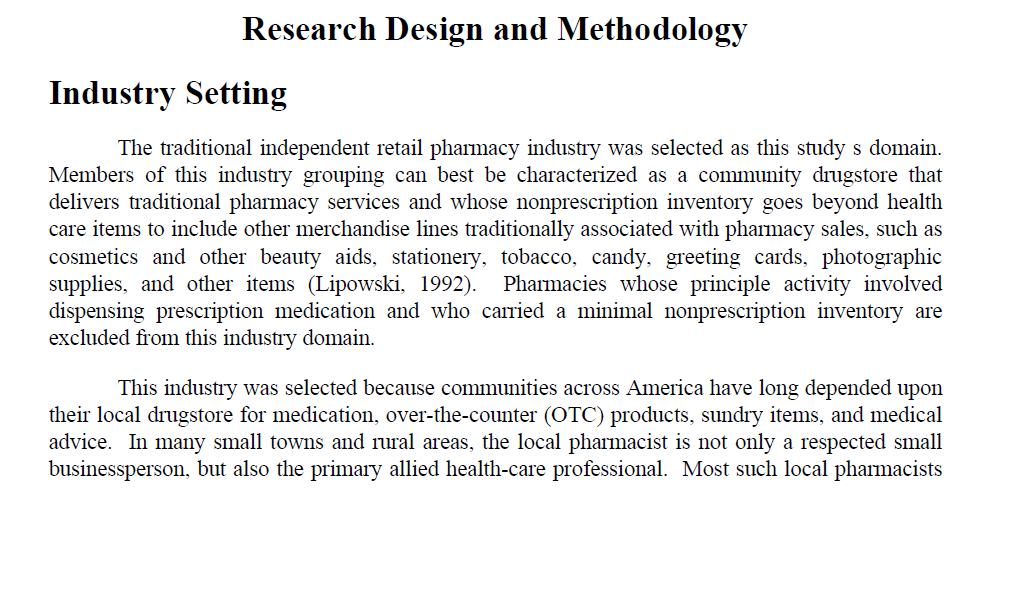
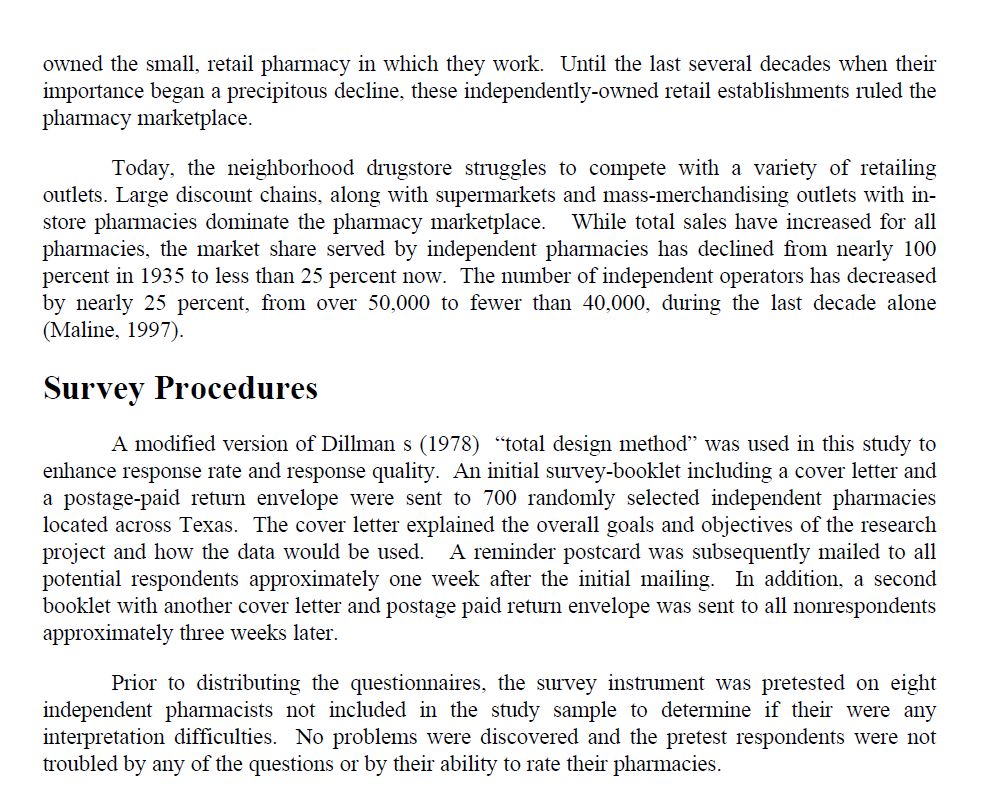
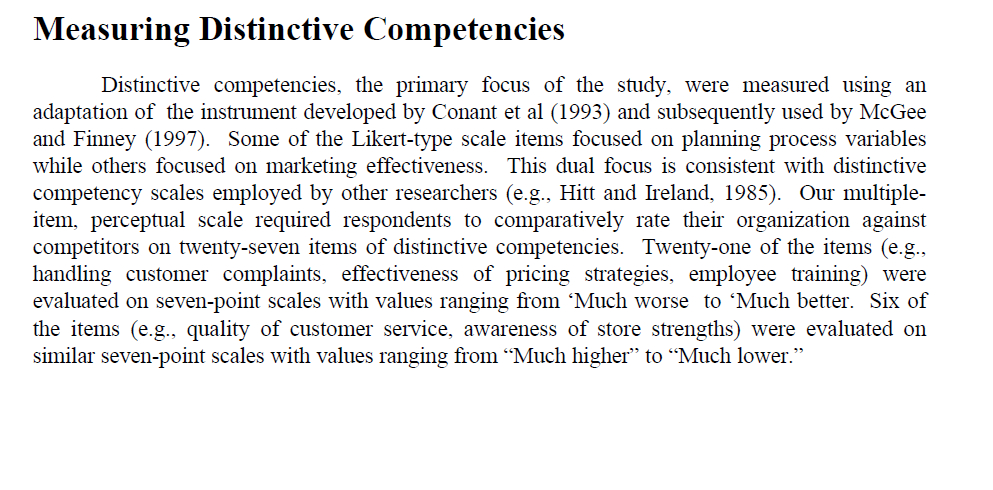
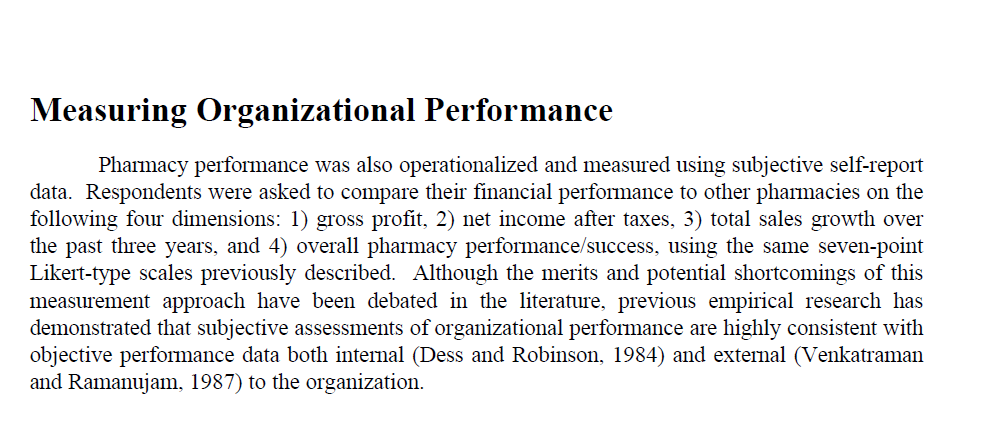
Research Design and Methodology Industry Setting The traditional independent retail pharmacy industry was selected as this study s domain. Members of this industry grouping can best be characterized as a community drugstore that delivers traditional pharmacy services and whose nonprescription inventory goes beyond health care items to include other merchandise lines traditionally associated with pharmacy sales, such as cosmetics and other beauty aids, stationery, tobacco, candy, greeting cards, photographic supplies, and other items (Lipowski, 1992). Pharmacies whose principle activity involved dispensing prescription medication and who carried a minimal nonprescription inventory are excluded from this industry domain. This industry was selected because communities across America have long depended upon their local drugstore for medication, over-the-counter (OTC) products, sundry items, and medical advice. In many small towns and rural areas, the local pharmacist is not only a respected small businessperson, but also the primary allied health-care professional. Most such local pharmacists owned the small, retail pharmacy in which they work. Until the last several decades when their importance began a precipitous decline, these independently-owned retail establishments ruled the pharmacy marketplace. Today, the neighborhood drugstore struggles to compete with a variety of retailing outlets. Large discount chains, along with supermarkets and mass-merchandising outlets with in- store pharmacies dominate the pharmacy marketplace. While total sales have increased for all pharmacies, the market share served by independent pharmacies has declined from nearly 100 percent in 1935 to less than 25 percent now. The number of independent operators has decreased by nearly 25 percent, from over 50,000 to fewer than 40,000, during the last decade alone (Maline, 1997). Survey Procedures A modified version of Dillman s (1978) total design method was used in this study to enhance response rate and response quality. An initial survey-booklet including a cover letter and a postage-paid return envelope were sent to 700 randomly selected independent pharmacies located across Texas. The cover letter explained the overall goals and objectives of the research project and how the data would be used. A reminder postcard was subsequently mailed to all potential respondents approximately one week after the initial mailing. In addition, a second booklet with another cover letter and postage paid return envelope was sent to all nonrespondents approximately three weeks later. Prior to distributing the questionnaires, the survey instrument was pretested on eight independent pharmacists not included in the study sample to determine if their were any interpretation difficulties. No problems were discovered and the pretest respondents were not troubled by any of the questions or by their ability to rate their pharmacies. Measuring Distinctive Competencies Distinctive competencies, the primary focus of the study, were measured using an adaptation of the instrument developed by Conant et al (1993) and subsequently used by McGee and Finney (1997). Some of the Likert-type scale items focused on planning process variables while others focused on marketing effectiveness. This dual focus is consistent with distinctive competency scales employed by other researchers (e.g., Hitt and Ireland, 1985). Our multiple- item, perceptual scale required respondents to comparatively rate their organization against competitors on twenty-seven items of distinctive competencies. Twenty-one of the items (e.g., handling customer complaints, effectiveness of pricing strategies, employee training) were evaluated on seven-point scales with values ranging from Much worse to Much better. Six of the items (e.g., quality of customer service, awareness of store strengths) were evaluated on similar seven-point scales with values ranging from Much higher to Much lower. Measuring Organizational Performance Pharmacy performance was also operationalized and measured using subjective self-report data. Respondents were asked to compare their financial performance to other pharmacies on the following four dimensions: 1) gross profit, 2) net income after taxes, 3) total sales growth over the past three years, and 4) overall pharmacy performance/success, using the same seven-point Likert-type scales previously described. Although the merits and potential shortcomings of this measurement approach have been debated in the literature, previous empirical research has demonstrated that subjective assessments of organizational performance are highly consistent with objective performance data both internal (Dess and Robinson, 1984) and external (Venkatraman and Ramanujam, 1987) to the organizationStep by Step Solution
There are 3 Steps involved in it
1 Expert Approved Answer
Step: 1 Unlock

Question Has Been Solved by an Expert!
Get step-by-step solutions from verified subject matter experts
Step: 2 Unlock
Step: 3 Unlock
 Study Help