



Question: fSolve the following integrals. Use 'C' as the integrating constant in your answers. a) x' cos(r + 4) dx = T b ) V1 -
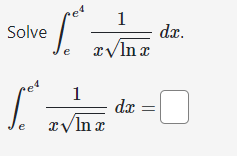
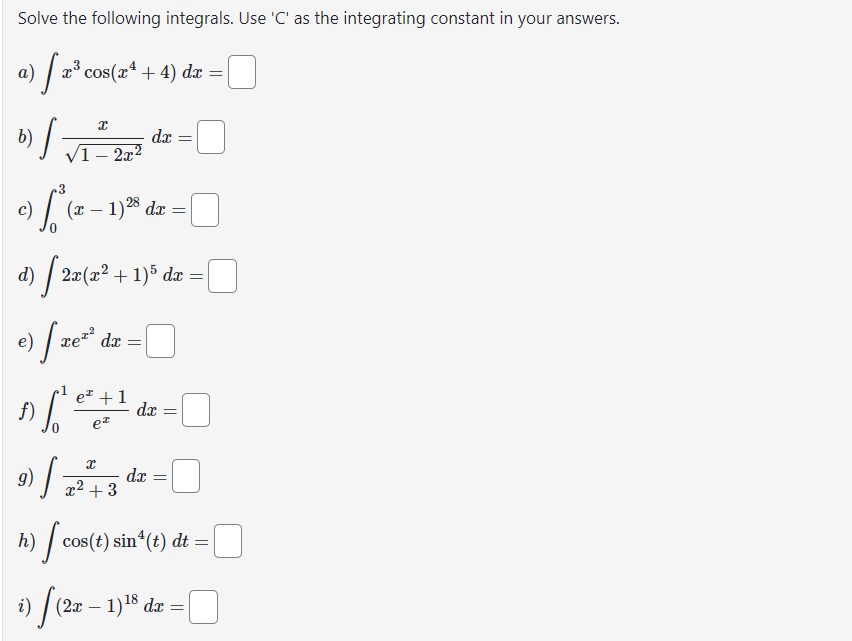
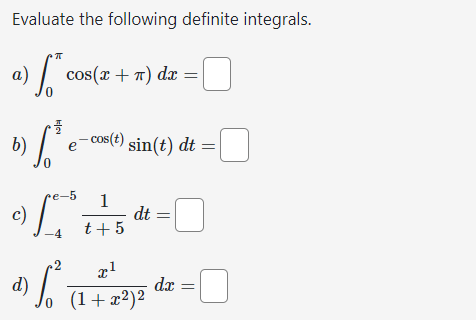


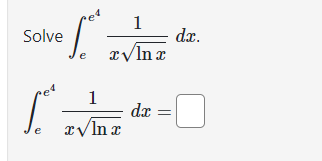
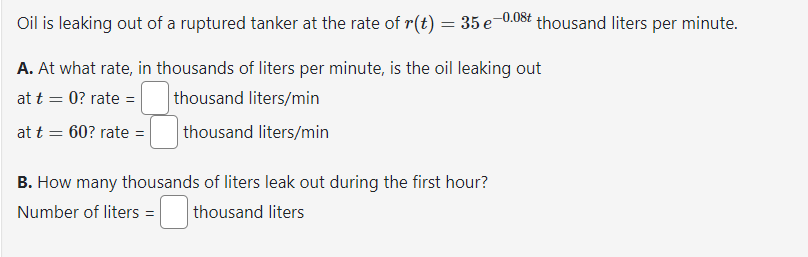

\fSolve the following integrals. Use 'C' as the integrating constant in your answers. a) x' cos(r + 4) dx = T b ) V1 - 2x2 3 c ) / (x - 1)28 dx = d) 2x(z2 + 1)5 dx = e) ( xet dx = er + 1 f) T g ) dx x2+ 3 h ) cos ( t ) sin * ( t ) dt = 1) (2x - 1)18 da =Evaluate the following definite integrals. a) cos(+ + 7) dx = 0 b) e - cos(t) sin(t) dt = 0 e-5 C) dt = 4 t + 5 2 d) dx = (1 + x2)2Breathing is cyclic and a full respiratory cycle from the beginning of inhalation to the end of exhalation takes about 5 seconds. The function fft] = %Sl.'ll {2ft} has often been used to model the rate in ft3/s of air flow into the lungs. Use this model to find the volume of inhaled air in the lungs at time t. Assume no air in the lungs at time t = 0. Volume of inhaled air at time t: C] _$2 do. Use 'C' as the integrating constant in your answer. Hint: You may have to use substitution more than once. Solve e evInc de = eOil is leaking out of a ruptured tanker at the rate of t} 2 35 e''s'i thousand liters per minute. A. At what rate, in thousands of liters per minute, is the oil leaking out at t : 0? rate : thousand litersfrnin at t : 60? rate : thousand litersfmin B. How many thousands of liters leak out during the first hour? Number of liters : C] thousand liters A bacteria population starts with 400 bacteria and grows at a rate of t) 2 45091.12: bacteria per hour. How many bacteria will there be after three hours? Bacteria after three hours: C] bacteria
Step by Step Solution
There are 3 Steps involved in it

Get step-by-step solutions from verified subject matter experts