



Question: fStatic vs. dynamic efficiency Put differently, IP attempts to solve the trade-off between dynamic and static efficiency: Static efficiency describes the level of efficiency at

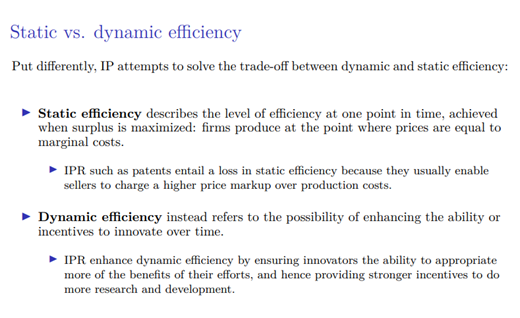

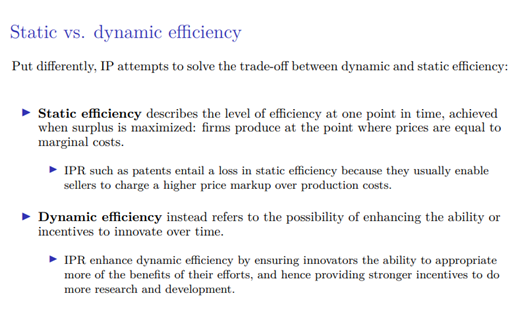
\fStatic vs. dynamic efficiency Put differently, IP attempts to solve the trade-off between dynamic and static efficiency: Static efficiency describes the level of efficiency at one point in time, achieved when surplus is maximized: firms produce at the point where prices are equal to marginal costs. IPR such as patents entail a loss in static efficiency because they usually enable sellers to charge a higher price markup over production costs. Dynamic efficiency instead refers to the possibility of enhancing the ability or incentives to innovate over time. IPR enhance dynamic efficiency by ensuring innovators the ability to appropriate more of the benefits of their efforts, and hence providing stronger incentives to do more research and development
Step by Step Solution
There are 3 Steps involved in it

Get step-by-step solutions from verified subject matter experts