







Question: further need to arrange them by step DEVERING SOLVENT FRONT ELEVING BEFORE DEVELOPING Thin Layer Chromatography Thin layer chromatography requires the use of very small
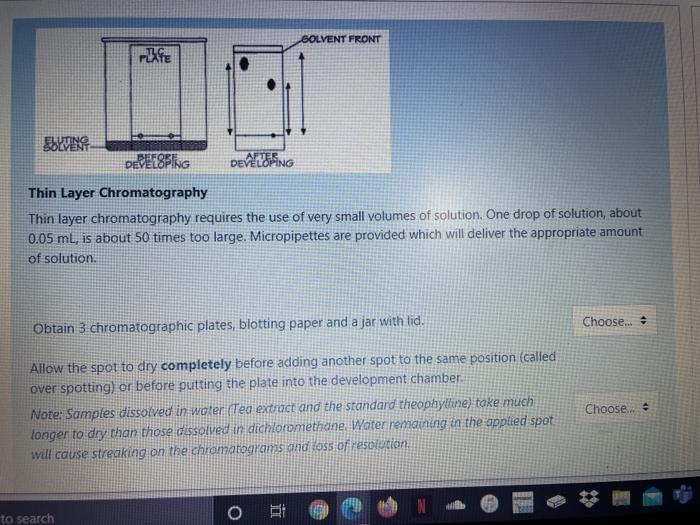
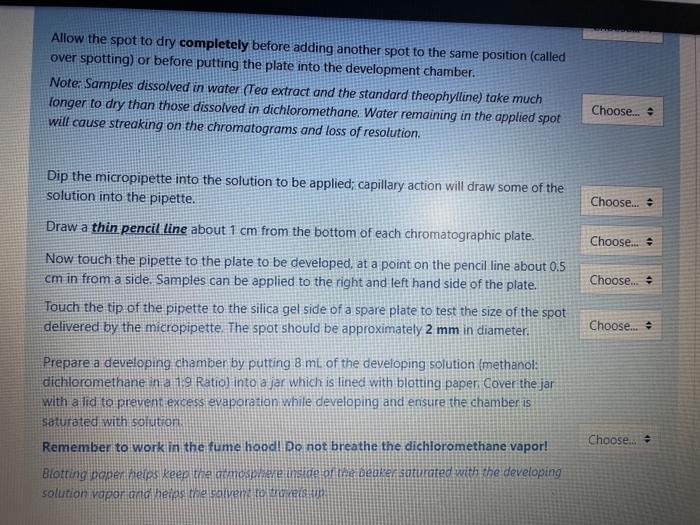
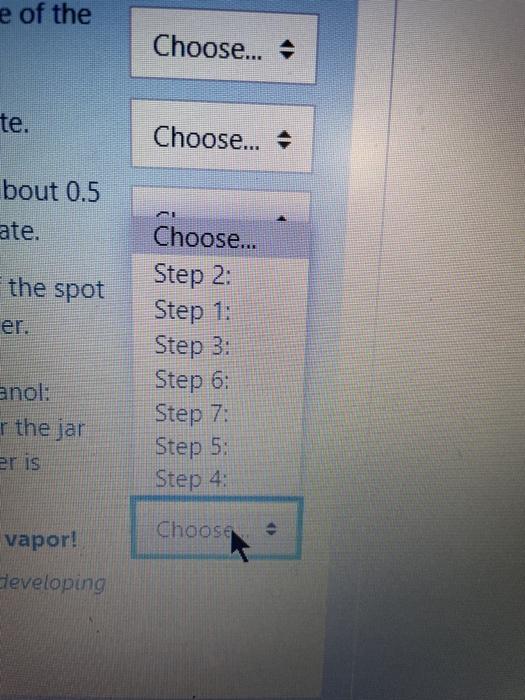
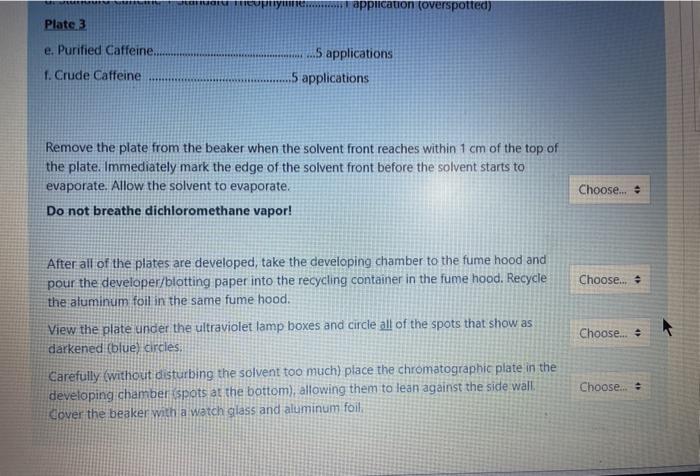
DEVERING SOLVENT FRONT ELEVING BEFORE DEVELOPING Thin Layer Chromatography Thin layer chromatography requires the use of very small volumes of solution. One drop of solution, about 0.05 ml, is about 50 times too large. Micropipettes are provided which will deliver the appropriate amount of solution Choose... Obtain 3 chromatographic plates, blotting paper and a jar with lid. Allow the spot to dry completely before adding another spot to the same position (called over spotting) or before putting the plate into the development chamber Note: Samples dissolved in woter (Tea extract and the standard theophyitine) take much longer to dry than those dissolved in dichloromethane Water remaining in the applied spot will cause streaking on the chromatogramas and loss of resolution Choose... + to search O Allow the spot to dry completely before adding another spot to the same position (called over spotting) or before putting the plate into the development chamber. Note: Samples dissolved in water (Tea extract and the standard theophylline) take much longer to dry than those dissolved in dichloromethane. Water remaining in the applied spot will cause streaking on the chromatograms and loss of resolution. Choose. Dip the micropipette into the solution to be applied, capillary action will draw some of the solution into the pipette. Choose... Draw a thin pencil line about 1 cm from the bottom of each chromatographic plate. Choose... + Choose... - Now touch the pipette to the plate to be developed, at a point on the pencil line about 0.5 cm in from a side. Samples can be applied to the right and left hand side of the plate. Touch the tip of the pipette to the silica gel side of a spare plate to test the size of the spot delivered by the micropipette. The spot should be approximately 2 mm in diameter Choose... Prepare a developing chamber by putting 8 mt of the developing solution (methanol: dichloromethane in a 19 Ratio into a jar which is lined with blotting paper. Cover the jar with a lid to prevent excess evaporation while developing and ensure the chamber is saturated with solution Remember to work in the fume hood! Do not breathe the dichloromethane vapor! Blotting papereips keep the move inside of tre beaker saturated with the developing solution vapor and herps the solvent les Choose. e of the Choose... te. Choose... bout 0.5 ate. Choose... the spot er. Step 2: Step 1: Step 3: Step 6: Step 7: Step 5: Step 4: anol: r the jar er is Choose vapor! Geveloping application (overspotted) Plate 3 e. Purified Caffeine. 5 applications 5 applications 1. Crude Caffeine Remove the plate from the beaker when the solvent front reaches within 1 cm of the top of the plate. Immediately mark the edge of the solvent front before the solvent starts to evaporate. Allow the solvent to evaporate. Do not breathe dichloromethane vapor! Choose... + Choose. After all of the plates are developed, take the developing chamber to the fume hood and pour the developer/blotting paper into the recycling container in the fume hood. Recycle the aluminum foil in the same fume hood. View the plate under the ultraviolet lamp boxes and circle all of the spots that show as darkened (blue) circles Carefully (without disturbing the solvent too much) place the chromatographic plate in the developing chamber (spots at the bottom), allowing them to lean against the side wall. Cover the beaker with a watch glass and aluminum foil Choose... - Choose
Step by Step Solution
There are 3 Steps involved in it

Get step-by-step solutions from verified subject matter experts
 Study Help