







Question: Given: Objective Function Max Z-10A + 15B (S profit) s.1. 2A+4B100 3A+2B 100 A, B0 (Available Material 1) (Available Material 2) Let: A #
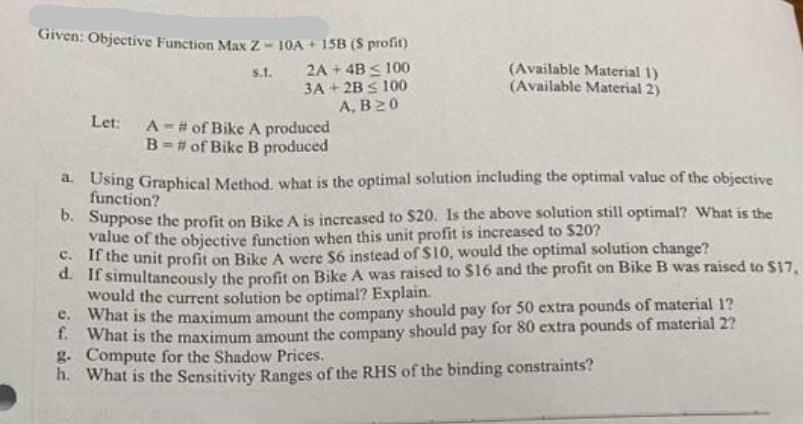
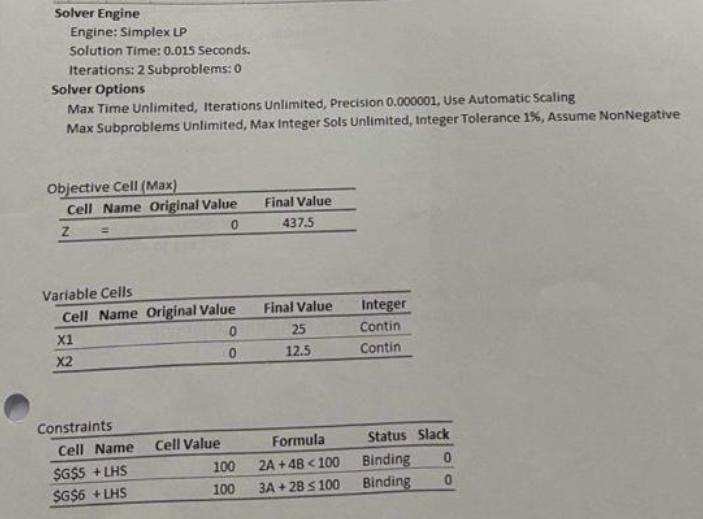
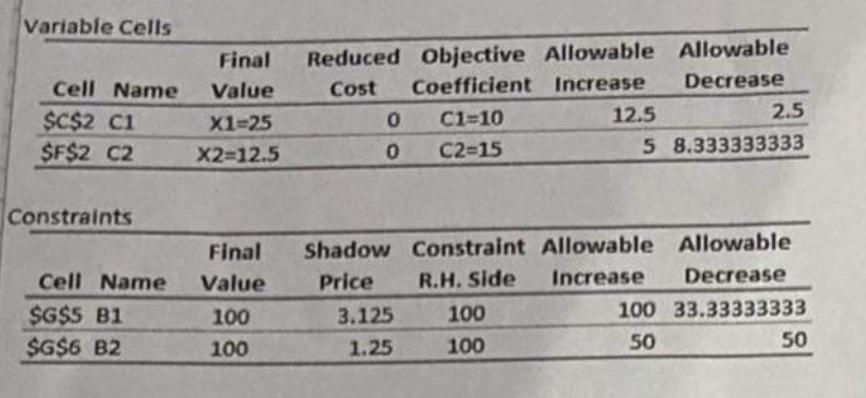
Given: Objective Function Max Z-10A + 15B (S profit) s.1. 2A+4B100 3A+2B 100 A, B0 (Available Material 1) (Available Material 2) Let: A # of Bike A produced B=# of Bike B produced a. Using Graphical Method, what is the optimal solution including the optimal value of the objective function? b. Suppose the profit on Bike A is increased to $20. Is the above solution still optimal? What is the value of the objective function when this unit profit is increased to $20? c. If the unit profit on Bike A were $6 instead of $10, would the optimal solution change? d. If simultaneously the profit on Bike A was raised to $16 and the profit on Bike B was raised to $17, would the current solution be optimal? Explain. e. What is the maximum amount the company should pay for 50 extra pounds of material 1? f. What is the maximum amount the company should pay for 80 extra pounds of material 2? g. Compute for the Shadow Prices. h. What is the Sensitivity Ranges of the RHS of the binding constraints? Solver Engine Engine: Simplex LP Solution Time: 0.015 Seconds. Iterations: 2 Subproblems: 0 Solver Options Max Time Unlimited, Iterations Unlimited, Precision 0.000001, Use Automatic Scaling Max Subproblems Unlimited, Max Integer Sols Unlimited, Integer Tolerance 1%, Assume NonNegative Objective Cell (Max) Cell Name Original Value Final Value Z = 0 437.5 Variable Cells Cell Name Original Value Final Value Integer X1 0 25 Contin X2 0 12.5 Contin Constraints Cell Name Cell Value $G$5+LHS 100 Formula 2A+48
Step by Step Solution
There are 3 Steps involved in it
a First we plot the li... View full answer

Get step-by-step solutions from verified subject matter experts
 Study Help