







Question: Given the following empty-stack PDA, (7 points; one point for each of the first 5 blanks) the language L accepted by the empty-stack PDA is
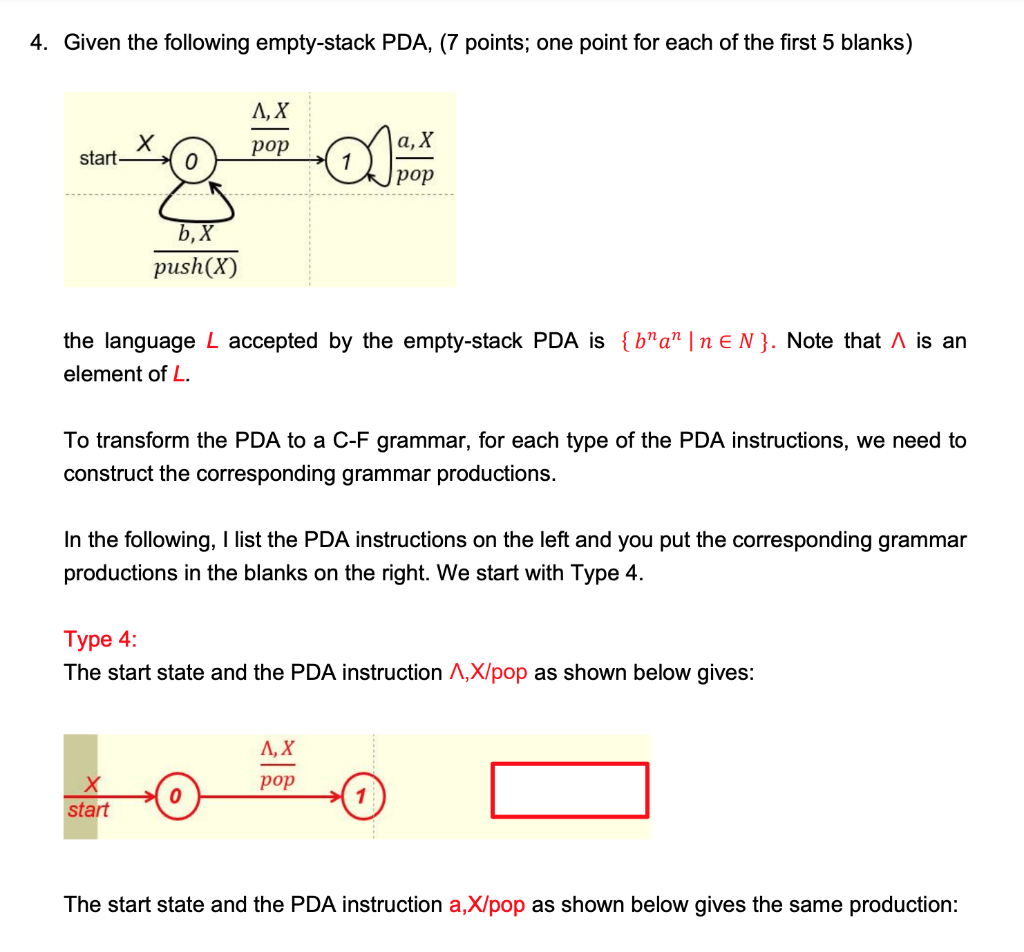
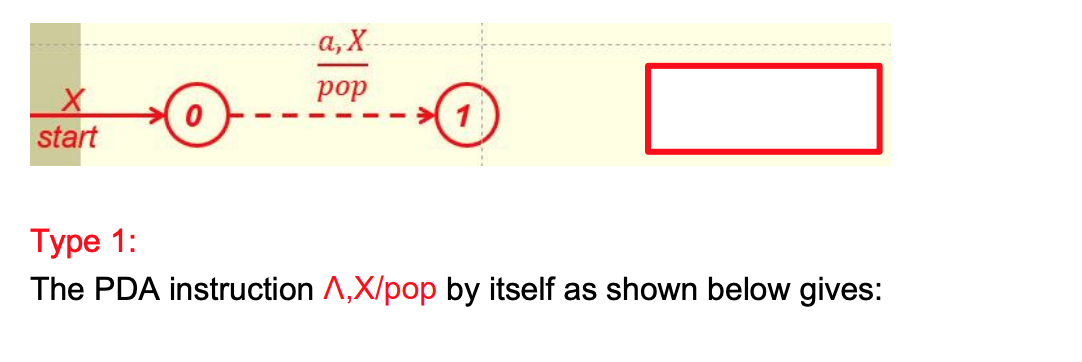
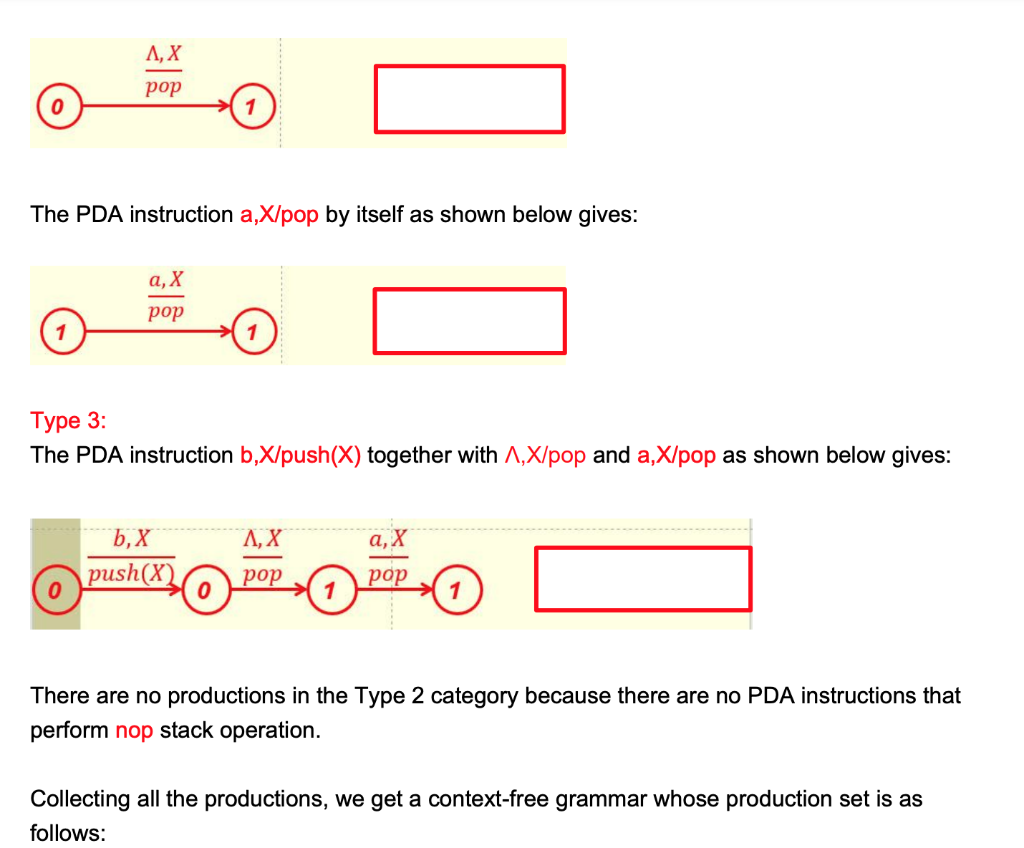
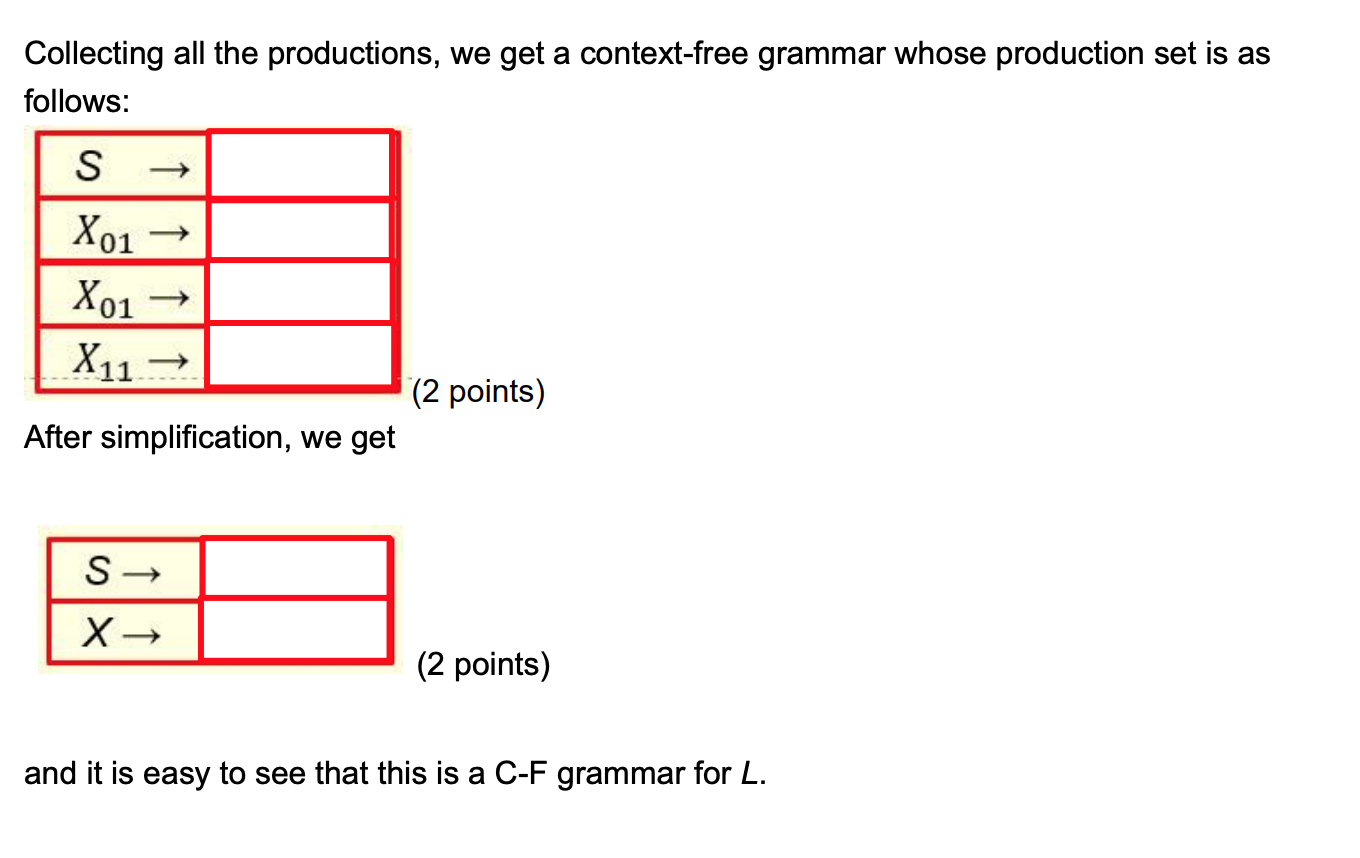
Given the following empty-stack PDA, (7 points; one point for each of the first 5 blanks) the language L accepted by the empty-stack PDA is {bnannN}. Note that is an element of L. To transform the PDA to a C-F grammar, for each type of the PDA instructions, we need to construct the corresponding grammar productions. In the following, I list the PDA instructions on the left and you put the corresponding grammar productions in the blanks on the right. We start with Type 4. Type 4: The start state and the PDA instruction ,X/ pop as shown below gives: The start state and the PDA instruction a,X/pop as shown below gives the same production: Type 1: The PDA instruction ,X/ pop by itself as shown below gives: The PDA instruction a,X/ pop by itself as shown below gives: Type 3: The PDA instruction b,X/push(X) together with ,X/ pop and a,X/pop as shown below gives: There are no productions in the Type 2 category because there are no PDA instructions that perform nop stack operation. Collecting all the productions, we get a context-free grammar whose production set is as follows: Collecting all the productions, we get a context-free grammar whose production set is as follows: (2 points) After simplification, we get (2 points) and it is easy to see that this is a C-F grammar for L
Step by Step Solution
There are 3 Steps involved in it

Get step-by-step solutions from verified subject matter experts
 Study Help