Question: Goodnotes File Edit Format View Tools Go Window Help Q 8 Sat May 31 8:43 AM BCH4054 Chapter 25 Glycogen Synthesis When glucose enters the
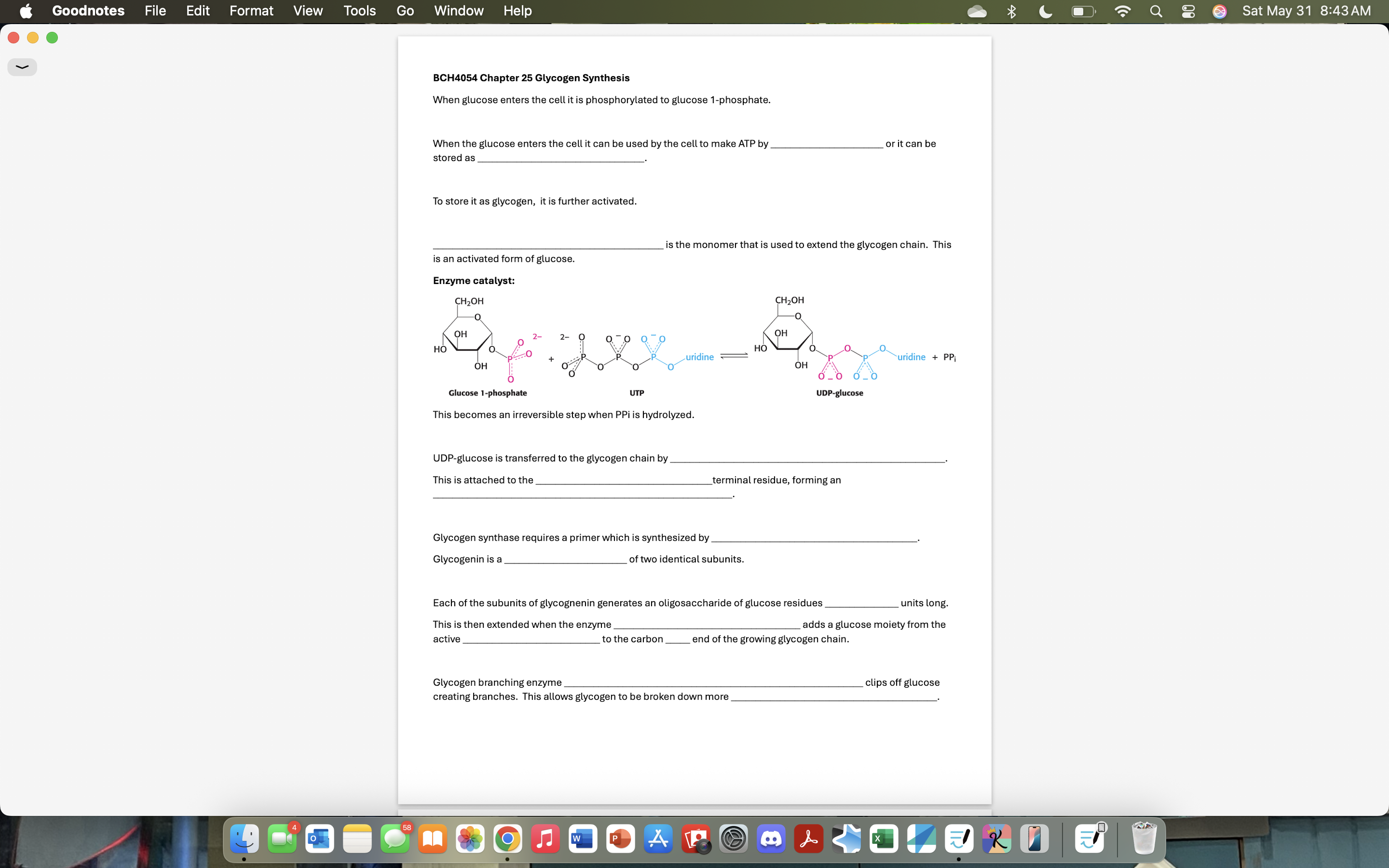
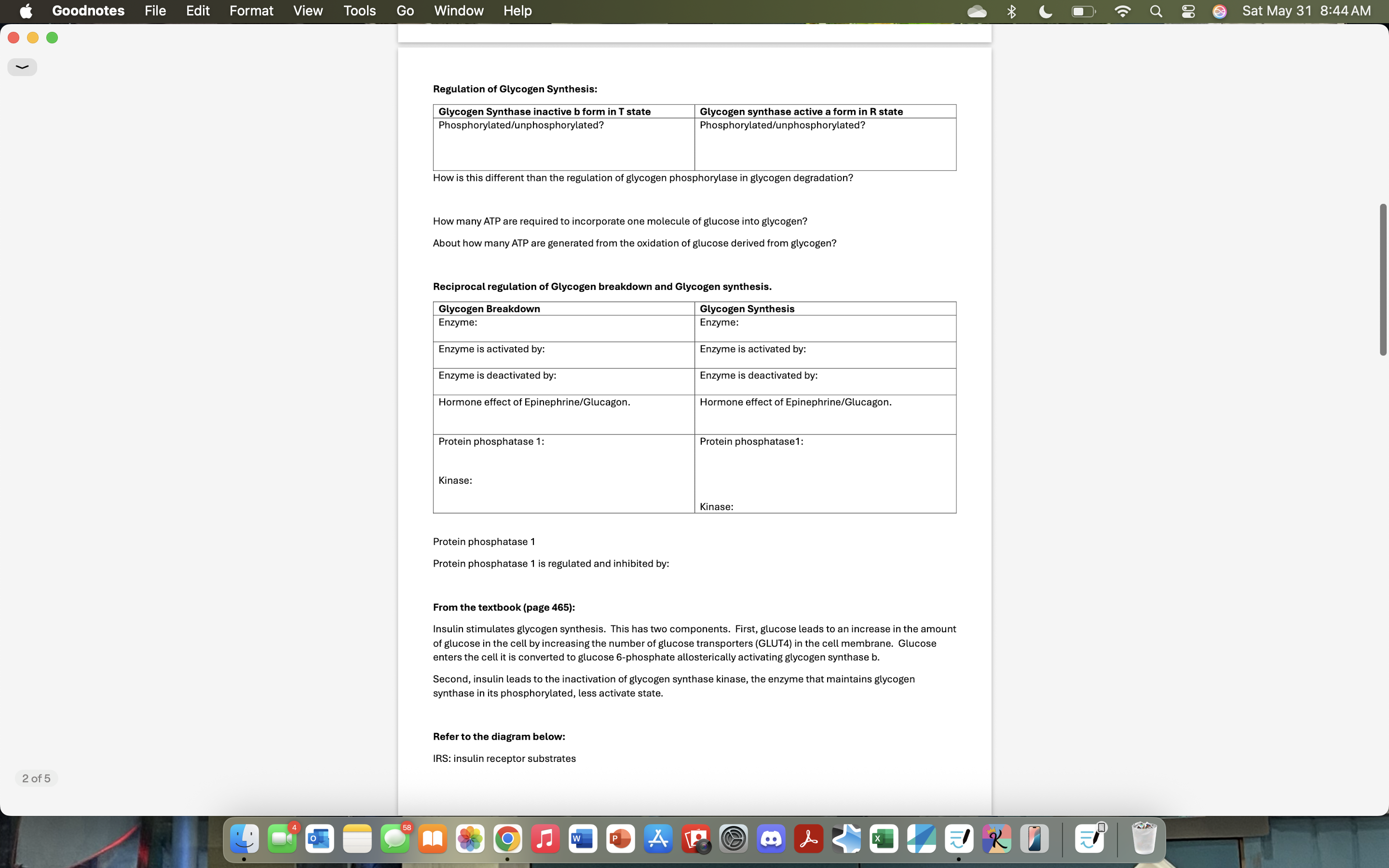
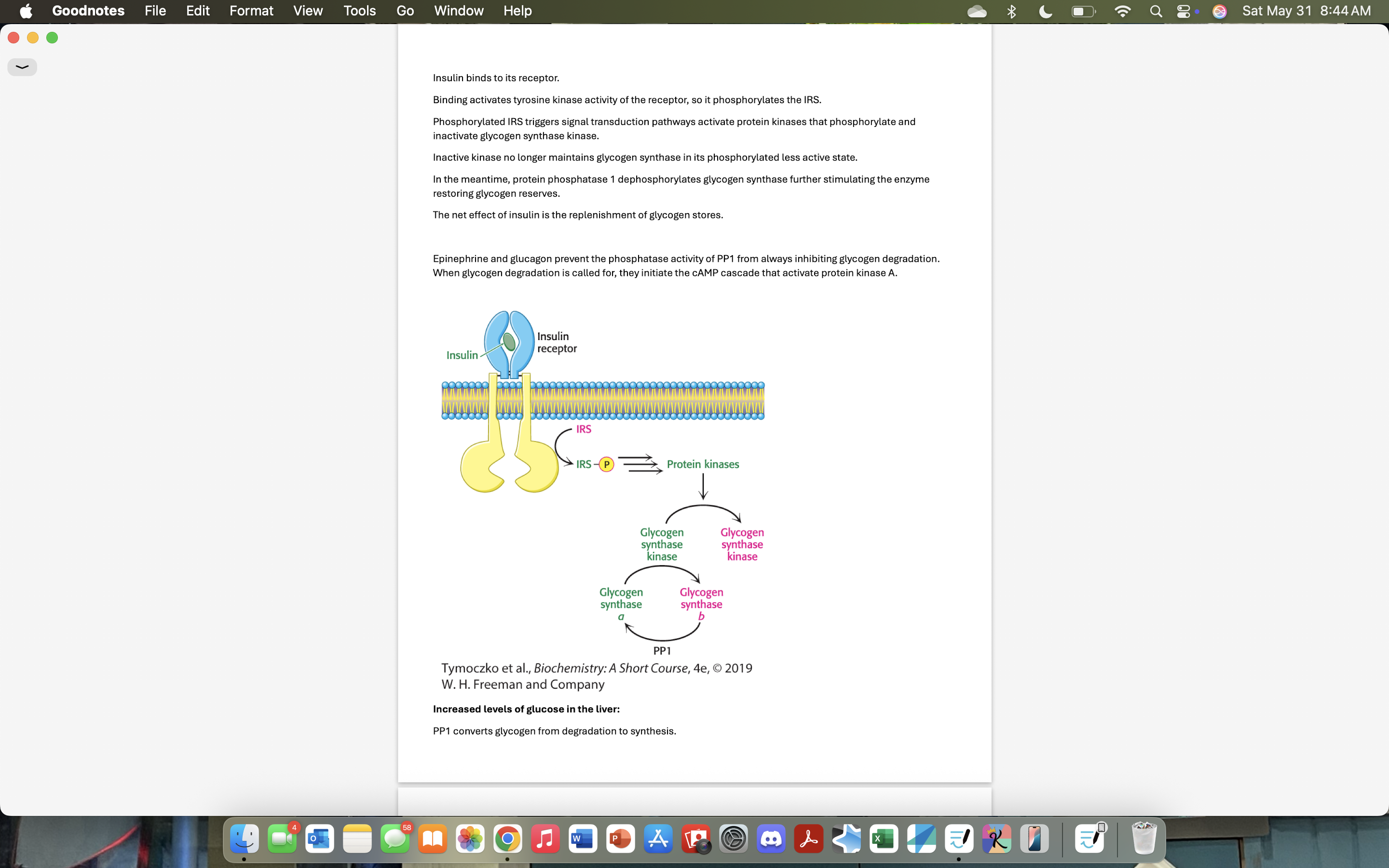
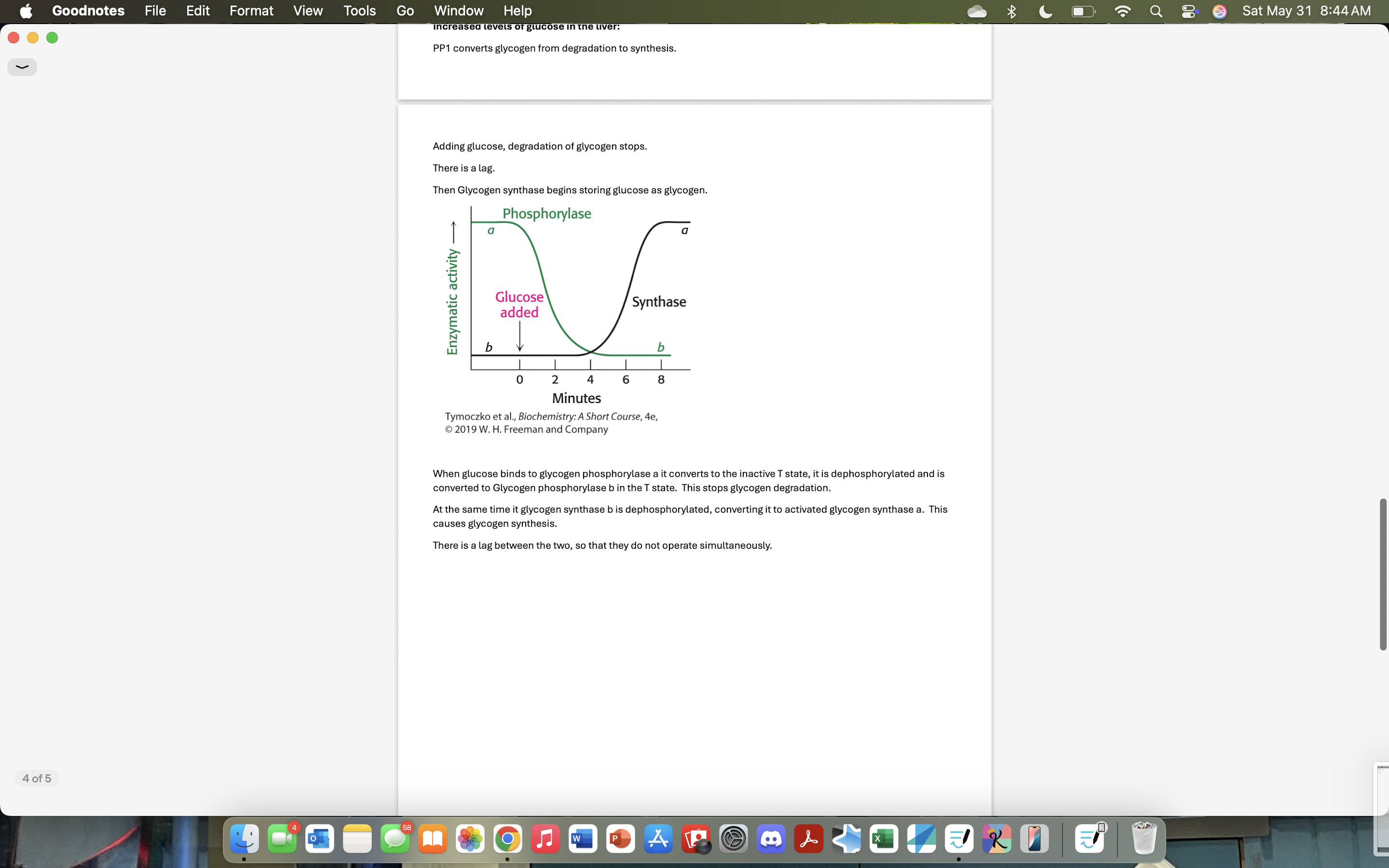
Goodnotes File Edit Format View Tools Go Window Help Q 8 Sat May 31 8:43 AM BCH4054 Chapter 25 Glycogen Synthesis When glucose enters the cell it is phosphorylated to glucose 1-phosphate. When the glucose enters the cell it can be used by the cell to make ATP by or it can be stored as_ To store it as glycogen, it is further activated. is the monomer that is used to extend the glycogen chain. This is an activated form of glucose. Enzyme catalyst: CH2OH CH2OH OH OH HO HO uridine OH uridine + PP; OH Glucose 1-phosphate UTP UDP-glucose This becomes an irreversible step when PPi is hydrolyzed. UDP-glucose is transferred to the glycogen chain by This is attached to the terminal residue, forming an Glycogen synthase requires a primer which is synthesized by_ Glycogenin is a_ of two identical subunits. Each of the subunits of glycogenin generates an oligosaccharide of glucose residues units long. This is then extended when the enzyme adds a glucose moiety from the active_ to the carbon _ end of the growing glycogen chain. Glycogen branching enzyme_ clips off glucose creating branches. This allows glycogen to be broken down moreGoodnotes WT Tools LCTo} Window Help So Cs) @ Sat May 31 8:44AM Regulation of Glycogen Synthesis: [ Glycogen Synthase inactive b form inT state Phosphorylated/unphosphorylated? | Glycogen synthase active a form in R state Phosphorylated/unphosphorylated? How is this different than the regulation of glycogen phosphorylase in glycogen degradation? How many ATP are required to incorporate one molecule of glucose into glycogen? About how many ATP are generated from the oxidation of glucose derived from glycogen? Reciprocal regulation of Glycogen breakdown and Glycogen synthesis. Glycogen Breakdown Glycogen Synthesis Enzyme: Enzyme: Enzyme is activated by: Enzyme is activated by: Enzyme is deactivated by: Enzyme is deactivated by: Hormone effect of Epinephrine/Glucagon. Hormone effect of Epinephrine/Glucagon. Protein phosphatase 1: Kinase: Protein phosphatase1: Kinase: Protein phosphatase 1 Protein phosphatase 1 is regulated and inhibited by: From the textbook (page 465): Insulin stimulates glycogen synthesis. This has two components. First, glucose leads to an increase in the amount of glucose in the cell by increasing the number of glucose transporters (GLUTA) in the cell membrane. Glucose enters the cell it is converted to glucose 6-phosphate allosterically activating glycogen synthase b. Second, insulin leads to the inactivation of glycogen synthase kinase, the enzyme that maintains glycogen synthase in its phosphorylated, less activate state. Refer to the diagram below: IRS: insulin receptor substrates 20f 5 Goodnotes File Edit Format View Tools Go Window Help Q 8 . Sat May 31 8:44 AM Insulin binds to its receptor. Binding activates tyrosine kinase activity of the receptor, so it phosphorylates the IRS. Phosphorylated IRS triggers signal transduction pathways activate protein kinases that phosphorylate and inactivate glycogen synthase kinase. Inactive kinase no longer maintains glycogen synthase in its phosphorylated less active state. In the meantime, protein phosphatase 1 dephosphorylates glycogen synthase further stimulating the enzyme restoring glycogen reserves. The net effect of insulin is the replenishment of glycogen stores. Epinephrine and glucagon prevent the phosphatase activity of PP1 from always inhibiting glycogen degradation. When glycogen degradation is called for, they initiate the CAMP cascade that activate protein kinase A. nsulin Insulin receptor IRS IRS-P Protein kinases Glycogen Glycogen synthase synthase kinase kinase Glycogen Glycogen synthase synthase a PP1 Tymoczko et al., Biochemistry: A Short Course, 4e, 2019 W. H. Freeman and Company Increased levels of glucose in the liver: PP1 converts glycogen from degradation to synthesis.Goodnotes File Edit Format View Tools Go Window Help Q g Sat May 31 8:44 AM Increased levels of glucose in the liver : PP1 converts glycogen from degradation to synthesis. Adding glucose, degradation of glycogen stops. There is a lag. Then Glycogen synthase begins storing glucose as glycogen. Phosphorylase a Glucose Enzymatic activity Synthase added 0 2 6 8 Minutes Tymoczko et al., Biochemistry: A Short Course, 4e, 2019 W. H. Freeman and Company When glucose binds to glycogen phosphorylase a it converts to the inactive T state, it is dephosphorylated and is converted to Glycogen phosphorylase b in the T state. This stops glycogen degradation. At the same time it glycogen synthase b is dephosphorylated, converting it to activated glycogen synthase a. This causes glycogen synthesis. There is a lag between the two, so that they do not operate simultaneously. 4 of 5
Step by Step Solution
There are 3 Steps involved in it
1 Expert Approved Answer
Step: 1 Unlock
Question Has Been Solved by an Expert!
Get step-by-step solutions from verified subject matter experts
Step: 2 Unlock
Step: 3 Unlock
Students Have Also Explored These Related Accounting Questions!









 Study Help